


LUKOIL to Begin Production in 2013
Posted on 26 March 2010 .
The LUKOIL-Statoil consortium could begin producing oil at the West Qurna-2 oil field in Iraq in 2013, LUKOIL Vice President Andrey Kuzyayev said. LUKOIL’s capital investments in the project could be as much as $3.7 billion, the Oil and Gas Information Agency reports.
LUKOIL President Vagit Alekperov said his company could increase investments in oil production in Russia and double production in its foreign projects. For the next three years, $3 billion has been allocated for LUKOIL’s foreign projects. K2K NEWS reports that LUKOIL intends to increase its oil and gas production to 446,000 barrels per day by 2015.
LUKOIL is currently involved in projects in West Africa, Venezuela and Saudi Arabia and is reviewing the possibility of beginning projects in Uganda and Kenya.
( Oil and Gas eurasia )
Posted in Iraq Oil & Gas News Comments Off on LUKOIL to Begin Production in 2013
Russian Lukoil to start drilling Iraqi oil fields before the end of this year
Posted on 22 March 2010 .
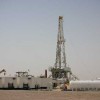
Russia's largest privately held oil company, LUKoil, plans to drill the first exploration well at the West Qurna-2 oil field in Iraq, LUKoil CEO Vagit Alekperov said on Wednesday. "We'll start drilling the first exploration well at the end of the year," Alekperov said, adding that the company's specialists were already working at the site.
On January 31, LUKoil signed a 20-year contract to develop Iraq's massive West Qurna-2 oil field. LUKoil will develop the 12.88 billion-barrel oil field in the Basra province in southern Iraq as a consortium with Norway's Statoil Hydro. The consortium, in which the Russian company holds 56.25% and Statoil Hydro 18.75%, won the tender for the oil field in December 2009. The Iraqi National Oil Company will also join the consortium and hold a 25% stake in the project.
LUKoil was involved in the development of the first phase of West Qurna and signed a contract with the Saddam Hussein regime to develop the second stage, but the deal was frozen in 2002. Alekperov earlier said that the international consortium led by LUKoil would invest some $30 billion in the development of the West Qurna-2 oil field.
Posted in Iraq Oil & Gas News 1 Comment
Iraq's Oil Reserves to be Revised Upwards
Posted on 21 March 2010 .
Iraq’s oil sector is changing, and so could the identity of the man in charge.
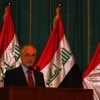
Asked if he hoped to keep his post as the minister of oil in the next Iraqi government, Dr Hussain al Shahristani said he would be happy to step aside.
“I wouldn’t try to stay unless I was forced to stay. It wouldn’t be my wish,” Dr al Shahristani said before yesterday’s OPEC meeting.
Another imminent change will be Iraq’s tally of its oil reserves, which for years have been estimated as the world’s third largest, at about 115 billion barrels.
The estimate of proved reserves “is going to go higher”, Dr al Shahristani said. “We’re revising it now.”
In the past two years, foreign oil companies drilling in Iraqi Kurdistan have reported at least three world-class discoveries.
Canada’s Heritage Oil has struck an oil deposit that may contain as much as 3 billion barrels of recoverable crude.
Gulf Keystone, a Bermuda-registered company, estimates it has found at least another 1.5 billion barrels.
The Hungarian oil group MOL last week reported a significant oil find that analysts said might contain 1 billion barrels of crude.
In addition, a number of the world’s biggest oil companies have recently pored over data on Iraq’s main oil reservoirs as they prepared to bid for long-term service contracts to raise production.
Dr al Shahristani said Iraq was producing 2.5 million barrels per day (bpd) of oil and exporting more than 2 million bpd, making it the third largest OPEC oil exporter after Saudi Arabia and Iran.
In the next few months, Iraq could boost exports by as much as 100,000 bpd by restarting Kurdish crude exports that were halted last September in a long-running dispute over oil jurisdiction between the semi-autonomous regional government and Baghdad.
“We expect to resume exports from the Tawke field [in Kurdistan] shortly, within a month,” Dr al Shahristani said.
“The issue of exporting oil from those fields is a completely separate issue from the contracts that were signed.”
Within seven years, Iraq would increase its production capacity, although not necessarily its output, to 11 million bpd, the oil minister predicted. That could mean export capacity of up to 10 million bpd,www.ekurd.netrivalling that of the world’s top oil exporters, Russia and Saudi Arabia.
Iraq would not consider rejoining OPEC’s quota system until its output capacity had risen to 4 million bpd, possibly as soon as two years from now, Dr al Shahristani said.
Iraq is the only OPEC member without a production quota. It was granted an exemption to refurbish an oil sector ravaged by decades of war and mismanagement.
“Iraq is a founder member [of OPEC]. They have a right to develop their reserves,” said Abdulla el Badri, the OPEC secretary general.
“At the end of the day, we will accommodate Iraq for the sake of the Iraqi people. I am sure this will not be a problem for OPEC.”
Posted in Iraq Oil & Gas News 1 Comment
Russian Firm to Complete Work at Damage Power Plant
Posted on 08 March 2010 .
08 March 2010 (Azzaman)
Russia’s Technopromexport has agreed to resume constructing a large power plant south west of Baghdad.
The al-Youssifya Power Station is one of the largest under construction in the country with an output capacity of 630 megawatts.
The Russians started work in 1990 and had to halt activities in 2003 due to U.S. invasion of Iraq.
But U.S. occupation troops occupied the plant and turned it into a military base, forcing the Russians to abandon the site altogether.
The Russian had completed nearly 35% of work on the plant when the Americans took it over.
U.S. troops are reported to have partially destroyed what the Russians had already done.
An Iraqi delegation was in Moscow last month, where it agreed with Technopromexport’s executives on terms to resume work at the plant.
Technopromexport, a Moscow-based firm, is a leader in construction of power projects and export of electricity.
Among its major power contracts in the country are the al-Hartha Power Station and other electricity projects.
The terms of the agreement have yet to be made public but the main hurdle for the Russians has insecurity.
Posted in Construction & Engineering In Iraq Comments Off on Russian Firm to Complete Work at Damage Power Plant

Robust Growth for Mideast Mobile Operators
Posted on 06 March 2010 .
Doha, 05 March 2010 (The Peninsula)
Middle Eastern mobile operators have outperformed their western counterparts for the first time, which have led to profitable growth and overseas expansion, a recent study shows.
PRTM, a global management consultancy firm, stated in their report "The Future of Mobile Telecommunications--New Operating Strategies for a New World," that seven multinational operators with origins in this region--Etisalat, Orascom, Qatar Telecommunications (Qtel), STC, Zain from the Middle East, and MTN and Millicom in Africa--have more than 300 million subscribers and have expanded across Africa and parts of Asia to sustain growth momentum.
The study also showed that Egypt's Orascom Telecom has become the eighth largest mobile network in the world by customer numbers, overtaking some of the well-established international operators. The research showed that fundamental change of operational models is central to sustained leadership and that significantly emerging markets have altered the telecommunications landscape.
"The past decade has been a highly successful one for the leading Middle Eastern and African operators. Supported by typically affluent and growing home markets and benign competition, both revenue growth and cash flow have been strong. And the leading operators have used this cash flow, supplemented by the ready availability of private capital, to build regional multinationals," said Anil Khurana, lead director of PRTM's Middle East Region and co-author of the report. Ameet Shah, head of PRTM's mobile services practice, served as lead author of the report.
Between 2003 and 2009, the leader board of the world's 30 largest mobile operators changed dramatically, according to this first-of-its kind report. The report identifies 19 new mobile leaders worldwide, measured either by number of subscribers or revenue. A common thread among these leaders is the continuous adaptation of their operating models to address new market conditions--crucial within a mobile industry where the game can change rapidly and where new players can quickly overtake yesterday's leaders.
"The rise of operators from emerging markets is testament to two factors: the rapid growth in their domestic markets, and their drive to play in multiple markets. But, as their existing markets start to mature, it is not yet clear that these companies will be able to revamp their operating models and sustain continued growth based on innovation, cost management, outsourcing, and the like," added Khurana, who calls these operators the "new multinationals."
The analysis reveals that the highest ranking mobile players over the past five years have modified their business models in ways that have led to profitable growth and support from shareholders, resulting in acquisitions and overseas expansion.
Telefónica and Telenor are prime examples of companies that have successfully ridden the boom of mobile usage in developing countries through strategic changes to their operating models.
This trend is evident in the emergence of large multinational operators from Russia, Africa, the Middle East and Latin America. It is also reflected through market consolidation within the US and through the growing importance of the leading Chinese and Indian operators. Those who have not adapted their operational models, including some major European operators, have experienced relative decline.
The report argues that operators that create the right operating models will increase performance and win investor backing in the international M&A game that is rationalizing many individual operators into global groups.
Consolidation during the next five years will mean an operator may need 300 million subscribers, or $50bn in revenue, to be among the global top 10 in 2014.
Posted in Iraqi Communications News Comments Off on Robust Growth for Mideast Mobile Operators
Deal Expected for Baghdad Underground
Posted on 15 February 2010 .
A deal with a French company will soon be concluded to supervise a project to build an underground railway in the capital Baghdad, the local mayor said.
“Companies from the United States, Russia, Germany, France and South Korea will be invited to submit their final bids for the project after a contract is signed with Systra”, Mayor Sabir al-Issawi told Aswat al-Iraq news agency.
France’s Systra, an international engineering and consulting group specializing in rail, will supervise the project.
(Aswat Al Iraq)
Posted in Iraq Transportation News Comments Off on Deal Expected for Baghdad Underground
Gazprom to Offer $10 Bn of Bonds
Posted on 15 February 2010 .
Russian "Gazprom" plans to issue $ 10 billion bonds 2010 to 2015. The organizer and the Under-guarantor of the bonds to be found by competitive tender.
It is expected to raise between $ 167 million and $ 334 million at a nominal value of $ 33 .33 for a period of between one and three years. The coupon period is 182 days.
Posted in Iraq Banking & Finance News Comments Off on Gazprom to Offer $10 Bn of Bonds
Lukoil in Talks on Developing Giant Oil Field near Basra
Posted on 12 February 2010 .
Azzaman reports that Russian energy giant Lukoil is discussing with local officials in Basra the details of implementing its contract to develop the West Qurna-2 oil field.
Governor Shaltah Aboud is reported to have promised the Russians “to engage in full cooperation and do his best to remove all obstacles.”
“We have discussed with Russia’s Lukoil and its partner Norway’s StatoilHydro, which have won the contract to develop the giant field of West Qurna-2, ways to solve the problems they might face,” Aboud said.
One important issue is employment – Aboud wants to see Lukoil and StatoilHydro employing as many Iraqis as possible.
“Lukoil expressed readiness to accommodate (certain) numbers of Iraqis and work for their career development,” the governor said. “We are planning more meetings with Lukoil and StatoilHydro on the nature of the services they intend to offer the province’s population.”
The Iraqi government ratified the agreement last month; it will last 20 years with a possible extension of five years. Lukoil has a 56.25% share, StatoilHydro 18.75%, and Iraq’s North Oil Company 25%.
The Qurna oilfield, just 65 kilometers from the port of Basra, has proven reserves of around 13 billion barrels. Under the deal the firms are to substantially raise the field’s output to 1.8 million barrels a day.
Production is expected to start by the end of 2011 and will involve drilling more than 500 wells, but it will take several more years to hit the 1.8 million bpd target. A meeting also took place on Friday between the consortium and the Iraqi Ports Company, to discuss methods of getting the oil to Basra port.
Iraq has the world’s third largest oil reserves, behind Saudi Arabia and Iran, with an estimated 115 billion barrels of proven reserves.
(Sources: Azzaman, Oil & Gas Financial Journal, Aswat Al Iraq)
Posted in Iraq Oil & Gas News 1 Comment

Iraq Buys 700,000 Tons of Wheat in Tender-trade
Posted on 10 February 2010 .
Iraq has finalized deals to buy at least 700,000 tons of Canadian, U.S, German, Russian, and Australian wheat from major suppliers in one of the bigger purchases in recent years, trade sources said on Wednesday.
The purchase, which still requires the cabinet's approval, involved at least 300,000 tons of Canadian wheat from two suppliers, one undisclosed and the other Louis Dreyfus, along with 100,000 tons of U.S. wheat from Archer Daniels Midland (ADM.N) at prices hovering around $225 per ton FOB, Middle East trade sources told Reuters.
The rest were 100,000 tones consignment of Russian wheat believed to have been bought from Exam at around $267 per ton CIF (cost, insurance and freight).
Two 100,000 tones each of possibly Australian or German origin wheat were awarded to undisclosed suppliers at around $215 per ton FOB, the sources familiar with the tender said.
The deals were a result of a tender for a nominal 100,000 tons that closed on Jan. 26 with offers that were extended to Feb. 4.
Volumes in Iraq's wheat and rice tenders are viewed as nominal and the country regularly buys more than originally sought.
The prices for the latest deals are close to Iraq's last major purchase of 300,000 tons of U.S. Russian and Australian wheat in a tender that closed last Oct. 26, traders said.
Traders said at the time a total of 100,000 tons of U.S. wheat was bought at about $234 FOB while a similar amount of Russian wheat was secured at about $209 per ton FOB.
Iraq has moved towards diversifying new wheat supply sources in the last two years after making major U.S. wheat purchases.
Iraq is one of the largest importers of wheat, with yearly wheat import requirements of nearly 4 million tones and rice at around one million tones. (Reporting by Suleiman al-Khalidi; Editing by Marguerite Choy)
By Suleiman al-Khalidi
Posted in Agriculture Comments Off on Iraq Buys 700,000 Tons of Wheat in Tender-trade
Russia's Lukoil to Invest 30 Bln Dollars in Iraqi Oil Field
Posted on 02 February 2010 .
Russian state energy monopoly Lukoil will invest 30 billion U.S. dollars with its foreign partners in the development of the West Qurna-2 oil field in Iraq, said the company's CEO Monday.
First phase of investment to the oil field, whose annual output is estimated at 95 million metric tons, will reach 4.5 billion dollars, said Vagit Alekperov when meeting with Prime Minister Vladimir Putin.
Russia has canceled more than 10 billion dollars, or 90 percent of the debt owed to it by Iraq, said Putin, adding that the Iraqi government has welcomed Lukoil's move.
It was also "a pleasure" for Lukoil and Norwegian Norsk Statoil to win the tender for the West Qurna-2 in last December, he said.
An agreement signed on Sunday between Lukoil, Norsk Statoil and the Iraqi government stipulated a 56.25 percent share for Lukoil, 18.75 percent for Norsk Statoil, and 25 percent for Iraqi North Oil Company.
Located in southern Iraq, the West Qurna-2 oil field has a known deposit of 12.9 billion barrels.
Posted in Iraq Oil & Gas News Comments Off on Russia's Lukoil to Invest 30 Bln Dollars in Iraqi Oil Field