


Coalition Continues Airstrikes Against ISIL
Posted on 03 August 2015 .
U.S. and coalition military forces have continued to attack Islamic State of Iraq and the Levant terrorists in Syria and Iraq, Combined Joint Task Force Operation Inherent Resolve officials reported.
Officials reported details of the latest strikes, which took place yesterday, noting that assessments of results are based on initial reports.
Airstrikes in Syria
Fighter-attack, bomber and remotely piloted aircraft conducted six airstrikes in Syria:
- Near Al Hasakah, one airstrike struck an ISIL tactical unit and destroyed an ISIL vehicle-borne improvised explosive device.
- Near Dayr Az Zawr, one airstrike struck an ISIL tactical unit and destroyed an ISIL guard shack.
- Near Kobani, four airstrikes struck two ISIL large tactical units and two ISIL small tactical units and destroyed three ISIL fighting positions and an ISIL command and control center.
Airstrikes in Iraq
Attack, fighter-attack, and remotely piloted aircraft conducted 18 airstrikes in Iraq, coordinated with the government of Iraq:
- Near Al Huwayjah, one airstrike destroyed an ISIL bomb factory.
- Near Fallujah, four airstrikes struck terrain denying ISIL a tactical advantage and destroyed two ISIL vehicles and two ISIL rocket rails.
- Near Habbaniyah, one airstrike destroyed an ISIL bridge.
- Near Makhmur, two airstrikes struck an ISIL tactical unit and an ISIL bomb-making facility and destroyed an ISIL fighting position and an ISIL vehicle.
- Near Mosul, four airstrikes struck an ISIL tactical unit, an ISIL weapons cache, an ISIL weapons storage area and an ISIL staging area and destroyed an ISIL bunker.
- Near Ramadi, four airstrikes struck two ISIL tactical units and an ISIL sniper position and destroyed an ISIL cache, an ISIL fighting position, an ISIL homemade explosives cache and an ISIL vehicle.
- Near Sinjar, two airstrikes struck two ISIL tactical units and destroyed three ISIL heavy machine guns and four ISIL fighting positions.
Part of Operation Inherent Resolve
The strikes were conducted as part of Operation Inherent Resolve, the operation to eliminate the ISIL terrorist group and the threat they pose to Iraq, Syria and the wider international community.
The destruction of ISIL targets in Syria and Iraq further limits the group's ability to project terror and conduct operations.
Coalition nations conducting airstrikes in Iraq include the United States, Australia, Canada, Denmark, France, Jordan, the Netherlands and the United Kingdom.
Coalition nations conducting airstrikes in Syria include the United States, Bahrain, Canada, Jordan, Saudi Arabia and the United Arab Emirates.
(Source: US Dept of Defense)
Posted in Security 3 Comments
Airstrikes Hit ISIL Terrorists in Syria, Iraq
Posted on 31 July 2015 .
U.S. and coalition military forces have continued to attack Islamic State of Iraq and the Levant terrorists in Syria and Iraq, Combined Joint Task Force Operation Inherent Resolve officials reported.
Officials reported details of the latest strikes, which took place yesterday, noting that assessments of results are based on initial reports.
Airstrikes in Syria
Fighter-attack, fighter and bomber aircraft conducted 24 airstrikes in Syria:
- Near Hasakah, seven airstrikes struck an ISIL large tactical unit and five ISIL small tactical units and destroyed six ISIL fighting positions, four ISIL motorcycles, an ISIL heavy machine gun, an ISIL vehicle and an ISIL command and control center.
- Near Dayr Az Zawr, 17 airstrikes struck eight ISIL staging areas, three ISIL bridges, four ISIL checkpoints, an ISIL training area and an ISIL logistics site.
Airstrikes in Iraq
Attack, fighter-attack, bomber and remotely piloted aircraft conducted 17 airstrikes in Iraq, coordinated with the government of Iraq:
- Near Qaim, two airstrikes struck an ISIL staging area.
- Near Beiji, two airstrikes struck two ISIL tactical units and destroyed three ISIL structures and an ISIL heavy machine gun.
- Near Habbaniyah, two airstrikes destroyed an ISIL mortar system, an ISIL fighting position and four ISIL rocket rails.
- Near Haditha, two airstrikes destroyed five ISIL structures, an ISIL mortar system, an ISIL weapons cache and an ISIL command and control center.
- Near Makhmur, one airstrike struck an ISIL tactical unit.
- Near Mosul, two airstrikes struck two ISIL tactical units and an ISIL anti-aircraft artillery weapon and destroyed three ISIL fighting positions and an ISIL heavy machine gun.
- Near Ramadi, four airstrikes struck two ISIL tactical units and terrain denying ISIL a tactical advantage and destroyed two ISIL vehicles and two ISIL excavators.
- Near Sinjar, one airstrike destroyed an ISIL fighting position.
- Near Tal Afar, one airstrike destroyed two ISIL bunkers.
Part of Operation Inherent Resolve
The strikes were conducted as part of Operation Inherent Resolve, the operation to eliminate the ISIL terrorist group and the threat they pose to Iraq, Syria and the wider international community.
The destruction of ISIL targets in Syria and Iraq further limits the group's ability to project terror and conduct operations.
Coalition nations conducting airstrikes in Iraq include the United States, Australia, Canada, Denmark, France, Jordan, the Netherlands and the United Kingdom.
Coalition nations conducting airstrikes in Syria include the United States, Bahrain, Canada, Jordan, Saudi Arabia and the United Arab Emirates.
(Source: US Dept of Defense)
Posted in Security Comments Off on Airstrikes Hit ISIL Terrorists in Syria, Iraq

Iraq Instability Weighs on Zain Group
Posted on 30 July 2015 .
By John Lee.
In its financial results for the six months ended 30 June, 2015, Zain Group gave the following update on its operations in Iraq:
"Zain Iraq launched 3G services at the beginning of the year and is very active in rolling out 3G services across the country that saw data revenues grow 17% Y-o-Y.
"The performance of Zain Iraq has been severely hampered by the escalation of social instability that has seen several million people displaced internally, coupled with Zain Iraq enduring frequent temporary network shutdowns and associated higher network operational costs.
"These exceptional circumstances coupled with intense competition and currency fluctuations, adversely affected the operation’s financial performance, as its revenues for the first six months reached USD 604 million, with EBITDA reaching USD 221 million and net income amounting to USD 60 million.
"The Zain Iraq team is committed to maintaining a resilient and efficient network regardless of the situation in the country and the operator foresees significant growth for all key financial indicators due to mobile data revenue growth given the pent-up demand for broadband services. The operator now serves 12.8 million customers."
Zain Group CEO, Scott Gegenheimer (pictured) noted:
"Although our digital transformation and efficiency drive efforts are well on track across many of our operations, we are disappointed by the severe impact that the increased social instability and intense competition in Iraq is having on our overall financial results for the year to date.
"Nevertheless we are encouraged to see growth of our customer base in key markets, with both Saudi Arabia and Sudan witnessing healthy growth in all of their key financial indicators.”
(Source: Zain)
Posted in Iraqi Communications News Comments Off on Iraq Instability Weighs on Zain Group
Anti-ISIL Airstrikes in Iraq, Syria Continue
Posted on 30 July 2015 .
U.S. and coalition military forces have continued to attack Islamic State of Iraq and the Levant terrorists in Syria and Iraq, Combined Joint Task Force Operation Inherent Resolve officials reported.
Officials reported details of the latest strikes, noting that assessments of results are based on initial reports.
Airstrikes in Syria
Fighter and remotely piloted aircraft conducted three airstrikes in Syria:
- Near Hasakah, two airstrikes struck an ISIL tactical unit and destroyed two ISIL fighting positions.
- Near Idlib, one airstrike struck an ISIL tactical unit and destroyed an ISIL vehicle.
Airstrikes in Iraq
Attack, fighter-attack and remotely piloted aircraft conducted 11 airstrikes in Iraq, approved by the Iraqi Ministry of Defense:
- Near Huwayjah, one airstrike struck an ISIL tactical unit and destroyed an ISIL vehicle.
- Near Beiji, two airstrikes struck an ISIL tactical unit and destroyed two ISIL vehicles and an ISIL vehicle bomb.
- Near Habbaniyah, one airstrike struck an ISIL tactical unit and destroyed an ISIL structure.
- Near Haditha, one airstrike destroyed an ISIL vehicle.
- Near Mosul, one airstrike destroyed an ISIL tunnel entrance.
- Near Ramadi, three airstrikes struck two ISIL tactical units and destroyed an ISIL armored vehicle, an ISIL structure and an ISIL fighting position.
- Near Sinjar, one airstrike struck an ISIL mortar position.
- Near Tal Afar, one airstrike struck an ISIL tactical unit and destroyed an ISIL heavy machine gun and an ISIL fighting position.
Part of Operation Inherent Resolve
The strikes were conducted as part of Operation Inherent Resolve, the operation to eliminate the ISIL terrorist group and the threat they pose to Iraq, Syria, the region, and the wider international community.
The destruction of ISIL targets in Syria and Iraq further limits the terrorist group's ability to project terror and conduct operations, officials said.
Coalition nations conducting airstrikes in Iraq include the United States, Australia, Canada, Denmark, France, Jordan, the Netherlands and the United Kingdom.
Coalition nations conducting airstrikes in Syria include the United States, Bahrain, Canada, Jordan, Saudi Arabia and the United Arab Emirates.
(Source: US Dept of Defense)
Posted in Security Comments Off on Anti-ISIL Airstrikes in Iraq, Syria Continue
Airstrikes Destroy ISIL Fighting Positions
Posted on 29 July 2015 .
U.S. and coalition military forces have continued to attack Islamic State of Iraq and the Levant terrorists in Syria and Iraq, Combined Joint Task Force Operation Inherent Resolve officials reported.
Officials reported details of the latest strikes, noting that assessments of results are based on initial reports.
Airstrikes in Syria
Fighter, fighter-attack, bomber and remotely piloted aircraft conducted nine airstrikes in Syria:
- Near Hasakah, seven airstrikes struck five ISIL tactical units and destroyed four ISIL fighting positions, an ISIL staging position, an ISIL bunker, an ISIL motorcycle and an ISIL structure.
- Near Aleppo, two airstrikes struck two ISIL tactical units and destroyed an ISIL vehicle, seven ISIL fighting positions and an ISIL bunker.
Airstrikes in Iraq
Attack, fighter-attack, bomber and remotely piloted aircraft conducted 23 airstrikes in Iraq, approved by the Iraqi Ministry of Defense:
- Near Qaim, one airstrike struck an ISIL tactical unit and destroyed an ISIL checkpoint.
- Near Beiji, three airstrikes struck two ISIL tactical units and terrain denying ISIL a tactical advantage and destroyed two ISIL buildings.
- Near Habbaniyah, one airstrike struck an ISIL large tactical unit and destroyed six ISIL structures.
- Near Haditha, one airstrike struck an ISIL tactical unit and destroyed two ISIL structures.
- Near Makhmur, three airstrikes struck two ISIL tactical units and destroyed 19 ISIL fighting positions, 10 ISIL tunnels and three ISIL vehicles.
- Near Mosul, two airstrikes struck two ISIL tactical units and destroyed two ISIL fighting positions and an ISIL vehicle.
- Near Ramadi, six airstrikes struck two ISIL tactical units and destroyed an ISIL excavator, two ISIL fighting positions, an ISIL resupply truck, an ISIL mortar position, an ISIL anti-aircraft artillery weapon, an ISIL vehicle and an ISIL structure.
- Near Sinjar, five airstrikes struck three ISIL tactical units and two ISIL staging areas and destroyed an ISIL vehicle, an ISIL heavy machine gun, five ISIL fighting positions and an ISIL light machine gun.
- Near Tal Afar, one airstrike struck an ISIL staging area.
Part of Operation Inherent Resolve
The strikes were conducted as part of Operation Inherent Resolve, the operation to eliminate the ISIL terrorist group and the threat they pose to Iraq, Syria, the region, and the wider international community.
The destruction of ISIL targets in Syria and Iraq further limits the terrorist group's ability to project terror and conduct operations, officials said.
Coalition nations conducting airstrikes in Iraq include the United States, Australia, Canada, Denmark, France, Jordan, the Netherlands and the United Kingdom.
Coalition nations conducting airstrikes in Syria include the United States, Bahrain, Canada, Jordan, Saudi Arabia and the United Arab Emirates.
(Source: US Dept of Defense)
Posted in Security Comments Off on Airstrikes Destroy ISIL Fighting Positions
Airstrikes Continue Against ISIL Terrorists
Posted on 27 July 2015 .
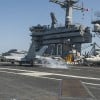
Coalition military forces continued to attack Islamic State of Iraq and the Levant terrorists in Syria and Iraq, Combined Joint Task Force Operation Inherent Resolve officials reported.
Officials reported details of the latest strikes, which took place yesterday, noting that assessments of results are based on initial reports.
Airstrikes in Syria
Fighter, bomber and remotely piloted aircraft conducted 13 airstrikes in Syria:
- Near Al Hasakah, five airstrikes struck two ISIL large tactical units, two ISIL small tactical units and two ISIL fighting positions and destroyed an ISIL weapons cache, an ISIL command and control center, two ISIL fighting positions and three ISIL checkpoints.
- Near Aleppo, two airstrikes struck an ISIL tactical unit and destroyed an ISIL towed artillery piece.
- Near Ar Raqqah, one airstrike struck an ISIL tactical unit.
- Near Kobani, five airstrikes struck an ISIL large tactical unit and four ISIL small tactical units and destroyed six ISIL fighting positions and an ISIL mortar position.
Airstrikes in Iraq
Attack, fighter-attack, and remotely piloted aircraft conducted 20 airstrikes in Iraq, approved by the Iraqi Ministry of Defense:
- Near Al Asad, one airstrike struck an ISIL tactical unit and destroyed an ISIL structure.
- Near Al Qaim, one airstrike struck an ISIL tactical unit.
- Near Habbaniyah, two airstrikes struck an ISIL tactical unit and destroyed three ISIL mortar systems, an ISIL structure and an ISIL bridge.
- Near Haditha, one airstrike struck an ISIL tactical unit and destroyed two ISIL structures.
- Near Makhmur, two airstrikes struck two ISIL tactical units and destroyed two ISIL bunkers.
- Near Mosul, three airstrikes struck an ISIL tactical unit, an ISIL vehicle-borne improvised explosive device factory and an ISIL mortar position and destroyed an ISIL fighting position.
- Near Ramadi, five airstrikes struck two ISIL tactical units, two ISIL tanks and an ISIL armored personnel carrier and destroyed an ISIL road block, an ISIL armored personnel carrier, an ISIL building, two ISIL structures and an ISIL mortar position.
- Near Sinjar, one airstrike struck an ISIL tactical unit and destroyed an ISIL ammunition cache and an ISIL fighting position.
- Near Tuz, four airstrikes struck four ISIL staging areas.
Part of Operation Inherent Resolve
The strikes were conducted as part of Operation Inherent Resolve, the operation to eliminate the ISIL terrorist group and the threat they pose to Iraq, Syria and the wider international community.
The destruction of ISIL targets in Syria and Iraq further limits the group's ability to project terror and conduct operations.
Coalition nations conducting airstrikes in Iraq include the United States, Australia, Canada, Denmark, France, Jordan, the Netherlands, and the United Kingdom.
Coalition nations conducting airstrikes in Syria include the United States, Bahrain, Canada, Jordan, Saudi Arabia, and the United Arab Emirates.
(Source: US Dept of Defense)
Posted in Security Comments Off on Airstrikes Continue Against ISIL Terrorists
Popular Mobilization Units - Heroes or Villains?
Posted on 25 July 2015 .
By Adnan Abu Zeed for Al-Monitor. Any opinions expressed are those of the author, and do not necessarily reflect the views of Iraq Business News.
Are Iraq's Popular Mobilization Units heroes or villains?
In September 2014, Ahmed al-Khafaji enlisted at the age of 25 in the Popular Mobilization Units, which were formed in accordance with a religious fatwa issued in June 2014 by the Shiite religious authority in Iraq, Grand Ayatollah Ali al-Sistani, with the aim of fighting the Islamic State (IS) following its invasion of the city of Mosul that month.
Arab and Iraqi Sunni parties claimed the fatwa incited Shiites to commit violence against Sunnis.
After Khafaji spent a few weeks learning how to use weapons in a training center in Babylon, 100 kilometers (62 miles) south of Baghdad, he participated in the liberation of Jurf al-Sakhar city, south of Baghdad, in October and suffered an injury to his left shoulder.
Khafaji received a couple of friends in a small room of a rural house located on the outskirts of the city of Hilla in Babil province. The house lacked the most basic essentials — including ventilation, furniture and cold water — at a time when the temperature was around 50 degrees Celsius (122 degrees Fahrenheit).
As he pointed his finger to the picture of Sistani hanging on the wall, he told Al-Monitor, “I fight to defend the nation and heed the call of this man who saved Iraq from falling into the hands of IS terrorists.”
Skimming through pictures of himself with his fellow fighters, Khafaji added, “I fought as a volunteer and did not wait for any financial reward. I practically have not received my salary for two months, but this will not prevent me from returning to the battlefronts as soon as I recover."
Posted in Security 4 Comments
What Iraq needs to Survive
Posted on 24 July 2015 .
By Mustafa al-Kadhimi for Al-Monitor. Any opinions expressed are those of the author, and do not necessarily reflect the views of Iraq Business News.
In describing the Iraqi dilemma since 2003, some Iraqis have been attributing the problem to political rather than social factors, whereby all disputes were ascribed to political causes. The prevailing thought among these Iraqis is that Iraq did not suffer from any social, sectarian, religious or ethnic rifts that contributed to this fractious state of affairs.
Other Iraqis believe that the problem Iraq is facing is purely social; that the country does not, in fact, exist, and that its formation under the Sykes-Picot Agreement necessitated the unification of disparate peoples incapable of coexisting.
Today, more than a decade after the Saddam Hussein regime was ousted in 2003, we must admit that a real social problem exists in Iraq — a problem born of historic roots, the perpetuation and exacerbation of which is driven by religious differences and racism.
Yet, the aforementioned does not mean that this social problem is a formative one. Iraq, as other countries in the world, is composed of a variety of religiously or ethnically diverse social groups, such as Arabs, Kurds, Christians and Muslims. Many countries have histories replete with religiously or ethnically motivated bloody civil wars, such as Lebanon, which suffered a civil war that lasted 15 years, killing roughly 150,000 people.
Since 2003, political efforts in Iraq have been focused on feeding and exaggerating social differences, which are reflected in various religious beliefs, national views and even economic differences. Electoral campaigns politically exploited this disparateness, took advantage of sectarianism and played on the prevalence of social rifts and racism to achieve political gains that would have been otherwise unattainable by a political class devoid of culture and intellectual depth.
The political conflict’s contribution in exacerbating social differences was great, catastrophic even, during the post-2003 years, as it has resulted in a bloody sectarian conflict. Yet, it is futile to seek exclusively political solutions to the social crises engendered by that conflict, such as the growing number of widows, orphans and disabled people as well as the prevalence of poverty and the militarization of society.
What is required in the context of the country’s political pursuit of initiatives aimed at reaching national reconciliation, as part of preparedness for the post-Islamic State (IS) era, is for the government, politicians, media personalities, religious figures and concerned organizations to seek long-term action and initiatives meant to address social trouble.
Iraq is in need of serious efforts to organize a campaign in this regard that includes the promotion of social synergy and the culture of coexistence. This campaign would start with educational curricula, affect the media and reach clerics and clan elders as well as cultural and intellectual symposia, culminating in the drafting of supportive laws that strengthen social cohesion and prevent future social fragmentation.
Achieving this is not in the realm of fiction, but is a normal course of action for any nation that has endured experiences similar to those of Iraq. It is noteworthy that France is now a prosperous country living in peace, after enduring a civil war in the 16th century.
The solutions to the setbacks suffered by societies have always been based on characteristically social, economic and political campaigns, supplemented by campaigns of a legal nature. For instance, India witnessed a religious and social conflict for several years, before becoming today a developed country by raising awareness among its people, spreading education and reducing the social divide between classes.
Educational curricula in Iraq, especially at the primary level, suffer from dissonance in the definition of the homeland, and from misinformation related to educating children about the principles of citizenship, while overemphasizing the study of contentious issues, particularly in religious curricula.
This particular point is highly complicated and requires extensive study in order to adopt a unified child-oriented rhetoric that prevents their development based on flawed foundations, and prevents social polarization from within the educational process.
Since such a process results in the most grievous of effects, it thus becomes necessary to address educational flaws and raise the level of educational performance to ensure that it be the first step on the long road toward treating social disintegration.
Furthermore, Iraqi media outlets have played a pivotal role in exacerbating social divisions. In that regard, we must commend the recent efforts of a group of Iraqi journalists to remedy the situation through the establishment of the Iraqi Media House on Jan. 16. This project is supported by the nongovernmental organization International Media Support, which supports global independent media. The Iraqi Media House aims at supporting independent reporters and journalists, and helping them commit to ethical standards.
The house uncovered, through a series of reports published this year, the media’s nefarious contribution in propagating the rhetoric of hate and violence. The report of May 18 — “Anbar Exodus: Iraqi Media Focuses on the Danger of Refugees … while Neglecting their Humanitarian Plight” — detailed the manner by which Iraqi media outlets dealt with the highly sensitive humanitarian issue of the displacement of tens of thousands of Anbar province inhabitants to Baghdad, as IS entered their cities.
The report revealed that the Iraqi media focused on the terrorist threat engendered by those refugees, instead of shedding light on their plight and humanitarian suffering, and ignored the humanitarian works that are carried out to help the displaced.
The tendency of some Iraqi media outlets to focus on the political dispute has had various social effects. In addition, the dissemination of lies, fake documents and news claiming that terrorist elements are among the displaced has led to the establishment of an unhealthy atmosphere when it comes to the circulation of news and rumors.
The situation that prevails in education and media also applies to religion, as clerics bear a historic responsibility in addressing social rifts; in fact, religious rhetoric in recent years seems to have negatively affected the mood of people, and, in many cases, led to social clashes. On Feb. 4, 2014, Saudi religious cleric Abdullah al-Mohaisany had called for the killing of Shiites in Iraq.
There are many moderate clerics who advocate social harmony, most prominent among them religious authority Grand Ayatollah Ali al-Sistani. On Aug. 8, 2014, Sistani called upon the Iraqi citizens to unite in the face of the “big danger” represented by IS.
Despite this, the religious establishment must adopt measures to reconcile between the different views fueling the religious conflict, and produce new ideas, opinions and constructs that prevent the exploitation of historic religious conflicts to destabilize national unity and coexistence within society.
Such a role is also required from Iraqi tribes, most of which are endowed with religious diversity. These tribes, now more than ever, must put forth initiatives aimed at achieving needed reconciliation in areas that witnessed clashes or were liberated from IS, in the hope that those regional reconciliations form an impetus for reconciliation on a national scale.
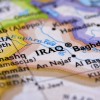
(Map image via Shutterstock)
Posted in Iraq Industry & Trade News, Politics, Security 4 Comments
Airstrikes Hit ISIL in Syria, Iraq
Posted on 24 July 2015 .
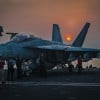
U.S. and coalition military forces have continued to attack Islamic State of Iraq and the Levant terrorists in Syria and Iraq, Combined Joint Task Force Operation Inherent Resolve officials reported today.
Officials reported details of the latest strikes, noting that assessments of results are based on initial reports.
Airstrikes in Syria
Fighter and remotely piloted aircraft conducted seven airstrikes in Syria:
- Near Hasakah, three airstrikes struck an ISIL large tactical unit and two ISIL small tactical units and destroyed two ISIL bunkers, 12 ISIL fighting positions and an ISIL vehicle.
- Near Kobani, four airstrikes struck an ISIL large tactical unit, an ISIL small tactical unit and destroyed an ISIL vehicle bomb and five ISIL fighting positions.
Airstrikes in Iraq
Attack, fighter-attack, bomber and remotely piloted aircraft conducted 11 airstrikes in Iraq, approved by the Iraqi Ministry of Defense:
- Near Habbaniyah, an airstrike struck an ISIL tactical unit and destroyed an ISIL command and control node.
- Near Haditha, an airstrike destroyed two ISIL vehicles.
- Near Makhmur, two airstrikes struck an ISIL tactical unit and an ISIL mortar position and destroyed an ISIL vehicle.
- Near Mosul, two airstrikes struck an ISIL tactical unit and an ISIL rocket position and destroyed an ISIL vehicle.
- Near Ramadi, two airstrikes struck an ISIL large tactical unit and an ISIL small tactical unit and destroyed seven ISIL fighting positions, two ISIL heavy weapons and an ISIL mortar position.
- Near Sinjar, an airstrike struck an ISIL tactical unit and destroyed an ISIL heavy weapon.
- Near Tal Afar, two airstrikes destroyed an ISIL excavator and five ISIL bunkers.
Part of Operation Inherent Resolve
The strikes were conducted as part of Operation Inherent Resolve, the operation to eliminate the ISIL terrorist group and the threat they pose to Iraq, Syria, the region, and the wider international community.
The destruction of ISIL targets in Syria and Iraq further limits the terrorist group's ability to project terror and conduct operations, officials said.
Coalition nations conducting airstrikes in Iraq include the United States, Australia, Canada, Denmark, France, Jordan, the Netherlands and the United Kingdom.
Coalition nations conducting airstrikes in Syria include the United States, Bahrain, Canada, Jordan, Saudi Arabia and the United Arab Emirates.
(Source: US Dept of Defense)
Posted in Security 3 Comments
Iraqis Weigh In On Iran Nuclear Deal
Posted on 24 July 2015 .
This article was originally published by Niqash. Any opinions expressed are those of the author, and do not necessarily reflect the views of Iraq Business News.
'The USA Sold Us to Iran': Iraqis Weigh In On Iran Nuclear Deal
Earlier this month news broke that a deal on Iran's nuclear programme had been reached, after months-long negotiations involving foreign ministers from seven countries – Iran, the US, the UK, Russia, China, France and Germany as well as the European Union's head of foreign policy.
The deal would curb Iran's nuclear programme and prevent the country from developing nuclear weapons quickly. In return long-standing international sanctions against Iran would eventually be lifted.
Around the world, opinions were divided as to whether the agreement was a triumph of diplomacy that would help achieve peace in the Middle East or whether it was, as one conservative US senator put it, “a historic defeat for the United States”.
Opinions were also divided in Iraq, which shares an almost 1,500 kilometre border and a chequered history of war, peace and political interference with Iran.
Just a few hours after the agreement was announced, Iraqis were heatedly discussing the topic on the streets, in cafes and on social media forums. The opinions expressed mostly seem to be indicative of the ethnic and sectarian fault lines already running through Iraqi society.
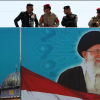
Those favouring the deal tended to be Shiite Muslims and they suggested that a better relationship between Iran, a Shiite Muslim theocracy, and the US would mean more stability in Iraq in general. The two nations – arguably Iraq's closest foreign allies – often jostle for power inside Iraq, using Shiite Muslim (Iran) or Sunni Muslim (the US) proxies. If they are on better terms, so the argument goes, maybe Iraq's sects will be on better terms and all forces could come together to combat the extremist group known as the Islamic State, which is currently causing Iraq's debilitating security crisis.
“It's a good deal,” argues Haider Kadhim, a shop owner in the upmarket Karrada area in central Baghdad. “I went to Tehran three months ago and I saw what suffering the economic sanctions have caused. It made me remember the problems that sanctions on Iraq caused here – poverty, disease, lack of services.
The fact that sanctions on Iran are lifted will be good for Iraq. They are our neighbours and we are close to them. If they're good, then we're good. And it will certainly increase economic cooperation and trade with them.”
However those opposed to the deal - most often Sunni Muslims - are arguing that the agreement gives Iran the right to interfere in Iraq without any US opposition. Washington has bought Iran's nuclear weapons, they complain, and in return they have sold Iraq to Iran.
“The nuclear deal is against Iraq's interests; Iran and the US have allied to destroy this country,” says Safaa Abdel-Meguid, an employee with the Ministry of Electricity who lives in the mostly Sunni neighbourhood of Saidiya in southern Baghdad. “Ali Khamenei has already acknowledged that his country won't stop supporting Iraq, even after the deal – which basically means his country won't stop interfering in Iraq.”
Insults and accusations also flew, with anyone opposed to the agreement often accused of being a secret agent for Saudi Arabia and the Gulf states – these countries have already expressed concern about the agreement, believing that if Shiite-majority Iran has more power it will be to the detriment of their Sunni-Muslim-majority nations.
The same kinds of arguments and discussions played out everywhere in Iraq – from family dining tables to coffee shops to Facebook. The Iran agreement also brought back unpleasant memories for many Iraqis – of the nuclear programme that was initiated by former Iraqi ruler, Saddam Hussein, and the trouble it caused.
“This kind of controversy among Iraqis reflects the social divisions we already have” Majid Kathem, a professor of sociology and psychology who lectures at the University of Baghdad and the University of Mustansiriyah, told NIQASH. “It is the result of the sectarian problems between Sunnis and Shiites that have plagued this country for years. Which is why every time there is a contentious topic like this, Iraqis come down on one or the other side; they cannot agree.”
The nuclear deal also gave critics of the Iraqi government another opportunity to harangue local politicians and their lack of achievement. Iraq's Foreign Minister Ibrahim al-Jaafari, a Shiite politician, was the target of much criticism. His dismal performance on open files – such as the fight over water with neighbouring Turkey and the dispute over Kuwait's Mubarak al-Kabir Port - was compared with that of Iranian Foreign Minister Mohammad Javad Zarif, who was seen as triumphant after many long and difficult negotiations. There were a lot of jokes made about al-Jafaari too. Iraqis often laugh about the way al-Jafaari speaks Arabic. He uses a haughty style of Arabic that seems old fashioned to many. Jokes about him compared his way of speaking to Zarif's, whom Iraqis see as more plain spoken and direct.
As for Iraq's senior politicians themselves, their opinions were divided in the same way as their voters were. At a senior political level most of Iraq's leaders welcomed the agreement in various statements to the press – even if some were a little lukewarm with that welcome.
“The agreement will help in strengthening security and stability in the Middle East,” Iraqi President, Kurdish politician Fuad Masum, told local media.
“We hope that the agreement will spare the region the scourge and disaster of war and conflict,” Iraq's Prime Minister, Shiite Muslim politician Haider al-Abadi, added in a statement.
And, senior Sunni Muslim politician, Salim al-Jibouri, also the Speaker of Iraq's Parliament, noted: “We hope that this agreement achieves greater economic and trade cooperation and gives the people their chance to live in peace and security”.
Other politicians made comments that reflected their own political allegiances.
“Unfortunately the agreement did not discuss the issue of respect for other nations' sovereignty and Iranian interventions in the region,” Ayad Allawi, one of Iraq's three Vice Presidents said; although Allawi is a Shiite Muslim too, he leans towards the secular lobby and he is well known for his antipathy toward Iran. “However,” Allawi conceded, “the agreement remains significant.”
Meanwhile Nouri al-Maliki, former Prime Minister of Iraq and now another of the country's Vice Presidents, described the agreement as a “victory for those who love peace in this region and in the world”. By the end of his regime last year, al-Maliki was known for his close links with Iran. Unsurprisingly the same kinds of sentiment were expressed by most of the Shiite Muslim-majority political parties.
While influential cleric Muqtada al-Sadr, who leads the millions-strong Sadrist movement and who has been critical about Iran's policy toward Iraq in the recent past, kept out of it, one of his counterparts, cleric Ammar al-Hakim, who heads a major Shiite Muslim political party, the Islamic Supreme Council of Iraq, said in an official statement: “We congratulate the noble Iranian people, its wise leaders and brave negotiators... We believe the nuclear deal is key to solving many of the thorny problems in the region”.
As yet though, the true impact of the agreement on Iraq cannot be seen. For instance, the impact of the agreement on oil prices. These dropped after the agreement was signed, a negative for Iraq which needs prices to rise if it wants to overcome its current federal budget crisis.
There may yet be more aspects of the agreement that have an affect on Iraq but these terms have not yet been revealed, says Ahmad al-Allusi, a local political analyst based in Baghdad. “The talks focused on more than just the nuclear issue. And we will doubtless learn more in the coming days – we will learn whether the two sides have agreed to resolve other conflicts in a conciliatory manner, through negotiation, or whether they will simply maintain the status quo.”
Posted in Security 3 Comments