

Iraq Pipeline Delays Threaten Shell's Majnoon Output
Posted on 30 August 2012 .
By John Lee.
Delays in the construction of an Iraqi pipeline threaten to stall production at Shell's Majnoon oilfield for at least three months, forcing the field to miss a 2012 target of 175,000 barrels per day, reports Reuters.
In February, production at Majnoon was 54,000 bpd, Shell says, but averaged only 18,600 bpd for the first quarter of this year, far below the planned year-end target.
Production at the field was around 45,000 bpd when the company took over in 2010; Shell has since spent around $1 billion, and planned to invest another $1 billion in 2012.
It has asked Iraq for a waiver to start recovering costs if Majnoon does not meet its first commercial production target by year-end - a contract requirement before costs can be retrieved, according to documents seen by Reuters. "This principle will reduce significant investment risk," the document said.
The field has been shut for maintenance since 26th June, but lagging development could put off completion of the new pipeline until the first quarter of next year, according to a Shell document filed with the oil ministry.
"A key concern ... remains the uncertain delivery of the First Commercial Production (FCP) pipeline," said the official letter sent by Shell's managing director of Majnoon.
In June of last year, along with its partner Petronas, Shell awarded Dubai-based Dodsal Group a $106m contract to lay a 79-km (50-mile) pipeline from the Majnoon field to a crude storage depot near Zubair, but the oil ministry rejected the deal on costs and handed the project to an oil ministry affiliate; officials say the pipeline is not now expected to be finished until March 2013.
China Petroleum Pipeline (CPP) was contracted recently to build part of the line.
Drilling at Majnoon is also said to be moving at a slow pace, with only three wells completed since a contract for 15 wells was awarded in August 2010.
(Source: Reuters)
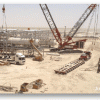
(Picture: Majnoon, June 2012)
Posted in Construction & Engineering In Iraq, Iraq Oil & Gas News Comments Off on Iraq Pipeline Delays Threaten Shell's Majnoon Output
IMF Approves $471 Million Payment to Iraq
Posted on 20 March 2011 .
The Executive Board of the International Monetary Fund (IMF) completed the second review of Iraq’s economic performance under a program supported by a Stand-By Arrangement (SBA) on Friday. Completion of the second review makes an additional SDR 297.1 million (about US$471.1 million) available for disbursement, bringing the total resources currently purchased by Iraq under the SBA to SDR 1.069 billion (about US$1.7 billion).
The Executive Board also approved a waiver of applicability of the end-December 2010 performance criteria on the central government fiscal deficit and on the central government spending bill, for which data is not yet available. The Executive Board furthermore approved an extension of the SBA by five months to July 2012, and a rephasing of access under the SBA to match disbursements with Iraq’s balance of payments financing needs.
The SBA was approved on February 24, 2010 (see Press Release No. 10/60) for SDR 2.38 billion (about US$3.77 billion). The SBA supported program aims to ensure macroeconomic stability and provide a framework for advancing structural reforms in Iraq.
Following the Executive Board’s discussion on Iraq, Mr. Naoyuki Shinohara, Deputy Managing Director and Acting Chair, stated:
“Iraq has maintained macroeconomic stability under difficult external and internal circumstances, while making efforts to rebuild key economic institutions. Inflation has remained subdued, and the exchange rate has remained stable. The 2011 budget aims to accelerate investment in public services and infrastructure, and accommodates higher social safety net provisions to support those in need. Iraq’s rehabilitation needs remain large and the higher investment spending is essential to help create a vibrant private sector that provides employment opportunities for Iraq’s large labor force, thus helping to reduce poverty. At the same time, a strong emphasis on ensuring the quality of public spending will be important.
“Decisive efforts to rebuild key economic institutions and improve governance will be critical for private sector development. The formation of the new government and the expected increase in oil production in the coming years offer an opportunity to do so while maintaining macroeconomic stability. Further strengthening public financial management encompasses the introduction of an automated financial management and information system and improvements in cash management which would eventually culminate in the establishment of a single treasury account. Establishing a framework for oil revenues to succeed the Development Fund for Iraq should help ensure continued accountability and transparency. In the financial sector, moving ahead with the financial and operational restructuring of the two largest state-owned banks and enhancing the central bank’s supervision capacity will contribute to creating a financial sector that can provide essential services to the private sector.
“Iraq continues to make progress to conclude debt agreements and resolve outstanding claims under terms comparable to the 2004 Paris Club Agreement.”
(Source: IMF)
Posted in Iraq Banking & Finance News, Iraq Industry & Trade News 1 Comment
KRG and Iran to Agree Visa Waiver Program?
Posted on 27 January 2011 .
According to a report from Press TV, Iran and Iraq's Kurdistan may agree a visa waiver scheme to facilitate cross-border travels as part of a program of increased cooperation between the two sides.
To facilitate cross-border travel for both Iranians and the citizens of the Kurdistan region in northern Iraq, and to encourage trade and cultural interchange for both sides, Iran and the Kurdistan Regional Government are considering a scheme to eliminate any visa requirements for travelling purposes, Press TV's correspondent in Erbil reports.
Iraqi Kurdistan's Prime Minister Barham Salih visited Iran recently in an effort to further enhance bilateral relations.
On 10th Jan, Salih met with Iranian Parliament Speaker, Ali Larijani, and other senior Iranian officials for talks aimed at boosting political and economic ties between the two sides.
According to the report from PressTV, during the meeting, he also expressed gratitude for Tehran's efforts in establishing peace and security in Iraq.
(Source: PressTV)
Posted in Iraq Industry & Trade News, Politics Comments Off on KRG and Iran to Agree Visa Waiver Program?

Full Details of UN Statement on Iraq
Posted on 15 December 2010 .
Today's session of United Nations Security Council, which led to the crucially important easing of restriction on Iraq, was chaired by the US Vice President, Joe Biden (pictured). The following is the text of the statement issued from his office, including full details of the decisions made by the Council.
Today marks an important milestone in the restoration of Iraq’s normalized ties to the international community. The UN Security Council, in a special session chaired by Vice President Biden, took significant steps to return Iraq to the legal and international standing it held prior to the 1990 invasion of Kuwait with the passage of three resolutions. Additionally, the Security Council issued a Presidential statement reaffirming the Security Council’s commitment to Iraq and support for UNAMI, welcoming Iraqi progress and reintegration into the region, and encouraging Iraq and all regional states to deepen and broaden their relationships.
With today’s action by the Security Council the United States and the international community are keeping their commitments to the Government and the people of Iraq. The resolutions adopted today by the Security Council will lift several longstanding Chapter VII restrictions on Iraqi trade and activity.
The three Security Council resolutions passed today are Resolution 1956, which terminates the UN supervised arrangements for the Development Fund for Iraq on June 30, 2011; Resolution 1957 which ends restrictions related to civilian nuclear cooperation placed on Iraq after the first Gulf War; and Resolution 1958, which ends the residual activities of the Oil for Food program.
Despite hardships, Iraq has made tremendous progress over the past few years and today is a far safer, more secure, and economically stable country. The United States urges Iraq’s neighbors and the international community to work closely with Iraq to resolve remaining outstanding Chapter VII issues, particularly outstanding issues between Iraq and Kuwait.
Posted in Iraq Industry & Trade News, Security 2 Comments