



Iran, Sanctions and Iraq: The Bigger Picture
Posted on 20 August 2018 .
By Ahmed Tabaqchali. Originally published by Iraq in Context; re-published by Iraq Business News with permission. Any opinions expressed are those of the author, and do not necessarily reflect the views of Iraq Business News.
Current analysis of renewed Iran sanctions often overlooks the wider context of Iraq's regional trading relations.
The extent of Iraq’s compliance with US sanctions on Iran has raised concerns regarding the loss of Iranian exports to its economy. However, Iraq’s trade with Iran, when looked at in the context of the wider region, shows these concerns in a different light.
It is arguably smaller than is widely perceived, especially given the long border between the two nations and the supposedly strong influence of Iran in Iraq, something which is contested.
There are many variables, following the imposition of sanctions, that will influence Iraq’s economy and trading relationships, making it difficult to examine any change in Iraq-Iran trade in isolation. Some of these variables are China’s response to these sanctions – its continued or increased purchase of Iranian oil or to impose tariffs on US crude- in light of its escalating trade war with the US.
Add to this the effects on oil demand from a change in world growth prospects as a result of an intensifying US-China trade war. Balancing or complicating events is the success of Saudi Arabia in sustaining increased oil production, or Iraq’s ability to increase its oil production. Finally, the state of the Turkish economy and the declining value of the Turkish Lira (TL[i]), in light of recent events, will play essential roles given Turkey’s substantial trading relationship with Iraq.
Much of the recent coverage of Iran’s trading relationship with Iraq refers to the significant annual exports of USD 12bn- which while significant, should be taken in the framework of Iraq’s overall imports and the trend of these imports from 2003-2017 (chart below). Additionally, Iran’s trade like, all other neighbouring nations’ trade with Iraq, is one-sided to its benefit. Iranian exports to Iraq are made up of goods and services, with the goods element at about USD 6bn for the 12 months ending March 2018[ii], which corresponds to about 15% of Iraq’s imports for 2017.
Iraq’s imports exploded six-fold from 2003 until 2013 to satisfy the population’s demand for goods after the isolation of the years under the sanctions. All of Iraq’s neighbours: Turkey, Iran and Jordan saw massive growth of exports to Iraq during this period for all types of goods, from fresh foods to finished products, given the near destruction of Iraq’ capacity to produce during the 14 years of sanctions and the ensuing civil war.
Iraqi Imports 2003-2017

(Source: https://tradingeconomics.com/iraq/imports)
Iraq imports peaked in 2013, after which the twin shocks of the ISIS war and the collapse in oil prices crushed the economy and with-it Iraq’s demand for goods. The effects of the ensuing ISIS conflict on overland trade routes affected the relative performance in the following years of each country’s exports.
The transit routes and volumes for 2014 (before the full effects of conflict and economic contraction) show the relative importance for each route, not only for the trade with a particular country, but that country’s additional role as a source of re-exports (chart below). In particular, Turaybill for Jordanian exports and re-exports coming from Aqaba, Kuwait’s Safwan, and Basra as a route for world exports as well as for UAE exports and re-exports from Jebil Ali. By 2014 exports from Syria ceased with the exception of the Al Waleed crossing, until it too ended when it fell under ISIS control in May 2015[iii]. Trade with Saudi Arabia ended with the invasion of Kuwait in 1990.
Iraq: Trade transit routes & volumes 2014

(Source: Chart taken from a World Bank Report[iv])
Iranian exports peaked in absolute terms in 2013, declining by about 6% by 2017, while Iraq’s imports declined by 36%, with the result that Iran increased its market share from 11% in 2013 to 15% in 2017. However, this has more to do with the trade routes than any special relationship that Iraq might have with Iran or Iran’s competitiveness. The ISIS occupation closed Iraq’s trade route with Jordan, Syria and degraded the value of the routes with Turkey given ISIS’s occupation of Mosul and surrounding areas.
The growth in Iran’s exports from 2004 is shown in the chart below (data are based on the Iranian calendar up to the year 1395, ending in March 2017). Latest reports indicate that the figure was almost unchanged for the year ending in March 2018. Yet, Iraq’s overall imports recovered by 13% in 2017 vs 2016, and its imports from Jordan and Turkey increased by 8% and 19% respectively. All of which put the relative value of trade with Iran in context.
Given Iran’s natural geographical advantages from the long border and its supposed hegemony over Iraq, it can be argued that it should have accounted for much more of Iraq’s imports or at least cemented its conflict enhanced position when Iraq’s imports recovered. Instead it lost market share from 2016 to 2017, implying that it would continue to lose market share without the imposition of sanctions, and as such the sanctions would only accelerate this trend.
Iranian exports to Iraq 2004 – 2016

(Source: http://www.iraqbase.com/trade_with_iraq/iraq_tradition.aspx#c_31)
While Turkey’s exports of around USD 12bn in 2013 were twice Iran’s levels, most of these exports were destined for the Kurdistan Region of Iraq (KRI) in which Turkish goods and companies played a significant role in the economic boom the region witnessed until 2014. The KRI, in 2017, accounted for 67% of all Turkey’s exports to Iraq up from 50% in 2007[v].
Turkish exports to Iraq suffered significantly due to the triple shock to the KRI’s economy – the loss of federal budget transfers, the ISIS conflict and the oil price collapse – as well as from the contraction of the Iraqi economy. Turkish exports declined 36% in 2013-2016 vs a decline of 43% in Iraq’s total imports, increasing its market share from 20% to 22%. The effective gain in market share is more significant than that, as most of these exports were for Iraq overall as opposed to being concentrated in the KRI. Turkish exports’ 18% recovery in 2017 and total imports’ 13% increase vs flat Iranian exports emphasises the competitiveness of Turkey’s exports whether due to quality or currency competitiveness vs the Iranian Rial.
Finally, the value of Turkish exports actually increased by about 25% in TL terms[vi], as the TL exchange rate against the USD decreased from TL 2.15 by end of 2013 to TL 3.79 by the end of 2017. All of which underlines the importance to Turkey of its exports to Iraq, especially in light of the 40% decline in the TL vs the USD so far in 2018. The significance of these exports might very well increase Iraq’s bargaining power with Turkey over many issues, particularly the water flow of the Tigris and Euphrates. Iraq’s relative bargaining power is further enhanced by the fees -converted to TL- collected for the oil that is shipped through Turkey to its port of Cihan, especially if Iraq resumes the Kirkuk oil exports of 250,000-300,000 barrels per day (bbl/d) that were cut after it reasserted feral authority over these fields in October 2017[vii].
Turkish exports to Iraq 2004 – 2017

(Source: https://tradingeconomics.com/turkey/exports/iraq)
Jordan’s exports and re-exports to Iraq suffered a great deal due to the closure of the land routes as a result of the ISIS occupation and subsequent conflict. The chart below shows a decline of 64% from 2013 to 2016 in Jordan’s exports, and probably a similar decline for re-exports. The mild recovery of 8% by 2017 from 2016’s low levels should be seen in the context that the trade route only reopened in October 2017, which argues well for meaningful growth in 2018[viii]. While Jordan’s economy is too small to fully replace Iran’s exports, its fresh foods[ix] would fill some of the gap and its much larger re-exports through Aqaba will make a difference.
Jordan’s exports to Iraq 2003-2016

(Source: https://tradingeconomics.com/jordan/exports/iraq)
Kuwait’s exports to Iraq recovered meaningfully in 2017 after a decline in 2013-2016, yet overall volumes are small. Most of these are re-exports through Safwan as Kuwait’s ports complement Basra.
Kuwait’s exports to Iraq 2003-2017

(Source: https://tradingeconomics.com/kuwait/exports/iraq)
The biggest potential beneficiaries from the sanctions would be Saudi Arabia and the UAE. Developing their relationship and influence in Iraq through trade and investments is magnified without competition from Iranian goods. Their economies would benefit from both the opportunity to replace Iranian products and from a sizeable recovering market. Even though 2016[x] was a low point for UAE’s total exports to Iraq, exports accounted for 53% of the mix making Iraq the seventh largest export market, while re-exports accounted for 47% of the mix, with Iraq as the fourth largest re-export market. All of which highlights Iraq’s importance to both the UAE’s economy and its vital re-export business.
UAE’s exports to Iraq 2003-2016

(Source: https://tradingeconomics.com/united-arab-emirates/exports/iraq)
Trading with Saudi Arabia ended with the occupation of Kuwait, and while it saw a recovery since 2003, it remained tiny compared to the sizes of the two economies. The re-opening of the Arar border crossing in late 2017, coupled with the re-setting of the relationship, will change this significantly with Saudi expectations that trading values would approach those of Iran in ten years’ time[xi].
Saudi Arabia’s exports to Iraq 2003-2016

(Source: https://tradingeconomics.com/saudi-arabia/exports/iraq)
However, there is more to Iraq’s trade with Iran other than its exports of goods, as the relationship includes the export of electricity and gas, as well religious tourism in the form of at least three million religious tourists a year, especially during the annual Arbaeen pilgrimage.
Iran’s recent exports of electricity have been about 1.0 gigawatts[xii] (GW) increasing available domestic supply to 18.91 GW[xiii] by end of 2016. However, the supply has been frequently interrupted since 2015 as Iraq has failed to make the required contractual payments to Iran[xiv]. The supply cut in July 2018 being the latest case - which was a combination of over-due bills of about USD 1bn[xv] and Iran’s increased domestic needs for electricity. The argument over the importance of this supply has been made moot as Iran would not be able to resume exports in the near future, due to its own domestic needs[xvi]. Short-term solutions to replace this lost supply from Kuwait and Saudi Arabia have the potential to become long-term solutions that will further cement the relationship.
For instance, Kuwait supplying fuel for some of the inactive power stations would go some way for Iraq to increase the utilization of its available but unutilized generating capacity due to lack of fuel. This relationship could be developed to one of mutual benefits with Kuwait supplying electricity in return for Iraq supplying gas[xvii], which while mutually beneficial would help the rebuilding of trust. Similarly, discussions with Saudi Arabia for the supply of electricity, possibly under much more advantageous commercial terms[xviii] than those with Iran, would further develop this relationship.
Much more troublesome and very difficult to replace would be the supply of Iranian gas to power stations in Baghdad and Basra - these were based on deals signed in 2013 to supply 9.1 Billion Cubic Meter (BCM) a year to each city. Exports to Baghdad started in June 2017 and totalled 1.2 BCM by November 2017[xix], while exports to Basra were supposed to start after May 2018[xx]. Both sides have been silent on this recently, as media reports have only covered Iraq’s implementation of the sanctions in the form of banking transactions and closing access to Iranian goods. While details could be delayed until the November implementation of the oil sanctions or Iraq would seek waivers. Either way, there are no easy or short-term solutions for the replacement of this vital supply apart from increased focus and spending on capturing flared gas. However, this gas has been only available recently, and in relatively small quantities, while its eventual replacement, i.e. gas recovered from flaring, is substantially cheaper as the Iraqi government pays the Basra Gas Company (BGC) about USD 2.50 per MMBtu vs for Iranian USD 6.6 - 7.2 per MMBtu[xxi] (data as of early 2018).
Religious tourism is an important sector, employing about 160,000 people directly, extending to 447,000 beneficiaries (2014 data[xxii]). While, Iranian pilgrims and visitors are an essential component in religious tourism, yet a significant percentage of pilgrims or visitors are Iraqis. Moreover, the importance to Iraq’s economy from the spending of Iran’s pilgrims is somewhat misunderstood or overstated. For instance, during the Arbaeen, Iraqis provide hospitality through offering accommodation in their homes and providing free food as part of their religious duties towards the pilgrims[xxiii]. As such, the extra consumer spending during the most prominent religious event comes from Iraqis. The spending by regular Iranian religious visitors, throughout the year, will not be so easily replaced- although it is mitigated by the fact that almost all those visitors use Iranian airlines and employ Iranian tour operators.
Finally, the effects, of the loss of USD access for Iran, on Iraq would take a long time to assess. In 2012, the governor of the Central Bank of Iraq[xxiv] suggested that there were increased demands of 40-50% for the USD following the imposition of sanctions on Syria and Iran, which led to an increase in the market price of the USD vs the Iraqi Dinar (IQD) as can be seen from the chart below.
Iraqi Dinar (IQD) exchange rate versus the USD Jan 2011 – August 2018

(Source: Central Bank of Iraq, Iraqi currency exchange houses, Asia Frontier Capital)
(Note: The sharp pikes in 2012, 2013 & 2015 were due to CBI policies that restricted the sale of USD, but abandoned after causing a rise in market rates)
The convergence of the market price of the USD and the official exchange rate vs the IQD came to an end in 2011 and diverged in 2012 due to the increased demand for the USD. Apart from the spikes due to policies to limit the official supply of the USD, the normal range was 2-4% premium of the market price over the official rate. This increased up to a 10% premium during the worst of the crisis as oil revenues were substantially below expenditures and exports were less than imports. This divergence came to an end with the recovery in oil prices and the declining cost of war until it stabilized at around 1.5% premium to the official exchange rate.
It’s difficult to make the same argument today about the increased demand, or at least a sharp increase, from the current round of sanctions given that the re-integration of Iran with the world economy following the signing of the JCPOA (The Joint Comprehensive Plan of Action) still suffered from the reluctance[xxv] of most banks to deal with Iran. In particular, Iran’s access to the USD continued to be severely limited. All of which might explain that the signing of the JCPOA had not affected the market price of the USD vs the IQD.
However, it is worth noting that after a stabilization over the last few months, the premium of the market price over the official rate increased in early August from about 1.5% to over 2%. This might be related to the sanctions effect or to the signs of recovery of the local economy from increased consumer spending and the resultant increase in demand for imports. A full recovery in consumer demand for imported products would likely take the premium to a range of 2-4%.
It can be argued, that while Iraq genuinely disapproves of the Iranian sanctions given its own bitter 14 years’ experience with them, yet it stands to benefit from their imposition as they will fast-track a number of positive trends that are already taking place.
Iraq’s new-found ability to self-fund its reconstruction, estimated at about USD 18.8bn by end of 2018[xxvi], will accelerate its economic recovery through a liquidity injection of 14.5% into the non-oil economy once reconstruction projects are underway. In the process making the country extremely attractive for its neighbours’ economies, both as a goods export destination and for re-construction businesses. The opportunity to replace Iranian goods increases the benefit for these exporters. Ultimately, this will cement the USD 30bn pledged for the reconstruction of Iraq at the Kuwait Conference[xxvii] from promises into actual spending that will benefit the economies of the providers as much as Iraq’s economy. The deeper implication is a change in their relationship from that of benefactors into partners which will ensure its sustainability- in the process speeding Iraq’s re-integration in the region and ensure a balanced relationship with its neighbours.
The re-opening of the Iraq-Saudi Arabia border crossing and the Iraq-Jordan border crossings will accelerate the rehabilitation of Anbar (arguably disenfranchised after 2003 and a seat of resentment for the post-2003 political order), and the southern governorates (neglected by both the current and the prior regimes). The resumption of trade-links with their associated economic activities would provide a huge boost to the local economies, which while contributing meaningfully to the healing process, will build upon and magnify the economic revival until it becomes self-sustaining with the boost from reconstruction.
Meanwhile, the relationship with Iran might mature if the Iranians look beyond their frustration at Iraq’s compliance with the sanctions and listen closely the anti-government sentiment within Iran following the December 2017 demonstrations. What is vital here, and something that would increase stability within Iraq, is a complete rethinking the relationship to that of a state to state basis from the current relationship involving sub-state actors. This would subsequently benefit Iran by making another Iraqi security crisis less likely, and ensuring the relationship is based on national sentiment, rather than non state actors.
Disclaimer
Ahmed Tabaqchali’s comments, opinions and analyses are personal views and are intended to be for informational purposes and general interest only and should not be construed as individual investment advice or a recommendation or solicitation to buy, sell or hold any fund or security or to adopt any investment strategy. It does not constitute legal or tax or investment advice. The information provided in this material is compiled from sources that are believed to be reliable, but no guarantee is made of its correctness, is rendered as at publication date and may change without notice and it is not intended as a complete analysis of every material fact regarding Iraq, the region, market or investment.
[i] The code for Turkish Lira is TYR, but TL is used widely. https://en.wikipedia.org/wiki/Turkish_lira
[ii] The 12 months ending in March 2018 correspond to the Iranian year 1396. Iranian data are provided using this calendar.
https://financialtribune.com/articles/economy-business-and-markets/81287/iran-third-biggest-trading-partner-of-iraq-with-16-share
[iii] Al Waleed crossing was freed by Iraqi forces in June 2017. https://www.reuters.com/article/us-mideast-crisis-iraq-syria/iraqi-forces-remove-islamic-state-fighters-from-vicinity-of-u-s-base-in-syria-idUSKBN19807Y
[iv] http://documents.worldbank.org/curated/en/672671468196766598/pdf/106132-v2-main-report-P159972-PUBLIC-KRG-Economic-Reform-Roadmap-post-Decision-Review-05-30-16.pdf
[v] https://www.washingtoninstitute.org/policy-analysis/view/turkey-and-the-krg-signs-of-booming-economic-ties-infographic
[vi] Arrived at by diving the value of exports by the year end value of the TL.
[vii] Iraq’s bargaining power is further enhanced if it links this with plans to double Kirkuk’s output over the next few yeaes
The Kurdistan Regional Government (KRG) exported an average of 550,000 bbl/d in 2017 until October 2017. After which they ranged between about 240,000-370,000 bb/d for an average of 311,000.
http://auis.edu.krd/iris/sites/default/files/Statehood in KRI through an Economic Lens_ FINAL.pdf pages 6 & 7, page 7 footnote 15.
The #JODIData report is out for the month of May. Let's begin with #SaudiArabia.
Once again, we're not on the same page when it comes to exports. They posted a FAR LOWER figure than what we tracked. Off by half a million barrels a day, or >15 million barrels for the month. #OOTT pic.twitter.com/5wtBw3d3Rm
— TankerTrackers.com, Inc. (@TankerTrackers) July 18, 2018
[viii] http://www.jordantimes.com/news/local/industrial-exports-iraq-resume-after-border-reopening
[ix] Although most of Jordan’s exports are currently value-add products. In 2016, Pharmaceutical Products accounted for 16% of total exports, Electrical & Electronic Equipment for 13%; Fertilizers for 12%; plastics for 11%. While Vegetable, Fruits & Nut food preparation accounted for only 2.3%, and Edible Vegetables, certain roots and Tubers accounted for 2.2% for a total under 5%.
[x] http://iraqieconomists.net/en/2017/09/19/uae-iraq-trade-touches-7-billion-2016/
[xi] https://www.thenational.ae/world/mena/saudi-iraqi-trade-to-reach-23-billion-saudi-riyals-within-10-years-1.706487
[xii] https://en.mehrnews.com/news/122562/Iran-to-resume-electricity-exports-to-Iraq-within-weeks
[xiii] Table 3, page 79 ““A New Hope: Iraq Oil’s Way Forward” http://www.bayancenter.org/en/2018/02/1435/
Figures from the Ministry of Electricity show that available capacity, was 16.0 GW by end of July 2018, which does not include the lost Iranian supply. https://moelc.gov.iq/index.php?name=News&file=article&sid=4212
[xiv] This article explains the nature of the relationship and the history of the under-payments https://www.washingtoninstitute.org/policy-analysis/view/the-irgc-may-try-to-divert-iraqs-electricity-payments
[xv] https://theiranproject.com/blog/2018/07/08/iran-cuts-electricity-supplies-to-iraq-over-unpaid-bills/
[xvi] https://theiranproject.com/blog/2018/07/17/govt-spox-iran-not-to-resume-electricity-supplies-to-iraq-in-near-future/
[xvii] https://www.middleeastmonitor.com/20170202-kuwait-considers-export-of-electricity-to-iraq/
[xviii] https://www.bloomberg.com/news/articles/2018-07-29/iraq-says-saudis-to-sell-it-power-at-a-fraction-of-iran-s-price
[xix] Page 82 “A New Hope: Iraq Oil’s Way Forward” http://www.bayancenter.org/en/2018/02/1435/
[xx] http://www.irna.ir/en/News/82906994
[xxi] Page 82 “A New Hope: Iraq Oil’s Way Forward” http://www.bayancenter.org/en/2018/02/1435/
[xxii] http://documents.worldbank.org/curated/en/255111529495871846/pdf/Jobs-in-Iraq-a-primer-on-job-creation-in-the-short-term.pdf
[xxiii] http://www.bbc.com/travel/gallery/20171220-the-iraq-city-that-opens-its-doors
[xxiv] https://www.alarabiya.net/articles/2012/04/12/207233.html
[xxv] https://www.reuters.com/article/us-iran-banks-kerry-idUSKCN0Y30OJ
[xxvi] A recent report by the author covers this in further detail.https://www.iraq-businessnews.com/2018/06/15/forget-the-donations-stupid-new-dynamics-in-funding-reconstruction/
[xxvii] https://uk.reuters.com/article/mideast-crisis-iraq-reconstruction/factbox-pledges-made-for-iraqs-reconstruction-in-kuwait-idUKL8N1Q55RY
Posted in Ahmed Tabaqchali, Investment Comments Off on Iran, Sanctions and Iraq: The Bigger Picture

"Unprecedented Upsurge" in Iraqis seeking Second Citizenship
Posted on 29 November 2017 .
By John Lee.
The escalating tensions between Baghdad and Erbil have triggered an unprecedented upsurge in applications from wealthy Iraqi nationals for second citizenship programs.
Data collected by Savory & Partners, one of the largest companies in the Middle East that provides citizenship-by-investment programs, shows that compared to the same quarter last year, interest has increased by 300 percent, while applications processed are more than 42 percent higher than last year.
Company founder and CEO Jeremy Savory (pictured) told Iraq Business News:
“The immediate days following the Kurdistan referendum saw a remarkable spike in the number of applicants from Iraq, not only from Kurdish Iraqis, but from all parts of Iraq.
"In the past, the Iraqi passport was very strong ... but over recent years the number of countries which have visa-free waivers has dropped considerably; hence, the need for second passport that enables people to travel to more countries visa free has seen a great spike.
“We have done Iraqi citizenship applications for Iraqi nationals for all the five Caribbean jurisdictions, all of which have been approved by the government. We have done European citizenship applications for Malta and Cyprus for Iraqi nationals, too.”
Iraqis constitute the company’s third largest client group after Syrians and Lebanese, with St. Kitts, Grenada and Dominica in the three most popular programs with an equal demand for all three programs. The company had only one Iraqi rejection in the last six years out of total of close to 800 passports, a rejection rate of less than 1 percent.
Posted in Iraq Industry & Trade News, Iraq Oil & Gas News, Politics, Security 7 Comments
KRG to pay $1bn to Pearl in "Full and Final Settlement"
Posted on 31 August 2017 .
The Kurdistan Regional Government (KRG) will immediately pay $1 billion to the Pearl Consortium, including Dana Gas, and its partners to settle a long-running legal dispute.
In a joint press release, the Kurdistan Regional Government and Pearl Consortium announced the "full and final settlement" between the two parties.
Below is the full press release:
Settlement Agreement between Kurdistan Regional Government of Iraq (the “KRG”) and (i) Dana Gas PJSC; (ii) Crescent Petroleum Company International Limited; and (iii) Pearl Petroleum Company Limited (“Pearl”); together (the “Consortium”)
The KRG and the Consortium, together (the “Parties”), signed a Heads of Agreement onc and Chemchemal fields on 4 April 2007 (the “HoA”). Subsequently a dispute arose between them concerning certain matters under the HoA, and they referred this disputeon 21 October 2013 to an arbitration under LCIA case reference number 132527 (the “Arbitration”) for decision by an arbitral tribunal (the “Tribunal”) in London.
The Parties have mutually agreed to fully and finally settle all their differences amicably by terminating the Arbitration and related court proceedings, and releasing all remaining claims between them, including the substantial damages asserted by the Consortium against the KRG; implementing a mechanism for settlement of $2,239 million awarded by the Tribunal to date ; and proceeding with immediate further development of the HoA’s world class resources for mutual benefit as well as the benefit of the people of the Kurdistan Region and all of Iraq.
The agreed settlement highlights are as follows:
- The KRG will immediately pay Pearl a sum of US$600 million.
- The KRG will also immediately pay Pearl a further US$400 million to be dedicated for investment exclusively for the aforesaid further development to substantially increase production.
- Pearl will increase gas production at Khor Mor by 500 MMscf/day, a 160% increase on the current level of production (the “Additional Gas”). The Additional Gas, together with significant additional amounts of condensate, is expected to begin production in approximately two years.
- The balance of sums awarded by the Tribunal ($1,239 million) is no longer a debt owed by the KRG and will be reclassified as outstanding cost recoverable by Pearl from future revenues generated from the HoA areas.
- The profit share allocated to Pearl from future revenues generated from the HoA areas are adjusted upwards to a level similar to the overall profit levels normally offered to IOCs under the KRG’s Production Sharing Contracts. This adjustment reflects the larger investment risks and costs involved in the development of natural gas resources compared to oil developments. After the recovery of costs and a return on investment by the Consortium, 78% of revenues generated from the HoA areas will be for the account of the KRG, and 22% for the account of Pearl.
- The Parties have clarified the Khor Mor block boundary coordinates and the KRG has awarded the Consortium investment opportunities in the adjacent blocks 19 and 20, and added these to the HoA areas, with commitments by the Consortium to make appraisal investments on these blocks, and developments if commercial oil and gas resources are found.
- The KRG will purchase 50% of the Additional Gas on agreed terms to boost the gas supply to power generation plants in the Kurdistan Region. The other 50% of the Additional Gas (250 mmscf/d) will be marketed and sold by Pearl to customers within Iraq or by export, or can be sold to the KRG as well to further boost power generation within Iraq.
- Pearl will also expand its local training and employment programs towards achieving maximum localization and content, as well as supporting local communities through its active Corporate Social Responsibility (CSR) programmes.
- The Parties have exchanged mutual releases, waivers, and discharges in relation to all claims in relation to the Arbitration and related court proceedings.
- The Parties have also amended and clarified the HoA language and terms, including extension of the term of the contract until 2049.
The Parties are very pleased with their settlement and and look forward to working together to maximise the full potential of the HoA areas, for their mutual benefit as well as that of the people of the Kurdistan Region and all of Iraq.
Under the settlement, the people of the Kurdistan Region and Iraq will enjoy additional revenues and improved electricity supply. The Parties believe that this settlement agreement confirms to international investors that the Kurdistan Region of Iraq offers an attractive and secure environment for investment.
H.E. Dr. Ashti Hawrami, Minister of Natural Resources of the KRG, said:
"The companies’ investment and production to date has already delivered substantial benefits for the Kurdistan Region through enabling cost-effective power generation. We are delighted by the outcome of this settlement which opens a new chapter in the relationship between the parties and will take the development of the important natural gas sector to new heights."
Mr. Majid Jafar, CEO of Crescent Petroleum and Managing Director of the Board of Dana Gas PJSC, added:
"We have always expressed our commitment to amicable resolution of matters to enable proper development of the Khor Mor and Chemchemal fields. We are pleased with this definitive agreement which follows constructive dialogue with the KRG and promises to generate significant value for all concerned. The settlement of all debts and restoration of full cooperation gives a positive outlook for further investment and full realization of the enormous resource potential of the HoA areas."
(Sources: KRG, Dana Gas)
Posted in Iraq Oil & Gas News Comments Off on KRG to pay $1bn to Pearl in "Full and Final Settlement"
IMF Approves Payment of $825m to Iraq
Posted on 02 August 2017 .
The Executive Board of the International Monetary Fund (IMF) has completed the second review of Iraq’s three-year Stand-By Arrangement (SBA), which is designed to support Iraq’s economic reform program and restore fiscal balance over the medium term.
The completion of the second review allows the authorities to draw the equivalent of SDR 584.2 million (about US$ 824.8 million), bringing total disbursements to SDR 1494.2 million about US$ 2109.7 million.
The SDR 3.831 billion arrangement (about US$5.34 billion at the time of approval of the arrangement) was approved in July, 2016 (See Press Release No. 16/321) and the first review was completed on December 5, 2016 ( See Press Release No. 16/540).
As part of the completion of the second review, the Board also approved Iraq’s request for waivers of non-observance and applicability of performance criteria, and modification of performance criteria.
Further fiscal consolidation was achieved in 2016, but at a slower pace than programmed because of weak control of investment expenditure and humanitarian needs. To move the program forward, the authorities are implementing strong corrective measures as prior actions and are committed to further fiscal measures in 2018 to ensure external and debt sustainability.
The Executive Board today also concluded the 2017 Article IV Consultation with Iraq. A respective press release will be issued separately.
Following the Executive Board’s decision, Mr David Lipton, First Deputy Managing Director, issued the following statement:
"The economic policies implemented by the Iraqi authorities to deal with the shocks facing Iraq—the armed conflict with ISIS and the ensuing humanitarian crisis and the collapse in oil prices—are appropriate. In the fiscal area, the authorities are implementing a sizable fiscal adjustment, mostly through retrenchment of inefficient capital expenditure while protecting social spending.
"The authorities are appropriately maintaining the peg of the Iraqi dinar to the U.S. dollar, which provides a key anchor to the economy. Performance under the Stand-By Arrangement has been weak in some key areas, but understandings have been reached on sufficient corrective actions to keep the program on track. Resolute implementation of the authorities’ program, together with strong international financial support, will be key.
"Further fiscal consolidation measures are needed in 2017-18 to keep the program on track. The composition of the fiscal adjustment should be improved over time by increasing non-oil revenue and reducing current expenditure. In addition, reforming the electricity sector and state-owned enterprises will make room for larger and more effective investment expenditure that supports growth and job creation.
"Significantly improving public financial management will be important. Arrears need to be assessed and paid following verification, and expenditure commitment and cash management should be strengthened to prevent the accumulation of new arrears.
"Measures to bolster financial sector stability include strengthening the legal framework of the Central Bank of Iraq, restructuring state-owned banks, and eliminating an exchange restriction and a multi-currency practice. Measures to prevent money-laundering, counter the financing of terrorism, and strengthen the anti-corruption legislation also need to be implemented.
"Implementation of the budget-sharing agreement with the Kurdistan Regional Government would put both the federal government and the Kurdistan Regional Government in a better position to address the shocks to the Iraqi economy."
(Source: International Monetary Fund)
Posted in Iraq Banking & Finance News, Politics Comments Off on IMF Approves Payment of $825m to Iraq
US Issues New Travel Ban
Posted on 07 March 2017 .
By John Lee.
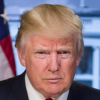
United States President Donald Trump has signed a new executive order banning people from six mainly Muslim countries: Iran, Libya, Somalia, Sudan, Syria and Yemen.
Unlike the order signed in January, which was blocked by the courts, this new order removes Iraq from the list, but imposes additional vetting for Iraqis.
Importantly, green card holders are not barred from entry, and immigration officials will have the authority to issue waivers on a case-by-case basis.
With regard to Iraq, the order states:
"Iraq presents a special case. Portions of Iraq remain active combat zones. Since 2014, ISIS has had dominant influence over significant territory in northern and central Iraq. Although that influence has been significantly reduced due to the efforts and sacrifices of the Iraqi government and armed forces, working along with a United States-led coalition, the ongoing conflict has impacted the Iraqi government's capacity to secure its borders and to identify fraudulent travel documents. Nevertheless, the close cooperative relationship between the United States and the democratically elected Iraqi government, the strong United States diplomatic presence in Iraq, the significant presence of United States forces in Iraq, and Iraq's commitment to combat ISIS justify different treatment for Iraq. In particular, those Iraqi government forces that have fought to regain more than half of the territory previously dominated by ISIS have shown steadfast determination and earned enduring respect as they battle an armed group that is the common enemy of Iraq and the United States. In addition, since Executive Order 13769 was issued, the Iraqi government has expressly undertaken steps to enhance travel documentation, information sharing, and the return of Iraqi nationals subject to final orders of removal. Decisions about issuance of visas or granting admission to Iraqi nationals should be subjected to additional scrutiny to determine if applicants have connections with ISIS or other terrorist organizations, or otherwise pose a risk to either national security or public safety ...
"Additional Inquiries Related to Nationals of Iraq. An application by any Iraqi national for a visa, admission, or other immigration benefit should be subjected to thorough review, including, as appropriate, consultation with a designee of the Secretary of Defense and use of the additional information that has been obtained in the context of the close U.S.-Iraqi security partnership, since Executive Order 13769 was issued, concerning individuals suspected of ties to ISIS or other terrorist organizations and individuals coming from territories controlled or formerly controlled by ISIS. Such review shall include consideration of whether the applicant has connections with ISIS or other terrorist organizations or with territory that is or has been under the dominant influence of ISIS, as well as any other information bearing on whether the applicant may be a threat to commit acts of terrorism or otherwise threaten the national security or public safety of the United States."
The full executive order can be viewed here.
It comes into effect on 16th March.
Posted in Politics, Security Comments Off on US Issues New Travel Ban
IMF Releases Another $618m Loan to Iraq
Posted on 07 December 2016 .
- IMF disburses about US$617.8 million following completion of first review of Iraq’s reform program
- The IMF-supported program includes measures to protect the poor, enhance financial sector stability, and curb corruption
- Significantly improving public financial management will be important
The Executive Board of the International Monetary Fund (IMF) has completed the first review of Iraq’s three-year Stand-By Arrangement (SBA), which is designed to support Iraq’s economic reform program and restore fiscal balance over the medium term. The Board also completed financing assurances review under the SBA.
The SDR 3.831 billion arrangement (about US$5.34 billion at the time of approval) was approved in July, 2016. The Board’s approval enables the disbursement of SDR 455 million (about US$617.8 million).
As part of the completion of the first review, the Board also approved Iraq’s request for a waiver for the non-observance of the continuous ceiling on new external arrears, and request to modify performance criteria.
The Board also approved the request for a waiver of applicability for end of September targets of four performance criteria on the floor on gross international reserves (GIR) of the Central Bank of Iraq (CBI), the ceiling on net domestic assets (NDA) of the CBI, the ceiling on the stock of outstanding arrears to international oil companies and the ceiling on the stock of gross public debt, as well as a request for the rephasing of the arrangement.
Iraq’s economic reform program supported by the SBA aims to address the urgent balance of payments need, bring spending in line with lower global oil prices, and ensure debt sustainability. The program also includes measures to protect the poor, strengthen public financial management, enhance financial sector stability, and curb corruption. Iraq will require the support of the international community to implement these policies.
Following the Executive Board’s decision, Mr. Mitsuhiro Furusawa, Deputy Managing Director and Acting Chair of the Board, issued the following statement:
“The economic policies implemented by the Iraqi authorities to deal with the shocks facing Iraq—the armed conflict with ISIS and the ensuing humanitarian crisis and the collapse in oil prices—are appropriate. In the fiscal area, the authorities are implementing a sizable fiscal adjustment, mostly through retrenchment of inefficient capital expenditure while protecting social spending. In the external area, the authorities are maintaining the peg of the Iraqi dinar to the U.S. dollar, which provides a key anchor to the economy.
"Performance under the Stand-By Arrangement has been mixed; however, understandings have been reached on sufficient corrective actions to keep the program on track. Resolute implementation, together with strong international support, will be key.
“The revised fiscal program in 2016 and the draft budget in 2017 are aligned with the SBA. The composition of the fiscal adjustment should be improved over time by increasing non-oil revenue and reducing current expenditure, including the payroll and pension payments, and reforming the electricity sector, subsidies, and state-owned enterprises, in order to make room for larger but more effective and efficient investment expenditure that is conducive to growth.
“Significantly improving public financial management will be important. Arrears need to be assessed and paid following verification, and expenditure commitment and cash management should be strengthened to prevent the accumulation of new arrears.
“Measures to bolster financial sector stability include strengthening the legal framework of the Central Bank of Iraq, restructuring state-owned banks, and eliminating exchange restrictions. Measures to prevent money-laundering, counter the financing of terrorism, and strengthen the anti-corruption legislation also need to be implemented.
“Implementation of the budget-sharing agreement with the Kurdistan Regional Government would put both the federal government and the Kurdistan Regional Government in a better position to address the shocks to the Iraqi economy.”
(Source: IMF)
Posted in Iraq Banking & Finance News, Politics Comments Off on IMF Releases Another $618m Loan to Iraq

Visited Iraq? US Now Requires Special Visa
Posted on 10 December 2015 .
By Simon Kent.
The US House of Representatives have voted to place special visa requirements on anyone who has visited Iraq, Iran, Sudan or Syria after March 2011.
The regulations--in effect from the date of the beginning of the Syrian uprising, come in the wake of the Paris attacks and relate to concerns over individuals who may be involved in terrorism.
What this means is that anyone in this category now has to apply through the formal visa screening process, which will affect any Iraq Business News readers who have visited Iraq on business.
There are currently 38 nations where citizens do not require a visa to enter the US, what is known as the "visa waiver program" (VWP). Under new legislation, VWP nations will be required to share more data with the US about terror suspects.
(Source: BBC.)
Posted in Security 6 Comments
Shell to Re-Start Majnoon Output in Q1
Posted on 20 September 2012 .
By John Lee.
Shell expects to resume production at its Majnoon oilfield in Iraq in the first quarter of 2013, Arne de Kock, commercial general manager for Iraq, has told Reuters.
The company then expects to lift output to 175,000 bpd by March or April, this being the level of production required for it to start recovering costs under its contract with Baghdad.
According to documents seen by Reuters, Shell has asked Iraq for a waiver to start recovering costs if Majnoon, which shut for maintenance on June 26, does not meet its first commercial production target by year-end.
"The vast majority of Majnoon is greenfield," de Kock said, meaning a new field development requiring new facilities. "Getting all of that heavy equipment into place is far more cumbersome and is causing some delays."
Shell is waiting for construction of a new 79-km (50-mile) pipeline by the Iraqi government to move the crude oil it produces at Majnoon to storage sites.
"The pipeline is not progressing as fast as we would like," said de Kock.
(Sources: Reuters, Sharecast)
Posted in Iraq Oil & Gas News Comments Off on Shell to Re-Start Majnoon Output in Q1
Iraq Pipeline Delays Threaten Shell's Majnoon Output
Posted on 30 August 2012 .
By John Lee.
Delays in the construction of an Iraqi pipeline threaten to stall production at Shell's Majnoon oilfield for at least three months, forcing the field to miss a 2012 target of 175,000 barrels per day, reports Reuters.
In February, production at Majnoon was 54,000 bpd, Shell says, but averaged only 18,600 bpd for the first quarter of this year, far below the planned year-end target.
Production at the field was around 45,000 bpd when the company took over in 2010; Shell has since spent around $1 billion, and planned to invest another $1 billion in 2012.
It has asked Iraq for a waiver to start recovering costs if Majnoon does not meet its first commercial production target by year-end - a contract requirement before costs can be retrieved, according to documents seen by Reuters. "This principle will reduce significant investment risk," the document said.
The field has been shut for maintenance since 26th June, but lagging development could put off completion of the new pipeline until the first quarter of next year, according to a Shell document filed with the oil ministry.
"A key concern ... remains the uncertain delivery of the First Commercial Production (FCP) pipeline," said the official letter sent by Shell's managing director of Majnoon.
In June of last year, along with its partner Petronas, Shell awarded Dubai-based Dodsal Group a $106m contract to lay a 79-km (50-mile) pipeline from the Majnoon field to a crude storage depot near Zubair, but the oil ministry rejected the deal on costs and handed the project to an oil ministry affiliate; officials say the pipeline is not now expected to be finished until March 2013.
China Petroleum Pipeline (CPP) was contracted recently to build part of the line.
Drilling at Majnoon is also said to be moving at a slow pace, with only three wells completed since a contract for 15 wells was awarded in August 2010.
(Source: Reuters)
(Picture: Majnoon, June 2012)
Posted in Construction & Engineering In Iraq, Iraq Oil & Gas News Comments Off on Iraq Pipeline Delays Threaten Shell's Majnoon Output
IMF Approves $471 Million Payment to Iraq
Posted on 20 March 2011 .
The Executive Board of the International Monetary Fund (IMF) completed the second review of Iraq’s economic performance under a program supported by a Stand-By Arrangement (SBA) on Friday. Completion of the second review makes an additional SDR 297.1 million (about US$471.1 million) available for disbursement, bringing the total resources currently purchased by Iraq under the SBA to SDR 1.069 billion (about US$1.7 billion).
The Executive Board also approved a waiver of applicability of the end-December 2010 performance criteria on the central government fiscal deficit and on the central government spending bill, for which data is not yet available. The Executive Board furthermore approved an extension of the SBA by five months to July 2012, and a rephasing of access under the SBA to match disbursements with Iraq’s balance of payments financing needs.
The SBA was approved on February 24, 2010 (see Press Release No. 10/60) for SDR 2.38 billion (about US$3.77 billion). The SBA supported program aims to ensure macroeconomic stability and provide a framework for advancing structural reforms in Iraq.
Following the Executive Board’s discussion on Iraq, Mr. Naoyuki Shinohara, Deputy Managing Director and Acting Chair, stated:
“Iraq has maintained macroeconomic stability under difficult external and internal circumstances, while making efforts to rebuild key economic institutions. Inflation has remained subdued, and the exchange rate has remained stable. The 2011 budget aims to accelerate investment in public services and infrastructure, and accommodates higher social safety net provisions to support those in need. Iraq’s rehabilitation needs remain large and the higher investment spending is essential to help create a vibrant private sector that provides employment opportunities for Iraq’s large labor force, thus helping to reduce poverty. At the same time, a strong emphasis on ensuring the quality of public spending will be important.
“Decisive efforts to rebuild key economic institutions and improve governance will be critical for private sector development. The formation of the new government and the expected increase in oil production in the coming years offer an opportunity to do so while maintaining macroeconomic stability. Further strengthening public financial management encompasses the introduction of an automated financial management and information system and improvements in cash management which would eventually culminate in the establishment of a single treasury account. Establishing a framework for oil revenues to succeed the Development Fund for Iraq should help ensure continued accountability and transparency. In the financial sector, moving ahead with the financial and operational restructuring of the two largest state-owned banks and enhancing the central bank’s supervision capacity will contribute to creating a financial sector that can provide essential services to the private sector.
“Iraq continues to make progress to conclude debt agreements and resolve outstanding claims under terms comparable to the 2004 Paris Club Agreement.”
(Source: IMF)
Posted in Iraq Banking & Finance News, Iraq Industry & Trade News 1 Comment