



Political Initiative to Resolve Anbar Crisis
Posted on 19 January 2014 .
By Mustafa al-Kadhimi for Al-Monitor. Any opinions expressed are those of the author, and do not necessarily reflect the views of Iraq Business News.
The Our Steadfast Anbar initiative, launched Jan. 11 by Ammar al-Hakim (pictured), leader of the Islamic Supreme Council, to resolve the Anbar crisis is an important step because it moves Iraq's security situation back into the political realm in trying to establish a broad base from which to combat terrorism.
Hakim has proposed a package of political, administrative, economic and social measures to normalize the situation in Anbar, which has been restive for the past two weeks and preceded by protests that lasted about a year. Among the initiative’s proposals is to spend $4 billion dollars over four years to rebuild Anbar’s cities, create jobs and form a provincial council of elders, influential tribal leaders, in addition to Anbar self-defense units, which in fact already exist through the Sahwa councils.
Some assert that Hakim’s initiative has electoral motives attached. Yet the initiative provides, for the first time, a vision toward resolving the Iraqi crisis, not just mere slogans as with most previous initiatives. The local and foreign responses to the initiative indicate that there is a general trend to interpret the crisis the way it actually should be understood.
Some Iraqi parties are trying to characterize the country's broader crises — ongoing for years and including the recent crisis in Anbar — as “security crises” that can only be resolved through security measures. This characterization assumes that the fight in Iraq is between the government and its supporters on the one hand and terrorism and its supporters on the other, and therefore does not take into consideration the root causes of the conflicts.
Astra Upgraded due to Iraq Steel Mill
Posted on 19 December 2013 .
By John Lee.
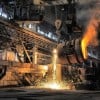
Aljazira Capital has raised its rating on Astra Industrial Group to overweight from neutral after the Saudi industrial conglomerate started a new steel millin Iraq.
The Jeddah-based investment bank was initially expecting the melt shop of 450,000 metric tons/year of billet and mill of 300,000 mt/y of rebar to begin operations in the second half of next year.
It said that the proximity of the Al Amna facility in Khor Al-Zubair to the Basra port, combined with the abundance of scrap in Iraq, will help cut logistics and raw material costs.
In 2010, Astra paid $61 million for a 51 percent stake in Jordan-based Al Tanmiya for Steel Industries, which is the owner of Al Amna.
(Sources: Fortune Best, Aljazira Capital)
(Steel image via Shutterstock)
Posted in Construction & Engineering In Iraq, Investment Comments Off on Astra Upgraded due to Iraq Steel Mill
Iran Wary of Iraqi Oil Export Plans
Posted on 09 December 2013 .
By Ayser Jabbar for Al-Monitor. Any opinions expressed are those of the author, and do not necessarily reflect the views of Iraq Business News.
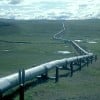
Iraq’s aspirations to increase its oil exports to close to 7 million barrels per day by 2017 drew criticism from the Iranian Ministry of Petroleum. Iranian Petroleum Minister Bijan Namdar Zangeneh regarded the move, which seeks to make up for the lack of oil exports from his country as a result of sanctions, as “absolutely unfriendly.”
The Iranian Embassy in Baghdad concurred with the opinion of the petroleum minister.
“Iraq’s oil policies will be harmful to the interests of Iran, especially given its aspirations to increase its crude oil exports to compete on the market and to establish a place for itself on the international scene,” Iranian Deputy Ambassador to Iraq Aziz Salihi explained to Al-Monitor. “Iran’s oil exports have gone down due to sanctions from 2.5 million barrels to 1.2 million barrels per day.”
“Iran enjoys good and solid relations with Iraq, and we do not anticipate for this to be compromised because of oil policies,” he continued, pointing out, “We can hold a dialogue with concerned Iraqi parties to establish some sort of understanding in this regard.”
Amid this criticism and fear of increased Iraqi oil exports, the Iranian nuclear deal with the major Western powers has emerged as a promising step toward a powerful economic revival that will be witnessed by the Gulf. It will also spark competition between oil-producing countries in a way that may lead to disputes over shares, granting facilitations and preferences to consuming countries, especially in East Asian countries.
Oil expert Hazem al-Fartousi explained to Al-Monitor that the results of the agreement will have two trajectories. One will be toward quelling the markets from the geopolitical conditions related to the Iranian nuclear file, including the instability in prices it caused. The other will have to do with the return of Iranian [oil] exports, thus increasing the amount of oil available on the market in a way that would bring relative oil stability in Iran. This will also decrease Iranian fears of increased oil exports from Iraq that Tehran spoke of not long ago.
Posted in Iraq Oil & Gas News 2 Comments
Oil Exports Recover, Targets Remain Problematic
Posted on 06 December 2013 .
By Andrew Scarre.
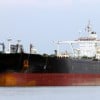
Iraq’s oil exports have increased in October to 2.25 million barrels per day, an increase of 0.18 million barrels per day in comparison to September’s figures. Over the course of October, Iraq exported 69.8 million barrels of oil over the course of October, creating US$7.160 of revenue. The ministry confirmed that the price of oil per barrel over the course of the month was US$102.579.
Exports Increase Despite Sabotage
This increase in exports came in spite of the ongoing maintenance work in the southern terminals. In addition to this, a statement released by the ministry confirmed that at separate points during the month, pumping of oil in the Kirkuk-Ceyhan had to be ceased due to sabotage. From where this sabotage stemmed is currently unclear. However, on 2nd November, the pipeline was attacked once more by insurgents who bombed the pipeline and disabled it.
Overall, during the course of the month, Iraq exported 63.8 million barrels through the southern port of Basra, and 621,000 barrels via Turkey's port of Ceyhan on the Mediterranean Sea.
The news of increasing oil exports will come as a welcome boost to the Iraqi economy due to its dependence on oil exports. At present, oil exports account for nearly 95 percent of its budget and a fall in such revenues would have a drastic impact on the economy as a whole.
Increasing Productivity
This, however, is not the only good news for Iraq of late and, after 2010’s announcement that oil reserves in the country were actually almost 30 billion barrels greater than original estimates; oil production has continued to thrive.
Posted in Iraq Oil & Gas News 1 Comment
Weekly Security Update 21 - 26 November 2013
Posted on 29 November 2013 .

By Tom Walker, Director, Assaye Risk
COUNTRY OVERVIEW
Little has changed in Iraq this week as al Qaeda (AQ) and Sunni insurgent groups have continued to press home a series of devastating attacks across the northern and central belts of the country. The security situation in northern Syria and northern Iraq remains febrile and fluid as AQ and its affiliates, most notably the Islamic State in Iraq and Levant (ISIL) continue to battle moderate rebel groups and Kurdish militias in Syria with inevitable implications over the border in Iraq.
As groups freely move between Iraq and Syria the northwest of the country has seen a clear rise in activity during the past few weeks. The ISIL has seen record numbers of fighters flock to its ranks in recent weeks as success against more moderate rebel groups continue to increase its operational and ideological attractiveness, which will only help the group sustain operations across a wider battles space, including Iraq. Last Thursday the ISIL captured a northwestern Syrian town, Atimiyah, after ousting moderate rebel fighters from the islamist group Suqur al-islam. Geographically, this action poses little of a threat to Iraq and its security situation but the increasing influence of the ISIL remains a potent threat. The rise of AQ and ISIL has changed the regional and international diplomatic calculus significantly and has tempered the calls of regional power brokers who desire the removal of the Assad regime. In the long term the possibility of hardline islamist groups gaining strong footholds in large parts of Syria poses its own dilemma, raising serious questions about the potential transnational influences that groups like the ISIL could have on Iraq’s security situation. In the short to medium term the combat experience and increase in capacity and capability the ISIL has seen will continue to pose serious challenges for the Iraqi security forces (ISF) as ISIL fighters migrate freely between operations in Iraq and Syria.
Thursday also saw an Iraqi Shia militia group, reportedly backed by Iran, fire a salvo of mortars into Saudi Arabia in an attempt to attack a Saudi border crossing point, with little physical damage reported. In a statement to the press Wathiq al-Batat, commander of Iraq's al-Mukhtar Army militia said, "The goal was to send a warning message to Saudis to tell them that their border stations and patrol are within our range of fire," a comment that was linked to calls by the same group for Riyadh to stop meddling in the affairs of Iraq. Just how potent a threat this is remains to be seen but government temperance will most likely ensure that it does not develop into anything of scale. It is most likely in response to calls by Baghdad for closer ties to Saudi Arabia, where Iraq has not had an ambassador since before the 1990s Gulf crisis. Shia groups harbor multiple suspicions against Sunni Saudi Arabia and Kuwait, both of who have been supporting Sunni rebel groups in Syria and this action is more likely linked to a spill over of aggravated Sunni-Shia antagonisms.
The latter part of the week saw significant insurgent activity along the Tigris River valley and into Baghdad. A car bomb in the busy market town of Sadiya, some 65km north of Baghdad, killed at least 25 people and wounded over 50. Further south in Taji, 20km from Baghdad, a suicide bomber attacked a police checkpoint (one of many attacks specifically targeting the ISF) and killed 4 police officers and wounded 8. Later in the day the final round of high impact attacks killed 7 and wounded 18 as 3 separate bombs exploded in the western Baghdad district of Amiriya. Altogether over 45 people were killed across the country on Thursday as northern cities and Baghdad continue to suffer from almost daily attacks, predominantly around religious sites, public social areas and ISF facilities.
Posted in Politics, Security, Weekly Security Update 1 Comment
SPETCO eyes Iraq Expansion
Posted on 19 November 2013 .
By John Lee.
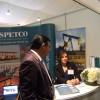
Oil Review Middle East reports that the Kuwait-based Safwan Petroleum Technologies Company (SPETCO) has said that it is looking to expand its upstream oil and gas services in Iraq and Saudi Arabia.
Anish Abraham, the company's manager of OFS/BD, told ORME that its specific attention in terms of marketing and distribution was towards Erbil in Iraq and Saudi Arabia.
The company provides upstream services ranging from well testing services, artificial lift systems, production facilities, tubular services.
Currently, SPETCO operates in Kuwait and the UAE and has set up a branch in Erbil.
(Source: Oil Review Middle East)
Posted in Iraq Oil & Gas News Comments Off on SPETCO eyes Iraq Expansion
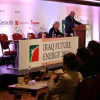
Experts Discuss SCOP Pipeline Projects
Posted on 07 November 2013 .
Advertising Feature
With the fourth edition of the Iraq Future Energy Conference approaching, experts – Mr. Falah Al Khawaja, former Director General for oil projects at State Company for Oil Projects (SCOP), and Mr. Ali Alwash, General Manager at State Company for Oil Projects (SCOP) - participating at the conference discuss the developments in the Basra fields, current and upcoming pipeline projects in the region, as well as the outcome of the 4th December OPEC output target meeting for Iraq.
Speaking on the importance of the developments in the Basra fields, Mr. Falah Al Khawaja, former Director General for oil projects at State Company for Oil Projects (SCOP), confirmed:
“The development of the Basra oil fields is very important for federal Iraq’s energy industry. These fields will raise Iraq’s hydrocarbon supply to about 9 mmb/d of oil including present capacity, and lead to trebling gas output by 2020. This is a huge input to world and local supply. Local refining capacity will be doubled, and Iraq’s power generation needs will be met.”
Referring to how critical is it to have an alternative to the Strait of Hormuz for exports, whilst also providing updates on Iraq’s export pipeline infrastructure project, Mr. Falah, said:
“The Strait of Hormuz issue was exaggerated and may be discarded depending on the ongoing dialogue between the West and Iran. Iraq, however, needs the flexibility of the western route to Jordan and Syria, and the northern route to Turkey.
"Preparatory work for both routes is progressing towards Jordan and Turkey. The southern corridor was never an option; but with the restoration of The Iraqi Pipeline in Saudi Arabia (IPSA), the pipeline to Yanbu remains the aim and a valid option.”
With regards to the current state of the northern route to Turkey he further added:
“The 40 inch pipe line extending from Kirkuk to Cehan in Turkey is badly damaged in the section from Fatha to the border (nearly 400 km) and, accordingly, the whole pipeline has deteriorated considerably from its original capacity. The damaged length is to be replaced.”
Posted in Iraq Oil & Gas News 3 Comments

Rotana Names New Karbala Management Team
Posted on 29 October 2013 .
Abu Dhabi-based Rotana, a leading hotel management company, announced the general manager and other senior appointments for its new property in Iraq, the five-star Karbala Rayhaan by Rotana.
General manager Nader Mobader, a seasoned hospitality player with 18 years of industry experience in Asia, Africa and the Middle East, has been leading the team through the crucial pre-opening phase and will head the operations when the hotel opens its doors to guests next month.
A native of Lebanon, Mobader is a graduate from Les Roches International School of Hotel Management, Switzerland. Prior moving to Rotana, Mobader worked with several international hotel chains.
Rotana also announced other key appointments, including Ali Kamar who has been appointed to the role of Rooms Division manager, and Wissam Injibar who takes on the position of director of Sales, and Hassan Salameh as executive Chef, overseeing the daily operations of the F&B department encompassing the hotel’s four dining outlets and one meeting room.
Mohamad Haj Hassan, Rotana’s area vice president – Iraq, Saudi Arabia and Sudan said:
“Iraq is a market that holds a great deal of interest for Rotana, and we wanted to make sure that the right team was in place to consolidate our reputation for service and excellence when we opened our second property in the country.”
The Karbala Rayhaan by Rotana will be the first and only five-star hotel to open in the city of Karbala, which annually attracts more than 12 million visitors.
The 200-room, 14-storey hotel is accessible from both Najaf Airport (80km) and Baghdad Airport (130km).
(Source: Trade Arabia)
Posted in Iraq Industry & Trade News, Leisure and Tourism in Iraq 4 Comments
Smugglers Easily Cross Iraq’s Border
Posted on 18 October 2013 .
By Mushreq Abbas for Al-Monitor. Any opinions expressed are those of the author, and do not necessarily reflect the views of Iraq Business News.
Khurshid, the khajakji (the local word for a smuggler), smiled when he spoke of the border. “It’s a fairy tale for domestic consumption only, not a reality, at least for us,” he said.
Khurshid is a Kurdish smuggler who is now “retired” because of his age. He and many of his colleagues have left the profession and are now in the trade business. They do not use the word khajakji because it connotes an illegal activity. But Khurshid believes he performed a national service for the Kurdish people, as they faced a suffocating, government-backed, decades-long blockade and greatly relied on smugglers for food, fuel and goods.
He told Al-Monitor, “Borders are thought of as official outlets, stations or steel barriers, but the definition is completely different for smugglers who see borders as fluid and overlapping, with thousands of routes that are only known to the people on both sides. ... Millions of Iraqi soldiers and Iranians used to be deployed on both sides of the border between the two countries throughout the Iran-Iraq war (1980-1988). The fighting and shelling was nonstop. Despite that, we never found it difficult transporting supplies, fuel or even people between the two countries.”
Khurshid and Salman al-Shammari, who lives in Mosul and for years smuggled to and from Syria despite the closure of the border throughout the 1970s and 1980s, consider smuggling to be more about timing than location. Borders are considered true borders only when there are official forces guarding both sides, not at other times. So smugglers are good in the “timing” game.
Iraq shares 3,631 kilometers (2,256 miles) of border with six countries: Iran, Jordan, Kuwait, Saudi Arabia, Syria and Turkey, in addition to a narrow sea coast of 58 kilometer (36 miles).
Iraq’s borders are a problem with all its neighboring countries. In addition, there are disputes with a number of countries over the border demarcation line and the ownership of oil wells. Cross-border smuggling has been a major concern for countries in the region.
Posted in Security 12 Comments
China Seeks 70% More Iraqi Crude
Posted on 17 October 2013 .
By John Lee.
China is attempting to increase purchases of its crude by more than two-thirds next year, according to a report from Reuters.
"Iraq is in a lucky position because we always get more requests than we can actually supply," deputy prime minister for energy Hussain Al-Shahristani said on Wednesday at the World Energy Congress in South Korea.
He added that China is requesting 850,000 bpd of crude from Iraq next year.
Saudi Arabia shipped 1.08 million bpd of crude to China in the first eight months of this year, while Baghdad has an annual term deal to sell about 500,000 bpd into China this year.
(Source: Reuters)
Posted in Iraq Oil & Gas News Comments Off on China Seeks 70% More Iraqi Crude