


Aberdeen City Council to Encourage Energy Investment in Iraq
Posted on 18 September 2011 .
Aberdeen City Council has announced a new initiative to encourage North-east companies to explore business opportunities in Iraq.
Upper Quartile, an Edinburgh-based economic development consultancy, will manage the programme, which will target the oil and gas sector, academic institutions and other contractors.
Seminars will be held over the coming months to inform firms of the economic, political and security issues they need to consider before developing a presence in Iraq. Companies will be invited to attend meetings with Upper Quartile’s experts and get the chance to meet key officials from Scotland and Iraq.
Iraq produces two million barrels of oil per day and aims to increase to 12 million within seven years to propel them to second place among the world’s oil-producing nations. Capital spending in oil-field services in 2011 is estimated to be five times that of Saudi Arabia, Bahrain, the United Arab Emirates, Oman, Qatar and Kuwait combined.
In 2010, foreign firms and investors reported over $42 billion in investments, service contracts and commercial activities across Iraq – up almost 50% on 2009. The top sector was new housing, which accounted for 33% of all foreign commercial activity in 2010, followed by transportation infrastructure, electricity and industry, and oil and gas production. Contracts on offer are expected to push the oil services market to $8 billion by 2014.
Aberdeen City Council Enterprise, Planning and Infrastructure director Gordon McIntosh said: “Aberdeen-based companies have a long history of innovation in the oil and gas business and of developing oil and gas production abroad. Their unrivalled experience, therefore, coupled with committed investment can play an important part in rebuilding an economy, whilst also offering profitable business opportunities in the medium and long term.”
Gavin Jones, co-founder and managing director of Upper Quartile, said: “Iraq possesses vast hydrocarbon reserves, but it lacks the infrastructure and expertise to support large-scale commercial extraction and export. It is therefore an ideal time for established Scottish companies to use their skills to help unlock the country’s enormous potential.”
Iraq’s business marketplace remains in post-conflict phase, characterised by few entrants and risk aversion, but companies which can build relationships with senior Iraqis can expect significant rewards.
Iraq has 16 oil sector companies. Oil exports account for 96% of the country’s economy and in the first seven months of this year Iraq earned more than $48bn in revenue.
Production is set to increase substantially over the next few years. In the short term, however, infrastructure is unable to support this growth and Iraq needs to invest in its export terminals, ports, ageing pipelines, storage capacity, and water and power supplies.
For further information on Aberdeen City Council’s new initiative visit http://www.aberdeencity.gov.uk/iti
Posted in 'Your Country' - United Kingdom, Iraq Industry & Trade News, Iraq Oil & Gas News Comments Off on Aberdeen City Council to Encourage Energy Investment in Iraq

BP, Iraq Differ On Costs Of Water Injection Project
Posted on 14 September 2011 .
Dow Jones reports that Iraq and BP have not yet reached agreement on reimbursement of costs to build a multi-billion-dollar oil field water injection scheme in southern Iraq.
ExxonMobil was chosen to lead the project on behalf of foreign oil companies rehabilitating Iraqi oil fields.
Nihad A. Moosa, head of the State Company for Oil Projects (SCOP) told Dow Jones Newswires that international oil companies (IOCs) interested in the common water injection project include Lukoil and Shell, which is expected to join later.
"BP wants to start reimbursing the costs of the project when foreign firms increase output from these fields by 10%, while the ministry wants to pay back costs when they boost output by 20%," Moosa said.
But a BP spokesman said that it "strongly supports the common seawater project, the terms for which are defined in the Rumaila Technical Service Contract", and that it is "working with ExxonMobil and the government of Iraq to move it forward."
BP is developing Rumaila oil field, Iraq's largest, which is producing around 1.3 million barrels a day. Under the service contract it signed with Baghdad in 2009, BP would start reimbursing its costs when it increases output from the field by 10%.
ExxonMobil, Shell, Eni and Lukoil have no problem with agreeing to the payment terms of the project, Moosa said.
Foreign companies had suggested the cost would be a little more than $3 billion to build the first stage of the project which is designed to produce 4 million barrels of water a day, she said.
"We rejected the proposed cost of the project as the ministry can build the project at half that price," she added.
The oil ministry is also considering another solution, namely hiring a separate company to build the project, Moosa said. The ministry has approached a company that has built similar projects in Saudi Arabia, she added, without naming the company.
The foreign firms are, however, "adjusting and reviewing their position" in order to address all these concerns and they reassured the ministry that they are still committed to the project, she added.
The water injection project aims to provide water to maintain reservoir pressure to fields such as, Rumaila, West Qurna Phase 1 and 2, Zubair and Majnoon in southern Iraq.
(S0urce: Dow Jones)
Posted in Iraq Oil & Gas News Comments Off on BP, Iraq Differ On Costs Of Water Injection Project
Hilton Worldwide To Open Hotel in Erbil
Posted on 07 September 2011 .
Hilton Worldwide is set to open its first hotel in Erbil, the flourishing capital city of Iraqi Kurdistan, under a management agreement with New York based real estate developer The Claremont Group. Comprising of 200 serviced apartments, DoubleTree Suites by Hilton Erbil is expected to open at the end of 2013.
The new hotel will be strategically located on Erbil's central thoroughfare, close to the recently expanded Erbil International Airport and the Ainkawa district, one of the city's main retail and entertainment centres.
Rob Palleschi, global head, DoubleTree by Hilton brand said, "I'm delighted to be bringing our brand to such an important city in the Middle East. DoubleTree by Hilton has built its success on providing high standards of service and quality facilities in gateway cities, which makes it the ideal choice for Erbil's thriving community."
Tailored for the needs of long-staying guests, the hotel will feature a business centre, health club, swimming pool, eight meeting rooms, two restaurants and a lobby lounge and bar. Around 200 jobs will be created at the hotel and the company's focus will be on employing people locally.
"Erbil's commercial status is increasing year on year and the city has a growing reputation as an up and coming tourist destination. We have every confidence that the DoubleTree Suites by Hilton Erbil will prove popular with the growing number of business and leisure travellers,' commented Rudi Jagersbacher, area president, Middle East & Africa, Hilton Worldwide
National Geographic recently listed Kurdistan, Iraq, amongst their Top 20 best trips describing it as 'an oasis of peace and stability with ancient cities, snowcapped mountains and bustling bazaars' and the New York Times travel section also listed Kurdistan in their 41 places to visit for 2011 saying 'the biggest lure is the opportunity for authentic cultural encounters'.
Stephen Lari, Principal of The Claremont Group, said 'There is so much potential in Kurdistan and particularly the city of Erbil. We've seen travel to the region grow considerably over the past couple of years. If that trend is going to continue then further infrastructure is required to support the industry. Hotels are key to that, and with Hilton Worldwide we know we have the right brand and management partner to make this hotel an integral part of the travel industry in the region'.
He added: "We'd like to commend the leadership of the Kurdistan Regional Government for fostering the secure and pro-investment environment that has been the catalyst for the region's steady growth and prosperity. By making the first major American-sponsored investment in the region's hospitality sector, we are firm believers in the Kurdistan success story"
Hilton Worldwide currently operates 53 properties across the Middle East and Africa and has 36 hotels in the development pipeline. So far this year the company has signed a total of 14 new hotels into the pipeline across the UAE, Saudi Arabia, Qatar and now Iraq.
(Source: Hilton Worldwide)
Posted in Construction & Engineering In Iraq, Iraq Industry & Trade News, Leisure and Tourism in Iraq 2 Comments

ONGC Videsh Close to $1.5bn Iraq Oil Deal
Posted on 05 September 2011 .
ONGC Videsh Ltd (OVL), the overseas arm of the Indian state-owned Oil and Natural Gas Corp (ONGC), may invest over $ 1.5 billion in exploring for oil in Iraq in a block that was awarded to it by the regime of Saddam Hussein, according to a report in the Economic Times.
“We are nearing finality on the contract for Block-8. It is likely to be signed in next six months,” an official said.
Block-8, located in the western desert in southern Iraq, bordering Saudi Arabia and Kuwait, was awarded to OVL in November 2000. However, the government formed after the US invasion in 2003 sought re-negotiation of the contract which has now been concluded.
The post-Saddam Hussain regime had initially agreed to the signing of a Production Sharing Contract (PSC), where OVL would have got ownership of the oil it produced from Block-8. But the success of post-war licensing rounds, where global majors committed to develop oilfields for a small fee, has reportedly seen Baghdad change track and offer a service contract to OVL.
The block already has a discovery and is estimated to hold 645 million barrels of in-place reserves, of which 54 million are recoverable, he said, adding OVL has committed investing $86 million in two phases of exploration and $ 1.45 billion in development of the reserves thereafter.
The contract would be a service contract whereby OVL will be paid about 18 per cent return on its investment. The company holds a 100 per cent interest in the block.
“We are currently agreeing on finer details of the contract,” the official told the Economic Times.
The service contract now being drawn would be similar to the one China National Petroleum Corp (CNPC) had signed recently for developing Al-Ahdad oilfield in central Iraq.
Baghdad has, however, refused the Tuba oilfield, for which OVL, in consortia with Reliance Industries and Algeria’s Sonatrach, were in negotiations before the US attack on Iraq.
(Source: Economic Times)
Posted in Iraq Oil & Gas News 1 Comment

The Last Straw? Maliki Appoints Dulaymi as Acting Minister of Defence
Posted on 20 August 2011 .
The following article was published by Reidar Visser, an historian of Iraq educated at the University of Oxford and currently based at the Norwegian Institute of International Affairs. It is reproduced here with the author’s permission. Any opinions expressed are those of the author, and do not necessarily reflect the views of Iraq Business News.
The newswires began reporting this item yesterday and today it has been generally confirmed: Prime Minister Nuri al-Maliki has appointed the culture minister, Sadun al-Dulaymi, as acting minister of defence. Dulaymi held the same portfolio in the Ibrahim al-Jaafari government in 2005-2006.
The significance of the appointment relates to two levels. Firstly, in terms of the architecture of the second Maliki government, it means Maliki could be seen as moving towards consolidating a situation in which no regular parliament appointments may take place for some time with respect to the security ministries: In early June he appointed Falih al-Fayyad of the Jaafari wing of the Daawa movement as acting minister of state for national security, whereas Maliki himself continues as acting interior minister. This is a different scenario from what happened in 2006, at which time it was precisely the security ministries that held up the completion of the government after the first posts had been allocated in May, but a solution was subsequently found and the full cabinet was approved by parliament in June.
Secondly, at the political level, the latest move is a clear rebuke to the secular Iraqiyya, which has lately signalled unhappiness about the direction in which the second Maliki government is evolving. Whereas Dulaymi may technically belong to the Unity of Iraq faction (which has technically been enrolled in Iraqiyya recently), it is very clear that Dulaymi is not the candidate of the leadership of Iraqiyya. In other words, he is what Maliki sometimes describes as a “Sunni candidate” rather than an Iraqiyya candidate. The more this kind of sectarian logic gets reified in the Iraqi government, the more we get back to the political atmosphere of 2006 when sectarian violence was at its height.
The problem with what Maliki is doing is that he continues to act as a strongman with a parliamentary majority in a context where it has been proved time and again that he doesn’t. Firstly, he seems to think White Iraqiyya (a small breakaway faction of Iraqiyya) can provide him with a “secular” cover and Dulaymi can do the same thing in terms of “integrating Sunnis”, but the numbers just don’t add up. Secondly, he keeps forgetting that the all-Shiite National Alliance rarely exists as a true united force in parliament, with the Sadrists, ISCI and other elements frequently disagreeing with Maliki. Indeed, many of Maliki’s own moves to maintain focus on his own, smaller State of Law bloc undermine the idea of a unified Shiite alliance. It indicates a complete lack of realism when Daawa members call the Dulaymi nomination a “move to stop regional influences in the defence ministry question”, which effectively means they dismiss all the 9 named Iraqiyya candidates for defence as stooges of Saudi Arabia and other Gulf states.
By circumventing a parliamentary vote, Maliki is trying to consolidate his own power despite his narrow parliamentary support base. The question is how long the other parties will tolerate this. Iraqiyya has already been talking about new elections for a while, though mainly with reference to the stalling process to establish a national council for high policies. Arguably, the defence ministry is a far better issue on which to bring matters to a head: A defence minister from Iraqiyya would deepen its integration into the government, whereas the strategic council is likely to remain a paper tiger. As usual, the swing vote will rest with the Kurds, who have been unhappy about lack of progress on their many demands to Maliki for joining the government, but who at the same time support the conceptual framework of ethno-sectarian quota arrangements that lies behind the Dulaymi appointment.
One potentially positive outcome of the appointment of Dulaymi would be the incentive to get rid of the useless culture ministry altogether and maybe merge the three education-related ministries into one: That at least would be in line with the latest signals from the Iraqi public who want an effective government fast.
Posted in Politics Comments Off on The Last Straw? Maliki Appoints Dulaymi as Acting Minister of Defence
Iraq's 'Garden of Eden' an Agricultural Disaster Waiting to Happen
Posted on 16 August 2011 .
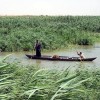
According to this report from NIQASH, many believe the original Garden of Eden, as described in both the Koran and Bible, is located in Basra. Increasingly though climate change, water shortages and urban sprawl mean Basra’s farmers are coming to doubt that story.
War and conflict have led to the loss of many farms and crops in the northern state of Basra. Increasingly saline water supplies and drought have added to agricultural woes here, and have transformed what might once have been a Garden of Eden into an arid desert and an urban sprawl.
The agricultural adviser to the governor of Basra, Muhsen Abdel-Hay Disher, firmly believes that climate change has played a part in the decline in agriculture in the area. According to official statistics, 70 percent of what was arable land in the 1970s is no longer useable. Other records indicate that average rainfall has fallen to one sixth of what it used to be in the 1970s. Additionally Disher told NIQASH that in northern Basra, a quarter less land was planted with wheat in 2010 compared to the previous year. Due to drought the total area planted was only 44,000 dunums (4,400 hectares as each dunum equals 2,500 square metres).
The politics of water as played out by neighbouring Middle Eastern countries have also had a devastating effect on Basra. To the east, Iran has built dams on rivers that bring fresh water into the Shatt al-Arab waterway. The less fresh water flowing into the Shatt al-Arab, the saltier – and less useable - the water gets on Basra’s farms.
“The saline levels in the Shatt al-Arab water increases when the fresh water levels decrease,” explained Abed Mahdi, the owner of a palm farm in the Faw district. “Which leads in turn to increased salt in the streams that irrigate the palms.”
Posted in Agriculture Comments Off on Iraq's 'Garden of Eden' an Agricultural Disaster Waiting to Happen

Investors Consider Iraqi Debt
Posted on 04 August 2011 .
According to a report in the Financial Times, investors are turning their attention to Iraq’s debt.
In 2004, after the US invasion of Iraq, the 'Paris Club' of 19 western creditors agreed to forgive roughly 80% of the $37.2bn owed to them.
This deal was used as a template for resolutions with other creditors and prevented the Iraqi government from favouring other countries outside the group.
The paper quotes Gabriel Sterne, senior economist a illiquid debt specialists Exotix, as saying that Iraq’s public and external debt is heading towards a “firmly sustainable footing”, and he forecasts that Iraq’s debt-to-GDP ratio will be less than 40 per cent by the end of 2011, compared with 552 per cent before the Paris Club agreement.
“With oil revenues buoyant and production volumes set to increase, we still think the risk-reward trade-off is acceptable on the eurobonds,” Mr Sterne wrote in a recent note.
Waleed Eedi, a director-general at the central bank of Iraq, put Iraq’s total debt at about $40bn compared with $135bn eight years ago, and said Iraq may sell its first bonds since 2006 next year.
However, Daniel Broby, chief investment officer at London-based Silk Invest, said the yield of about 6.7% just isn’t attractive enough.
There is also the vexed issue of bilateral Arab debt, owed mainly to Kuwait and Saudi Arabia. Mr Sterne says this debt is not being serviced but, equally, neither is it being enforced by the two Arab neighbours.
The economic outlook is based on plans to increase oil production to 12m barrels a day within six years, from the present 2.6m bpd, but many analysts are sceptical that this will be achieved.
The IMF estimates Iraq’s economy will grow 9.6 per cent this year and 12.6 per cent in 2012 as oil production rises. Inflation is forecast at 5 per cent for the next two years.
"It’s a matter of security and once that is solved, really the sky’s the limit in terms of the growth potential for Iraq, in terms of the demographics and the supply-demand issue,” says Sherif Salem, portfolio manager at Invest AD. “It’s going to be a bumpy road in the short term but in the longer term, given Iraq’s importance, it is in people’s interests that Iraq gets through this."
(Source: Financial Times)
Posted in Investment, Iraq Banking & Finance News 2 Comments

Iraqi Politics and Implications for Oil and Energy
Posted on 03 August 2011 .
While prospects that Iraq could reach its ambitious oil production targets are fading, political instability in a number of oil-producing countries are having adverse effects on OPEC production and spare capacity, according to a new study by the Baker Institute.
The report says that the international community is very likely to be reliant on Iraq and Saudi Arabia to bring more oil to international markets over the coming years if the world is to avert another supply crunch like that which occurred in 2008.
The study, by Meghan O'Sullivan, concludes that Iraq and Saudi Arabia may have difficulty meeting rising demand for oil in the near term.
Posted in Iraq Oil & Gas News Comments Off on Iraqi Politics and Implications for Oil and Energy
Govt Highlights Initiatives for Energy Sector at Iraq Petroleum Conf
Posted on 20 July 2011 .
The fifth annual Iraq Petroleum conference took place at the Landmark Hotel, London on the on the 12-14 July 2011, focusing on the next phase of Iraq’s oil and gas resource development as well as current and future upstream opportunities.
As Rt Lord Howell of Guildford, Minister of State for the UK Foreign and Commonwealth Office stated during the opening session of Iraq Petroleum 2011. “Iraq has the world’s third largest proven oil reserves. Iraq is the only country, besides Saudi Arabia, with the potential to massively increase conventional oil production. It currently produces nearly 3 million barrels per day and the government has ambitious plans to increase production to 12 million barrels over the next decade”
The conference brought together a global network of over 300 senior level professionals from 29 countries in over 15 sectors of the oil and gas industry and provided a meeting place for industry experts, connecting delegates and new players in the Iraqi oil and gas marketplace.
The conference highlighted the tremendous potential for opportunities and the need for international expertise in the development of Iraq’s oil and gas industry. With the conference room full until the end of the last session, delegates showed enthusiasm in discussing the future opportunities in the industry.
H.E Ali Al Dabagh assured the conference that the Iraqi Government shall be the guarantor of all contracts that were awarded to the IOCs and shall support their efforts and cooperate with them through their respective JMCs to ensure that they succeed and achieve the objectives of each contract and to pay them back their investments and profits as and when they become due in accordance with the terms of their respective contracts.
Industry support for the conference included Upstream Principal Sponsor: Crescent Petroleum, Service Principal Sponsor: Baker Hughes and conference sponsors ExxonMobil, Statoil, Shell, Total, Oxy, ENI, Jawar Al Khaleej Shipping L.L.C, Oil Serv, Huawei, IAG, Olive Group, Mott MacDonald, Mubadala, Standard Chartered, Technology Partners, SKA Group, and OIEC.
For further information visit: http://www.cwciraqpetroleum.com/
Posted in Iraq Oil & Gas News Comments Off on Govt Highlights Initiatives for Energy Sector at Iraq Petroleum Conf

Foreign Office Minister for Energy addresses Iraq Petroleum Conference
Posted on 18 July 2011 .
Foreign Office Minister Lord Howell said that Iraq's natural resources have the potential to help tackle the world's energy challenge when he spoke at the Iraq Petroleum Conference.
| Speaker: | Foreign Office Minister Lord Howell |
| Event: | Iraq Petroleum Conference |
| Location: | London |
Ladies and Gentlemen
I am delighted to be back at the Iraq petroleum conference addressing such a distinguished audience, and I would like to thank Dr. Alirio Parra and CWC Group for the opportunity to be here today.
Rising energy prices and the Arab Spring have raised important questions across the Middle East and presented challenges for the world. Today I would like to share with you some thoughts about Iraq’s potential to help meet these challenges through leadership in the Middle East, and how it can be a game-changer in energy markets. I foresee this and similar conferences playing a part in developing this potential and in catalysing investment and decisions about investment in Iraq.
The geopolitical challenge
At the end of May I visited a number of Gulf States, where oil prices and energy security were high on the agenda. In a region which contains the planet’s largest oil reserves, the Arab Spring in a variety of forms has become interlinked with energy issues.
Few could deny the legitimacy of a people seeking freedom – seeking a voice to steer their future. But few could have predicted the pace of change we have seen brought by the so-called Arab Spring. At a time of fast-moving events, it must also be a time for wise reflection on how best to meet the aspirations of the Arab people. There are no simple answers. Those who offer simple answers are misleading us,as there are many ways for nations to achieve and maintain legitimacy, through their own pattern of participation and consent.
But governments that use violence to try and extinguish the legitimate aspirations of their peoples are destined to fail. The lasting answer to the challenges and instabilities of the Arab Spring is through reform, not repression. We have no doubt about that at all.
Posted in 'Your Country' - United Kingdom, Iraq Oil & Gas News 1 Comment