


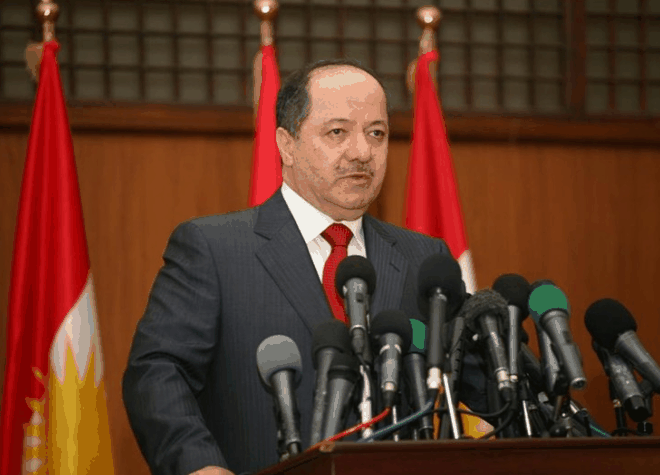
The Kurds, represented by the Kurdish Alliance, stipulated that the prospective conference must incorporate guarantees that conference decisions would be implemented. The goal is to prevent a repeat of what happened in Erbil in 2010; from the Kurdish Alliance's perspective, the Iraqi prime minister failed to implement most of the elements of the decisions that were issued.
According to the Kurds, commitment to agreements made at the conference will be the benchmark for success. Opposition political parties have accused the prime minister of evading the implementation of agreements, particularly with regard to national partnership.
The Erbil Agreement agreed on establishing a "strategic policies council" and national balance at state institutions; developing rules of procedure for the Council of Ministers; enacting laws pertaining to oil and gas, the Supreme Federal Court and the General Amnesty Law; assigning the position of minister of defense to the Iraqi List; solving the problems of detainees; participating in the management of the state in a way that would preserve all components and factions of the Iraqi people; and other issues that would help to rectify the political process.
The Sunnis, represented by the Iraqi List, will attend the prospective meeting carrying perhaps the most influential card: the anti-government protests being held in the major Sunni cities — Anbar, Mosul, Salahuddin and Diyala — which have resisted attempts to disperse them or to respond partially to their demands, particularly those related to the detainees and de-Baathification measures.
The Sunni demonstrations draw their strength from the fact that they threaten to undermine social peace in the country, which is greatly feared by the Shiite-led government.
Sadr's support of protesters' demands in Sunni governorates has earned him some approval and legitimacy among Sunnis. This might allow Sadr’s bloc to attend the prospective meeting from a position of strength, which he has acquired from his approval by both parties, in addition to a privileged relationship with the Kurdistan region following his visit there last year to participate in meetings demanding the prime minister’s dismissal.
Comments are closed.