


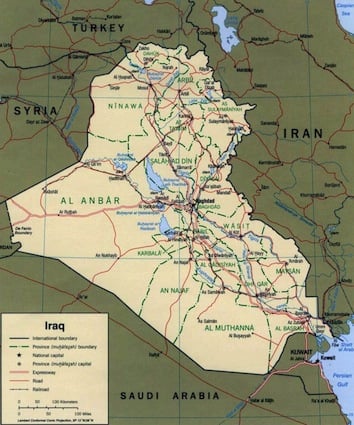
NORTH
The Tigris River Valley, Tikrit and Kirkuk were the regional epicenters of violence this week with a number of targeted high impact attacks which resulted in casualties amongst the ISF and civilians alike. 29 March saw multiple simultaneous attacks against Shia worship sites countrywide with a blast in Kirkuk. A suicide VBIED was driven into a group of worshippers outside a mosque in the city resulting in the deaths of 3 people and the wounding of approx. 70. Whilst Kirkuk has seen worse what remains significant here is the nationwide coordinated targeting of worship sites as Sunni insurgents seek to maintain pressure on both the Shia population as well as the Shia dominated government. This attack was followed by a 01 April suicide VBIED attack in Tikrit, which claimed the lives of 9 people, including 7 members of the ISF, after an explosive laden fuel tanker was driven into a government administration compound in Central Tikrit.
WEST
This week Al-Anbar was quiet with the focus of activity predominantly low-level shootings and SAF attacks concentrated in the major urban centers in the east of the province. Ramadi and Fallujah also saw disparate IED attacks during the week, which thankfully resulted in very limited casualties. Further afield in Al-Anbar the frictions and spill over from the Syrian conflict continue to exacerbate the security situation as insurgents, rebel groups and smugglers attack ISF at every opportunity. Whilst the week was relatively calm there were numerous skirmishes between ISF and smugglers in the border regions, which resulted in the death of an Iraqi border guard and an unconfirmed number of wounded. This is fairly commonplace given the recent insurgent actions in this part of Al-Anbar but Baghdad’s position is becoming increasingly eroded leaving a large operating vacuum, which continues to be occupied by Sunni insurgent groups and which if left unchecked will continue to present problems across the country. This position is even more tenuous given the impasse surrounding the postponed provincial elections and the lack of traction with the Sunni protest movement.
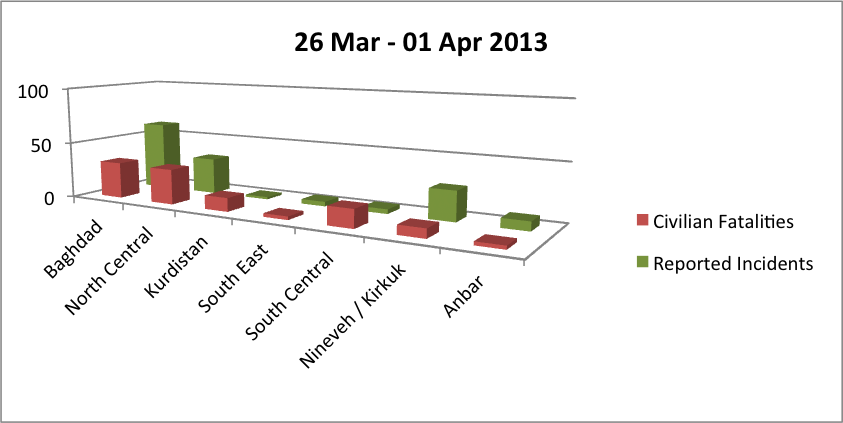
CENTRAL
Despite the relative calm of last week and a bolstered security presence across the central belt Baghdad and surrounding provinces experienced an increased number of high impact attacks, predominantly against Shia worship sites last week. At least 19 people were killed and 100 wounded when blasts hit Shia mosques in the Baghdad districts of Zafaraniyah, Binook, Qahira and Jihad during Friday prayers on 29 March. Whilst we have not seen the same levels of casualties in these IED attacks - versus the similar coordinated attacks of mid March – they continue to point toward an increasingly sophisticated and well resourced insurgency that is capable of near continuous high tempo operations. In line with previous weeks Baghdad continues to see a familiar blend of stealth assassinations and SAF attacks as both Shia and Sunni groups continue to wage a campaign of intimidation and revenge, which will continue in this time of deep political crisis.
SOUTHERN
In line with the emboldened stance by Sunni insurgent groups the South has for the first time in recent months seen an increase in Sunni insurgent activity and threat, which thankfully has failed to impact this week. Basra and surrounding areas continue to experience what is often referred to as ‘local issues’ as Shia groups posture and fight over loyalties and districts. Much of the violence this week has been criminal and revenge oriented as tribes and families seek to gain control of lucrative smuggling routes and operations, as well as to avenge the deaths of slain members.
Comments are closed.