


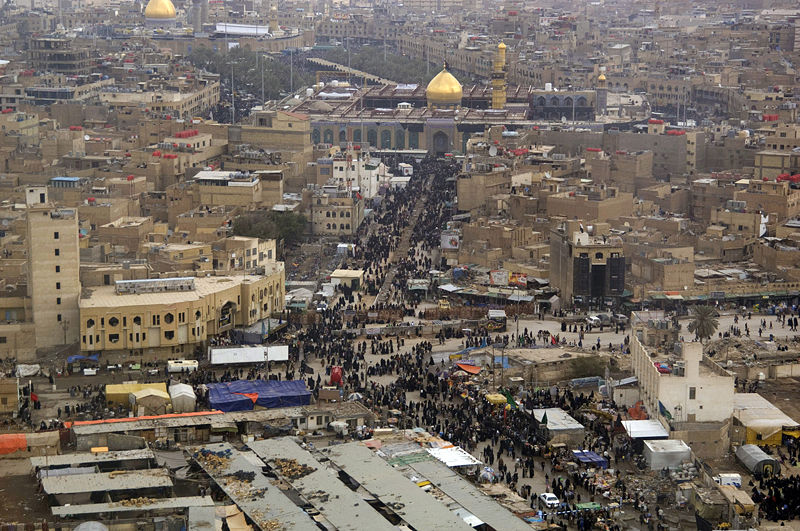
And the reason why the current projects are not being completed is because the government still owes contractors billions of dinars, Shadhan says. So naturally the contractors are unwilling to finish anything.
“Some of the projects in Karbala date back to 2008,” Shadhan told NIQASH. “And contractors dragging their feet has become a permanent characteristic of construction in Karbala.”
It is hard to know who is to blame for the current state of affairs. Politicians involved happily blame one another for the problems.
Mohammed al-Moussawi, former head of the provincial council, said funds had been mismanaged and blamed Karbala’s former governor, Amal al-Din al-Hir, for not spending the money carefully enough.
Meanwhile al-Hir said that the contractors were to blame for delays in projects and that there had never been enough money in the budget in the first place.
Poor planning is the main reason for the delay, added another council member and former head of the council’s economics committee, Tariq al-Khikany. “There are also some serious problems with some of the contracts signed years ago,” al-Khikany said. “So the local government doesn’t have the authority to hold contractors who do not fulfil their contractual obligations accountable.”
The only sanctions that the local council can impose on contractors are to withdraw the project and give it to another contractor. “And this doesn’t help anyone,” al-Khikany said. “In fact it can actually work in the interests of the contractors who have defaulted.”
The local council should be given the authority to impose sanctions on contractors, he says. Because often the contractors who are not completing their work are the ones who signed contracts with federal ministries in Baghdad, al-Khikany explains. “The contractors and companies have greater freedom to do what they want because they are so far away from Baghdad. And they know the local authorities cannot hold them to account.”
Comments are closed.