


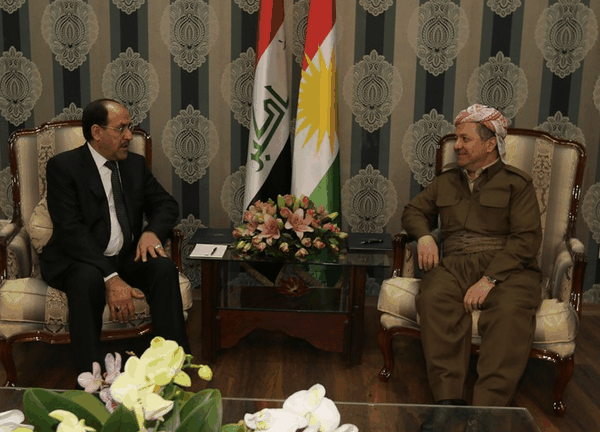
Meanwhile, it seemed that officials associated with the Patriotic Union of Kurdistan (PUK) were cautious regarding these hard-line positions, and one PUK official went as far as stating that the KRG is responsible for the crisis because of its "failed oil policies." Furthermore, some PUK leaders met with Maliki independently to discuss the budget issue.
However, the current problems relating to the budget are not limited to the crisis between Baghdad and Erbil, as there are other aspects that could be called "structural problems." An official from the International Monetary Fund (IMF) noted that the current draft budget does not solve the problem of Iraq's near-total dependence on oil revenues, and the potential risks this entails in the event of a drop in oil prices.
The budget, which amounts to about $150 billion, assumes that oil prices will remain at $106.10 per barrel. However, it is likely that prices will drop this year, resulting in a continuation of the budget deficit. This deficit occurred for the first time last year, after multiple years of a financial surplus. The IMF official also expressed his concern that the Iraqi government may think about using cash reserves in the Central Bank to compensate for this deficit, which would weaken the currency and stimulate inflation.
Budget Problems go Beyond Erbil-Baghdad Crisis | Iraq Business News http://t.co/0AqkPInsvL