


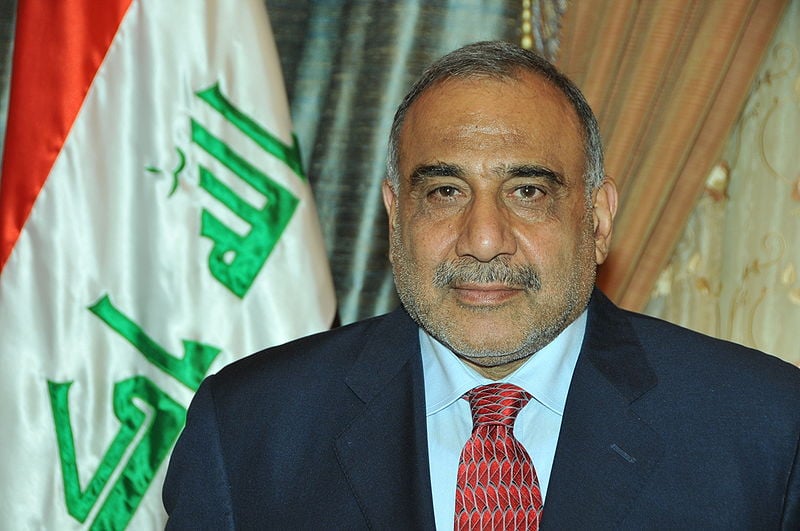
Abdul-Mahdi said the interim oil deal reached with the Kurds in November was a goodwill gesture from the Kurds to him personally, to enhance the fortunes of the Abadi government. In the deal, the Kurds agreed to export 150,000 barrels of oil per day to the Baghdad government. “Now, we will settle down to real business. Gestures [of goodwill] are behind us. To strike a deal will not be easy,” Abdul-Mahdi told me.
The day after Abdul-Mahdi left for Baghdad, in the lobby of my Brussels hotel my eye caught a front-page headline in the Wall Street Journal: “Iraq and Kurdistan Agree on Oil Deal.” The article's opening paragraph read, “The Iraqi government agreed Tuesday [Dec. 2] to an oil export deal with the northern region of Kurdistan, signaling an end to a yearslong political impasse that has nearly bankrupted both governments and hobbled efforts to fight the Islamic State insurgency."
The new agreement will go into effect on Jan. 1, 2015, with Iraqi Kurdistan exporting 250,000 barrels of oil a day to Baghdad, and Kirkuk, currently under Kurdish control, exporting another 300,000 barrels a day. In return, 17% of Iraq’s budget expenditures will got to the KRG, and Baghdad will disburse the approximately $10 billion in the KRG's budget share it has been withholding since the beginning of 2014. In addition, the Iraqi Defense Ministry will make direct monthly payments to the peshmerga to cover expenses in the fight against Islamic State forces.
The deal is being saluted across the Iraqi political spectrum as a “win-win” for Baghdad and Erbil. Before the deal, Turkey had positioned itself as the sole outlet for oil from Iraqi Kurdistan. The Kurds established a new company, the Kurdistan Organization for Marketing Oil (KOMO), to export oil via Turkey. The Turkish terminal on the Mediterranean had been busy in the last few months loading Kurdish oil onto tankers that then navigated the globe in search of buyers.
The Baghdad-Erbil deal states that Kurdish exports will flow through Iraq’s national oil company, the State Organization for Marketing of Oil (SOMO). The Wall Street Journal assessed this as “marking a win for Iraq’s central government, which has long sought to exercise more control over Kurdish oil exports and revenue.” Thus, the money from Kurdish oil exports will no longer be deposited at Halkbank, the Turkish state bank, and instead will be transferred to an escrow account in New York.
Abdul-Mahdi: Now the Real Work Begins: By Cengiz Çandar for Al-Monitor. Any opinions expressed are those... http://t.co/9R5KZtHcPI #Iraq
New Blog Post Abdul-Mahdi: Now the Real Work Begins - By Cengiz Çandar for Al-Monitor. Any opinions expressed are ... http://t.co/QnpCwnbSzs
Abdul-Mahdi: Now the Real Work Begins http://t.co/M3x57YA8Pr