


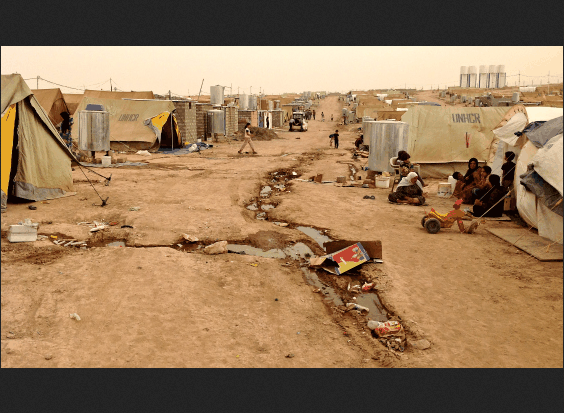
Along the road between Kalar and Jalawla, still an uninhabited militarized zone months after being retaken from IS, Al-Monitor spoke to other internally displaced Iraqis.
The inhabitants said that they had initially been staying inside a school in Kulajo after being displaced by the fighting, but had later been transferred to this informal tented encampment.
They said that the area — still muddy on Al-Monitor’s visit in late March — had been recently flooded by rain, and that it would likely be filled with scorpions and snakes in the summer months. Schools are too far away for the children to attend. The residents live in limbo, receiving aid at irregular intervals from tribal leaders and some nongovernmental organizations, a resident who identified himself as the "camp manager" told Al-Monitor.
The man, a former shop owner from Muqdadiyah who asked not to be named, said, "If we go back, the arrests will start" by the Shiite militias, implying that such arrests would be indiscriminate and sectarian-based.
Southeast of the capital, the Nabi Younes camp in Nahrawan is much better equipped. Rows of container housing with electricity, running water and television are raised off the ground, asphalt roads running between them. The camp, carefully guarded by Iraqi troops, includes a soccer field and elementary school. House numbers are scrawled in black on the otherwise monotonous white buildings and a dusty Iraqi flag flies near a protective fence around the camp.
Images of the historical Muslim figure Hussein, revered by the Shiite sect and typically depicted as a light-skinned man with auburn flowing locks, and various Shiite slogans such as "Ya Zahra" in reference to the Prophet Muhammad’s daughter are ubiquitous. Similar images dot the sides of the road on the way from Baghdad, with one on a government checkpoint as well.
Comments are closed.