


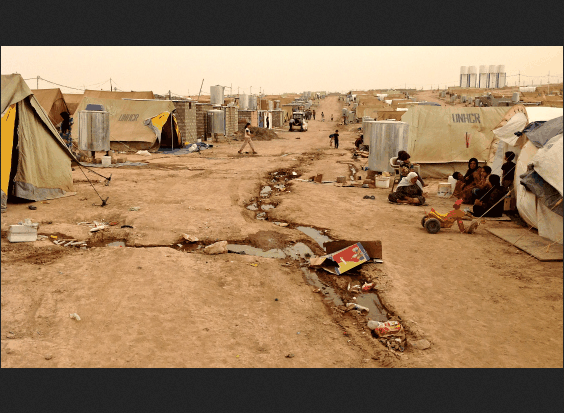
The most immediate concern is for the displaced from the western Iraqi province of Anbar — still mostly under the control of IS and where Iraqi government troops and allied Shiite militias are concentrating their operations — and its regional capital Ramadi. The UNHCR reports that over 100,000 people have been displaced from the area in recent weeks.
In an e-mail exchange with UNHCR Public Information Officer Bathoul Ahmed, Al-Monitor was told, "Many Ramadi IDPs have faced serious difficulty in reaching places of safety. Procedures for admission to different governorates have often changed on a daily basis, and at key checkpoints the authorities have introduced enhanced security screening practices, including the requirement for a sponsor in order to cross."
At an April 30 press conference in Baghdad, European Union humanitarian aid department chief Jean-Louis de Brouwer reportedly warned that not allowing the displaced from Sunni areas into Baghdad or the Kurdish region without sponsorship would ultimately "end up with the kind of ethnic division that will not be good for the country."
Much local support for IS is seen as stemming from discriminatory practices by the Shiite-led government toward Sunnis in the years since the 2003 invasion and the fall of Saddam Hussein’s regime. The current displacement trends and restrictions on IDP movement seem likely to further aggravate the already high levels of distrust between the two communities.
Comments are closed.