


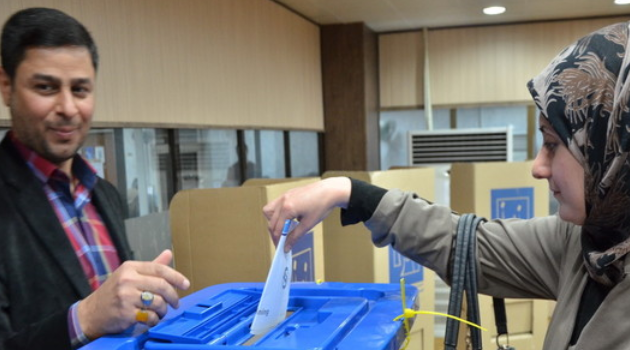
The other major issue is the deployment of militia and military groups in cities around Iraq. Whether Sunni Muslim, Shiite Muslim or Iraqi Kurdish, the various armed groups will doubtless have an impact on how ordinary civilians vote.
There are a number of other technical and logistical issues that could also prevent the provincial elections from taking place.
Elections are supposed to take place in the semi-autonomous northern region of Iraqi Kurdistan at the same time, but, according to a 2010 agreement, the date of the election should only be set by the Iraqi Kurdish government itself and it has yet to do this. The disputed province of Kirkuk is supposed to participate in elections after the Iraqi government passes a special law and this has not happened either.
Another issue involves election rules. Over the past few weeks some political parties have been calling for further fundamental changes to the provincial election laws. The most recent laws saw the provincial elections calculated on the basis of a mathematical formula called the Sainte-Laguë formula, which determines how to count votes and ascertain representation. The Sainte-Laguë system stops larger parties from gobbling up the votes smaller parties have won, if the smaller parties haven’t won enough votes to pass a certain threshold.
The result of using the formula previously has meant that there are many more parties holding seats on provincial councils than before. Previously only two or three large parties ran the councils. Conflicts, rivalries and the unwillingness to work together has meant that the provincial councils have had difficulty doing their work. This legal problem will also need to be resolved before elections can be held.
Comments are closed.