


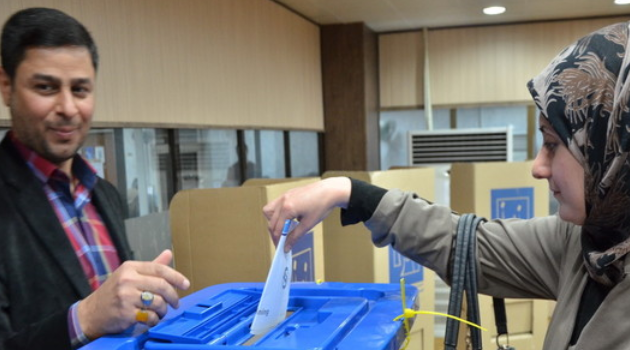
The recent political manoeuvrings and defections from established political blocs are also going to make holding the provincial elections more difficult. These have resulted in the – some say illegal – recent dismissals of senior politicians like Iraq’s Minister of Finance, senior Iraqi Kurdish politician Hoshyar Zebari. This is all some distance away from provincial politics, but the political conflicts at the top mean that, once again, it’s going to be more difficult for provincial politicians to form coalitions and alliances.
Finally, one of the major roadblocks for provincial elections is the IHEC itself.
Politicians have been calling for a change of personnel on the IHEC. According to the Iraqi Constitution it is supposed to be an independent body. But instead its appointees have been given their jobs according to Iraq’s unofficial quota system, which sees senior positons divvied up between Sunni, Shiite and Kurdish parties.
In July 2016, 100 MPs signed a petition demanding this change.
“We are an executive body and we apply the law without being influenced by political difference,” insists Safaa al-Musawi, IHEC’s spokesperson. “Parliament has not voted on any new election laws so we will continue to use the existing one. Additionally, changing the members of IHEC would require months of negotiations between the different political blocs. And,” he noted, “up until now we haven’t had any formal request from Parliament to postpone the elections so we will continue with preparations for April 2017.”
Comments are closed.