


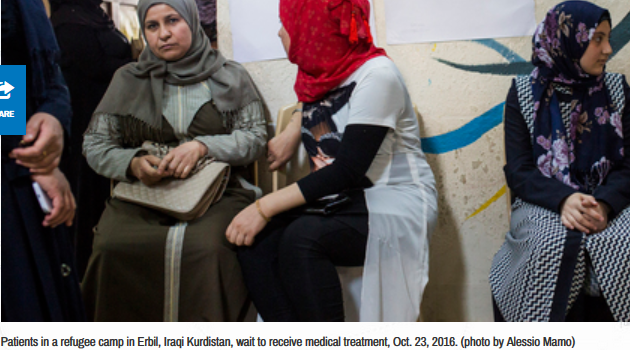
Zhyan has built four clinics in Erbil province and serves five camps for the displaced and refugees with a mobile unit. One of the camps, at nearby Debaga, has seen an influx of displaced people from villages cleared of IS in recent days. The camp already hosts 36,000 people.
“Zhyan's mobile unit reaches Debaga every Monday and Wednesday,” project manager Marta Malaspina told Al-Monitor. “All the displaced from villages around Mosul have to pass through different controls and screenings before coming to [Iraqi Kurdistan]. Most of the camps that were built and prepared before the offensive was launched are in Iraq, except for Debaga, here in Kurdistan."
She explained that men and women who enter Kurdistan are separated. Boys over 11 years old must leave their mothers and join the men. The Kurdistan Regional Government implements strict border controls and anti-terrorism safeguards, as IS stands right at its borders. Kurdistan was hit by suicide bomb attacks last year.
Hoda, a gynecologist at Zhyan's Ashti Clinic in Erbil, used to work at the hospital in Mosul. She has mixed feelings of intense fear and anguish for her family back in her hometown, but also hope, as it might become possible to return home in the coming months.
She called her brother in Mosul, where the family has been stuck in their parents’ house for days now, fearing the spread of the war inside the city itself. Hoda and the nurses want to take part in this historical moment by using their medical skills to help the displaced and — soon, they hope — take their support to newly liberated villages.
Comments are closed.