


By Ahmed Tabaqchali, Chief Strategist of AFC Iraq Fund.
Any opinions expressed are those of the author, and do not necessarily reflect the views of Iraq Business News.
Construction Activity and Stability
The market, as measured by the Rabee Securities RSISX USD Index was up 4.4% in June, and up 30.4% for the year.
The market's technical picture continues to be positive, with the macroeconomic fundamentals discussed here last year supporting the argument that the market's uptrend will likely remain in force.
However, its upward slope might moderate or go sideways as it consolidates its gains for the year before its next move. Supporting the consolidation thesis is the technical picture of the Rabee Securities RSISX IQD Index (the Iraqi dinar (IQD) version of the Rabee Securities RSISX USD Index) which reflects a multi-month consolidation pattern (second chart below).
The fundamental drivers for the market's next move would come from the government's implementation of the 2023 budget following its passage into law at the end of the month. The expansionary budget, as it comes into force, would result in meaningful liquidity injections into the economy as a consequence of the oversized role of the government's spending in the economy - essentially an efficient direct transmission mechanism of oil revenues into the real economy. Ultimately, these liquidity injections will feed into corporate profits, which in turn, will provide the impetus for the market's next move.
RSISX USD, and RSISX IQD Indices versus Average Daily Turnover
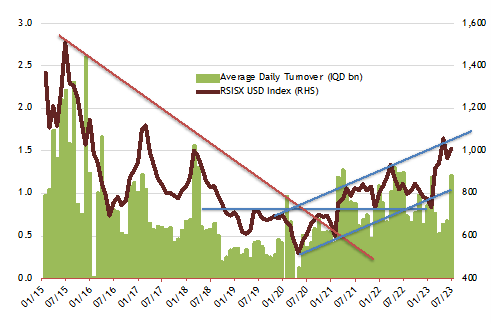
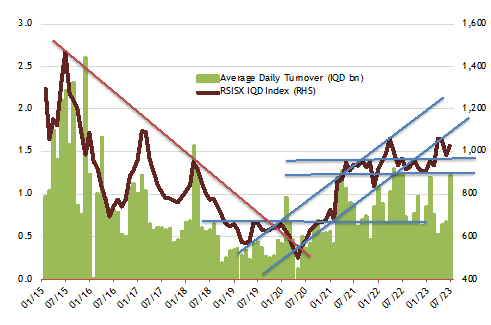 (Source: Iraq Stock Exchange, Rabee Securities, AFC Research, data as of June 30th)
Construction Activity and Stability
As discussed here a few months ago in "Supermarkets and Stability", one of the most promising recent developments in the economy is the meaningful capital investment by businesses and individuals, brought about by the relative stability of the last five years following the end of the ISIS conflict. While, these years were punctured by several shocks, such as the countrywide demonstrations in late 2019, the assassination of Iran's top general in Baghdad followed by the emergence of COVID-19 and the crash in oil prices in 2020, the undecisive elections in 2021, followed by a year of a political impasse topped by political conflict and violence in the summer of 2022.
Nevertheless, these shocks pale in comparison to those of the prior decades of conflict that Iraq had experienced, and crucially, were short-lived and did not lead to self-reinforcing cycles of violence and conflict along the lines of the past. As such, this relative stability provided a more stable and predictable macroeconomic framework for businesses and individuals to operate in and to plan for capital investments on a scale not seen since before the last prior decades of conflict; that in turn, should be sustained by the population's pent-up demand for goods and services to catch up with the rest of the world.
These developments were first seen in the immediate aftermath of the ISIS conflict through the revival of long-forgotten social activities, expressed in consumer retail consumption (restaurants, coffee shops, and malls) and construction activity as reported in AFC Iraq's travel report in the summer of 2019 "Significant Social and Economic Transformation".
Over the five years since the end of the ISIS conflict, the construction activity that was then in the early stages of revival in Baghdad turned into a building boom, with construction cranes popping up everywhere and transforming the city. The last time Baghdad witnessed such a massive transformation was in the early days of the Iraq-Iran war, as the regime then embarked on a "Guns and Butter" policy to insulate the city's population from the ravages of the war, but eventually abandoned the policy as costs mounted and the war dragged on.
During these decades, the city's population grew from 3.1 million to 7.7 million while its infrastructure, until the last few years, for the most part, stayed the same. A continuation of the relative stability of the last five years and the multi-decade pent-up demand for infrastructure in Baghdad should sustain this infrastructure build, which can reshape the city in much the same way the building boom of 2003-09 reshaped Dubai and brought with it much prosperity.
This private sector led construction activity was supported by funding from the Central Bank of Iraq (CBI)'s IQD 14 tn (USD 10.7 bn) and IQD 4 tn (USD 3.1 bn) subsidised lending initiatives. Initially launched in 2015, the IQD 5 tn lending initiative was channelled through specialised state-owned banks and the housing fund, to support the real estate, industrial, and agricultural sectors, and the IQD 1 tn lending initiative was channelled through private sector-owned banks to support small and medium enterprises.
Both initiatives were augmented in mid-2020 with extra funding by the CBI, and lending terms were eased with interest rates as low as zero for the housing sector. Both of these measures accelerated the initial modest uptake with the bulk of the lending driven by demand for financing by the real estate sector, so that during 2021-22, about IQD 6.7 tn and IQD 0.5 tn were disbursed from the two initiatives for real estate financing (*).
This pent-up demand for real estate and the relative stability enjoyed by the country are acting as magnets, attracting regional capital to invest in the sector, such as Saudi Arabia's USD 1 bn investment in a new commercial, housing and shopping district in Baghdad. Announced in early June 2023, the project named "Baghdad Avenue" is a part of the country's accelerated reconciliation with its once close-knit neighbours in the countries of the Gulf Corporation Council (GCC), which was ruptured by the invasion of Kuwait in 1990 (**).
The real estate sector is not the only sector to benefit from the interest of regional capital as seen by the formation of the Saudi-Iraqi Investment Company, launched in late May 2023, with capital of USD 3 bn to invest in Iraq, funded by the Saudi Arabian wealth fund PIF. This was soon followed by plans for two significant regional investments in the country. The first was in mid-June 2023 that Qatar plans to invest USD 5 bn over the next few years; while the second was in early July 2023 that Saudi Arabia and the United Arab Emirates, each planning to allocate USD 3 bn to fund the creation of joint business councils to expand investments in, and trade with, Iraq.
Supplementing the private sector-led construction activity in Baghdad is the beautification campaign of the city undertaken by the current government as part of its drive to gain public support and legitimacy - following its troubled formation in October 2022, a year after the undecisive October 2021 parliamentary elections that was marked by political conflict and strife. This beautification campaign involves "... improving roads, bridges and sidewalks, removing security checkpoints that worsened traffic, cleaning up facades of buildings damaged by war and revamping parks and promenades that hug the Tigris River that bisects the city" as reported by Reuters, in mid-May 2023 with photos showing the city reclaiming its former beauty.
The transformation of Baghdad has brought with it the inevitable loss of green spaces and traditional architecture that has marked its uniqueness throughout the centuries. Its famed date orchards and gardens that filled the city, as well as its beautiful traditional architecture such as the old homes with wood-latticed windows and traditional brick villas, are being replaced by malls, shopping districts, and apartment blocks - in an all too familiar pattern of destroying the old to build the new throughout the city's history (***). These unfortunate aspects of the city's development were reported recently by the New York Times and the Washington Post with vivid photographs of the traditional and new that show a city that is being transformed after decades of conflict.
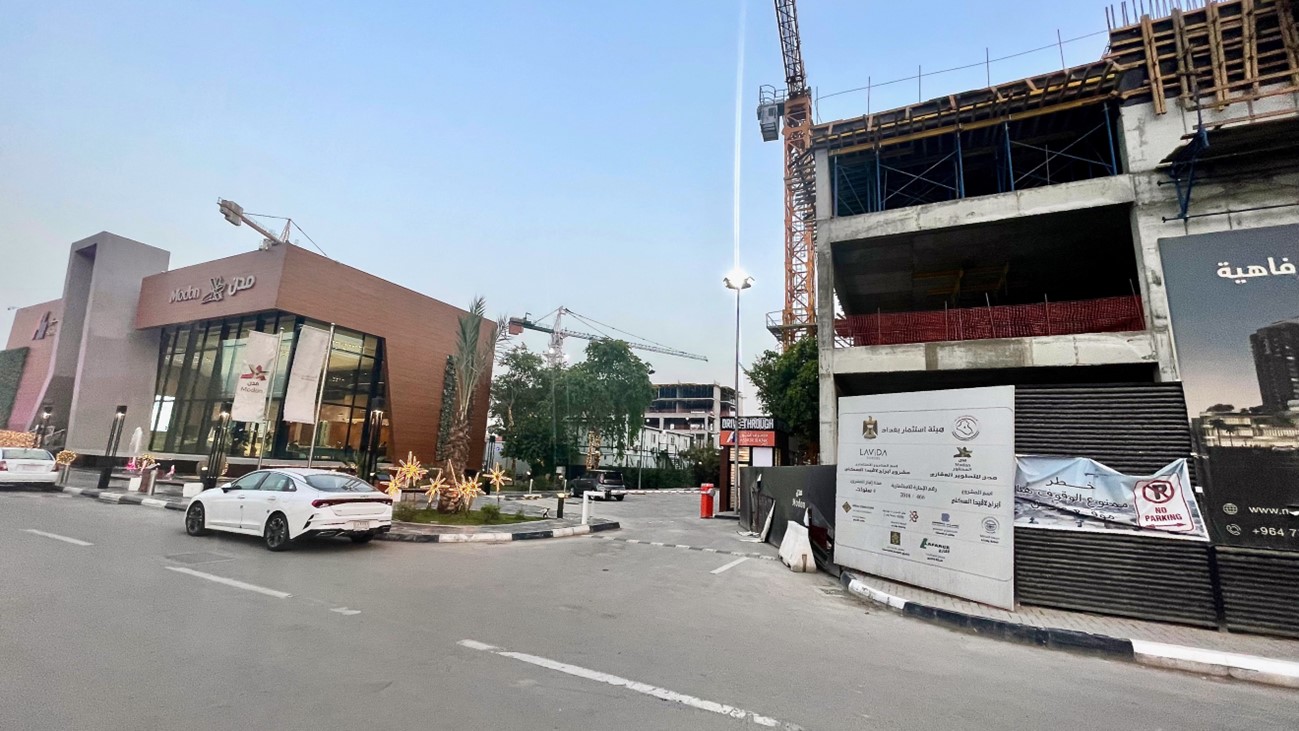
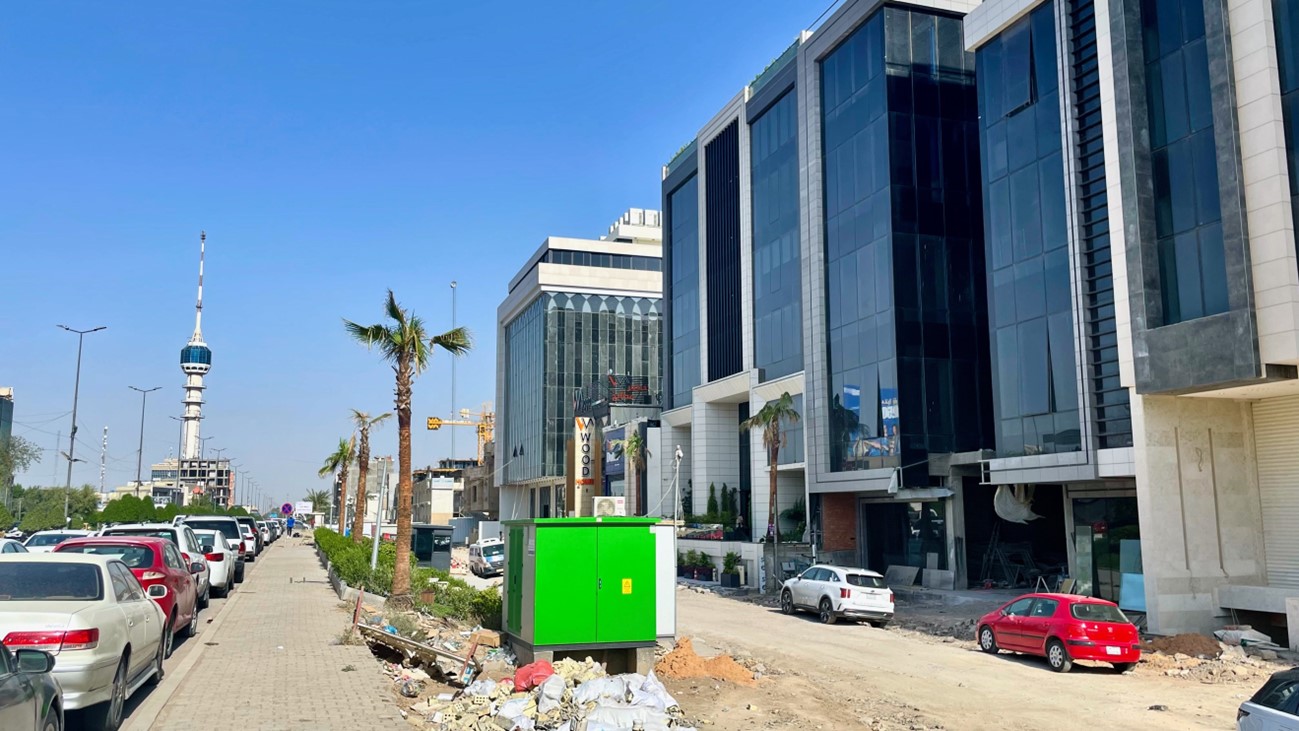
Below are photographs taken by the author over the last few months of some of the parts of Baghdad that have been transformed and those that are being transformed, and complement the phots within the articles by Reuters, the New York Times, and the Washington Post mentioned earlier.
42nd Steet, Baghdad
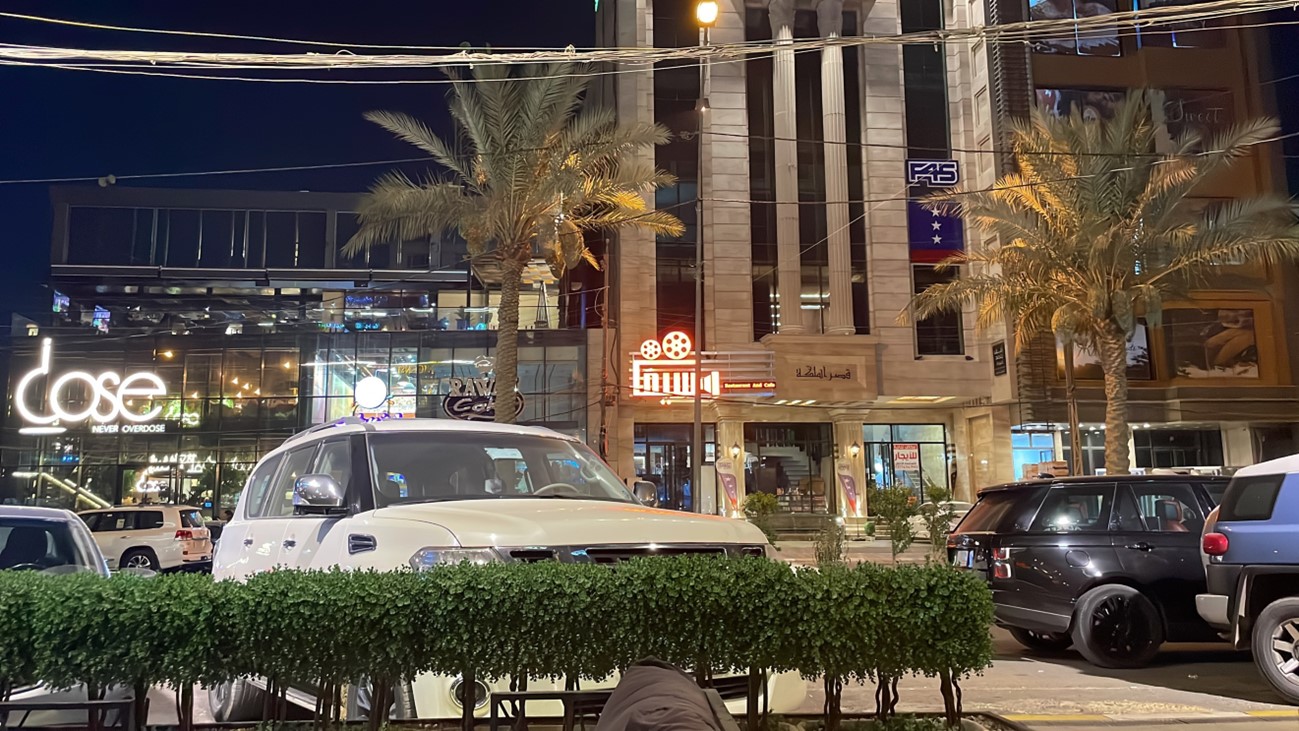
King Abdul Malik bin Marwan Street, Baghdad

Al Masbah Junction, Baghdad

Al Nedal Street, Baghdad

Al Sadoon Street, Baghdad
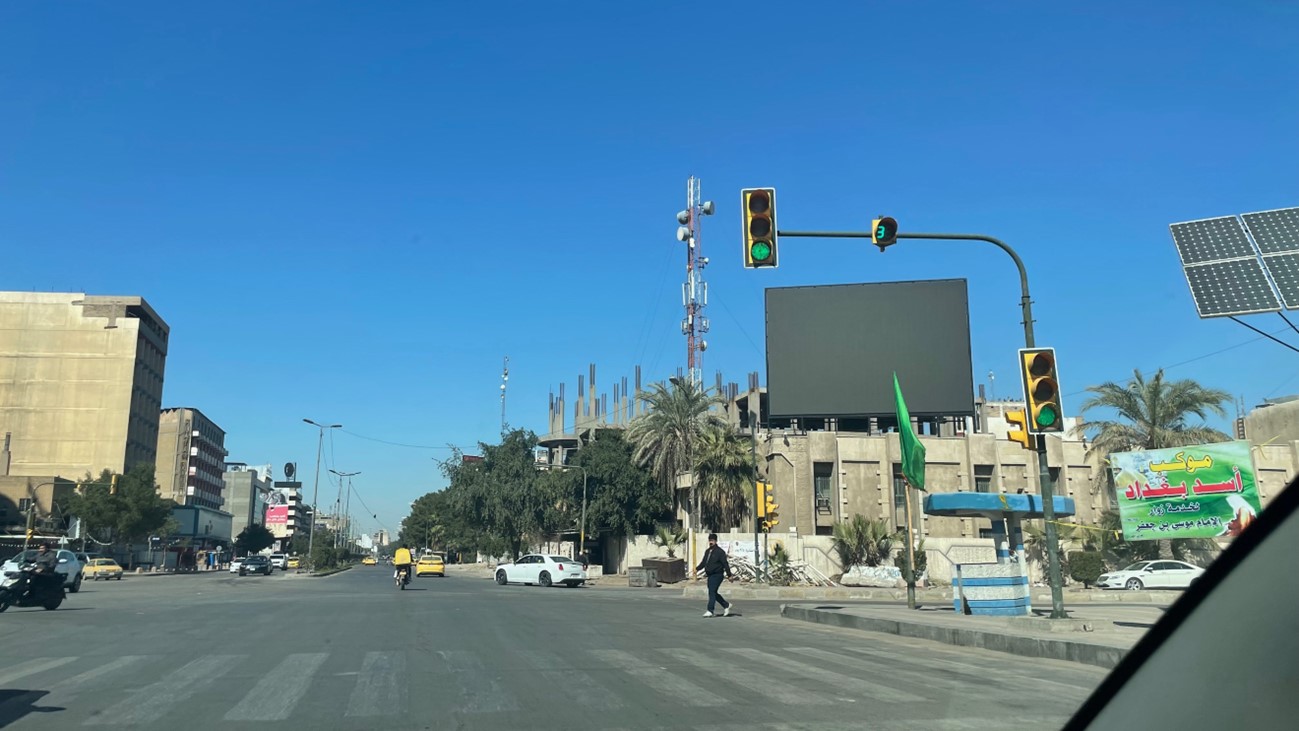
Palm Trees Street, Baghdad
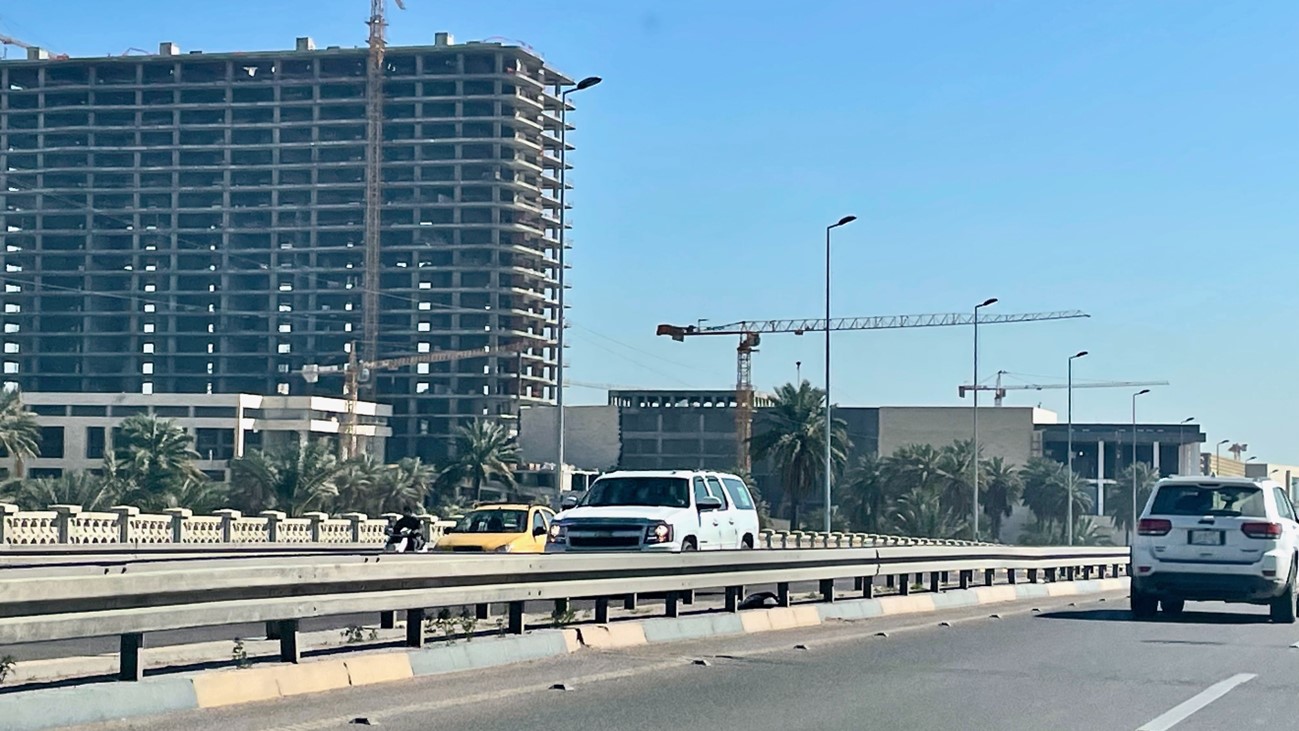
Baghdad Tower Street, Baghdad

Yermuk Pool Street, Baghdad
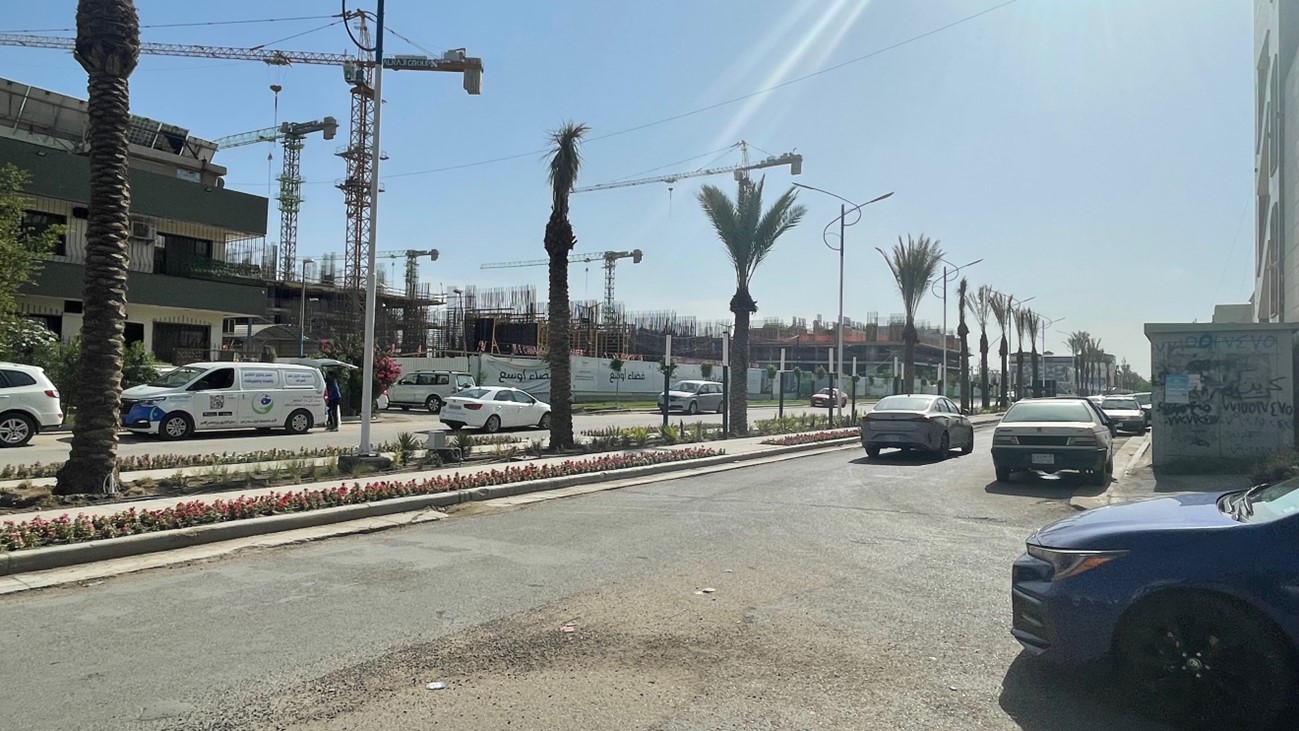
Yermuk Pool Street, Baghdad
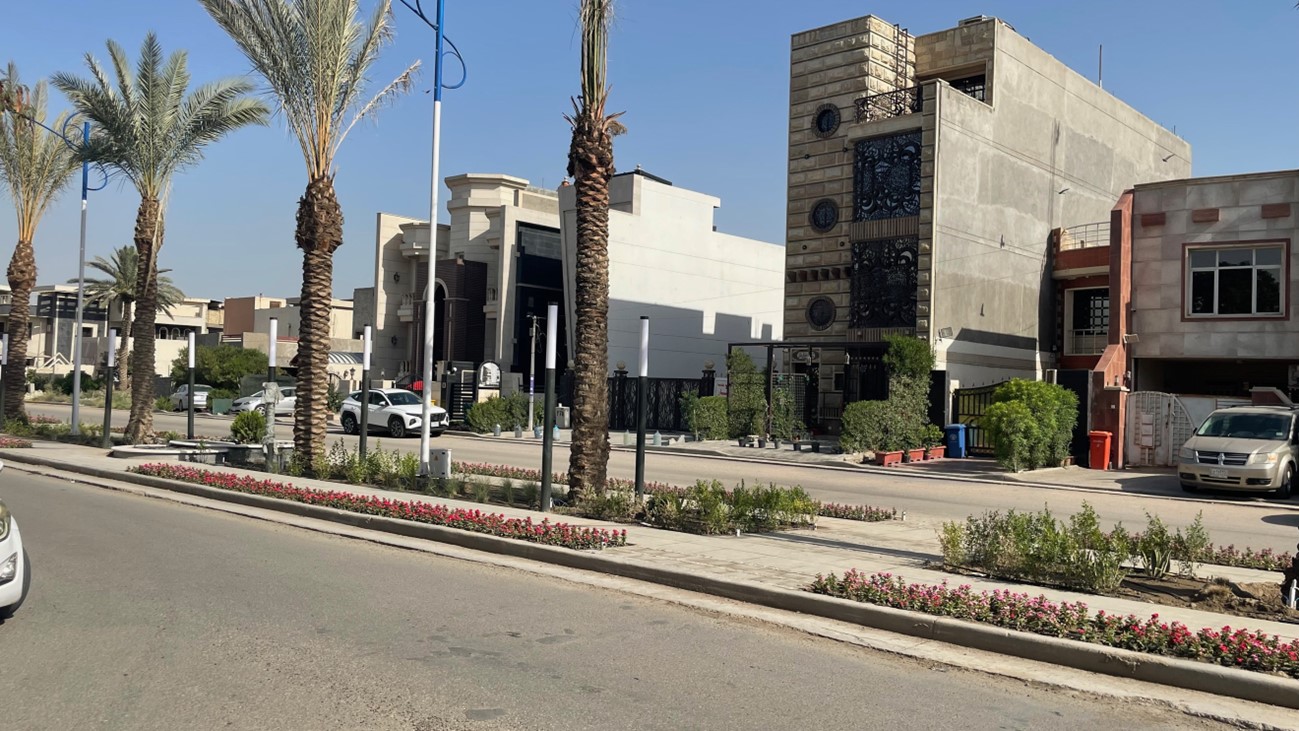
Entertainment Club Street, Baghdad

Baghdad Tower Street, Baghdad
Baghdad Tower Street, Baghdad
Notes and sources:
(*) Source: Central Bank of Iraq, IMF Iraq country report number 2023/075, and "Priority financing needs of Iraqi SMEs Report" published by GIZ May 2023.
(**) The reconciliation was reported here at the end of the market report for January, when the city of Basra hosted the 25th edition of the bi-annual Arabian Gulf Cup football tournament, known as Khaleeji 25, for the first time since 1979. Then, over 50,000 GCC visitors streamed into Basra over the two weeks of the tournament in January 2023 which was the first such visit since the 70's.
(***) This pattern was discussed here in "Sandstorms, and a stroll down Al-Mutanabbi Street" in its description of the historic buildings in Al-Mutanabbi Street writing " ... A few years, later the building was expanded, and a tower was added using bricks reclaimed from the demolition of the eastern section of Baghdad's historic city wall."
Please click here to download Ahmed Tabaqchali's full report in pdf format.
Mr Tabaqchali (@AMTabaqchali) is the Chief Strategist of the AFC Iraq Fund, and is an experienced capital markets professional with over 25 years' experience in US and MENA markets. He is a Visiting Fellow at the LSE Middle East Centre, Senior Fellow at the Institute of Regional and International Studies (IRIS), and a Senior Non-resident Fellow at the Atlantic Council. He is also a board member of Capital Investments, the investment banking arm of Capital Bank in Jordan.
His comments, opinions and analyses are personal views and are intended to be for informational purposes and general interest only and should not be construed as individual investment advice or a recommendation or solicitation to buy, sell or hold any fund or security or to adopt any investment strategy. It does not constitute legal or tax or investment advice. The information provided in this material is compiled from sources that are believed to be reliable, but no guarantee is made of its correctness, is rendered as at publication date and may change without notice and it is not intended as a complete analysis of every material fact regarding Iraq, the region, market or investment.
Comments are closed.