


Iraq launches the Updated Nationally Determined Contribution
Posted on 10 October 2026 .
From the United Nations Development Programme (UNDP). Any opinions expressed are those of the author(s), and do not necessarily reflect the views of Iraq Business News.
Iraq launches the Updated Nationally Determined Contribution
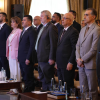
Under the patronage of Prime Minister H.E. Mr. Ali Al-Zaidi, Iraq today officially launched its Updated Nationally Determined Contribution (NDC), setting out a strengthened framework for climate action through 2035.
Coordinated between the Ministry of Environment and the United Nations Development Programme (UNDP), the updated NDC raises Iraq's climate ambition while linking climate action with economic diversification, energy and water security, resilience, investment and sustainable development.
Submitted to the UNFCCC [UN Framework Convention on Climate Change] in November 2025, the updated NDC raises Iraq's unconditional emissions-reduction target to up to 3 per cent below business-as-usual (BAU) by 2030 and establishes a new unconditional target of up to 5 per cent by 2035. A further conditional reduction of up to 17 per cent by 2035, subject to international climate finance, technology transfer and capacity-building support, brings the potential total reduction to up to 22 per cent below BAU.
Speaking on behalf of Prime Minister H.E. Mr. Ali Al-Zaidi at the launch, Dr. Ihsan Al-Awadi emphasised the national importance of the Updated NDC, saying: "We view this document as a national priority and a practical pathway to link climate action with economic and social development."
"Iraq's Updated NDC marks an important step from climate ambition towards implementation. The priority now is to translate these commitments into investment, stronger institutions and practical solutions that improve resilience, protect water and livelihoods, and support Iraq's development." said H.E. Ms. Sarwa Abdulwahid Qader, Minister of Environment.
"Iraq's Updated NDC provides an important framework for turning climate ambition into concrete action. Its success will depend on strong national leadership, coordinated implementation and sustained international partnership. The United Nations stands ready to support Iraq in this next phase." said Peter Hawkins, United Nations Resident Coordinator in Iraq.
The NDC covers mitigation across energy, oil and gas, electricity, transport, industry, agriculture and waste, while prioritising adaptation in water resources, agriculture, health and Iraq's special ecosystems, including forests, mountains and the Mesopotamian Marshes.
"Iraq has outlined a more ambitious climate course. The priority now is implementation: translating commitments into investment, strengthening institutions and mobilising the finance, technology and partnerships needed to deliver measurable results for Iraqi citizens." said Mehdi Khalili, UNDP Deputy Resident Representative in Iraq.
For more than a decade, UNDP has supported the Government of Iraq in advancing its climate agenda, Policy, Strategies and strengthening national action on climate change. Most recently, UNDP provided technical support throughout the NDC updating process, with financial support from the United Kingdom under the Climate Promise Initiative, as part of a broader United Nations effort. The next phase will focus on implementation, climate finance, investment and partnerships, alongside stronger climate data, monitoring and measurement systems.
The launch marks the beginning of Iraq's next phase of climate action, translating national ambition into implementation and tangible development results.
Posted in Iraq Industry & Trade News 0 Comments
Workshop: Strengthening SME resilience in Iraq
Posted on 25 September 2026 .
From the United Nations Office for Disaster Risk Reduction (UNDRR). Any opinions expressed are those of the author(s), and do not necessarily reflect the views of Iraq Business News.
Strengthening SME resilience in Iraq:
Building risk-informed, inclusive and resilient enterprises for sustainable recovery and local economic development
Background
Small and medium-sized enterprises (SMEs) are central to employment, private sector development, livelihoods and local economic recovery in Iraq. However, businesses are increasingly exposed to interconnected disaster, climate and environmental risks, including drought, water scarcity, extreme heat, dust storms, flash floods and environmental degradation. These pressures can disrupt business operations, workers, markets and supply chains and interact with damaged infrastructure, displacement and uneven access to finance and business services.
The resilience of SMEs is also closely connected to Iraq's broader recovery and displacement context. IOM's Displacement Tracking Matrix reported more than 186,000 people displaced by climate-related factors as of September 2025. Iraq also continues to face conflict-related displacement and complex challenges associated with return and reintegration. Local enterprises play an important role in providing employment, income and services for displaced people, returnees and host communities, making stronger SME preparedness and resilience important for both sustainable recovery and local economic development.
To address these interconnected challenges, the United Nations Office for Disaster Risk Reduction (UNDRR) and the International Organization for Migration (IOM) are jointly organizing a two-day national capacity-building workshop on Strengthening SME Resilience in Iraq, on 16-17 November 2026.
The workshop will bring together approximately 40-50 participants from national and local government institutions, governorates, business associations and SMEs, financial institutions, academia, the United Nations and development partners.
By bringing together disaster risk reduction, business continuity, displacement-sensitive livelihoods and local economic development approaches, the workshop will support Iraqi partners in identifying practical measures to strengthen enterprise resilience and lay the foundations for the development of an Iraq SME Resilience Roadmap.
Objectives
The workshop aims to:
- Identify disaster, climate and displacement-related risks affecting Iraqi SMEs and local economies.
- Introduce international approaches to SME resilience, business continuity planning and the UNDRR Resilience Maturity Assessment (REMA) tool.
- Apply risk-mapping and resilience-assessment methods to realistic Iraqi enterprise scenarios.
- Strengthen understanding of the links between SME resilience, displacement, livelihoods and sustainable local economic recovery.
- Identify practical measures for strengthening business continuity and supply-chain resilience.
- Agree priority actions, institutional roles, potential partnerships and next steps towards the development of a national SME resilience roadmap for Iraq.
From understanding risk to action
The first day of the workshop will focus on understanding the risk environment facing Iraqi SMEs and building a common approach to enterprise resilience.
Participants will examine the role of SMEs in Iraq's economic recovery and the challenges facing businesses operating in displacement-affected contexts. Sessions will explore disaster and climate risks affecting enterprise assets, workers, supply chains and markets and introduce practical approaches to business continuity and risk-informed planning.
Through an interactive group exercise, participants will map hazards, vulnerabilities, dependencies and existing capacities across selected Iraqi SME sectors and identify priority risks requiring further action.
The second day will move from risk assessment to national action.
Participants will explore how displacement, return and host-community needs can be incorporated into SME resilience programming and will be introduced to UNDRR's Resilience Maturity Assessment (REMA). Through a hands-on exercise, participants will apply selected elements of REMA to illustrative Iraqi SME scenarios and identify practical resilience improvements.
The programme will also address supply-chain resilience, including critical suppliers, transport, utilities and customer dependencies, before bringing participants together to identify priority actions for an Iraq SME resilience roadmap.
Expected results
By the end of the workshop, participants are expected to have:
- A shared understanding of the principal disaster, climate and displacement-related risks affecting SMEs and local economies in Iraq.
- Initial risk maps identifying priority sectors, vulnerabilities, dependencies and capacities.
- Improved understanding of business continuity planning and practical measures SMEs can take to prepare for disruption and recover more effectively.
- Practical experience applying the UNDRR REMA tool to identify enterprise resilience gaps and priorities.
- Priority actions to strengthen supply-chain resilience.
- Initial agreement on priority actions, institutional responsibilities, potential partners and sequencing for an Iraq SME Resilience Roadmap.
- Candidate institutional focal points and partnerships to support follow-up, subject to confirmation.
- Towards a national SME resilience roadmap
- A central outcome of the workshop will be to begin defining a pathway for strengthening SME resilience at the national level in Iraq.
Government, businesses, business associations, UN entities and development partners will discuss how resilience considerations can be more systematically incorporated into enterprise development and support. Participants will identify priority actions across policy, institutional capacity and enterprise-level support, as well as potential leadership roles and partnerships for implementation.
The workshop conclusions and draft action points will provide the basis for further refinement of the proposed national roadmap and continued cooperation between Iraqi institutions, UNDRR, IOM and relevant partners.
Participants
The workshop is expected to convene approximately 40-50 participants, including representatives of:
Government institutions and governorates; business associations and SMEs; financial institutions; academia; United Nations entities; and development and technical partners.
Organizers
The workshop is jointly organized by UNDRR and IOM, bringing together complementary expertise in disaster risk reduction, business resilience, displacement-sensitive livelihoods and sustainable local economic development.
Posted in Iraq Education and Training News, Iraq Industry & Trade News 0 Comments
Iraq Oil Conf Opens; Focus on Exports, Refining and Gas
Posted on 09 September 2026 .
By John Lee.
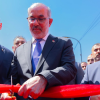
Iraq's fourth international oil, gas and licensing rounds conference has opened in Baghdad, with the Ministry of Oil outlining progress on exports, refining and infrastructure over the first 100 days of the new government.
According to the Ministry of Oil, Minister Basim Muhammad Khudhair al-Abadi said oil exports had risen from around 200,000 barrels per day (bpd) at the start of the government's term to more than 3 million bpd in September. He attributed this to the efforts of ministry staff, national companies and international partners.
The minister highlighted a number of priorities and developments:
- Signing of an Iraq-Turkey agreement to reactivate the northern export route and strengthen export security
- A strategic pipeline project with a consortium comprising Chevron, US company TI Capital, and Qatari company UCC, linking Basra to Fishkhabur with a branch towards Baniyas in Syria
- Agreements signed during a visit to the United States covering field development, exploration blocks and oil infrastructure
- Successful negotiations with Japan's JGC to return to Iraq and resume work on a fluid catalytic cracking (FCC) project at the southern refineries
- Securing petroleum products and logistics across all provinces during the Arbaeen pilgrimage period of approximately 60 days
Al-Abadi said the ministry's priorities for the coming period include increasing production and export rates, diversifying export routes, developing refining capacity, reducing gas flaring and monetising associated gas, reducing dependence on imported petroleum products, and expanding the role of Iraqi companies.
(Source: Ministry of Oil)
Posted in Construction & Engineering In Iraq, Iraq Oil & Gas News 0 Comments
Iraq's FCC Project Back on Track with JGC Agreement
Posted on 17 August 2026 .
By John Lee.
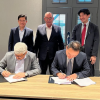
An agreement has been reached with Japanese firm JGC Corporation to resume work on Iraq's fluid catalytic cracking (FCC) project.
According to the Ministry of Oil, the deal was concluded by a ministerial negotiating committee led by ministry adviser Dr. Hamid Younis, with South Refineries Company (SRC) Director General Hussam Hussein Wali among its members.
JGC has begun transferring personnel to the project site and resuming operational preparations. Once complete, the project is expected to add:
- 5 million litres per day of petrol
- Approximately 7 million litres per day of gas oil
- 400 tonnes per day of liquefied petroleum gas (LPG)
(Source: Ministry of Oil)
Posted in Iraq Oil & Gas News 0 Comments
Iraq Faces Daily Petrol Shortfall of 4m Litres
Posted on 05 June 2026 .
By John Lee.
Iraq's daily petrol consumption reached approximately 35 million litres on Wednesday, surpassing all previous records, according to the Ministry of Oil's media and government communications office.
The ministry said the shortfall between production and consumption has reached around 4 million litres per day. South Refineries Company (SRC) refineries are operating at full capacity, producing around 30 million litres of petrol per day, but consumption has risen to approximately 34-35 million litres daily.
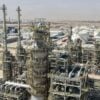
The ministry attributed the production gap in part to the withdrawal of a foreign company responsible for operating the fluid catalytic cracking (FCC) unit (pictured), citing security concerns. The departure resulted in a loss of 4-5 million litres of high-octane petrol per day. Demand has also been elevated by holidays and religious visits.
Previous peak consumption had not exceeded 32 million litres per day prior to recent regional developments. The ministry said it is managing the shortfall by drawing on available reserves.
(Source: Ministry of Oil)
Posted in Iraq Oil & Gas News Comments Off on Iraq Faces Daily Petrol Shortfall of 4m Litres
Iraq to Expand Crude Oil Exports via Pipeline and Road
Posted on 04 June 2026 .
By John Lee.
Iraq's cabinet has approved a plan to significantly increase crude oil exports, including through a new route via Syrian Mediterranean ports, according to the Ministry of Oil.
The cabinet, chaired by Prime Minister Ali al-Zaidi, endorsed recommendations from a meeting held on 20th May between the prime minister and senior Ministry of Oil officials. The plan includes:
- Increasing pipeline crude exports from 220,000 barrels per day (bpd) to 770,000 bpd, in two phases over two and a half months
- Raising truck exports to neighbouring countries to 420,000 bpd, in three phases
- Granting the oil minister the financial and contractual powers required to implement the plan
- Directing the State Oil Marketing Organization (SOMO) to conclude contracts for the additional volumes
- Resuming operation of fluid catalytic cracking (FCC) units at refineries through the Japanese operating company [UNICO?]
The cabinet also approved a contract with Syria for the transport, storage, and handling of crude oil - including Basra Light, Medium, and Heavy grades - through the ports of Banias and Tartous on the Mediterranean. A representative office of the Ministry of Oil is to be established to manage export operations via this route.
(Source: Ministry of Oil)
Posted in Iraq Oil & Gas News Comments Off on Iraq to Expand Crude Oil Exports via Pipeline and Road
South Refineries FCC Unit Enters Full Operation
Posted on 03 February 2026 .
By John Lee.
The Ministry of Oil has announced the successful commissioning of the Fluid Catalytic Cracking (FCC) unit at South Refineries Company (SRC), with the start of production of high-octane upgraded petrol.
Deputy Prime Minister for Energy and Minister of Oil Hayan Abdul Ghani Al-Sawad praised the workforce at South Refineries Company for achieving repeated milestones in the refining sector, contributing alongside other companies to national self-sufficiency in petroleum products.
The company's Director General, Hussam Hussein Wali, said final commissioning was completed on the evening of 31 January 2026. He added that the unit will produce around 4,200 cubic metres of high-octane upgraded petrol, further supporting Iraq's drive towards self-sufficiency in refined fuels.
(Source: Ministry of Oil)
Posted in Iraq Oil & Gas News Comments Off on South Refineries FCC Unit Enters Full Operation
FCC Project to End Iraq's Imports of High-Octane Petrol
Posted on 25 October 2025 .
By John Lee.
Deputy Prime Minister for Energy Affairs and Minister of Oil Hayan Abdul Ghani Al-Sawad has announced that the launch of the Fluid Catalytic Cracking (FCC) project at the South Refineries Company (SRC) in Basra will enable Iraq to achieve self-sufficiency in petrol and other oil derivatives once it is inaugurated on Saturday.
The Minister said that when the current government took office less than three years ago, Iraq was importing petroleum products worth around $5 billion annually. Through the development of domestic refineries and an increase in refining capacity by about 450,000 barrels per day -- nearly double the previous level -- Iraq has now achieved self-sufficiency in diesel and kerosene, while reducing petrol imports from 12,000 cubic metres to 4,000 cubic metres per day. He added that the remaining imports will be replaced by production from the new FCC project, ending the need for imported high-octane petrol.
According to Minister Abdul Ghani, the project will produce high-octane (95+) petrol -- among the best fuel grades available -- representing a major step forward in Iraq's refining capacity and energy self-reliance. He described the achievement as part of the government's wider effort to deliver tangible benefits and essential services to the Iraqi people.
(Source: Ministry of Oil)
Posted in Iraq Industry & Trade News, Iraq Oil & Gas News Comments Off on FCC Project to End Iraq's Imports of High-Octane Petrol
Iraq's $-Multi-Billion Climate Investment Plan
Posted on 18 September 2025 .
By John Lee.
Iraq's National Investment Commission (NIC), in cooperation with the United Nations Development Programme (UNDP), has held a workshop to discuss the first phase of Iraq's National Climate Investment Plan (CIP) for 2025-2030, which was launched in July.
The meeting in Baghdad was attended by international organisations, diplomatic missions, the Ministry of Environment, and local and foreign investors.
NIC Chairman Haider Mohammed Makiya said the CIP is a government-backed roadmap to address the challenges of climate change, already impacting Iraq's water, agriculture, and environment. He noted that the first phase will focus on five tracks - energy and renewables, agriculture, industry, water, and innovation.
The plan will be financed through the Green Climate Fund (GCF), with an estimated range of $1.3-3.3 billion, and by the International Finance Corporation (IFC). According to Makiya, Iraq attracted more than $102 billion in investments (foreign $64 billion, domestic $36.8 billion) over the past two and a half years.
A second phase (2031-2050) will expand the focus to climate-related projects in industry, agriculture, transport, and energy.
During the event, UNDP's Mamnoor Rashid highlighted Iraq's international commitments, including the Montreal Protocol, the UN Framework Convention on Climate Change (UNFCCC), and pledges to end routine flaring by 2030.
The workshop concluded with recommendations to intensify cooperation with domestic and international partners and to finalise mechanisms for financing and implementation across all provinces.
Click here to download the full plan [English]
Click here to download the full plan [Arabic]
To browse our comprehensive library of reports on Iraq, click here.
(Source: NIC)
Posted in Investment, Iraq Industry & Trade News Comments Off on Iraq's $-Multi-Billion Climate Investment Plan
Strategic Gasoline Improvement Project in Kirkuk
Posted on 08 August 2025 .
By John Lee.
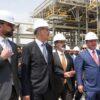
Iraq's Deputy Prime Minister for Energy Affairs and Minister of Oil, Eng. Hayan Abdul Ghani, has visited the Hydrogenation and Gasoline Improvement Project in Kirkuk, currently being implemented by Al-Barham Company for Refining and Distribution of Petroleum Products for the North Refineries Company (NRC).
The Minister reaffirmed the government's commitment to upgrading petroleum product quality to international standards, citing the Kirkuk project as one of several strategic initiatives in Iraq's refining sector.
Other key projects include the FCC unit at South Refineries Company to boost high-octane gasoline production, as well as the addition of production units at Missan, Najaf, Diwaniya, and Nineveh refineries, each with a capacity of 70,000 barrels per day, designed to meet modern environmental and efficiency standards.
The Kirkuk-based project comprises three main units:
- A benzene hydrogenation unit (14,400 bpd)
- A gasoline improvement unit (6,400 bpd)
- An isomerisation unit (8,000 bpd)
The Ministry emphasised the project's strategic role in modernising Iraq's refining capabilities and reducing dependency on fuel imports.
(Source: Ministry of Oil)
Posted in Iraq Oil & Gas News Comments Off on Strategic Gasoline Improvement Project in Kirkuk