


New President of Iraqi Federal Supreme Court Named
Posted on 01 July 2025 .
By John Lee.
Iraq's Federal Supreme Court (FSC) has announced the retirement of its President, Judge Jassim Mohammed Aboud [al-Umairi], due to health reasons.
The decision was made on Sunday, 29th June 2025, during a meeting of the committee established under Article 3 (First and Second) of the amended Law No. 30 of 2005 on the Federal Supreme Court.
Judge Munthir Ibrahim Hussein, currently Deputy President of the Federal Court of Cassation (FCC) and Head of its Criminal Panel, has been nominated to succeed him. A formal request has been submitted to the President of the Republic for issuance of the republican decree of appointment.
Born in Baghdad in 1963, Judge Hussein holds a law degree from the University of Baghdad (1989) and graduated from the Judicial Institute in 1998 (21st cohort). He has served at the Court of Cassation since 2018 and is also an alternate member of the Federal Supreme Court.
Several members of Iraq's Federal Supreme Court are reported to have submitted their resignations recently in protest against the court's former chief justice.
(Source: Supreme Judicial Council)
Posted in Politics, Security Comments Off on New President of Iraqi Federal Supreme Court Named
Qi and K2 Integrity to Elevate Iraq's Financial Standards
Posted on 24 June 2025 .
By John Lee.
Qi (International Smart Card), Iraq's largest electronic payment platform, has announced that it has entered into a landmark partnership with K2 Integrity (K2i), a US-based global financial integrity and compliance advisory firm.
The multi-year collaboration aims to align Iraq's financial infrastructure with international standards in anti-money laundering (AML) and countering the financing of terrorism (CFT).
The partnership spans operations in the UAE, Jordan, and Iraq. A major compliance back office will be established in Jordan, fully integrated into Qi's ecosystem, while the UAE office will serve as an innovation hub.
ISC Chairman Bahaa Abdul Hadi described the initiative as part of a broader national mission:
"This is not just about one business group. This is about Iraq and its economic future ... we are investing heavily to ensure our systems, people, and partners meet the highest global standards of financial integrity."
The partnership spans a 36-month roadmap split into three phases, where K2 Integrity will perform the following strategic tasks.
- Evaluate and transform Qi's current financial crime compliance (FCC) framework.
- Train Qi's personnel across all levels-from frontline staff to executive leadership.
- Take operational responsibility for implementing globally benchmarked compliance practices.
- Transition the program into a sustainable, best-in-class model eventually managed by Qi.
According to a press release, this initiative marks a pivotal milestone in Iraq's compliance evolution, strengthening national capabilities and building a foundation for secure, scalable financial growth; it positions Iraq to regain credibility with international partners, attract investment, and enable more secure, scalable cross-border transactions, particularly vital for trade, remittances, and financial inclusion.
(Source: Qi)
Posted in Iraq Banking & Finance News, Security Comments Off on Qi and K2 Integrity to Elevate Iraq's Financial Standards

KRG's US Energy Deals Spark Fresh Dispute with Baghdad
Posted on 21 May 2025 .
By John Lee.
The Kurdistan Regional Government (KRG) and Iraq's federal government have entered into a new dispute over the legitimacy of two major energy agreements signed with American companies.
On 19th May, Kurdistan's Prime Minister Masrour Barzani oversaw the signing of two agreements at the U.S. Chamber of Commerce in Washington, D.C., which the KRG claims represent "tens of billions of US dollars" in value. The deals were concluded between the KRG's Ministry of Natural Resources and American energy firms HKN Energy and WesternZagros.
HKN Energy, in partnership with ONEX Group, announced the formation of a joint venture called Miran Energy to develop the Miran gas field. According to their statement, the field could hold an estimated 8 trillion standard cubic feet of recoverable natural gas and potentially generate over $40 billion in long-term value.
In a separate agreement, WesternZagros secured rights to the Topkhana block, which, combined with their existing Kurdamir block, reportedly holds a resource potential of up to 5 trillion standard cubic feet of natural gas and 900 million barrels of crude oil. WesternZagros estimates the phased development could generate approximately $70 billion in revenue over the project's lifetime.
The agreements quickly drew condemnation from Baghdad. In a statement released on 20th May, Iraq's Federal Ministry of Oil rejected the KRG's actions, describing them as violations of decisions issued by the Federal Court of Cassation (FCC). The ministry cited a specific ruling in case number 59/Federal 2012 (and its consolidated case 110/Federal 2019), which it claims renders contracts concluded after the court's decision "illegitimate."
"Oil wealth is considered the property of all Iraqi people, and any measures for its investment must be conducted through the federal government," the ministry stated, declaring the contracts "null" based on the Iraqi Constitution and Federal Court decisions.
The KRG, however, defended the agreements, stating they are "based on existing contracts with new US investment and new operating companies." In its response issued on 20th May, the KRG's Ministry of Natural Resources claimed that the contracts in question were "signed many years ago" and have been "upheld as legal and valid by Iraqi courts."
The KRG emphasised that both American companies have operated in the Kurdistan Region for years and are already among the region's primary oil producers. It further stated that the agreements aim to increase domestic natural gas production to meet power generation needs and deliver "uninterrupted electricity services across all parts of Iraq."
This dispute represents the latest chapter in the long-standing tensions between Erbil and Baghdad over control of the Kurdistan Region's natural resources, particularly as the KRG continues to assert what it describes as its "constitutional rights and authorities as a federal entity under the permanent Constitution of Iraq."
Statement from the federal Ministry of Oil in Baghdad (translated):
Clarification from the Ministry of Oil
Some news outlets have circulated reports from the Kurdistan Regional Government (KRG) concerning "new energy agreements valued at tens of billions of dollars."
The Federal Ministry of Oil wishes to clarify its rejection of the procedures undertaken by the Ministry of Natural Resources in the Kurdistan Regional Government for the investment of the Miran field and the Topkhana-Kurdamir field in Sulaymaniyah Governorate. These procedures violate decisions issued by the Federal Court of Cassation, which deemed contracts concluded after the issuance of the Federal Supreme Court's decision in case number 59 / Federal 2012 (and its consolidated case 110 / Federal 2019) as illegitimate.
The Ministry emphasises that despite Iraq's need to maximize gas investment and meet domestic demand for operating power generation plants across the country, the KRG's actions explicitly contravene Iraqi law. Oil wealth is considered the property of all Iraqi people, and any measures for its investment must be conducted through the federal government.
Accordingly, the Ministry affirms the nullity of these contracts based on the Iraqi Constitution and the decisions of the Federal Court.
Statement from the Kurdistan Regional Government (KRG):
Clarification from the Ministry of Natural Resources
While the Kurdistan Regional Government continues to emphasize all its constitutional rights and authorities as a federal entity under the permanent Constitution of Iraq, which clearly recognizes the Region's rights and authorities, we reaffirm that the two deals signed by our Ministry with the American companies HKN and WesternZagros are based on existing contracts with new US investment and new operating companies.
These deals are based on contracts signed many years ago, which have also been upheld as legal and valid by Iraqi courts. There is no legal dispute concerning them. The recent change has been in the operating companies, in accordance with the legal and contractual framework of the existing agreements.
Both American companies have been active in the Kurdistan Region for many years and are among the Region's primary oil producers. They are not new investors.
The aim of these agreements is to increase domestic natural gas production to meet the fuel needs of power generation stations, with the goal of delivering uninterrupted electricity services across all parts of Iraq.
Posted in Iraq Oil & Gas News, Politics Comments Off on KRG's US Energy Deals Spark Fresh Dispute with Baghdad

South Refineries Company Nears Completion of FCC Project
Posted on 18 May 2025 .
By John Lee.
Iraq's South Refineries Company (SRC) is nearing the completion of its Fluid Catalytic Cracking (FCC) project, with 98% of the work done. Deputy Prime Minister and Minister of Oil, Hayan Abdul Ghani, emphasized the importance of boosting production to achieve self-sufficiency in petroleum products during his visit to the site.
The project, set to start phased operations in August and full production in September, will have a capacity of 55,000 barrels per day, producing 4,300 cubic meters of Euro 5-compliant gasoline, 300 tons of liquefied gas, 6,000 cubic meters of hydrotreated gas oil, 4,500 tons of improved fuel oil, and 400 tons of solid sulfur per day.
(Source: Ministry of Oil)
Posted in Iraq Oil & Gas News Comments Off on South Refineries Company Nears Completion of FCC Project
Maysan Refinery Expansion: Iraq's Capacity to Reach 1.54m bpd
Posted on 01 April 2025 .
By John Lee.
Prime Minister Mohammed S. Al-Sudani has announced that Iraq's refining capacity will soon reach 1,542,000 barrels per day (bpd) following the expansion of key refineries.
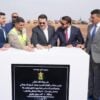
During a visit to Maysan province, the Prime Minister inaugurated the Maysan [Missan] Refinery Development Project, which will increase its capacity from 40,000 to 110,000 bpd.
He highlighted that this project had been stalled since 2014 but was revived as part of the government's strategy to restart delayed energy initiatives. The expansion, to be completed within 6 to 8 months, will be executed entirely through Iraqi expertise and national effort.
Al-Sudani also emphasized the Baiji Refinery expansion project, which has already added 70,000 bpd to Iraq's refining capacity. The facility is expected to be fully operational within two months, contributing to the country's self-sufficiency in refined petroleum products.
Key Highlights from Al-Sudani's Remarks:
- The Maysan Refinery expansion will introduce a new 70,000-bpd unit, alongside hydrogenation, gasoline enhancement, FCC, diesel, and kerosene units.
- The project aligns with the government's goal of converting 40% of exported crude into refined products by 2030, reducing Iraq's dependence on raw oil exports.
- The Cabinet's approval for the refinery expansion will lead to the development of a new industrial oil city, supporting petrochemical and fertilizer projects.
- These initiatives will create thousands of job opportunities and represent a key step in Iraq's economic reform efforts.
(Source: PMO)
Posted in Iraq Oil & Gas News Comments Off on Maysan Refinery Expansion: Iraq's Capacity to Reach 1.54m bpd
Iraq Reviews Summer Electricity Plan, Oil Developments
Posted on 11 March 2025 .
By John Lee.
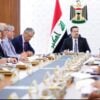
Iraqi Prime Minister Mohammed S. Al-Sudani chaired a meeting on Sunday to assess summer electricity supply plans and the progress of oil sector projects.
The Minister of Electricity outlined strategies to ensure stable power supply, including fuel station operations, while the Minister of Oil detailed fuel supply plans for power plants, including floating and mobile platforms under review.
Key decisions included:
- Completion of a gas transmission line from Basra's power plants to a floating platform.
- Approval of a new 40km gas pipeline from Al-Mahmoudiya to Bismayah to ensure full-capacity operation of the Bismayah power plant.
- Assessment of fuel oil supply, storage, and import logistics.
The meeting also reviewed strategic oil projects, including:
- Basra-Haditha oil pipeline.
- Seawater supply pipelines and treatment plant at Basra Oil Company (BOC).
- Offshore pipeline expansions (third, fourth, and fifth phases).
- Artawi [Ratawi] gas complex (Phase II).
- Mansouriya, Akkas, and Faihaa [Block 9] field developments.
- FCC fluid catalytic cracking unit project.
- Fifth and sixth licensing rounds.
The meeting assessed progress on government program projects, with an update on execution rates as of February 2025.
(Source: PMO)
Posted in Iraq Oil & Gas News Comments Off on Iraq Reviews Summer Electricity Plan, Oil Developments
Increased Consultancy Contract for Basra Refinery Project
Posted on 26 February 2025 .
By John Lee.
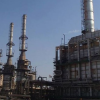
The Iraqi Council of Ministers has approved an increase in the consultancy contract amount for the Basra Refinery Development / Fluid Catalytic Cracking (FCC) Project with Japan's UNICO and France's Technip.
The decision also includes an extension of the contract duration, granted as an exception to Government Contracting Instructions No. (2) of 2014.
This move aligns with Iraq's strategy to modernize refining capacity and enhance fuel production efficiency.
(Source: PMO)
Posted in Construction & Engineering In Iraq, Iraq Oil & Gas News Comments Off on Increased Consultancy Contract for Basra Refinery Project
Iraq to Expand Maysan Refinery with New 70,000 bpd Unit
Posted on 12 February 2025 .
By John Lee.
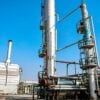
The Iraqi Ministry of Oil has announced plans to expand Maysan [Missan] Refinery by adding a new refining unit with a capacity of 70,000 barrels per day (bpd), increasing the refinery's total output to 110,000 bpd.
During a visit to the refinery, Deputy Minister for Refining Affairs Adnan Mohammed Hammoud emphasized that the project aligns with the government's strategy to develop the refining sector, enhance domestic production of petroleum products, and reduce reliance on imports. The expansion will ensure a stable fuel supply for Maysan and neighboring provinces.
The project includes Euro-5 standard units, such as a hydrocracking unit, an FCC unit, and facilities for gasoline, gas oil, and white oil production, along with environmentally friendly service units.
The Deputy Minister called on refinery staff to ensure efficient operations and uninterrupted fuel supply. He also led a meeting with senior officials to review progress and development plans.
Maysan Refinery, operated by South Refineries Company (SRC), currently has a 40,000 bpd capacity and is considered a key facility in Iraq's refining sector.
(Source: Ministry of Oil )
Posted in Iraq Oil & Gas News Comments Off on Iraq to Expand Maysan Refinery with New 70,000 bpd Unit
New Oil Projects in Baiji District
Posted on 04 January 2025 .
By John Lee.
Iraqi Prime Minister Mohammed S. Al-Sudani has inaugurated several oil sector projects in Baiji District, Salah al-Din Province, on Thursday:
- The fourth and fifth oil refining units at Al-Siniyah Refinery in Salah al-Din Province, each with a capacity of 10,000 barrels per day, increasing the oil refinery's total capacity to 50,000 barrels per day;
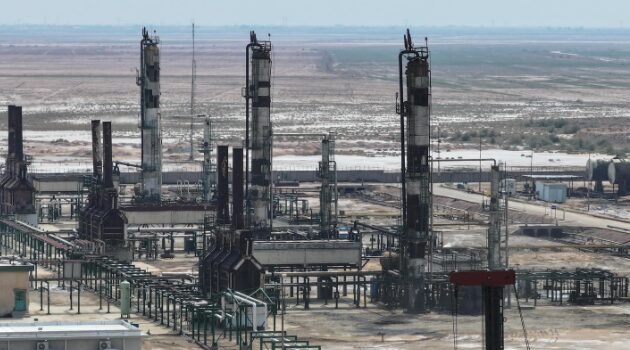
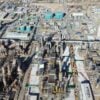
- Units for gasoline enhancement, gas and industrial wastewater treatment, liquefied gas production, and kerosene hydrogenation at the North Refinery (pictured) in Baiji District;
- Launch of construction for the third unit at the Salah al-Din Refinery, with a production capacity of 70,000 barrels per day and high, environmentally friendly standards.
He said that the Ministry of Oil has been directed to complete studies for the petrochemicals project and the Fluid Catalytic Cracking (FCC) project in Baiji, adding that plans are in place to make Baiji the largest oil industrial city in Iraq and the region.
(Source: PMO)
Posted in Construction & Engineering In Iraq, Iraq Oil & Gas News Comments Off on New Oil Projects in Baiji District
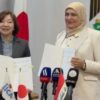
FULL DETAILS: Japan signs $388m Loan for Basrah Refinery Upgrade
Posted on 19 November 2024 .
By John Lee.
The Japan International Cooperation Agency (JICA) signed a $388-million loan agreement with Iraq on Sunday, to provide Japanese ODA loan for the sixth phase of the Basrah Refinery Upgrading Project.
In a statement, JICA said:
"This project aims to improve the quality and productivity of petroleum products, reduce the supply-demand gap, decrease the environmental load, and transfer related technologies, by installing a new fluid catalytic cracking (FCC) Complex with relevant units at Basrah Refinery in Basrah Governorate in the southern part of Iraq, thereby contributing to economic and social reconstruction in Iraq."
In this sector, JICA has so far implemented eight ODA Loan projects with a total approved loan amount of 563.0 billion yen [$3.6 billion]. This includes financing for all previous stages of the Basrah Refinery Upgrading Project, which commenced in 2012.
Japan's JGC Corporation has been the main contractor on the project.
At a separate meeting on Monday, the Undersecretary for Refining Affairs at the Ministry of Oil, Mr. Hamed Younis, said that the project will become operational in mid-2025.
He added that the project will contribute significantly to Iraq's production of refined petroleum products, with the following outputs:
- Gasoline: Production of 4.5 million liters per day meeting Euro 5 standards.
- Hydrogenated Diesel (Kerosene): Production of 6.5 million liters per day meeting Euro 5 standards.
- LPG (Liquefied Petroleum Gas): Production of 300 tons per day.
- Other Refined Products:
- White oil, kerosene, and naphtha: Combined production of 3.5 million liters per day.
- Enhanced fuel oil: Production of 4.5 million liters per day.
More details:
- Project Component
- Construction of FCC Complex
- Consulting Services
- Maximum Loan Amount
- 60,040 million Japanese Yen
- Annual Interest Rate
- Project: 0.2%
- Consulting Services: 0.01%
- Repayment Period
- 40 Years
- Grace Period
- 10 Years
- Procurement
- Japan Tied
- Executing Agency
- Ministry of Oil
- Contribution to SDGs
- Goal 7 (Affordable and clean energy)
- Goal 9 (Industry, innovation and infrastructure)
- Planned Implementation Schedule
- Completion of the Project: December 2025, when the facilities are put into service
- Issuing of letters of invitation for consulting services (including detailed design work): already hired
- Tendering of announcement of initial procurement package for international competitive bidding on project construction: already procured package for EPC
- STEP
- Special Terms for Economic Partnership (STEP)* will apply to the Japanese ODA loan for this project, and Japanese technology, Japan's advanced technical know-how and engineering skills will be utilized at the FCC complex being constructed under the project.
- * STEP refers to special assistance terms for promoting the visibility of Japanese aid through a transfer of outstanding Japanese technology and expertise to developing nations. The main contract is Japan tied and subcontracting is general untied. The main agreement partner must generally be a Japanese company, an overseas subsidiary of a Japanese company, or a joint venture between a Japanese company and the borrowing country where the Japanese company is the lead partner, although under certain conditions a joint venture between a Japanese company (which is the lead partner of the joint venture) and an affiliated company (as accounted under the equity method) of a Japanese company may be the main agreement partner.
Click here to read the full ex-ante evaluation.
(Sources: JICA, Ministry of Oil)
Posted in Construction & Engineering In Iraq, Investment, Iraq Banking & Finance News, Iraq Oil & Gas News Comments Off on FULL DETAILS: Japan signs $388m Loan for Basrah Refinery Upgrade