



IBBC Forum: AI as an Engine for Transformation in Iraq
Posted on 08 December 2025 .
The Iraq Britain Business Council (IBBC) hosted a very informative Tech Forum as part of its conference in Basra last week.
Titled "AI as an Engine for National Transformation in Iraq," and moderated by IBBC's Ashley Goodall, it featured contributions from:
- Phil McCauley, Saibre Capital: AI-aligned capital investment and large-scale urban and infrastructure programmes
- Dr. Neil Cobbold, Reapit: Future skills, labour-market disruption and AI-enabled competencies
- Raghad Al-Abboodi, She Codes Too: Women's participation, digital skills and workforce inclusion
- Makram Jaibaji, Global Construction Solutions (GCS): AI in infrastructure design, engineering optimisation and city-scale planning
Posted in Iraq Industry & Trade News Comments Off on IBBC Forum: AI as an Engine for Transformation in Iraq
Doing Business in Iraq: IBBC/BCCT Webinar
Posted on 01 December 2025 .
The Iraq Britain Business Council (IBBC) and British Chamber of Commerce in Turkey (BCCT) have hosted an online discussion on doing business in Iraq.
Moderated by IBBC's Ashley Goodall, the webinar featured contributions from:
- Chris Gaunt OBE, Chairman, British Chamber of Commerce in Turkey (BCCT)
- Jonathan Wilks CMG, Senior Adviser to IBBC, and former Ambassador to Iraq
- Robin Stehlik, Chief Commercial Officer, Pilgrims Risk Management Group
- Jamil Choucair, CEO and CIB Head, Iraq, Standard Chartered Bank
- Ayman Abu Dhaim, CPA, Chief Executive Officer, National Bank of Iraq (NBI)
- Ahmed Al-Haidary, CFA, FRM, PMP, Partner at Management Partners
- David Tannourji, Operations Manager, MSelect
Posted in Investment, Iraq Industry & Trade News Comments Off on Doing Business in Iraq: IBBC/BCCT Webinar

Video: IBBC Tech Forum on AI
Posted on 11 June 2025 .
By John Lee.
The Iraq Britain Business Council (IBBC) hosted a very informative Tech Forum on the topic of "How Tech and AI can benefit services and entrepreneurs in Iraq and internationally'", as part of its Spring Conference in London last week.
The session was chaired by Ashley Goodall, and speakers included:
- William Page, 1001.tv
- Daniel Sawko, ShipShape
- Raman Salihi, SoftCell
- Professor Frank Gunter, Lehigh University
- James Wallman, World Experience Organisation
Please click below to view the full webinar:
(Source: IBBC)
Posted in Investment, Iraq Education and Training News, Iraq Industry & Trade News Comments Off on Video: IBBC Tech Forum on AI
Dr Luay Al-Khateeb joins IBBC Advisory Council
Posted on 01 August 2024 .
From the Iraq Britain Business Council (IBBC):
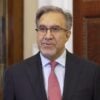
Dr Luay Al- Khateeb is joining IBBCs advisory council and brings his energy expertise to the council.
As a long-standing friend of IBBC Dr Luay has chaired energy panels at IBBC major conferences. As an independent Iraqi politician he was the former Electricity Minister and member of the Federal Energy Council in the Government of Adil Abdul-Mahdi between 2018-2020. Prior to this, he was the founding director of the Iraq Energy Institute, a think tank producing scholarship and analysis on current, historic and future energy, economy and technology trends in Iraq, as well as organizing high-level fora on energy reform in Iraq and the region.
A frequent commentator on Iraq's energy strategic policies and an advocate of sector-wide reforms, Al-Khatteeb is currently a non-resident Distinguished Fellow at the Center on Global Energy Policy (Columbia University-SIPA.), Honorary Professor at the University of Exeter, former foreign policy fellow at Brookings, and has written articles and published reports for a range of publications include The New York Times, Harvard University, Columbia University, CNN, MEES, the Petroleum-Economist and The National among others.
Previously, he served as honorary advisor to the Federal Parliament of Iraq on Energy and Economy. Between 2014 and 2016
Al-Khatteeb has held several longstanding positions on energy in Iraq and the region, being an outspoken advocate of modern gas to power strategies, eliminating gas flaring and providing feedstock for power and linked industries, particularly in Iraq.
In conversation with Dr Al-Khateeb, we asked the following questions:
Q; What are your hopes for involvement with the Advisory council?
A; I look forward to support the IBBC business community in Iraq as well as help guiding the IBBC organisation to navigate its way to explore better opportunities that will contribute to the development of the country and its reconstruction campaign,
Q: Do you have any key issues you'd like to pursue via IBBC such as Energy transition or specific reforms?
A: Energy development, energy security and energy transition are all priority topics on the agenda to promote and strengthening the ties between the United Kingdom and Iraq,
Q: Would you like to comment on the recent Mansion house panel you chaired?
A: The participants at the energy panel that took place at the 15th IBBC annual conference demonstrated the level of progress in the energy sector across Iraq, including gas, power, upstream and downstream as well as renewable energy development. It was great to see such progress and that Iraq will eventually end gas flaring by 2028 while capturing such important commodity and utilising it for industrial development and feedstock supply for power generation, saving Iraq billions of dollars a year from expensive imports and contributing significantly to the country's GDP.
The IBBC advisory council serves to strengthen and spread IBBC's knowledge and influence and allows IBBC to access some of the most experienced minds who have been involved in Iraq over the years. This access allows us to connect where necessary with High-ranking officials, draw on the expertise and experience and develop our thinking and ideas. Recent member additions include Riad Chehayeb of Serco, Professor Frank Gunter of Lehigh University's report on De-dollarisation and Dr Shamal Mohammed of Silal.
Mr Christophe Michels. MD IBBC says' Dr Luay is well known to IBBC members, and we are delighted he is augmenting the advisory council with his expertise in energy and Iraqi politics'
Posted in Iraq Industry & Trade News Comments Off on Dr Luay Al-Khateeb joins IBBC Advisory Council

AI NOW: The Background to IBBCs Tech Forum discussion on AI
Posted on 13 June 2024 .
From the Iraq Britain Business Council (IBBC):
The principals of AI are universally applicable to business and individuals alike, and some examples of how AI can impact various sectors is very illuminating.
AI is just a technology that is only meaningful if it is helpful to all, for example for farmers fighting pests better- using the right type and number of pesticides, to check the weather and microclimates, for communications departments researching and writing documents, and for companies streamlining their logistic and supply chains.
AI applications must be human centric and helpful. For corporates AI is driving growth and efficiencies and to future proof companies against competition and disruptions in the market or climate. It impacts topline costs while also driving resilience and competitiveness through product innovation by integrating and interrogating data sets for opportunities.AI can overcome threats, speed up decision making through rapid scale data analysis and innovating through synthesising context, generating, and testing creative ideas for products.
Most corporations and governments are already using live AI to streamline operations to realise significant value through AI: 69% of companies are using data , 60% using AI to improve processes. 56% to service to clients (Googles stats).
AI is accelerating better decision making, whether in digital farming, or to run AI operations where people are used more as supervisors of a self-improving AI system, rather than as experts or practitioners within it ( e.g. in ICL group) .Bayer for example, are using deep learning with their tech researchers to drive 3x productivity which can either be fed back into more tech or go straight to the balance sheet. Bayer are also using AI for innovation and creating new products faster and for better customer experience, such as serving farmers and corporates via their phones and multi-modality (text, video, phones, online) with agronomic data, and gathering information directly from field via drones photography for e.g. use of herbicides and biomass info.
EY believe that AI is democratising access, decision making and information to people, that was previously the preserve of a few data scientists, but is now readily available to all businesses so they can optimise operations.
How can organizations get started?
Google say that it's likely that companies are sitting on data they don't know they have, so working with a partner to realise and use their data well is a first step ( i.e. creating information for generative AI ) to make it useable and visible. Once data is available it can be used in all areas of operations and will have impact everywhere, to create autonomous operations, new product and market opportunities, to reduce costs and increase productivity and expand offerings and transition staff to supervisory roles, which does require training and change management investment.
OCP say that fertilizer is now part of the global digital transformation system, using data to digitise operations. They operate digital supply chains to create new value chains from mining through to addressing agricultural markets and advising on better soils- which has had impact on all areas from HR to training and value bots and smart farming and direct relationships with small holders and SMEs. This has led to 5% increase in profitability through efficiency.
Google say that Using data with AI enables you to look at data differently and enable you to prioritise, grow and future proof better, and that the impact of AI/Tech is so important to organisations it should be owned by the CEO.
What risks are there in AI?
Human input and recording are inherently faulty and can replicate across data sets at scale - so be aware of data bias from geography, demographics and social parameters. Be aware of IP issues and know who owns what and how to protect data and outputs. Is it owned by the tech platform, the company, or individuals? ensure your data is protected and the end user and employees are trained to work well with AI - to empower them to make better decisions and outcomes.
Overall, AI should be a force for improvement, efficiency, productivity, innovation and profitability - to create better new relationships with end users putting power of information in their hands while providing feedback loops to companies, and ultimately confer greater market resilience to organisations. In terms of just the agriculture sector, we are on the cusp of a new green revolution through AI, supporting sustainable farming while increasing yields, feeding the world, using fewer natural areas and addressing aridification of climate regions. Replicating this innovation across all sectors and governments will create significant productivity enhancements for all. Now is the time to invest in AI or lose out to competitors.
Come join our discussion online via the IBBC Tech Forum on 1st July with Google and Microsoft here.
Ashley Goodall 11/06/24
Posted in Investment, Iraq Education and Training News, Iraq Industry & Trade News 2 Comments
Agritech Cmte promises to Improve Iraqi Agriculture
Posted on 23 February 2024 .
By Padraig O'Hannelly.
A major new initiative to improve agriculture in Iraq has been launched by the Iraq Britain Business Council (IBBC).
Chaired by Dr Amet Selman, founder of AAA Holding Group, IBBC's Agritech Committee gathers interested IBBC Members and external experts to draw up a plan to dramatically improve agricultural practices throughout the country.
"The Deputy Minister for Agriculture and the General Manager for Agricultural Supplies have tasked our committee with improving the sector," Dr Selman told Iraq Business News at the launch.
Richard Cotton, Director of Business Development at AAA Holding Group, added:
"We have now formalised that promise with the Prime Minister [of Iraq] to say, we are going to bring agritech to the sector; we're going to work with the farmers and we're going to see how we can improve agriculture generally, working with the Iraq Britain Business Council, which is our umbrella organisation."
Ashley Goodall, Marketing Consultant at IBBC, also emphasised the priority this has at the top level in Iraq:
"[The Ministry of Agriculture] were keen to have a Memorandum of Understanding as soon as possible ... so it's very exciting - the urgency with which they're looking at it, the drive that seems to be coming from the government to improve agriculture, and obviously working with the private sector like Dr Amet to actually help drive this through. So it's an interesting partnership."
Taking into account the huge range of farming standards in Iraq, from traditional to modern intensive, and the wide diversity of soil types, the committee's first task will be to set up some pilot studies to identify existing soil condition and to organise communication channels with farmers to enable their participation in the programme.
Currently, much of Iraq's fertiliser is imported, of poor quality, and used without proper care and consideration.
Dr Selman, whose company makes fertiliser locally in Iraq to the highest standards, says:
"Over many decades, Iraqi farmers use old-fashioned fertiliser, the same type of fertiliser every year, the same type of fertiliser for each crop, so they are poisoning the soil. Our vision is to teach them how to use the right fertiliser for each type of soil and crop."
As part of this process, Mr Goodall also points to the number of ex-pat Iraqis who have shown an interest in this project, from agricultural experts to investors, creating an opportunity for the Iraqi diaspora to reengage with the country and contribute to its prosperity. "There's a lot that could start to come out of this initial project," he adds.
The IBBC Agritech Committee currently consists of:
Dr Amet Selman, AAA Holding Group (Chairman)
Mr Richard Cotton, AAA Holding Group
Mr Mohammed Al Saedi, Sama Hammurabi Law
Mr Shamal Mohammed, Silal
Mr Christophe Michels, IBBC
Mr Ashley Goodall, IBBC
Mr Colin Findlay, IBBC (Secretary to the committee)
The inaugural committee meeting was also attended by a wide range of interested parties, and an ad hoc advisory panel will be formed as required.
Posted in Agriculture Comments Off on Agritech Cmte promises to Improve Iraqi Agriculture
Video: IBBC Tech Forum on Digital Transformation
Posted on 22 June 2023 .
By John Lee.
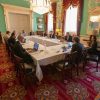
The Iraq Britain Business Council (IBBC) hosted a very successful Tech Forum on the topic of "Digital Infrastructure & Transformation", as part of its Spring Conference in London on Friday.
The session was chaired by Ashley Goodall, and speakers included:
- Mr Saquib Ahmed, SAP;
- Mr Padraig O'Hannelly, Iraq Business News;
- Mr Mohsen Garcia, 1001 Media;
- Mr Peter Chamberlin, Scott Logic;
- Ms Cynthia El Khoury, Mastercard;
- Mr Ali Al-Khairalla, Embassy of the Republic of Iraq.
Please click below to view the full webinar:
(Source: IBBC)
Posted in Iraq Industry & Trade News, Iraqi Communications News Comments Off on Video: IBBC Tech Forum on Digital Transformation
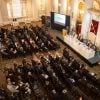
IBBC hosts well attended Conference at The Mansion House
Posted on 20 June 2023 .
On June 16th IBBC hosted it's best attended London Conference at The Mansion House yet, with over 280 delegates from Iraq, UK, and International European and Middle East countries.
With an overarching theme of 'Iraq open to the world' a wide range of panels discussed Iraq's rapidly improving international position across economic indicators, political relationships, and security. Baroness Nicholson, IBBC President, welcomed delegates, The Lord Mayor spoke of London's importance as a financial centre and Lord Ahmed (Minister of State for the Middle East, North Africa, South Asia, and United Nations) presented an upbeat outline of UK's trading and political relationship with Iraq including significant increase in bilateral trade in the last year. Professor Hamid Khalaf Ahmed, Executive Director for the Higher Committee for Education Development in Iraq & Advisor to the Prime Minister, spoke on behalf of the Iraqi Prime Minster, to reiterate the determination of the GOI to see through its five priorities, including setting a budget and delivering on targets for corruption and infrastructure development, increase in public sector jobs and investment in education at all levels of Iraqi society. Dr Mohammed Shukri, Chairman, Kurdistan Board of Investment outlined a focus on diverse investment opportunities including agriculture, tech, and infrastructure in the KRG. Two prominent sponsors Mr Sardar Al Bebany, IBBC Executive Committee Member, CEO & Chairman, Sardar Group and Mr Amet Selman, CEO, AAA Holding Group offered their thanks to IBBC audience and outlined their commitment and importance to investing in their people and businesses in Iraq.
Three strong focus areas emerged from the conference, and were reflected in the panels along with other important topics:
Finance, chaired by Mr John Curtin, Ernst & Young Iraq, Included panellists Mr Haider F. Al-Shamaa, International Islamic Bank; Mr Tim Palmer, UK Export Finance; Mr Salahuddin Al-Hadeethi, Ministry of Finance; Dr Yasser Hassan, National Bank of Egypt; Mr Raed Hanna, Mutual Finance Ltd

Energy; Chaired by Mr Luay Al Khateeb, Centre on Global Energy Policy - Columbia U. With a keynote Address from: Mr Laith Al Shaher, Deputy Minister of Oil. Panellists included: Dr Abdulhamzah Hadi Abood, the Advisor from the Ministry of Electricity; Mr Laith Al Shaher, Ministry of Oil; Mr Andrew Wiper, Basrah Gas Company; Mr Mushhood Haider, Scotland Trade, and Investment; Mr Ali Al Janabi, Shell Iraq and UAE; Ms Sara Akbar, Oil Serv

And keynote discussion on Iraq Open to the World.
Professor Frank Gunter opened the discussion with a keynote presentation of the key findings of his report ''Seaports and Airports of Iraq: Rules Versus Infrastructure' (see separate briefing here)
Chairman Mrs Hadeel Hasan Al Hadeel Al Hasan LLC led the discussion including, panellists: Professor Frank Gunter, Lehigh University; Mr Steve Alexander; Sardar Group; Mr Richard Cotton, AAA Holdings; Mr Hassan Heshmat, Hydro-C; H.E. Bader Mohammad Alawadi, Ambassador of the State of Kuwait.

Significant panels also included.
Education and skills roundtable; of acute importance due to the technical demands on Iraq's expanding economy and the need to upgrade university courses and overseas scholarship support for 5,000 Iraqi students from the GOI, Chaired by Professor Mohammed Al Uzri (IBBC Health and Education Advisor) with Professor Hamid Khalaf Ahmed responding to questions and outlining the GOI plans for education with IBBCs University and skills members.

An emergent theme of growing importance is 'Heritage', as a business and culturally important sector, chaired by: Professor Mohammed Al Uzri, with Dr John McGinnis, The British Museum; with Prof Gamal Abdelmonem, Nottingham Trent University, Mr Ali Al Makhzomy, Bilweekend; Dr Rosalind Wade Haddon, British Institute for the Study of Iraq; Professor Chris Whitehead, Newcastle University.

During the day there were also a KRG roundtable discussions with Dr Mohammed Shukri and a full complement of KRG businesses and chambers of commerce, A Tech forum on 'The digitisation of Iraq. Chaired by Ashley Goodall of IBBC, including Mr Saquib Ahmed, MD SAP Iraq; Mr Padraig O'Hannelly, Iraq Business News; Mr Mohsen Garcia, CEO 1001 Media; Mr Peter Chamberlin, Scott Logic, Ms Cynthia El Khoury, Mastercard Iraq; Mr Ali Al-Khairalla, Embassy of the Republic of Iraq (available to view here)
A special ceremony awarded The Rasmi Al Jabri Award (for Iraqi companies dedicated to best international practices and significant growth of Investment and turnover). This year the winners are AAA Holding and Mr Amet Selman for their work for successfully providing fertilizers to the Iraqi market in conjunction with the GOI and third-party agricultural groups. (Video link here). The conference was preceded by an ebullient reception for over 150 delegates the previous evening at the Institute of engineers, where Prof. Dr Sabih G. Khisaf (of Hyperloop Dubai) gave a talk on the importance of engineering and his work on the hyperloop and hosted by John Scott of IBBC.

Christophe Michels, MD of IBBC who chaired the conference commented 'This is our 11th Iraq Day at The Mansion House and probably the most successful we have had yet. Iraq is rapidly developing, building on a stable budget, good security, political stability, and increasingly good relations with her neighbours. Now is the time for Iraq to truly embrace business and to cut down on outdated bureaucracy, regulations and the corruption going hand in hand with these. If this does not happen, the country risks missing out on all the new opportunities arising from finally opening to the world. As IBBC we are optimistic and will continue to lend our support to our Members and the wider Iraqi community'.

IBBC Spring Conference 2023 Sponsors:
Principal Sponsor: AAA Holding Group
Gold Sponsors: Sardar Group & Trade Bank of Iraq
Bronze Sponsors: Standard Chartered Bank & Hydro - C
To attend future events, including the Iraq SME conference, July 6th, and IBBC Autumn conference in Dubai, Dec 8th, please follow our website.
Posted in Construction & Engineering In Iraq, Investment, Iraq Banking & Finance News, Iraq Industry & Trade News, Iraq Oil & Gas News, Politics, Security Comments Off on IBBC hosts well attended Conference at The Mansion House
Video: IBBC hosts Successful Tech Forum in Dubai
Posted on 17 November 2022 .
The Iraq Britain Business Council (IBBC) has hosted a very successful Tech Forum as part of its Autumn Conference in Dubai.
The session was chaired by Ashley Goodall, and speakers included:
- Padraig O'Hannelly, Iraq Business News (IBN);
- Laura Khudairi, Iraq Venture Partners (IVP);
- Hossam Darra, SAP;
- Shamal Mohammed, Silal;
- Muhammed Canbaloglu, Stirling Education;
- Ben Muziek, Unihouse Education
Posted in Iraq Industry & Trade News, Iraqi Communications News, Politics Comments Off on Video: IBBC hosts Successful Tech Forum in Dubai

IBBC's Dubai Conference doubles in Scope and Impact
Posted on 15 November 2022 .
From the Iraq Britain Business Council (IBBC):
As Iraq returns to the international stage with record oil revenues, stability, and a new Government, the IBBC extended its Autumn Dubai conference over three days to accommodate a record number of attendees and speakers. While energy is fundamental to Iraq, the conference branched out to encompass other important topics, challenges, and opportunities that Iraq's rebounding economy requires in the immediate and longer term.
Foremost sectors include finance and investment, tech, infrastructure and industry, water and the environment, education, skills and training and a special focus on regional areas including KRI and Basrah. Education was the subject of a special preconference day for universities and government officials.
Addressing and welcoming the business conference Baroness Nicholson, President of IBBC confirmed that Iraq is an important country for Britain, and we enjoy good and strong relations, especially between IBBC members from both the UK and Iraq. HE Juma Al Kait, Assistant Undersecretary for International Trade, UAE Ministry of Economy also welcomed the delegates to the UAE and noted that trade between Iraq and UAE has grown over 60% in the last year and is set to continue growing in the future.
HE Mr Mustafa Ghalid Mukheef, Governor of the Central Bank of Iraq, spoke of continued and accelerated investment in infrastructure, Mr Adel Khudair Al Masoodi, Representing the Iraqi Minister of Trade, The British Ambassador, Mr Mark Bryson- Richardson, Dr Mohammed Shukri Chairman of Kurdistan Investment board and Mr Sardar Al Bebany, Sardar group Chairman and CEO and principal sponsors of the conference all focused on different aspects of business and trade opportunities.

With a strong financial focus on day one, Mr Abdullah Jefri of International Finance corporation said that Iraq has an alarming economic reliance on oil and under threat from climate change, drought, and food security so the country will require $250bn of investment to diversify and meet demands for infrastructure and IFC are investing in Telecoms, Ports, infrastructure / renewables and agriculture with the private sector, which is the only way to reach the investment objectives. Dr Salem Chalabi, President and Chairman of Trade Bank of Iraq gave a keynote speech with the message that a concerted effort is required to convert the wealth beneath Iraq to provide prosperity for the poorest who live above it. In particular Iraq has 420,000 new people entering the workforce each year, who require employment. Dr Chalabi called for the private sector to be given the means to address the crucial employment and other challenges. TBI is investing in solar power, refinery production and assisting the central bank in numerous private sector projects.
As principal sponsors, Sardar Group held a keynote session outlining their plans for Iraq, including the opening of the largest car showroom in Iraq in Baghdad, the bourgeoning automotive market, and their dedication to training, developing, and investing in the professionalism of their employees. A notable initiative is Sardar's commitment to training Yazidi IDP's in KRI in business skills and English. But Sardar has also been on a long journey from a family business to a corporation and from car dealerships to the electrification of Iraq and the intention to set up electric trains, while extending nationally and internationally with international investors and capabilities from the USA, Japan, and the UK.

Finance also dominated the afternoon panels with Mr Mohammed Al Delaimy, CEO Standard chartered bank chairing the IFC, MFL Finance, IIB and Etihad Credit Insurance and Sardar group
The KRI brought a significant number of delegates, and a new panel focus of Business in Iraqi Kurdistan, chaired by Mr Aiz Khidairi, with Dr Shukri, Mr Edip Nezir of UB Holding who explained the significant expansion of the group into Skiing resorts in the Kurdish mountains, residential, hospitality and steel in Basra. Mr Sheikh Salih Al Barzinje of London Sky noted the growing IBBC membership and businesses in the region are keen to travel for business and pleasure. Mr Amanj Raheem, Cabinet Secretary of the Kurdistan Regional Government commented on improving relations between Baghdad and Erbil.
The tech forum speakers ranged from Padraig O Hannelly, Editor of Iraq Business news, gave an overarching summary of where tech has evolved in Iraq, followed by Laura Khudairi, of Iraq venture partners, who invest in start-ups and early-stage businesses, explained how the start up economy is fairing and the necessity of bringing in more secondary stage investors to help scale up the ecosystem. Hossam Darra COO of SAP ME gave a full account of how SAP is supporting digital literacy, sustainable business, and the importance of technology as the new infrastructure for all areas of the economy including education, agriculture, and finance and how Government can manage data and resources more efficiently. Shamal Mohammed of Silal then discussed with Ashley Goodall the IBBC tech chair, the options for water and agriculture improvement and management through technology. The potential for carbon credit investment into soil improvement, use and monitoring of water resources and the kind of agricultural systems that are already being deployed in the Gulf, the opportunity for a thriving agriculture sector is possible with the new technologies, carbon credits to upgrade and invest in agriculture and raised the idea of developing a green wall of trees and diverse plants to halt the desertification.

In the second part, the focus was on edutech and the way in which Stirling Education are using online teaching for both students and teachers, the kind of emergent courses available, and the collaboration with KRI education ministry to share online courses with public sector education.
The final panel included Industry members, chaired by Mr Aziz Khudairi, with Mr Adil Akah Al Shnawa, President of the Iraqi Federation of Industries, Mr Ahmed Abdulla Hadi Al Hankawi of Etihad law noted there are 5000 foreign companies in Iraq who all bring tax and income benefits to the economy, and called for more simplicity and encouragement for foreign investors to come to Iraq. Mr Amar Shubar of Management partners gave a strategic overview of Iraq's lack of industrial competitiveness, including the key drivers of failure, and clarity on what can and needs to happen to restore the country's capabilities. Ms Sura Khudairi of Khudairi Group who said the fashion market in Iraq is growing fast and there is a strong possibility of reinventing the local production of materials and design for Iraqis, and showcased her 'Street turban' look, that takes women beyond the religious control of the past. Mr Hardi Ismail of Mselect shared their latest learning and development survey that is the country's first overview of this area, that enables people to make informed decisions about the level and type of training required by companies. Some of the data suggests 41% of companies see increased productivity because of training, 93% still prefer classroom training over online, but the global trend is very much about online training, and 37% of companies cite cost as a restriction to training and development, including oil and gas sectors. The survey will be done annually for comparison and to support Mselect's training insights and business.
Baroness Nicholson, President of IBBC opened day three with a welcoming speech that covered business opportunities in Basrah including speeches from Deputy Governor of Basrah, Mr Mohammed Tahir Altamini, Mr Majid Mozan Gutami, Chairman of Basrah Chamber of commerce, Mr Raed Hanna, MFL Finance, and Ms Marlin Shabo of AAA holding. Mrs Sara Akbar of Oil Serv gave a keynote on collaboration with Kuwait and the combined opportunity with Basrah and the south, while Ms Kate Dourian of Iraq oil report said the GOI has $100bn revenues in 2022 and for the coming year, which should be invested in production and infrastructure.
Basrah is known for its energy production, so the energy panel big guns highlight included not only Iraq Oil report, OilServ but also Basrah Gas Company's Mr Marfa al Asady , and Hans Hoiskar of Petronor. Dr Laith Abdulhussein Kadhim Al Shaher DG of the Legal Directorate at the Ministry of Oil said Iraq is rebuilding its oil infrastructure as its so important for GOI revenues and invited western energy companies to help build the infrastructure. The vision is for Iraq to increase production and activate exploration activities to increase hydrocarbon reserves. Iraq will increase refining capacity to reach self sufficiency in oil products and will increase gas capturing projects to eliminate gas flaring. Gas production is 3bn 'scuff '50% is still flared 1.5bn captured, hence still importing gas from Iran for powerplants. Rehabilitation of infrastructure for export outlets ports and terminals, increasing storage capacity, and environmental protection all planned. Currently there are 4.4mbpd but there is long term demand as Iraq's oil, and the fields are now 100-70 years old, so there's a need to renew and pump to reservoirs and increase capacity. New refining capacity is adding 350k bpd in Karbala from next year.
Further plans include capture of 1.5 'scuff' of gas and to plant more trees and forest on oil fields to reduce pollution as does reduction in gas flaring and reduce methane emission to locate areas of escape and take steps to reduce in the next year. Basra Gas Company's Mr Marfa Al Asady said there has been x4 production increase since 2013 of gas capture and plans to increase to 1.4 scuff. The gas capture has also created 5000 direct jobs and a further 5,000 indirect jobs locally. Furthermore, BGC are also training local young people and women with Basra University to obtain certificates in welding, electronics, and other skills to enable them to apply and obtain jobs in the company. The Basra Uni project also helps local people more generally to get skill certificates for work, Sarah Akbar of Oilserve also observed that its not sensible to be importing gas from Iran while there is so much potential for gas capture in Iraq, and to stop pollution and greenhouse gas emissions, it should be the number one priority of Gov to stop gas flaring and for the private sector to deliver this if opened up to them. Lizzie Porter of Iraq Oil Report also observed that the Gov has $100bn of income that needs to be invested wisely in production and capabilities for a better environment and employment. A message echoed by Mr Hans Hoiskar of Petronor, who said business in Basrah is healthy but again investment in productivity and efficiency is important to regear the country.
Vikas Handa also noted and appealed to the Gov that cancer in Basrah or Iraq is a scourge both Vikas and Dr Laith lost close relatives to cancer, that is an issue in the region, so flaring and pollution must be reduced to stop this. Sara Akbar said that Basrah does not have a cancer centre for scans, so a great need for a cancer centre in Basrah is require and should be funded by oil companies.
Water and the Environment panel addressed World Food Programme, Hydro C (renewables) and Mr Mohammed Shamal of Silal spoke of opportunities for water and agricultural production and Dr Kaiwan Siwaily energy advisor to Sardar Group. Mr Ally Raza Quershi of World food programme in Iraq, building resilience to climate change in Iraq. Who began by showing the marshes and how they have dried out. Iraq is 5th most vulnerable country in world to climate crisis, which is now affecting Iraq; less water flowing to the two rivers, which are drying up. Hamrin lake is only 10% of its 2019 size in 3 yrs. Agriculture is a key part of economy, so how to support that? Wheat production 50% 21-22, down as water more saline and old production techniques for when water was plentiful. 5m were displaced in 2014 now 4m back home and returned to land but farms not producing and shortfalls as too little water. How to survive?
GOI has invested in food distribution but for the longer term if oil price is not sustained what happens then? The Private sector has an opportunity to bring modern technology to help. People believe what they see, not what you tell them, there is a need to demonstrate agricultural change in Iraq can work. Private sector attention is required to help agriculture modernise and compete as Iraqi's also prefer Iraqi products. Digitisation: GOI is trying to adapt at variable levels but moving forward there is much to do. Suggestions that digitising a platform for farmers can enable them to manage crops better. Hassan Heshmat- calls for greening of the economy, and is bringing new technology and solutions and innovations that require immediate actions and investment from and to the private sector. Shamal Mohammed- Silal- says long term investment from government and private sector is required as the environment is not going to get better- to manage water, agriculture, and resources, as is being done in Abu Dhabi, and he proposed a green levy on oil companies for green activities in Iraq. E.g., to plant 10m trees per year, with a multi discipline approach to make it happen. We must act now as in 10 years it will be too late and unsuitable to live/ work in- soil and water is for life and must be cared for. Agriculture started in Iraq 12,000 years ago, and Iraq can do it again and manage resources differently. Dr Kaiwan Siwaily of Sardar Group focused on lessons learned from the KRI's generation and use of Electricity.
Finally, Mr Colin Finlay of IBBC chaired the business success panel including Mr Amit Agrawal of Martrade, Mr Peter Turner of SKA, Mr Khuram Iqbal of AAA holding on how their businesses are thriving in Basrah region with the biggest fertilizer plant in Iraq, able to scale up production and distribution.
The conference closed with Christophe Michels MD of IBBC, thanking Vikas Handa for chairing the event and all delegates, speakers and especially the sponsors; Sardar Group, AAA Holdings, Basra gateway, Hydro-C and Mutual Finance.
For more information on the conference and joining IBBC as members or future conferences please contact IBBC at [email protected] and the website iraqbritainbusiness.org.
Next conference is in the UK at the Mansion House in the City of London in the Spring of 2023.
(Source: IBBC)
Posted in Investment, Iraq Education and Training News, Iraq Industry & Trade News Comments Off on IBBC's Dubai Conference doubles in Scope and Impact