


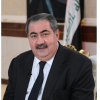
Zebari Presents "Real" 2015 Budget
Posted on 24 December 2014 .
By John Lee.
Iraqi Finance Minister Hoshyar Zebari (pictured) has taken a brutally realistic stance on the passing of Iraq's 2015 budget, Reuters reports. Zebari has previously been frank about the challenges Iraq faces and the war economy situation the country is now in.
The Finance Minister noted how,
"The strategy was to present a real budget - to engineer our budget according to our actual revenues so that we will be able to meet our top priorities."
Such frankness is a good thing if we follow the logic that a good politician manages the expectations of the public and is realistic about the challenges ahead. If we look at the last administration for example, we saw several promises by the former PM that Iraq's problems such as the electricity crisis or the security crisis would end within "months".
Previous budgets had also been based on the expectation of a high oil price, a risky strategy.
Nonetheless, like so many other oil dependent nations, Iraq has been hit hard by the collapse in oil prices, although the IMF recently reported the country's economic contraction would be less than originally forecast, just half a percent according to one estimate. As such, the 2015 budget comes in at $103 billion (123 trillion dinars) running a deficit of 23 trillion dinars.
On the positive side, the 2015 budget cements the recent interim Baghdad-Erbil oil agreement, which some analysts hope could form the basis (if not the ultimate solution) to Iraq's oil revenue dispute.
And the Abadi administration has a mixture of confidence tinged with concern about the challenge ahead. Oil Minister Abdel Adel Mehdi has noted how the current financial squeeze could provide an opportunity for genuine public sector reform, a key objective of the Abadi government.
(Source: Reuters)
Posted in Politics 8 Comments
Economic Activity Up Following Agreement
Posted on 18 December 2014 .
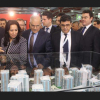
After easing almost a year of financial crisis and terrorism threat, the Kurdistan Region last week hosted the 10th Erbil International Fair attended by 250 companies from 16 countries.
In the wake of initial agreement between Erbil and Baghdad to resolve oil export and budgetary issues, and of security advances to halt the ISIS threat, market confidence begins to regain and business continues to progress.
Kurdistan Regional Government Minister of Trade and Industry, Samal Sardar, highlighted the importance of hosting the fair amid current circumstances.
He said, “The participation of companies from foreign countries might not be at the level of previous years, but hosting the fair shows that business activities have not stopped and the Kurdistan Region’s security situation is very stable for business.” Minister Samal Sardar stressed that the Region’s economy continues to improve.
The breakthrough agreement between Erbil and Baghdad on resolving outstanding issues has helped to resume and revive business activities in the Region.
Mr. Abdulla Ahmed Abdul-Rahim, supervisor of Erbil International Exhibition told krg.org, “Hosting the fair amid the current situation, especially after the initial agreement between Erbil and Baghdad, shows that Kurdistan can preserve its economic position and successfully manage crises.”
He added, “Erbil International Fair managed to build trust during the last ten years and the KRG has played a key role in developing the venue. The fairground has so far hosted more than 60 exhibitions on various sectors and has greatly benefited the people of Kurdistan.”
Representatives of private sector companies said the economic crisis and terrorist threats adversely affected their plans and caused suspension of some planed activities. However, the situation did not last long, as demonstrated by participation of international companies in various exhibitions.
Mr. Saman Brifkani, Supervisor of Magic Art Advertising Agency told krg.org, “Despite some concerns by some companies there have been various exhibitions by big brands and companies in the Kurdistan Region including Land Rover, Range Rover and BMW in which they showcased their latest products. In addition, various French, American and British franchises in Erbil’s markets and malls have recently launched.
“The breakthrough agreement between Erbil and Baghdad will strengthen trust and support increasing business activities”, he added.
On the sidelines at the fair the Czech Republic Consul General to Erbil, Jaroslav Reif, and a delegation from his country’s ministry of trade and industry discussed their activities in the Region.
The Czech Republic Consul General told krg.org, “Czech companies together with Czech banks implemented major projects in the Kurdistan Region especially in the electricity sector. We want to introduce the Kurdistan Region’s investment market to the Czech Republic and invite European investors to support investment activities in the Region.”
The Czech Republic is among the active investors in the Kurdistan Region’s investment market and has long reiterated its interest to invest in the Region.
Lebanon is among the countries that have not suspended their investment and business activities in the Kurdistan Region.
Mr. Jacques Jean Sarraf, Chairman of the Malia Group which owns various investments in the Region especially in the tourism sector told krg.org “The Lebanese private sector is keen on the Kurdistan Region and they did not suspend their activities in the Region.”
He added that his group is one of the main exporters to the Kurdistan Region and they are working on finding an alternative route for bringing their goods to the Region through air cargo as most of the Syrian and Lebanon border is under the control of the Islamic State terrorist organisation, known as ISIS.
Mr. Sarraf said, “Lebanon has played a significant role in developing the Region’s banking, construction and tourism sectors, and has contributed to the investment in the Kurdistan Region, including in basic and higher education.”
In another development, Britain Business Group Kurdistan was launched on 10 December, 2014 to further collaboration between British companies and companies based in the Kurdistan Region.
During the inaugural ceremony, Mr. Frank Baker, British Ambassador to Iraq, highlighted the Kurdistan Region as a stable and suitable environment for economic and trade activities.
During the ceremony, KRG Spokesperson Minister Safeen Dizayee reaffirmed, “The KRG supports the free market and facilitates foreign investment in the Kurdistan Region.”
(Source: KRG)
Posted in Construction & Engineering In Iraq, Iraq Industry & Trade News, Iraq Oil & Gas News 5 Comments
Iraq Economy to Shrink by Less than Expected
Posted on 11 December 2014 .
The International Monetary Fund (IMF) has issued its findings following a recent visit to Iraq.
End-of-Mission press releases include statements of IMF staff teams that convey preliminary findings after a visit to a country. The views expressed in this statement are those of the IMF staff and do not necessarily represent the views of the IMF’s Executive Board. This mission will not result in a Board discussion.
A staff team from the International Monetary Fund (IMF) led by Carlo Sdralevich visited Amman, Jordan from December 2−7, 2014 to conduct discussions with Iraqi Minister of Finance Hoshyar Zebari, Central Bank of Iraq (CBI) Deputy Governor Zuhair Ali Akbair, and other officials from the ministries of finance and planning and the CBI to assess the country’s recent economic developments. Discussions focused in particular on the impact of the double shock of the Islamic State of Iraq and Syria (ISIS) insurgencyand the decline in oil prices. At the conclusion of the visit Mr. Sdralevich issued the following statement:
“Iraq’s GDP is expected to contract by about 0.5 percent this year largely because of the economic effects of the ISIS insurgency. We estimate non-oil growth to have deteriorated since the start of the conflict due to the destruction of infrastructure, impeded access to fuel and electricity, low business confidence, and disruption in trade.
"In contrast, as most of the oil infrastructure is in the south of the country and beyond the reach of ISIS, and taking into account the output of Kurdistan Regional Government (KRG), oil production should reach 3.3 million barrel per day (mbpd) in 2014, up from 3.1 mbpd in 2013, with exports remaining at 2013 levels of 2.5 mbpd. Next year, growth is projected to rebound to about 2 percent as oil production and exports increase further, helped by the recent agreement between the central government and the KRG on oil exports from KRG and the Kirkuk oil fields. End-October year-on-year inflation was 0.9 percent outside the conflict-affected provinces.
“The central bank has maintained the peg with the U.S. dollar. The spread between the official and parallel exchange rates narrowed to 2.6 percent in September, thanks to steps taken by the CBI towards the liberalization of the foreign exchange market. Nevertheless, high imports, combined with declining oil revenues and lower government sales of foreign exchanges to the CBI to finance government spending, contributed to a decline in international reserves from over $77 billion at end-2013 to about $67 billion at end-November. The government also tapped the Development Fund for Iraq (DFI), the balances of which have now been transferred to the CBI; the DFI declined from $6.5 billion at end-2013 to about $4 billion in November.
“The government expressed its commitment to present a draft 2015 budget to parliament soon. Lack of parliamentary approval of the draft 2014 budget has triggered a fiscal rule that has partly limited spending this year. However, off-budget spending, particularly on security, has boosted the deficit, which will likely reach about 5 percent of GDP.
"The staff team discussed with the ministry of finance the challenges related to formulating the draft 2015 budget, which is intended to address the ongoing exceptional spending pressures and the strong decline in oil prices. As projected financing in 2015 will be limited, we expect the government deficit to decline to less than 2 percent of GDP.
“The IMF will continue to support Iraq through policy advice, technical assistance, and training. The 2015 Article IV consultation discussions with the authorities will take place in the coming months.
“The IMF mission would like to thank the Iraqi authorities for their cooperation and the open and productive discussions.”
(Source: IMF)
(GDP image via Shutterstock)
Posted in Iraq Industry & Trade News 8 Comments

Why Mosul Extremists have Blocked All Telecoms
Posted on 05 December 2014 .
This article was originally published by Niqash. Any opinions expressed are those of the author, and do not necessarily reflect the views of Iraq Business News.
Communication Shut Down: Why Extremists In Mosul Have Blocked All Telecommunications
The extremist group controlling Mosul in northern Iraq has decided to shut down most mobile telecommunications inside the city. Rumours are flying as to why. Have they done it because they can no longer profit from the phone companies in Mosul? Or is it because of an impending battle and they don't want their positions revealed?
In a short statement broadcast on a local radio station, Al Zuhur, several days ago, a spokesman from the extremist group known as the Islamic State told listeners that work done by telecommunications companies in Mosul, the northern Iraqi city the group currently controls, has been suspended.
The statement didn't give any reason as to why telecommunications companies would no longer be active in Mosul – fighters from the Islamic State, or IS, group had apparently sabotaged some of the cellphone towers. But nobody seems to know why and rumours are flying in the town.
Some say it's because an external attack on the city – to liberate it from the IS group – is imminent and the group want to block communications. Others say it's because telecommunications companies, which had always been rumoured to pay protection money to extremist groups in Mosul as well as rental to the building owners upon whose property they placed their towers, have stopped paying both fees.
A local telecommunications engineer who wanted to be identified only as Jaber says the cellphone towers were sabotaged for financial reasons. It's become more difficult to get money in and out of the province of Ninawa since the IS group took over and the IS group hasn't been able to collect money from the telecommunications companies, he alleges. It's especially difficult to get money out of the comparatively safe region of Iraqi Kurdistan at the moment, after a recent car bomb attack.
Posted in Iraqi Communications News, Security Comments Off on Why Mosul Extremists have Blocked All Telecoms

Iraq Ranks 156th in World Bank Report
Posted on 26 November 2014 .
By John Lee.
Iraq has been ranked 156th out of 189 countries in the World Bank's recent Doing Business 2015 report.
Top of the list were Singapore, New Zealand and Hong Kong, with last place going to Eritrea, just behind Libya and the Central African Republic.
Doing Business measures regulations affecting 11 areas of the life of a business. Ten of these areas are included in this year’s ranking on the ease of doing business: starting a business, dealing with construction permits, getting electricity, registering property, getting credit, protecting minority investors, paying taxes, trading across borders, enforcing contracts and resolving insolvency. Doing Business also measures labor market regulation, which is not included in this year’s ranking.
(Source: World Bank)
Posted in Iraq Industry & Trade News, Politics, Security 9 Comments

Iranian-Built Power Plant Opens
Posted on 16 November 2014 .
By John Lee.
Iraq has inaugurated a 162-MW power station designed and built by Iran's MAPNA Group in the Heidarieh [Haidariya] district, some 25 km north of Najaf.
Iran's PressTV reports that the opening ceremony on Thursday was attended by the Iranian and Iraqi energy ministers.
According to the report, Iran's Energy Minister, Hamid Chitchian, said his country is prepared to promote "all-out relations" with Iraq, especially in the electricity sector.
Iran's annual electricity exports to Iraq are valued at one billion dollars, with Baghdad importing 1,300 MW of electricity from Iran.
(Source: PressTV)
Posted in Construction & Engineering In Iraq, Iraq Public Works News Comments Off on Iranian-Built Power Plant Opens
French to Help Develop Electricity Sector
Posted on 11 November 2014 .
By John Lee.
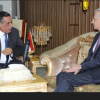
Iraq’s Minister of Electricity, Qasim Mohammad Abid Hammadi al-Fahadawi [Qassim al-Fahdawi] held a meeting with the French Ambassador to Iraq, Marc Barety, on Sunday.
The Ambassador congratulated the Minister on his new role, and assured the Minister of the full support of the French government and private sector companies in the development of Iraq's electricity infrastructure.
(Source: Ministry of Electricity)
Posted in Construction & Engineering In Iraq, Iraq Public Works News Comments Off on French to Help Develop Electricity Sector
Haider al Abadi: Bringing Strategy to the Table
Posted on 05 November 2014 .
By Robert Tollast.
“How is electricity?”, I asked. “Excellent” replied Marwan, a young student of Physics at the University of Dhi Qar. Marwan (not his real name) is studying wireless transmission, and one of his lecturers is currently in Leicester studying with a British Council initiative to bolster the academic capacity of Iraqi universities.
Will Marwan’s lecturer return to find his university campus an empty bullet scarred shell? This might have been the case in southern Iraq in the spring uprising of 1991, or in 2003 as US Marines fought through the town of Nasiriyah.
Today, across the Kurdish region of Iraq and many areas of the expansive south, violence is often in the forefront of peoples’ minds, but this is mostly because Iraq is a nation at war. Countless Iraqis have volunteered to fight ISIL in what must surely seem like another tragic episode in a long, tragic history.
Incredible as it may seem, the war is actually quite far away for approximately 7 million Iraqi Arabs and Kurds. And their local leaders have set their sights on business, as much as the war on ISIL. Of course, local momentum isn’t much without a coordinating strategy at the national level. For the first time in decades, Iraq might have found the man to coordinate such a strategy.
Nonetheless, there can be no doubt that since June this year Iraq has confronted an existential crisis. But it is a crisis that Iraq can survive. And while it would be naive if not impossible to gloss over the tragedy that Iraq is enduring, we need to look at the whole country - a country almost the size of France, to get the full picture.
We could even allow a little room for optimism, firstly because there are vast, heavily populated areas of Iraq that are effectively walled off from ISIL. These areas host the country's only “skyscraper” style office buildings, expanding ports and the super giant oil fields that are crucial for supporting the global economy.
A second reason for a modicum of hope is that in the centre and north of the country, ISIL are being challenged by a growing (albeit peculiar) coalition. History shows us that strange coalitions are not barred from victory. On the contrary, they are essential to victory.
In terms of the geographical limits to this current terrorist blitzkrieg, think of Stalin’s tank factories that were located east of Moscow, out of reach of Hitler’s bombers, or Washington in 1864, impregnable to Confederate assaults.
Basra and Nasiriyah are similarly insulated from terrorist activity, and as long as this situation remains Iraq will probably weather this storm. The Iraqi army’s recent victory at Jurf al Sakhar is solid evidence that if anything, the approaches to the south are looking more secure than ever.
Posted in Blog, Robert Tollast Comments Off on Haider al Abadi: Bringing Strategy to the Table
Iran Water, Electricity Projects Worth over $1.3bn
Posted on 27 October 2014 .
By John Lee.
Iranian companies are reported to be implementing water and electricity projects in Iraq worth over $1.3 billion (1.5 trillion Iraqi dinars).
According to an article from Trend, an Iranian Energy Ministry official said Iranian companies were currently working on 31 projects in Iraq in these sectors, and added that he expects more Iranian companies to invest in water and electricity projects in Iraq in the future.
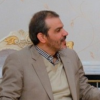
The Iranian ambassador to Iraq, Hassan Danayeefar [Hassan Danae Fer] (pictured), is reported to have said in April that Iran exports 80 percent of its technical and engineering services to Iraq, and that the Iraqi market could absorb $500 billion worth of investment in that sector.
(Source: Trend)
Posted in Construction & Engineering In Iraq, Iraq Public Works News Comments Off on Iran Water, Electricity Projects Worth over $1.3bn
Iraq Seeks to Increase Electricity Imports
Posted on 20 October 2014 .
By John Lee.
Iraq's new Minister of Electricity, Qasim Mohammad Abid Hammadi al-Fahadawi [Qassim al-Fahdawi] (pictured), is to travel to Iran on Tuesday to hold talks on electricity imports.
At a meeting with his Iranian counterpart, Hamid Chitchian, the Minister will also discuss the expansion of economic ties between Tehran and Baghdad.
In 2013, the two sides agreed to increase electricity exports from Iran to Iraq by 500 megawatts.
Tasnim News Agency reports that Iranian companies have so far completed 10 projects in Iraq in the area of water and electricity, and another 27 projects valued at $1.245 billion (1.45 trillion Iraqi dinars) are still in progress.
(Source: Tasnim News Agency)
Posted in Iraq Oil & Gas News, Iraq Public Works News Comments Off on Iraq Seeks to Increase Electricity Imports