


Iraq Shuns Rail to Protect Ports
Posted on 09 November 2010 .
Iraq’s Transport Minister has said that Iraq turned down a project to create rail links between Iraq and the Gulf states because it wanted to project Iraqi ports.
He added that the border problem with Iran had hampered the clearing of sunken ships and materials in Shatt Al-Arab Waterway.
“If the country is linked with the Gulf states and Iran by railways, the Iraqi ports will die!,” Minister Amer Abdul-Jabbar told Saudi Middle East Newspaper.
As regards to the problem with the Iranian side, the Minister said: “The main problem related to clearing up the ships and other materials sunk in Shatt Al-Arab Waterway is the drawing of the borders with Iran,” adding that “there are problems with Iran regarding the drawing of borders, and there is a joint committee discussing the problem, that we hope would be able to settle the problem, to enable us clear the sunken ships and materials as soon as possible.
Iraq does not have the heavy lifting machines, with 2,000-ton capacity, required to lift the sunken ships, but progress has been made.
(Source: Aswat al-Iraq)
Posted in Construction & Engineering In Iraq, Iraq Public Works News Comments Off on Iraq Shuns Rail to Protect Ports
BREAKING NEWS: Iraqiya Politicians Defect, Govt Being Formed
Posted on 08 November 2010 .
Iraq Business News has received information late on Sunday that between 30 and 34 politicians have defected from Iyad Allawi's Iraqiya bloc, and will support Nouri al-Maliki's bid to form the next Iraqi government.
Although these rumours are still unconfirmed, they are from a source trusted by Iraq Business News. The details are understood to be as follows:
- Monday's planned parliamentary session will be delayed until Thursday;
- Cabinet positions are in the process of being allocated;
- Kurdish leader Jalal Talabani will retain the position of President, with Nouri al-Maliki as Prime Minister, and Ayad Allawi as Head of Parliament;
- Iraq's neighbours, with the notable exception of Saudi Arabia, are generally in agreement.
We are currently checking with other sources and will bring you more details as we have them.
Posted in Blog 8 Comments
Oilfield Services Companies in Line for Iraqi Contracts
Posted on 05 November 2010 .
MEED reports that prospects look good for the only oil services companies eligible to bid for work on Iraq’s oil fields.
At the Adipec oil and gas conference, which took place between 1-4 November in Abu Dhabi, the stands belonging to the ‘big four’ US oilfield services companies -- Schlumberger, Baker Hughes, Halliburton and Weatherford -- were busy as people queued up meet their senior decision-makers.
Prospects are definitely looking up for the big four at the moment and the reason, according to MEED, is Iraq. They, together with local Oil Serv, are the only oil field services companies being allowed to bid for work on the country's existing oil fields.
After spending so much money during the licensing rounds, the international oil companies need to ramp up production on the Iraq fields and the quickest way to do it is to give the work to the services companies on a turnkey basis. By taking on such a risky venture, these five companies are hoping that it positions them correctly for when the market opens up fully.
Working in Iraq is risky in many ways, but developing these oil fields is about as close as you can get to a sure thing in the country. The industry knows that developing Iraq’s hydrocarbon reserves is real and it is happening. That’s why the big four’s stands were so popular at Adipec.
With Abu Dhabi and Saudi Arabia becoming quieter as they reach their production targets, the whole of the upstream oil and gas industry is relying on Iraq to drive regional revenues for the next 10 to 20 years.
That is where the big four are going and the rest are queuing up to follow.
(Source: MEED)
Posted in Construction & Engineering In Iraq, Iraq Oil & Gas News Comments Off on Oilfield Services Companies in Line for Iraqi Contracts

IEA Sceptical of Iraq's Oil Output Plans
Posted on 05 November 2010 .
The International Energy Agency (IEA) has reportedly poured cold water on Iraq's plans to quadruple oil production to 12 million barrels a day by 2017, saying it could take 20 years just to reach half the target total.
But the agency predicted in a draft of its annual World Energy Outlook that Iraq will succeed in pushing production up enough to overtake its longtime regional rival, Iran, "by soon after 2015", according to reports from UPI and the Financial Times.
The only countries that have been able to pull off the kind of feat that Iraq seeks to achieve are the former Soviet Union and Saudi Arabia, who during the 1960s pushed through the 10 million bpd barrier. The difference is that they had the infrastructural capabilities and postwar Iraq doesn't.
Industry analysts have long been skeptical of Baghdad's ambitious plans and say although Iraq wants to rapidly upgrade and expand its long-neglected oil infrastructure, the task is immense.
"In some cases, the only thing holding the pipelines together is the sludge in them," a Western diplomat observed recently.
Posted in Construction & Engineering In Iraq, Iraq Oil & Gas News Comments Off on IEA Sceptical of Iraq's Oil Output Plans

Erbil Building Trade Solo Exhibition - March 2011
Posted on 26 October 2010 .
Erbil Building Trade Solo Exhibition will be held in Erbil from 3rd to 6th of March 2011 in the Sami Abdulrahman Park Exhibition Centre
Erbil is ready to host building and construction industry professionals in this essential event with its growing market and population of 8 million.
Erbil Building Trade Solo Exhibition is the greatest event in the building industry in the whole region and it will be a meeting point for visitors, trade visitors and international industry members from all over the world.
It is expecting more than 300 exhibitors and 150,000 visitors from a variety countries. Iraq is in need of a full range of infrastructure related products, services and systems, including hospital equipment and supplies, security products, road and rail machinery, oil production equipment and finance and telecom systems.
Work on hundreds of major projects worth $43.5bn - pledged by the interim Iraqi government with funds from Iraq's own oil revenues - is moving ahead. The amount of investment required for reconstruction of Iraq is estimated $500bn, Iraq Deputy Prime Minister Rafea Al Issawi told a conference in Sharjah in June 2009.
Posted in Construction & Engineering In Iraq Comments Off on Erbil Building Trade Solo Exhibition - March 2011

Iraq Has Most Expensive ADSL Broadband
Posted on 20 October 2010 .
The Arab Advisors Group analyzed the ADSL rates in nineteen Arab countries. Iraq and Lebanon have the highest ADSL fees, while Morocco and Egypt have the lowest fees. When rates are analyzed in relation to GDP per capita in each country, the GCC countries and Morocco lead the pack.
ADSL remains the prevailing Internet broadband technology in the Arab World. Uptake is strong in most countries especially as ISPs launch promotions and reduce their rates. The Arab Advisors Group has analyzed the ADSL service provision and rates in the following nineteen Arab countries: Algeria, Bahrain, Egypt, Iraq, Jordan, Kuwait, Lebanon, Libya, Mauritania, Morocco, Oman, Palestine, Qatar, Saudi Arabia, Sudan, Syria, Tunisia, UAE and Yemen.
The Arab Advisors Group’s analysis revealed that the 1024 Kbps speed is the most common speed offered in the Arab region. The average total annual cost for the 1024 Kbps residential ADSL service in the Arab region stands at US$ 736.4 per year. Rates are lowest in Morocco followed by Tunisia, Egypt, Algeria, Jordan, Yemen, Palestine, Kuwait, Oman, Mauritania, Syria, Qatar, KSA, Libya, Bahrain, UAE, Sudan, Lebanon, while Iraq offers the highest rate. Libya does not have the 1024 Kbps ADSL speed; however, the Arab Advisors Group’s ranking for the country is based on extrapolating from its rates of other speeds. The research also revealed that ISPs tend to waive ADSL connection fees as part of their ongoing promotions.
Posted in Iraqi Communications News Comments Off on Iraq Has Most Expensive ADSL Broadband
Al-Maliki Turns to Iran
Posted on 18 October 2010 .
The strategies on Iraq of neighbouring states seem to be coming clearer.
This week, al-Maliki has been in Iran to meet both Mahmoud Ahmadinejad, the Iranian president, and Ayatollah Ali Khamenei, the Iranian head of state. Al-Maliki described the two countries' relationship as "strategic", saying: "We ask Iran and our neighbours to support our reconstruction and to boost economic and commercial co-operation, which will help improve stability in our region." Both Ahmadinejad and Khamenei called for the political groups in Iraq to come to a deal quickly.
Khamenei said: ""The Iraqi nation is vigilant and aggressors cannot dominate this country again. May God get rid of America in Iraq so that its people's problems are solved." Iranian television also reported that Ahmadinejad completely supports a strong and independent Iraq that "serves its own people and works for regional progress and Islamic values."
The meeting has been played down by the United States, with State Department spokesman Phillip Crowley saying that the visit shouldn't be over-interpreted, because the two countries are neighbours. "Ultimately, this has to be an Iraqi decision as part of its own political process." However, he also said that: "We are concerned about any neighbouring country that would meddle in Iraq's affairs."
The US has shown its concern for Iran meddling for some time, believing that it has encouraged violence and terrorism in Iraq. If Iran was to support al-Maliki and remove the terrorist influences of which it's accused of by the US and Allawi, it could improve the bond between the two countries at the expense of al-Maliki's opposition and western powers.
Former Iraqi PM and current contender Iyad Allawi was last week in Saudi Arabia for talks about Iraq's political situation with King Abdullah, as reported by Iraq Business News. Analysts have claimed that al-Maliki is too close to Iran for Saudi Arabia's tastes. In a CNN interview at the weekend, Allawi said Iran was "trying to wreak havoc in the region."
Al-Maliki is also visiting Egypt and Turkey to build more regional support for his premiership.
(Sources: Reuters, Aswat al-Iraq, US State Department, AFP)
Posted in Iraq Industry & Trade News Comments Off on Al-Maliki Turns to Iran

Did Iraq Lie About Oil Reserves?
Posted on 18 October 2010 .
Two weeks ago Iraq revised its estimates of oil reserves upwards, and this was immediately followed by Iran doing the same.
Now Reuters reports that a former oil minister has cast doubt on the numbers and on the motivation of the governments in issuing the figures, saying that the estimates are politically motivated and not justified by the evidence.
Mr Issam Al Chalabi, who served as Iraqi oil minister in the government of Mr Saddam Hussein, said Iraq's announcement last week that its proven oil reserves were 25% higher was 'unreliable'. Unfortunately the announcement that was made last week has not been substantiated by proper evidence; he said that it is not a reliable figure. This is not the way to handle the reserves. I think it was made for political reasons.
According to BP data, Iraq raised its total estimate of proven oil reserves to 143 billion barrels making it the holder of the world's third largest reserves after Saudi Arabia and Venezuela.
Iraqi officials said that the figures had been inflated by new estimates for the West Qurna and Zubair oilfields. But Mr Chalabi, who was Iraqi oil minister from 1987 to 1990, questioned the motivation for the new estimate.
Posted in Iraq Oil & Gas News Comments Off on Did Iraq Lie About Oil Reserves?

Iraq's Budget to be in Surplus in 2012
Posted on 11 October 2010 .
Iraq's proposed budget, which has gone to Cabinet, should give it a deficit of $18.6bn dollars in 2011 and surplus in 2012, according to Kippreport.
Iraq's huge reliance on oil will continue as it needs 2.4m barrels of oil per day next year to reach its target, said Deputy Finance Minister Fadhil Nabi. Assuming an oil price of $70, it's looking at 95% of its revenues from oil.
If all the signed oil deals pay off, capacity should increase from 2m-2.5m barrels per day up to 4 million per day in 2013, and 12 million in six or seven years. which would rival Saudi Arabia.
It was the International Monetary Fund that calculated Iraq's budget was likely to move in to surplus in 2012 and that this was based on conservative assumptions for exports and oil prices. The revenues are likely to be used to finance yet more reconstruction.
The IMF approved a loan payment of $740m to Iraq this month as part of a $3.7bn program, which it would not have granted had it not been convinced that Iraq was keeping the economic environment stable.
The budget must be approved not only by cabinet, but by the fractious parliament.
(Sources: IMF, Iraq Ministry of Finance, Kippreport)
Posted in Iraq Oil & Gas News Comments Off on Iraq's Budget to be in Surplus in 2012
Al-Maliki Victory Drawing Nearer
Posted on 11 October 2010 .
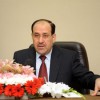
Under the watchful eye of Saudi King Abdullah and his intelligence chief, Prince Muqrin bin Abdul Aziz, Prime Minister Nouri al-Maliki is drawing nearer to winning enough support to form a government.
Al-Maliki is pushing his momentum gained from his recent near-miss in parliament by appealing to all rival parties to show "flexibility and realism", reports the Tehran Times. He showed no signs of giving way. "All of us, from all affiliations, have to sit together and talk and talk, even if it takes longer, until we reach a meeting point," he said to opposing Sunni tribal leaders in Baghdad.
Tehran Times says this is a "hint at growing confidence by al-Maliki that he's in a position to call the shots over possibly forming a new government and dividing up the key posts and Cabinet seats among the country's three main factions: majority Shias, Sunnis and Kurds."
Having won over previous opposition from a Shia faction he's now looking to Kurdish parties. If he can convince them to back him he will gain a majority in parliament. This is despite the rival Sunni bloc coming top in the spring vote. It has been unable to find enough partners to push Al-Maliki aside.
Foreign powers are showing continued interest in the ongoing contest. USA Vice President Joe Biden called President Barzani, head of the Kurdistan region, to confirm that the United States supported a government formed from national partnerships that reflect the results of the election, according to the Kurdistan Regional Government. However, Mr Biden said in the conversation that the USA does not support any individual candidates.
Former Iraq PM Iyad Allawi was at a meeting over Iraq's political situation with King Abdullah, the intelligence chief and Saudi amabassador to Washington Adel al-Jubeir, according to AFP.
Analysts believe that al-Maliki is too close to Iran for Saudi Arabia's tastes. Allawi's Iraqiya bloc received two more seats than Al-Maliki's State of Law Alliance in the election, but the two sides were unable to come to a deal, despite Saudi Arabia's worries that it is necessary to prevent instability.
Echoing America, a Saudi official said: "Choosing a prime minister is an issue for the Iraqi people."
With a Kurdish political negotiator saying his bloc is close to a deal with Al-Maliki, this is sure to anger Sunnis, writes Gulf News. One of the key issues was making a priority the return of land to Kurdish people who were pushed out during Saddam Hussain's regime. However, Foreign Minister Hoshyar Zebari is not so positive: "We are not very close to the final solution," he said.
Even so, Al-Maliki looks increasingly like the man to form the next Iraq government.
(Sources: Gulf News, Kurdistan Regional Government, Tehran Times)
Posted in Iraqi Communications News 1 Comment