



BREAKING NEWS – New Opportunities at Giant Rumaila Oilfield
Posted on 07 October 2010 .
As our weekly newsletter goes to press, BP has just announced a major new event for contractors interested in its giant Rumaila oilfield.
There will be opportunities in the areas of:
- Engineering and Project Management Services (EPMS);
- Engineering, Procurement and Construction (EPC); and
- Construction.
This is hugely significant to the development of Iraq's economy, as the field will be second only to Saudi Arabia's Ghawar field when it reaches full production of 2.85 million barrels per day.
Just to put that in context, it equates to about 3.3% of current world output.
Here at Iraq Business News we have consistently argued that Iraq is on the path to a prosperous and productive future, and this announcement is another big step along that path.
Francisco Sanchez, US Undersecretary of Commerce for International Trade, who is currently leading a delegation of American businesses to Iraq, said on Wednesday:
- "The opportunity to create partnerships and engage is not a year-and-a-half from now or two years from now, where perhaps you’ll see a continued reduction in attacks or violence. If you want to play a role here, you really have to be here now."
As this and other stories develop, we remain committed to keeping you informed of news in all areas of Iraq's business life.
Please click here for more information on the Rumaila contracts, and click here to see a presentation about plans for the oilfield.
Will your business be part of the Iraqi success story? If so, Upper Quartile and AAIB are the perfect team to guide you. For more information please contact Gavin Jones or Adrian Shaw.
Posted in Blog, Construction & Engineering In Iraq, Employment, Iraq Oil & Gas News Comments Off on BREAKING NEWS – New Opportunities at Giant Rumaila Oilfield

New Iraq Equities Fund to Tap Growth
Posted on 04 October 2010 .
Abu Dhabi's Invest AD has launched an Iraq Investment Fund to channel investment into high-growth companies in a country where improving stability and increased oil production should fuel strong economic expansion in coming years.
Invest AD is seeding the fund and is marketing it alongside its other equities and private equity funds that invest in the Middle East and Africa.
"As Iraq stabilise, it should take its place as one of the major economies in this vibrant region," said Invest AD Chief Executive Officer Nazem Fawwaz Al Kudsi. "The country is overcoming difficult circumstances to make real progress towards an open economy, and we see tremendous opportunities in the long term. By entering the market early, we hope to capitalize fully."
The new fund, which is open to institutional and high-net-worth investors early in October, will make investments primarily in listed equities, but also in unlisted opportunities.
Iraq is widely considered one of the last frontiers in emerging markets, although the stock market is tipped to grow rapidly in coming years as the country recovers from conflict.
Invest AD, established by the Abu Dhabi government in 1977, is among a handful of companies to offer global investors access to Iraqi equities, and the only one based in the Middle East.
Mr Al Kudsi says that Invest AD is seeing growing regional and international investor interest in Iraq. "They see the growth potential, whether through fixed or portfolio investments. The Iraqi equity market is still quite small by regional standards, but from small beginnings come big opportunities. We expect our fund to grow in line with this."
Iraq's economy will grow by over 7 percent annually in the next couple of years, according to the International Monetary Fund (IMF), with the country's current account and fiscal deficits turning to surplus as oil production increases.
Iraq has the world's third-largest proven oil reserves and the country has signed 11 oilfield development deals with major oil firms including Royal Dutch Shell, Italy's Eni, Exxon Mobil, Occidental Petroleum Corp and South Korea's KOGAS. These deals are projected to lift the country's capacity within seven years to just under Saudi Arabian levels of 12 million barrels per day, from 2.5 million now.
Posted in Investment, Iraq Banking & Finance News 1 Comment
Weekly Security Update for 30th September 2010
Posted on 30 September 2010 .
National Overview
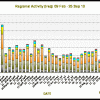
The total number of officially reported hostile incidents nationally increased, returning to the expected rate during this reporting period. 112 incidents were recorded last week compared to 75 the week before.
Hostile activity in Baghdad accounted for approximately half the total number incidents, more than double the number of incidents recorded in Baghdad in the last reporting period. Elsewhere the north central region, which normally follows closely behind Baghdad with high hostile incident levels – showed relatively subdued activity levels. This is probably the result of Iraqi Security Force operations reducing insurgent capability during the previous reporting period. However, due to the proven resilience of the Al Qaeda in Iraq insurgency in the region it is assessed that their operational strength will be resumed within a couple of weeks.
Hostile incidents in the south central and south east regions largely focused on targeting the United States Forces – Iraq with the number of incidents remaining consistent with previous recordings. Despite only one recorded successful attack, insurgents in Dhi Qar province are showing increased intent which may lead to elevated incident levels in the coming weeks. Incident levels in the northern region were in line with expectations, although they would have been higher were it not for Iraqi Security Forces action that prevented two mass casualty attacks. A number of successful arrest operations will have further restricted insurgent movements in the region.
 Political Overview
The political deadlock is beginning to approach endgame and it appears likely that there will be a step forwards in terms of government formation by the end of October or perhaps sooner. There are two possible outcomes. The most likely outcome is that Prime Minister Nouri al-Maliki will be re-nominated as prime minister by a bloc that consists of Maliki’s State of Law Alliance (SLA), most elements of the pan-Shiite Iraqi National Alliance (INA) and the Kurds. There are signs that Maliki – possibly with backing from Iran – has won the support of the Iranian-influenced Sadrist movement and the Iranian-controlled Badr list, two key elements of the INA. The other major part of INA – the Islamic Supreme Council of Iraq (ISCI) – is still holding out, largely due to the personal antipathy of ISCI and its leader, Ammar al-Hakim, towards Maliki. Sources within the Iraqi government state that Hakim has even imperiled his party’s longstanding ties with Iran in an attempt to block Maliki’s re-election. Under this scenario, the government would be a re-run of earlier years, with an Iranian-influenced pan-Shiite bloc governing the country with Kurdish support, The Iraqiyyah movement led by Iyad Allawi, representing most Sunni voters, would be left on the outside of the government. This would likely exacerbate the security situation in the Sunni provinces and western Baghdad, and would also result in even more significant Iranian penetration of Iraq’s security organs.
An alternate and less likely scenario is the long-awaited formation of an anti-Maliki coalition. The persistence of rumours concerning this possibility could simply be the wishful thinking of Maliki’s key opponents – Allawi and Hakim – and the possibility has been consistently supported and boosted by Saudi-owned media. Under this scenario, Iraqiyyah, ISCI and the Kurds would enact their fears about a second Maliki government to support the INA’s alternative candidate to Maliki – the easily-manipulated Adel Abd’al-Mahdi, an ISCI politician who is acceptable to most factions and countries but is purely a compromise candidate with no personal support base and little leadership potential. In theory, Allawi would let Abd’al-Mahdi be prime minister, Allawi would take the presidency and the Kurds would shift their powerbase to the parliamentary speaker’s chair. Supporting the effort to ensure this outcome, Allawi and the Gulf Arab media has moved into overdrive on the theme of Maliki as Iran’s chosen candidate. If Iraqiyyah were at the centre of a new government instead of on the outside, there could be fewer negative security effects for Iraq. On the downside, certain areas such as Basrah could witness more violence as a result of strained relations between ousted Maliki supporters still embedded in local governments and the security forces. However, these issues may be largely academic as there are many pointers to suggest that the time for an anti-Maliki alliance has well and truly passed.
 Baghdad
Shia’a insurgents were responsible for eleven separate indirect fire attacks against the International Zone during the reporting period. The number of indirect fire attacks has risen each month since June, and September looks set to record the highest monthly number for such attacks this year. Indirect fire attacks on the International Zone tend to occur during high profile visits such as the visit of U.S. Vice President Joe Biden on 04 July, though this rise in attacks may be related to discontent caused by the stalled political situation.
Al Qaeda in Iraq or their associated movements conducted a coordinated mass casualty attack in Baghdad on 19 September. Two vehicle borne improvised explosive devices detonated at approximately 1015hrs in the Mansour and Khadimiyah areas of the city. The attack in the western Mansour district killed at least ten and wounded 58, while the attack in Khadimiyah killed 19 and wounded 53. The attacks had the desired effect of making headlines and undermining confidence in the ability of the government of Iraq to keep its citizens safe. If the Al Qaeda in Iraq and Associated Movements supply chain remains sufficiently robust then similar attacks are likely in the next two weeks.
Elsewhere the usual pattern of assassination attacks against off duty national security force and government of Iraq employees continued unabated. Drive by shootings and under vehicle improvised explosive devices were the most common modus operandi in these attacks, designed to intimidate and deter Iraqis from participating in the state administration.
The various Shia’a and Sunni insurgent groups will have had time to regroup over the Eid period and a higher rate of incidents resulted as predicted. However, trends show that after a week of high incident levels there usually follows a much quieter period, partly due to reactive Iraqi Security Forces action but more likely as a result of the time it takes to re-supply an insurgent grouping. Incident numbers are therefore likely to decrease slightly next week.
 Basra
Basra
On 19 September Forward Operating Base Minden was targeted with two rounds of indirect fire from the direction of the Shatt al Arab river. This attack was the first against Forward Operating Base Minden since September 2009 and is the second indirect fire attack against a small U.S. Forces base in Basra since 16 September when Camp Bucca was targeted. On 26 September two 107mm rockets were discovered on launch rails to the north of Basra Contingency Operating Base. This diversification of targeting may be a result of successful Iraqi Security Force operations that have seen the capture of indirect fire teams engaged in attacks against Basra Contingency Operating Base during July and August.
A small arms fire incident was reported close to the Provisional Joint Co-ordination Centre in Basra City on 21 September. The details of the incident remain unclear but it is possible that this was an attack against a U.S. Forces vehicle visiting the base. Criminal attacks involving small arms fire continue to blight route Aspen. Two attacks this week were assessed as criminal activity, either hi-jack attempts or retaliation attacks by associates of a criminal gang that were killed by U.S. Forces while attempting to hi-jack a convoy on 05 September. Despite 05 September show of force by U.S. Forces, this area will continue to witness incidence of criminal activity for the foreseeable future.
Basra’s Iraqi Security Forces continued to find improvised explosive devices and mount search and arrest operations throughout the province leading to the detention of dozens of suspected insurgents and criminals. These actions combined with a marked improvement in the posture of Iraqi Army soldiers manning checkpoints in the city are helping to improve the reputation of the national security forces thus increasing public confidence.

Posted in Weekly Security Update Comments Off on Weekly Security Update for 30th September 2010
More Than 1,000 New Wells at West Qurna 1
Posted on 27 September 2010 .
ExxonMobil (XOM.N) and its partner Royal Dutch Shell (RDSa.L) plan to more than double the number of new wells in Iraq's West Qurna Phase One in order to reach its projected production target, an Exxon executive said on Monday.
According to Reuters, quoting ExxonMobil's Iraq Vice President, James Adams, Exxon aims to drill two to three times the current 370 wells in the field as part of its development plan for the field, to reach plateau output of 2.325 million barrels per day.
"In order to reach the output target, we need to drill two to three times the number of wells that are already there," Adams told reporters on the sidelines of an industry event.
Asked how many wells the firm will be able to drill this year, he said, "a handful", adding that at this stage the companies are still evaluating the field.
Current production is in the range 200,000 to 250,000 bpd, he said. In July, Adams told Reuters the consortium aimed to raise production by 10 percent by the end of the first quarter of 2011. IBN published the quarterly agreed targets for Iraq's Southern oilfields for coming year in this article.
The initial development plan agreed by Exxon and its partners for the West Qurna Phase One oilfield includes drilling eight new wells and overhauling up to 50 wells this year, an Iraqi oil official said in May.
Adams confirmed that Exxon was taking the lead among international oil companies in managing a multibillion-dollar water injection scheme, which could help raise extraction rates in Iraq's southern oilfields such as West Qurna, Majnoon, Zubair, Rumaila, Gharaf and Halfaya.
"The government made the decision to require that this [water injection project] be done on a communal basis. They invited us to take the lead," he said.
The Exxon-Shell contract to develop the 8.7-billion-barrel West Qurna Phase One project was one of a series that Iraq has signed with international oil companies to develop its vast reserves.
If the projects all turn out as planned, Iraq could quadruple its oil output capacity to Saudi levels of 12 million barrels per day, potentially giving it the billions of cash it needs to rebuild after decades of war, sanctions and neglect.
(Source: Reuters)
Posted in Iraq Oil & Gas News 1 Comment
Political Stalemate Not Delaying Rumaila - BP Boss
Posted on 22 September 2010 .
BP's boss in Iraq says the political impasse that has delayed the formation of Iraq's new government for more than six monthsit has had no effect on its work on Iraq's biggest oilfield.
BP is moving ahead with developing the supergiant Rumaila oilfield and could award new contracts for work in the field later in the year, BP Iraq's President Michael Townshend told Reuters.
"We have not seen any delays in contracts that caused us to reduce or stop our work," he said.
Most of the work in the field does not need approval by Iraq's cabinet, so the lack of a new government and of a functioning parliament is not holding up tenders.
Contracts worth more than $20 million are reviewed by the Rumaila Joint Management Committee (JMC), and contracts of more than $100 million are reviewed "with a time limit" by state-run South Oil Co., he said.
Rumaila produces almost half of Iraq's total output of 2.5 million barrels per day, and contains and estimated 17 billion barrels of crude reserves.
BP and its Chinese partner CNPC signed a 20-year development contract for Rumaila and expect to increase output to 2.85 million bpd. If achieved, that would put Rumaila in second place worldwide after Saudi Arabia's Ghawar, the world's largest oilfield.
The plan to boost crude output in Rumaila includes a major oil well drilling programme that will continue through 2011. As we reported during the summer, international service companies have been awarded contracts worth nearly $500 million to drill 49 new wells at the field.
BP and its partners aim to put in over 50 electric submersible pumps (ESP) this year, said Townshend.
In addition, new generator sets are being installed, and work is moving ahead on connecting existing wells to the degassing stations, and on well refurbishment, which is currently being carried out at 14 wells.
"We will be replacing rigs that were on SOC contract at the end of year, but on an overall basis I would expect the total number of workover and drilling rigs to remain relatively steady through next year," he said.
"In addition to these contracts we should be in place to start awarding the start of seismic and some engineering work."
Drilling new wells, overhauling existing ones and installing electric submersible pumps are ways to overcome the natural decline of the field and boost production.
Current crude production is "a little over 1 million barrels a day", he said, declining to give a specific output figure. If left alone the natural decline of the Rumaila field is around 15 percent per year, he added.
In May, Salah Mohammed, head of the Rumaila Division at the South Oil Co, said production from Rumaila was around 1.045 million barrels per day (bpd), and expected to reach 1.150 million bpd of crude by the end of the year.
"Everything that we have seen so far, shows that the ability of the reservoir to produce is still fundamentally there," said Townshend. "That is really reassuring."
(Source: Reuters)
Posted in Iraq Oil & Gas News 1 Comment

Spanish Equipment Rental Company Moves Into Iraq
Posted on 18 September 2010 .
Spanish equipment rental company GAM (General de Alquiler de Maquinaria) has announced a major investment to enter the Iraqi market.
Chief Operating Officer, Carlos Araoz, told IRN that the new depot in Erbil would be part funded using $20 million from an American source.
"In Iraq I will not have Loxam or Lavendon competing with me. There is an amazing infrastructure plan and oil and gas projects."
He added that GAM's Saudi Arabian contacts were helping it enter the Iraqi market.
Mr Araoz said there were few security problems in northern Iraq and that the Kurdistan depot would be linked to a new branch in Turkey planned in the coming months.
(Source: Access International)
Posted in Construction & Engineering In Iraq, Iraq Oil & Gas News, Iraq Public Works News Comments Off on Spanish Equipment Rental Company Moves Into Iraq

Anbar to Upgrade its Border Crossings
Posted on 11 September 2010 .
Anbar Council has launched a project to upgrade its three border crossings, with the intention of raising additional revenue, the head of the council’s investment committee said on Tuesday.
The three border crossings are:
- Arar (on border with Saudi Arabia);
- Tarbiel [Tirbil] (on border with Jordan); and
- al-Tanf (on border with Syria).
The project will involve the building of several garages for lorries and at least one hotel.
“The revenues [from increased traffic through these border posts] will be used to finance projects throughout Anbar,” said Mezher Hassan, head of the council’s investment committee.
Posted in Iraq Industry & Trade News 1 Comment

New Blog Series - Construction in Iraq
Posted on 06 September 2010 .
Iraq, 1980. The Iranian F15s swooped around the partially constructed Ishtar Sheraton, followed the Tigris river beside Abu Nawas Street and launched their missiles at Al Dora refinery. Thirty years of war and unrest had begun. I know because I was there – I was the project quantity surveyor then, working for the State Organisation of Tourism. On the other side of the table, and working for the contractors was my future business partner, Evan Anderson, so our firm is truly founded on its Iraq experience.
Now it is 2010 and we all hope that a new, peaceful phase for the Iraqi people can start. The US army is leaving, and democratic elections have been held. The conditions of working and security are not yet ideal but those of us who have affection for Iraq and perhaps a long strategic vision mixed with optimism must try to be positive and provide support wherever we can.
Of course, commercial benefit is the driver, but there is also an element of goodwill that motivates me to participate. Iraq has been good to me, financially and professionally. Maybe soon I can return some of the debt owed. I hope so.
So, my blog starts, but it will quickly develop and convert to the blog of my company, Blair-Anderson Iraq. But first then a bit more history of how we got here.
My name is Stewart Blair. I am the joint owner of the Blair-Anderson Group, www.blair-anderson.com who have many years experience in the construction industry in what is known as the Middle East. We have provided cost management services to clients from the UAE to Saudi Arabia, Bahrain, Qatar, Kuwait and Egypt. We have been established for almost 25 years in this field.
In 2003 our company joined forces with an Iraqi civil engineer with whom we had worked in Dubai on several projects successfully, and a business bond had been created. We decided then that the combination of our international experience, including a credible Iraq and Haider’s enthusiasm to become involved in his native Iraq would demonstrate our ability to handle assignments in Iraq. Haider Al-Ali is the managing director of the company.
This blog will try to track our business development efforts and also try to impart and share some construction cost and risk knowledge as we discover it.
Let us start with a construction oriented look at the Iraq market. Why Iraq? Well, the projects I was on, such as the Ishtar, Palestine and Babylon hotels, the Rashid hotel, Taji Island and Baghdad University were probably the last to benefit from modern peaceful technology. The highest of these was 22 floors, perhaps 75 metres. We have now completed several towers in the UAE exceeding 75 floors!
The ambitions of Iraq need to be serviced by modern technology therefore. In our opinion, every urban facility and service is needed. For construction, the best way to view the market is as an island, where everything needs to be imported. Of course there will be local materials and skilled labour and workforce, but a lot has to be done to catch up so that proper construction and maintenance can be achieved.
The first conclusion then is that it will be expensive. We will explore all the various cost heads as our blog progresses, but we are also cautious as all development needs a return, and until the economy can afford to provide that by an accelerated increase in earnings per capita and so GDP, we suspect private development will not be as fast as may be expected or hoped for.
Even now, we are experiencing a significant level of difficulty. As our services tend to be at the front end of the procurement process, we notice a lack of confidence in government agencies in their own buying processes. We understand that there will be a certain nervousness – why not, no significant purchases of international services have been made for years, and the “I will not be ripped off “ syndrome is strong.
The construction and development procurement process is in our view then a priority. Therein lies our conflict of interest though, so until others take up this issue there is not much, that service providers like us can do. This blog may reach such others then, and that is our hope, so they can assess the value of our services without the pressure of a sales pitch. We look forward to sharing our experiences, and perhaps success with our readers over the coming months.
Stewart Blair is founder and director of Blair-Anderson Holdings, specialising in project reviews, management and control systems feasibility/viability studies, cost planning and the management and settlement of disputes on major international projects. He has been involved in sensitive dispute management assignments both in the Middle East and Internationally. He has also been responsible for successful cost planning and cost control on several major projects comprising high rise, commercial, hotel and touristic developments.
Posted in Construction & Engineering In Iraq 3 Comments
Saudi Firm to Invest in Oil and Electricity
Posted on 31 August 2010 .
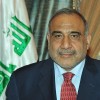
A delegation from the Saudi al-Jumaih Holding Company briefed Iraqi Vice President Abdel Abdulmahdi [Adel Abdul Mahdi] on the projects the firm is planning in the oil and electricity sectors, according to a report from Aswat al-Iraq.
Abdulmahdi welcomed the Saudi firm and all other Arab and foreign companies planning to invest in the Iraqi market’s various sectors.
Posted in Iraq Oil & Gas News Comments Off on Saudi Firm to Invest in Oil and Electricity
Kuwait Signs Oil Pact with Iraq
Posted on 24 August 2010 .
Kuwait has signed an agreement to share oil from cross-border fields with Iraq and is waiting for its northern neighbour to reciprocate, the emirate’s oil minister has said, according to a report from The National.
The deal could help to smooth the often thorny relationship between the two countries 20 years after Saddam Hussein’s armies occupied Kuwait – an incursion that sparked the First Gulf War.
A committee representing both governments met this month, the Kuwaiti minister, Sheikh Ahmed Abdullah Al Sabah,said last Wednesday.
“The Kuwaiti side already signed the declaration, and now we’ve sent it to Iraq to sign it,” Sheikh Ahmed said.
The agreement stipulated that a company had been created to work on both sides of the border “so nobody will claim that one side took more oil than the other”, he said.
“An international adviser will come and look at the field and say how much is allowed [for] this side and the other side, and the cost will be shared equally,” Sheikh Ahmed said.
Production from cross-border oilfields has been a problem between the Gulf neighbours. In the run-up to the 1990 invasion, Iraq accused Kuwait of stealing its oil by slant-drilling into the Iraqi side of the giant Rumaila oilfield – which is known as Ratqa south of the border – to steal its oil. Kuwait denied the allegation.
Whether the allegation was true or not, Saddam used it as an excuse to invade Kuwait.
After an eight-year war with Iran, Iraq was left heavily in debt to Kuwait and Saudi Arabia.
Iraq also accused Kuwait of producing more oil than allowed by OPEC’s quota system, driving down international oil prices and hurting the Iraqi economy. Manouchehr Takin, an analyst for the London-based Centre for Global Energy Studies who wrote the 2008 report “Stealing Iraq’s Oil: Is the Iraqi Press Right?”, said Rumaila was the most contentious of several oilfields that straddle the border.
A high rate of production on one side of the border essentially “sucks the oil from the other side”, Mr Takin said.
Posted in Iraq Oil & Gas News Comments Off on Kuwait Signs Oil Pact with Iraq