



Iraq's new cabinet: economic recovery and the oil challenges
Posted on 21 December 2010 .
By Tariq Abdell, Founder & Chairman, Mesopotamia Insight.
The opinions expressed here are those of the author, and do not necessarily reflect the views of Iraq Business News.
The unanimous approval of the new Iraqi government by the Iraqi lawmakers, to be led by the incumbent premier al-Maliki, is long-awaited news - ending nine tumultuous months of political horse-trading. However, the highly politicized nature of the new cabinet could easily jeopardize its effectiveness and its decision-making independence; subsequently, protracting Iraq’s tribulations: ethno-sectarian strife, improvised population, and languished infrastructure.
Inarguably, Iraq's new cabinet first order of business is security, 2011 budget, hydrocarbon and investment laws and, most importantly, revamping of Iraq's underdeveloped oil sector which provides over 90 percent of its budget revenues.
Given Iraq’s colossal energy reserves, 115 billion barrels of oil and 112 trillion cubic feet of gas, and the international markets insatiable appetite for energy resources, chiefly the U.S., China, and India; Iraq is strategically positioned as ever before to reclaim its well-deserved seat among the major oil producers such as Saudi Arabia and Iran.
Nevertheless, the daunting challenges of the oil sector - decades of wars and sanctions- are solemnly hampering the country’seconomic recovery and its multi-billion dollar mega-reconstruction projects (e.g., housing, schools, hospitals, roads, bridges, airports, dams, etc…) – among them:
- The oil sector is a highly politicized field.
- Major oil fields require billions of dollars for rehabilitation and development.
- The oil workforce is in desperate need of training and technological know-how.
- OPEC constraints (production quotas, for instance).
- Severely languished oil infrastructure (systematic bottleneck, for instance)
- Repealed hydrocarbon law
Given the aforementioned challenges, the new Iraqi Government shall devise a concerted post-conflict oil strategy, that is capable of revamping the oil sector and, subsequently, boosting production capacity to its desired levels - from 2.5 million barrels a day to 12 million bpd over the next six years- the strategy shall entail the followings:
a) Independent and inclusive Petroleum Council -reflecting the geographic distribution of Iraq’s energy resources- that is responsible for formulating oil strategies, enforcing transparency and accountability as bulwarks against corruption, and, most importantly, deflecting the politicization of the oil sector.
b) Conducive and transparent business environment compatible with Iraq’s new constitution -ratification of the investment and hydrocarbon laws- susceptible to assure and attract greatly needed foreign capital and technological know-how.
C) Equitable distribution of oil revenues to avoid the resource-rich nations’ deleterious disease also known as the resource war. Historically, the bulk of Iraq’s oil revenues are distributed along ethno-sectarian and tribal allegiances, as opposed to inclusive and growth-oriented economic policies,
Moreover, given the IOCs vested interest in the Iraqi oil, the new government ought to seek the IOCs' expertise to help revamp its oil sector by introducing technological know-how, the industry best practices, and foster a professionally literate workforce. With such perspicacious initiative, Iraqi government will definitely enhance its oil sector efficiency, boost production, and, eventually, spur economic recovery.
Conversely, in the absence of a concerted and inclusive national development strategy susceptible to resuscitate the country’s weakened economy, create jobs, and, ultimately, improve the well-being of of its impoverished population; Iraq may risk reigniting political instability, ethno-sectarian strife, religious fanaticism, and foreign intervention as result of its injudicious policies.
The opinions expressed here are those of the author, and do not necessarily reflect the views of Iraq Business News.
The author, Tariq Abdell, is an Iraq analyst, and Founder & Chairman of Mesopotamia Insight
He can be contacted at: [email protected]
or
Followed on twitter: http://www.twitter.com/atariqx
Posted in Tariq Abdell 3 Comments

Turkey and Iran Battle for Influence in Iraq
Posted on 11 December 2010 .
According to a report from Reuters, Turkish clothing and beer are hot sellers in the streets of Erbil, the capital of Iraq's Kurdish north, while in the South, Iranian cars roam the streets of Basra and Iranian pilgrims flock to Iraq's holy sites.
Sunni Ankara and Shi'ite Tehran, old rivals turned friends, are vying for post-war economic clout in neighbouring Iraq to capitalise on an expected oil boom, and have been flexing their muscles in Baghdad's government formation talks, diplomats and politicians said.
Both Iran and Turkey are using Iraq to increase their respective economic and political power.
Turkish companies are top investors in hotels, real estate, industry and energy in Iraq's semi-autonomous northern Kurdish region, and increasingly in the Shi'ite south where Iranian influence had been almost unchallenged, says Reuters.
Iran is Iraq's main trading partner and has been one of the largest investors in its construction and industrial sectors since the fall of Sunni dictator Saddam Hussein.
"It is clear that they are competing, specifically in Turkey's effort to dam in Iranian influence. Iran has undoubtedly gained a significant role in Iraq since 2003, and from about 2007 on, Turkey has started to push back," said Joost Hiltermann of the International Crisis Group.
"They are holding each other in balance."
Posted in Construction & Engineering In Iraq Comments Off on Turkey and Iran Battle for Influence in Iraq
History’s lesson for the dinar
Posted on 07 December 2010 .
I used to think that rapid increases in Iraqi oil production would practically guarantee a significant strengthening of the dinar over the next ten years. Surprisingly, however, history suggests that this is far from a foregone conclusion.
While the Oil Ministry claims that Iraqi capacity will rise by 10 million barrels per day (mn bbl/d) to something like 12 mn bbl/d by the end of this decade, few analysts take this projection seriously. In fact, no country has ever achieved such a large incremental increase in a ten-year period. Historically, a recent study by the Energy Policy Research Foundation (available at http://www.eprinc.org/pdf/EPRINC-Iraq-FirstLook.pdf) found that Saudi Arabia came closest, with an increase of about 6 mn bbl/d (up 150%) from 1970 – 79, followed by Iran, which went from around 2 – 6 mn bbl/d from 1965 – 1974, and Russia, which raised production by some 4 mn bbl/d (68%) from 1998 – 2007.
But suppose for the sake of argument that Iraq was able to match these precedents and raised production from approximately 2 mn bbl/d at present to, say, 6 mn bbl/d by 2019. What would happen to the dinar if it followed a trajectory similar to the Saudi riyal, Iranian rial, or Russian ruble during the oil booms in those three countries?
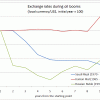
Not much, as it turns out. If it’s like the riyal or the ruble, the dinar would actually depreciate in US dollar terms by 25% or 16%, respectively. And the rial appreciated by just 12% from 1965 – 1974. (See chart. As the indices are based on year-end US$/local currency exchange rates, increases/decreases in an index correspond to appreciation/depreciation against the dollar.)
The problem with the idea that increased oil production must be bullish for the dinar is that it is based on the assumption that nothing changes except the output of oil (what economists call a “ceteris paribus” assumption). In fact, however, many other things can be expected to change. In the case of a large country like Russia, for example, domestic demand for refined products may rise significantly as well so that exports don’t go up at the same pace as crude production volumes. In the Saudi and Iranian cases, oil booms led to import booms, with the result that demand for foreign exchange rose along with increased export earnings. There might also be scenarios in which an increasingly confiscatory taxation regime led to greater dollar demand due to capital flight. And of course exporting more barrels won’t necessarily lead to higher forex revenues during an oil-price slump.
History’s lesson for the dinar is that whether it strengthens or weakens over the next decade will depend not only on Iraq’s success in increasing oil production but also on the economic changes that this increased production induces. If Iraqi demand for imports and refined products were frozen for ten years at current levels, a 4 mn bbl/d production increase would be unambiguously dinar positive. But in a more realistic scenario, supply and demand for foreign exchange are likely to grow together, with the result that the exchange rate may not deviate dramatically from its current level.
Posted in Iraq Banking & Finance News, Mark DeWeaver on Investments and Finance 600 Comments
Mortars Hit Basrah Airport
Posted on 01 December 2010 .
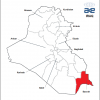
Basrah airport has been hit by several mortars over the last week. Although no casualties were reported the facility was shut for several hours and flights delayed and cancelled as a result.
Local militancy
Blame has speculatively been assigned to local Shi'ah militia groups, such as those affiliated with the now splintered Jaysh al-Mahdi (the Mehdi army) and those taking direction from Iranian elements. The culprits have not been identified and whilst there is no firm proof, the attacks fit the modus operandi of these groups.
Possible Motives
Initial reports focused on the disruption the airport closure had on Hajj pilgrims returning from Saudi Arabia. However, the attacks may have been aimed at disrupting travel by individuals attending a high profile oil and gas conference in Basrah city. The militants were likely intent on sending a strong signal of presence to would-be investors. If the perpetrators were linked to Iran their intent may have been to illustrate the potential hazards Western firms may face when working in an area so affected by Tehran proxy groups.
Meanwhile, prime minister Nuri al-Maliki has been granted 30 days in which to form a government. He is highly unpopular amongst the militant groups based in Basrah province after he clamped down on their activities in spring 2008. The arrest and killing of numerous militants in the operation Charge of the Knights has not been forgotten and the remaining elements may have wanted to express their displeasure with his mandate. Their aim would have been to embarrass al-Maliki and undermine his credibility as a stabilising force, not just in the eyes of Basrawis, but also amongst the foreign nationals travelling to Basrah to do business.
Alternatively, the attack may have been timed to coincide with Thanksgiving. American soldiers on site at Basrah airport were celebrating during the strikes, which may simply have been aimed at reminding US forces that they have not eradicated militant groups based in the country.
The Tactic
Rocket and mortar attacks in Iraq are most commonly directed at fortified and 'secure' facilities. These areas are normally too well guarded for terrorists to gain access. A mortar, which can be fired from a distance, is therefore the only means available to a group seeking to cause damage and casualties. As such, the risk is highest in the locations where personnel might otherwise consider themselves to be 'safe'. The Green Zone, for example, suffers the vast majority of mortar attacks in the country. Conversely, areas in the so-called 'Red Zone' may be perceived as being dangerous, but they are rarely subjected to mortar attacks, save those aimed at the Green Zone but which fly astray accidentally. Airports and US military bases are the next most affected facilities.
While this may make the International/Green Zone sound like an alarming place, it should be noted that mortar attacks are now highly infrequent when compared to earlier years. Furthermore, most attacks tend not to cause casualties. In the event that an attack does take place, however, personnel should be prepared.
AKE Recommendations
Before travelling to Iraq individuals should have adequate insurance cover for their activities. Hostile environment training should also be considered so that the risk posed by mortars (and other tactics) can be fully explained, learnt and prepared for. Once in the country, and especially in areas deemed otherwise 'secure' such as bases, airports and the Green Zone, individuals should familiarise themselves with emergency procedures such as warning sirens and evacuation routes. The whereabouts of your nearest shelters, exits, first aid kits and medical personnel should all be known. In the event of a mortar attack you will have little to no warning, so you should know how to react as second nature, without panic or confusion. As mentioned, the risk of casualties is low, but if individuals are prepared and ready to react the risk will be even lower.
John F Drake is a senior risk consultant with AKE Group, a British private security firm working in Iraq since before 2003. Further details on the company can be found at www.akegroup.com/iraq
You can also follow John on twitter at www.twitter.com/johnfdrake

Posted in John Drake Comments Off on Mortars Hit Basrah Airport

How to Brand Your Business in Iraq
Posted on 30 November 2010 .
By Lisa Knight, Creative Director & Founder of The Brand Foundation.
Since 2007 Iraq has witnessed a number of multinationals setting up regional operations – GE, Daimler Benz, Shell, and global finance and banking institutions such as J. P Morgan Chase and Citibank publicly proclaiming an interest in the Iraqi financial sector, its only a matter of time before a cross-sector multinational influx occurs.
How does a multinational go about presenting itself to an Iraqi population of approximately 28 million people? Iraq, unlike the UAE or Saudi Arabia has a significant amount of historical baggage, local perceptions of large western organizations are unclear at such an early stage of re-development, and the idea of a multinational being welcomed with open arms is not guaranteed – neither is global brand recognition a given in a country that has largely been shut off from western media.
With the possibility of political baggage being directly associated with big, foreign businesses, especially those that are US or British owned, does entering Iraq mean a major brand positioning exercise is required?
In the case of Iraq, I believe it should. The Iraqi market is to be entered sensitively, with tact, diplomacy and an acute cultural awareness of the impact of a turbulent history. Imposing your tried-and-tested western brand on this market with disregard for its troubled past and cautious nationals could be an opportunity missed.
In the marketing and branding world, getting to know your customers has always been a vital research activity that helps you develop an appropriate brand dialogue, in Iraq the concept remains the same, however it isn’t a small market segment one is analyzing, it’s a population of tens of millions of people, the majority of which are potentially receptive to your proposition, provided you get the dialogue right – and dialogue, not just identity, is key.
Understanding their purchasing habits, lifestyle traits, beliefs and customs will lead you to appropriate solutions, including when and where to interact and what tone of voice to adopt. A bi-lingual logo isn’t enough to say “Hello/Salam, we’re here – we speak your language, so trust us,” – a far more considered, sophisticated approach is needed to achieve a deep-routed penetration whereby in time trust is established between your organization and your new customers.
Localization is just that. Local. Methods that work in other parts of the world, or other parts of the Middle East may or may not be appropriate for Iraq.
Lisa Knight is Creative Director & Founder of The Brand Foundation, a UAE-based branding agency that specialises in the property sector in emerging markets. Prior to that, Lisa led the creative team of the UK’s governing political party, firstly under Rt. Hon Tony Blair and latterly, Rt. Hon Gordon Brown. Lisa’s career spans 16 years and numerous industries: arts & entertainment, business & finance, fashion, travel, youth, sport, and international development.
Posted in Iraq Industry & Trade News, Lisa Knight 7 Comments
Maliki Orders Clampdown on Border Corruption
Posted on 29 November 2010 .
An adviser in the Iraqi government has said that the Prime Minister, Nouri al-Maliki, has instructed the Interior Ministry to combat corruption at border crossing points.
Ahmed al-Shihani told AKnews that the Prime Minister called for action to be taken following official reports about rising corruption at Iraq’s border crossings -- particularly the borders with Jordan and Syria -- due to the increased commercial traffic between Iraq and these countries.
Shihani said that the government will send regular inspection teams to the crossings, and employ “other methods”, in order to detect cases of corruption and bring the perpetrators to justice.
"The border points must be free from corruption,” he said.
On June 7, the Prime Minister demanded the direct supervision of the border crossings.
On November 4, the establishment of a central supervisory committee to oversee the operation of the crossings was announced.
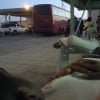
There are many border crossing points between Iraq and its neighboring countries, the busiest of which are the Ibrahim al-Khalil, which connects Iraq with turkey; the al-Walid and Rabeia crossings on the Syrian border; the Treibil [Tirbil, Tarbiel] crossing into Jordan (pictured); the Araar port on the Saudi border, and the Shalamja and Mundhiriya crossings connecting Iraq to Iran.
Posted in Iraq Industry & Trade News Comments Off on Maliki Orders Clampdown on Border Corruption
The Biggest Increase in Oil Capacity in History
Posted on 17 November 2010 .
The balance of risk and reward for investing in Iraq's vast oil reserves is changing, according to a report by Turner Investments.
The report, called Oil in Iraq: A Profitable Gamble? considers safety risk for oil company employees and their families, risks to operations from bombs and landmines, and political risks ranging from a line of officials seeking bribes to sectarian wars between Sunni, Shia and Kurd factions.
For all the problems, the authors believe there is one big reason why oil companies will seek to profit from Iraq:
"Iraq could hold the greatest potential for growth in global oil production. With 115 billion barrels of oil, Iraq has the world’s third-largest proven reserves, behind only Saudi Arabia and Iran. Some geologists believe that Iraq’s reserves are even greater than that, as many oil fields have yet to be fully explored. There are few, if any, places that have as much oil that’s untapped and close to the surface (and thus relatively economical to extract) as Iraq does."
Iraq has clearly not been an instant success. As the report states, "energy companies have in fact balked at getting entangled in Iraq’s spider web of domestic problems." It goes on to say that in a major auction in June 2009, "only a single deal was struck in that auction; other energy companies considered the risks of a long-term investment in Iraq too formidable to overcome." This year, Iraq has seen four major gas deals and many more oil investment projects announced.
The authors say: "Our own sense is that companies have become decidedly more optimistic about their prospects in Iraq over the past 12 months. Their optimism evidently has been stoked by the 12 development contracts to increase oil production that have been awarded to international companies such as BP, ExxonMobil, Occidental Petroleum, and Royal Dutch Shell."
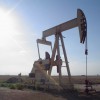
The authors concurred with Morgan Stanley's forecast that "Iraq can roughly double its oil production by 2016, to 4.2 million barrels per day." That would represent one of the biggest increases in oil capacity in history. They continued: "Doing that would likely require a fourfold increase in capital investment, with $50 billion being spent between now and 2016. The money would fund the drilling of more than 1,700 new wells and upgrading 1,000 existing wells that have been decaying for years. BP alone plans to spend some $15 billion in a joint venture with China National Petroleum Corporation to boost production at the Rumaila field."
The authors conclude: "In short, we think Iraq represents too big of a prospective bonanza for Western oil exploration-and-production companies and energy-services companies to pass up. In truth, the companies are increasingly concluding that the pluses of doing business in Iraq outweigh the undeniably large number of minuses."
(Source: Turner Investments)
Posted in Iraq Oil & Gas News 1 Comment
Australia supports Iraq WTO membership
Posted on 16 November 2010 .
An Iraqi ministry has said that Australia supports its quest for World Trade Organisation membership, according to NINA.
WTO membership will significantly boost investment in Iraq as well as increasing its access to goods and services due to fewer restrictions from WTO member countries.
WTO membership takes almost as long to attain as agreement at a UN meeting. Iraq submitted its application to join in 2004, and it met with the WTO's working party for Iraq for the first time to discuss the application in 2007. It took Saudi Arabia ten years before its application was granted finally in 2005.
It's not all bureaucracy that makes the process so slow, by any means. To gain WTO membership there are hundreds of pieces of legislation that a country needs to pass and put into practice, so that it conforms to the standards that make international business easier and more trustworthy.
As Australia and Iraq sign memoranda of understanding to improve trade and investment, the Iraq Ministry of Commerce said: "The meetings included research...in order to activate the memoranda of understanding and urged Australian companies to take advantage of employment opportunities and the huge investment available in Iraq."
"The Australian side expressed its readiness to support Iraq in building human capacity through intensive training courses. Australia's support for Iraq in the process of joining the World Trade Organization also showed its great support in the ideas the Iraqi side."
(Source: NINA, Department of Commerce)
AAIB View
A spokesperson at A.A.I.B. Insurance Brokers, a company specialising in Iraq commented; the support of Australia for Iraq’s intention to join the W.T.O. is to be applauded as membership should provide clear to Iraq as it strives to diversify and deepen its economy.
However the W.T.O. has been criticised in some quarters. Allegations have been made that the W.T.O generally favours the interests of the rich, industrialised counties at the expense of the less developed countries, that its workings and decision making processes are not transparent enough and that it puts commercial interests above environmental considerations and human rights. Also policies to protect the positions of small, emerging domestic industries are restricted.
Most countries however believe that the benefits of membership of the W.T.O. far outweigh such concerns. W.T.O. members trade with lower trade barriers, including tariffs and quotas and the avoidance of excessive regulations. W.T.O. principles include; non-discrimination, transparency and increased certainty about trading rules and conditions. Overall these factors make trading easier, cut unnecessary costs and increasing confidence in the commercial and contractual environment.
All these things ultimately facilitate more investment in productive capacity and job creation opportunities and can result in a wider choice of lower priced goods and services being available to consumers. Importantly, governments are better placed to defend themselves against lobbying from narrow interest groups; the W.T.O. system encourages good governance and reduces opportunities for corruption.
As regards Iraq, various studies and news articles have identified obstacles (real or perceived) to raising investment and deepening commercial involvement within the country. Such obstacles have included the problems of widespread corruption, overly complex bureaucracy, limited infrastructure and power supplies and lack of contract certainty.
The potential benefits of W.T.O. membership to Iraq are many. For the country to meet the membership acceptance criteria structural changes to the economy and labour market will be needed along with development of the legislative landscape. Ultimately senior and sustained political effort will be needed to bring Iraq into the W.T.O. fold.
Posted in Iraq Industry & Trade News 54 Comments

Election Update: Govt Negotiations at Critical Stage
Posted on 10 November 2010 .
Our sources in Iraq tell us that negotiations are expected to continue late on Wednesday to decide the formation of the next Iraqi government, and it looks likely that the parliamentary session that had been postponed until Thursday will be delayed further.
It is now generally accepted that Nouri al-Maliki will retain the position of Prime Minister, but the positions of President and Speaker (or Head of Parliament) are still being hotly contested.
The expectation is still that Jalal Talabani will hold on to the Presidency, and that Ayad Allawi will have to accept the position of Speaker.
But there is also some significant horse-trading to be done regarding the service ministries, such as Communications, Education, and Health. The Sunnis from Allawi's Iraqiya bloc who have agreed to support Maliki need to be kept happy, and the more important of these will expect to receive ministries.
The campaign of bomb attacks has been stepped up, blamed on al-Qaeda and disaffected Ba'athists who are unhappy with the direction of the talks. The Mansur district of Baghdad was heavily targeted this morning, with the timing of the attacks considered by some to be linked to the information flow from the negotiations.
Saudi Arabia is said to be particularly displeased with the latest developments, and doubts have been cast on the sincerity of plans to re-build the Iraq-Saudi oil pipeline. “It's all just talk”, said one commentator.
Many are blaming the delays in forming a government on what they see as foreign 'interference' in the process.
We'll keep you informed at Iraq Business News as the story develops.

Iraq-Saudi Oil Pipeline May Be Re-Built
Posted on 09 November 2010 .
Iraq's Oil Ministry is studying an offer submitted by a private a Saudi company to rebuild the idled Iraq-Saudi oil export pipeline, ministry spokesman Asim Jihad told Reuters.
Jihad and a representative of the Saudi firm, Ali Mahir, said the offer proposed involving Japan's Mitsubishi and a Hungarian company identified as OTV, which took part in the construction of the original 626 km (390 mile) pipeline, which had a capacity of 1.7-million barrels per day. Alsumaria TV says the proposal involves Mitsubishi along with Bulgarian and American companies.
"We welcome any cooperation with Saudi Arabia in the oil sector to enhance bilateral relations. The offer is under discussion," Jihad said.
(Sources: Alsumaria TV, Reuters)
Posted in Construction & Engineering In Iraq, Iraq Oil & Gas News Comments Off on Iraq-Saudi Oil Pipeline May Be Re-Built