



Kuwait Gas-Supply Pact -- Iraq "has Much to Gain"
Posted on 09 January 2018 .
By Salam Zidane for Al Monitor. Any views expressed here are those of the author, and do not necessarily reflect the views of Iraq Business News.
Iraq has much to gain from gas-supply pact with Kuwait
Kuwait will begin importing natural gas from neighboring Iraq this year, a development welcomed in Baghdad as it could improve Iraq's relations with the Gulf countries — relations that ruptured when Iraq invaded Kuwait in 1990.
Most of Iraq’s gas is associated petroleum gas, also known as flare gas. Associated petroleum gas is a byproduct of oil production, as opposed to natural gas that comes directly from gas reservoirs in the ground.
The Iraqi Ministry of Oil has decided to export associated petroleum gas from international oil companies operating in southern Iraq to Kuwait via a gas pipeline near Basra. Kuwait would then turn it into dry gas, condensates and liquid gas, among other types. According to the Ministry of Oil, Iraq flares 1.5 billion cubic feet of gas daily.
Ministry spokesman Assem Jihad told Al-Monitor, “Iraq will export to Kuwait the associated gas, part of which is flared on a daily basis. Processing natural gas is a complex and expensive industrial process that requires building plants through local and foreign companies.”
Jihad said, “Iraq is set to supply Kuwait with 50 million cubic feet of gas daily, which will gradually increase to 200 million cubic feet [depending on] international prices. The gas will be exported through the three-decade-old pipeline linking the two countries. The pipeline, however, needs maintenance. Iraq will take care of maintenance over the 30 kilometers [19 miles] of pipeline stretching within its territory, while Kuwait will handle its part of the pipeline.”
Iraq has lost billions of dollars annually as a result of wasteful gas flaring and its importation of diesel fuel for electricity. That's not to mention the low levels of energy efficiency because many Iraqi power stations run on dry gas, which is not produced locally.
What has compounded the problem is the reluctance of some oil companies to exploit associated gas despite the increase in Iraq's crude oil production from an average of about 1 million barrels per day in 2003 to roughly 4.3 million per day in December, which increased gas flaring from 700 million cubic feet to 1.5 billion cubic feet daily.
Kuwait will lay the pipeline to the neighboring Rumaila oil field, the largest in the world, under the supervision of the BP oil company. The agreement is likely to be implemented soon, since Kuwait has a demand for natural gas that exceeds its supply by an estimated 500 million cubic feet daily. Kuwait has been unable to curb this deficit in part because of tension among Gulf countries that has prevented Qatari gas from flowing into Kuwait via Saudi Arabia; Reuters reports that much of the shortfall is being covered by imports of liquefied natural gas.
The Iraq-Kuwait associated petroleum gas deal should help Iraq pay off the remaining reparations for the invasion of Kuwait, amounting to $4.5 billion.
Iraq's parliamentary Oil and Gas Committee criticized the government's energy policy for relying on the development of oil production and neglecting natural gas processing, which could put an end to the country's electricity crisis and launch petrochemical industries. Committee member Zaher al-Abadi told Al-Monitor, “Iraq is losing billions of dollars in flaring gas, while the Ministry of Oil is standing idly by.”
Oil expert Hamza al-Jawahiri, who is knowledgeable about the agreements between international oil companies and the Ministry of Oil, and between the ministry and various countries, said Kuwait will process the natural gas in Iraq and then transport it to its cities.
“As per the agreement, Kuwait will bear the expenses of building plants, processing and piping the gas,” he said. The gas will be processed in Iraq by separating impurities and non-methane hydrocarbons and fluids to produce dry natural gas.
Jawahiri added that Kuwait signed an agreement months ago with Basrah Gas Company, which is part of the latest gas export agreement, noting that other sources of gas will include rich oil and gas fields in southern Iraq. Basrah Gas is a consortium of three businesses including the majority shareholder South Gas Co., Shell and Mitsubishi. The consortium exploits gas from three oil fields.
Shaalan al-Daraji, Basrah Gas chief information officer, told Al-Monitor the company’s plan, which runs until 2021, aims to end the flaring of gas in the Zubair, Qurna 1 and Rumaila oil fields. “The company currently produces 700 million cubic feet of gas daily and has a strategic plan to stop gas flaring in oil fields," Daraji said.
Iraqi Prime Minister Haider al-Abadi expressed great support for the Kuwait agreement, which could end Iraq’s long-standing estrangement with the Gulf countries, as Kuwait has asked the United Nations Security Council to lift sanctions on Iraq.
Posted in Iraq Oil & Gas News Comments Off on Kuwait Gas-Supply Pact -- Iraq "has Much to Gain"

Qatar to Invest in Iraqi Oil
Posted on 04 January 2018 .
By John Lee.
Qatar Petroleum (QP) has confirmed that it plans to invest in Iraq’s upstream oil businesses.
President and CEO Saad Sherida Al Kaabi (pictured) told reporters:
“I have met personally with the Iraq’s Oil Minister (Jabar Al Luaibi) and have conveyed my interest in investing Iraq’s upstream business, and he welcomed that.
“Iraq is a very important country in the region. It has huge resources and needs a lot of investments to bring the country back to the prominence. It is a brotherly country, and we would like to help and assist in developing their upstream business.”
The Peninsula Qatar quotes him as saying that QP is currently exploring best ways of entering the Iraqi market.
(Source: The Peninsula Qatar)
Posted in Investment, Iraq Oil & Gas News Comments Off on Qatar to Invest in Iraqi Oil
US Sanctions on PMUs puts Iraq in Tough Spot
Posted on 06 December 2017 .
By Mustafa Saadoun for Al Monitor. Any opinions expressed here are those of the author and do not necessarily reflect the views of Iraq Business News.
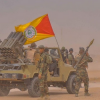
The conflict between the United States and Iran has taken a new turn toward escalation against the Iranian-backed armed Shiite factions in Iraq. But this step might harm Washington’s interests in Baghdad and engage the Iraqi government in a crisis with the Popular Mobilization Units (PMU).
While Iraqi Prime Minister Haider al-Abadi is trying to strike a balance to tame armed Shiite factions and earn US support, Washington is seeking to add armed factions affiliated with the PMU to the list of terrorist organizations.
The US House of Representatives introduced a bill in early November called “Iranian Proxies Terrorist Sanctions Act of 2017,” which calls for imposing terrorism-related sanctions on Harakat Hezbollah al-Nujaba and Asaib Ahl al-Haq. The bill was referred Nov. 3 to the Foreign Affairs committee.
Before Harakat Hezbollah al-Nujaba was formed in 2013, the United States designated its leader Akram al-Kaabi as a terrorist in 2008 per Executive Order No. 13438, on the grounds of “causing chaos in Iraq and threatening the stability and security of the alliance forces which were in Iraq before retreating completely in 2011.”
Harakat Hezbollah al-Nujaba was blacklisted less than a month after spokeswoman for the US State Department Heather Nauert described Abu Mahdi al-Muhandis, the deputy commander of the PMU, as a terrorist.
After Muhandis, Harakat Hezbollah al-Nujaba and Asaib Ahl al-Haq were blacklisted, statements of various US Congress members indicated that the United States intends to designate additional Shiite factions as terrorist organizations.
While a harsher tone is being adopted in Iraqi statements against Washington, member of the parliamentary Foreign Affairs Committee Hanan al-Fatalawi called on the Iraqi Foreign Ministry Nov. 17 to summon the US ambassador to Baghdad to find out the reasons behind “the future US war” on the PMU.
Posted in Security Comments Off on US Sanctions on PMUs puts Iraq in Tough Spot
Japanese Company considers Gas Pipeline and Petchem Plant
Posted on 28 November 2017 .
By John Lee.
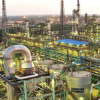
Iraq has reportedly contracted Japan’s Toyo Engineering to help build a gas pipeline to Kuwait and a petrochemical plant as Baghdad.
According to a report from Reuters, the move will help Iraq to reduce flaring and finish paying the reparations owed to Kuwait for the invasion in 1990.
The project would allow Kuwait to reduce its dependency on Qatar as a supplier of gas; deliveries could begin as early as 2019.
It would also deal a blow to Shell, which aimed to be the dominant gas player in Iraq before relations with Baghdad soured following it’s planned exit from the Majnoon oil project.
Toyo told Reuters that talks are ongoing and a final decision has not yet been made.
(Source: Reuters)
Posted in Iraq Oil & Gas News Comments Off on Japanese Company considers Gas Pipeline and Petchem Plant
Iranian Universities enter Iraq
Posted on 18 October 2017 .
By Zep Kalb for Al-Monitor. Any opinions expressed are those of the author, and do not necessarily reflect the views of Iran Business News.
In the aftermath of the US-led invasion of Iraq in 2003, the country's educational system all but collapsed. Illiteracy rates have exploded. Universities have turned into sectarian battlegrounds.
Systemic violence — including beatings, rape and death threats — has forced students and faculty out of campuses. As state provision of higher education has receded, private donors have set up alternative institutions, often with a sectarian and religious twist. Foreign actors have also stepped in to fill the void.
Before the US-led invasion, education indicators in oil-rich, Baathist-controlled Iraq improved similarly as in other middle-income countries, and in several ways even more so. The country’s first university, Baghdad University, opened its doors in 1957. In 1968, the government made education free and compulsory at all levels.
In 1977, the eradication of illiteracy was made legally binding. The developmental push appeared to be working. By 1980, Iraq had already achieved near universal primary school enrollment.
Saddam Hussein’s devastating eight-year war with Iran in the 1980s and the sanctions imposed by the West over his invasion of Kuwait in the 1990s slowed these gains.
By 2000, the literacy rate of youth aged 15-24 years old stood at 84.8%, slightly higher than that of regional neighbor Egypt. The gender gap was also narrowing: Female literacy rates stood at 80.5% in 2000, a figure Egypt reached only in 2006. At the same time, underinvestment in education by a cash-strapped government led to an aged and creaking infrastructure.
For all its ills, the collapse of the Baathist regime in 2003 and its replacement with a US-installed government wrecked the country’s educational system. Junior, inexperienced American officers who failed to understand the complexities of maintaining peace between the sects were put in charge of higher education.
Posted in Iraq Education and Training News 1 Comment
Baghdad Suspends Int'l Flights to Erbil
Posted on 28 September 2017 .
By John Lee.
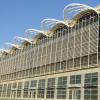
Direct international flights will be suspended to and from Erbil International Airport (pictured) starting from Friday evening, following a decision by the Iraqi cabinet and Prime Minister Haider al-Abadi, an airline official has told Xinhua.
The move follows the region's vote for independence in Monday's referendum.
Airlines including Qatar Airways, EgyptAir and Lebanon's Middle East Airlines had already informed passengers that flights would be cancelled at the request of Iraq's Civil Aviation Authority.
Only domestic flights will be permitted, and all the already-booked tickets for international flights should be through Baghdad international airport.
Iraq's Tourism Board also announced on the halt of domestic tourism movement to the Kurdish region starting from early next week.
(Sources: Xinhua, The Independent, Reuters)
(Picture credit: Makyol)
Posted in Iraq Transportation News, Leisure and Tourism in Iraq, Politics, Security Comments Off on Baghdad Suspends Int'l Flights to Erbil
Omani firm targets Rock Exports to Iraq
Posted on 12 September 2017 .
By John Lee.
Al Fajar Al Alamia, an Omani firm listed on the Muscat bourse, has said that port facilities in the northern part of Oman must be improved in order to handle the high volumes of rock products required in Iraq, Qatar and Bangladesh.
Company chairman Saleem bin Qassim bin Ahmed Al Zawawi said:
“We are hopeful that the current downturn in the UAE market for rock products would soon be reversed with supplies to Iraq, Bangladesh, etc.”
(Source: Times Of Oman)
Posted in Construction & Engineering In Iraq Comments Off on Omani firm targets Rock Exports to Iraq
Why an Iraqi Town, in Middle of the Desert, has no Cafes
Posted on 12 August 2017 .
This article was originally published by Niqash. Any opinions expressed are those of the author, and do not necessarily reflect the views of Iraq Business News.
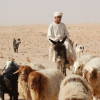
In the small desert area of Busaya, Iraqis of different sects have lived together peacefully for decades. Locals pride themselves on their hospitality and unity.
Up until recently not many outsiders really knew much about the southern Iraqi sub-district of Busaya.
In the middle of the desert and close to the border of Saudi Arabia, the area tends to be Bedouin in nature, closer to the culture of the nomadic Arabs of the Gulf States than many other Iraqis. It recently came to public attention because a group of Qatari hunters in the area for sport, were abducted in 2015. The hunting party, which apparently included members of the Qatari royal family, was released in April 2017.
The area is well known as a stop for migrating birds from Europe and hunters commonly come here, to seek out birds and hares.
Most of the around 2,200 people here are either dependent on their own livestock or the Iraqi government for jobs. And around three-quarters of them are Sunni Muslims. Yet somehow, they still elected Shiite Muslims to their local government. Locals say that they don’t let what is going on elsewhere in Iraq affect local relationships.
Around another 5,000 locals, many of whom speak with an accent that sounds more Gulf States than Iraq, are nomadic. And the area is so well known for its hospitality that there are no cafes or restaurants here. Visitors to the district are always invited to eat at locals’ homes, another Bedouin tradition.
Posted in Security Comments Off on Why an Iraqi Town, in Middle of the Desert, has no Cafes
Asiacell Revenues Boosted by Mosul Liberation
Posted on 27 July 2017 .
By John Lee.
Asiacell Iraq has announced 4 percent growth in revenues from QAR 2.1 billion ($570 million) in H1 2016 to almost QAR 2.2 billion ($600 million) in H1 2017.
The customer base increased 13 percent to reach more than 12 million customers in H1 2017.
EBITDA decreased by 3 percent and stood at QAR 972 million due to network investments to accommodate high data demand as well as reconnection cost in the liberated areas.
According to a statement from the company's Qatar-based owner Ooredoo, growth was stimulated by improvements in the political situation. "With further areas in Mosul being liberated during the first half of the year, network reconnection helped to drive the increase in customer numbers," it said.
(Source: Ooredoo)
Posted in Iraqi Communications News Comments Off on Asiacell Revenues Boosted by Mosul Liberation

Iraq Britain Business Council welcomes 7 New Members
Posted on 06 July 2017 .
The Iraq Britain Business Council (IBBC) has announced that several new companies have joined the Iraq Britain Business Council in 2017, each of which are underpinned by strong reputations for innovation, reliability and a commitment to investing in Iraq.
Al Ratba’a Contracting Company, Al-Burhan Group, Iraq Star Group, Serco, Shamara Holding, Cresent and Rolls Royce join 52 other world- and region-leading companies that form IBBC’s Council of Members.
Al Ratba’a Contracting Company is based in Basra, Iraq, and provides high quality services with improved construction systems and processes, and innovation in accordance with the regulations and international standards to satisfy its customers. Al Ratba’a has 16 years of experience doing business in Iraq, with its headquarters based in Basrah and offices in Baghdad, employing over 800 international and Iraqi staff. Its network of clients and partners includes many international and national firms working across the country in numerous industrial sectors. Al Ratba’a has 12 years of experience working in the Oil & Gas sector, with base camps located in all major Oil fields in Southern Iraq. Its services span a wide range of associated activities across the Oil & Gas industry. For more information visit: http://intraq8.com/al-ratbaa-company/
Al-Burhan Group is a conglomerate based in Iraq and is actively involved in key projects across the country focusing on consultation, construction, equipment and machinery supply, milling, security assistance, hospitality services and transportation. Al Burhan Group is considered an “A” grade company making them one of the top companies in Iraq that is licensed and that has the ability to conduct large scale projects. Al Burhan Group has received numerous awards over the years, two of which being for Reliability and Quality of Service. For more information visit: www.alburhangroup.com
Cresent is Control of Work and Health and Safety specialists, with over 30 years’ experience working in hazardous industries around the world. Cresent’s scope extends across a wide range of facilities on and offshore. Since 2012 Cresent has been working with clients in Iraq, and has been helping make Iraq’s oil fields safer by producing numerous safety training packages in Arabic and English, delivering training to more than 80,000 people in Iraq, coaching 100 Iraqi Safety Trainers and providing work clothing, posters, booklets, campaigns and other information for people at the Rumaila and the West Qurna Oil Fields. For more information visit: www.cresent.co.uk
Iraq Star Group is a leading provider of armed security solutions for international clients across Iraq. The company is 100% Iraqi owned and based in the southern city of Basra. Iraq Star Group has decades of experience in the provision of complex security solutions and is an approved provider to the largest International Oil and Gas companies operating in Iraq. For more information visit: www.iraq-star137.com
Posted in Construction & Engineering In Iraq, Investment, Iraq Industry & Trade News, Iraq Oil & Gas News, Security Comments Off on Iraq Britain Business Council welcomes 7 New Members