



Qatar Supports WFP’s Food Program in Iraq
Posted on 08 May 2018 .
Qatar Fund For Development Supports WFP’s Food Assistance Program in Iraq
The Qatar Fund For Development (QFFD) has made a contribution of US$3 million to the United Nations World Food Programme to provide assistance for displaced people in Iraq. The funding will support more than 22,000 Iraqis living in camps.
“The Qatar Fund For Development is committed to supporting displaced people in Iraq, providing them with their basic human needs, and giving them hope for a better future,” said QFD Executive Director of Corporate Strategy, Ali Abdulla Al-Dabbagh after signing the contribution agreement in London.
In urban areas with functioning markets, families will receive cash, allowing them to buy the food they need in line with their dietary requirements and preferences. In areas where local markets are not well established, WFP provides assistance through e-vouchers, which can be used in selected shops.
“We welcome this donation from the Qatar Fund For Development,” said Francis Mwanza, head of WFP’s London office. “Although some Iraqis have returned to their homes, others have lost all their possessions and face security threats, these people remain in camps and continue to need our support.”
WFP currently assists 570,000 displaced Iraqis in camps each month with food rations and cash-based assistance.
(Source: WFP)
Posted in Construction & Engineering In Iraq Comments Off on Qatar Supports WFP’s Food Program in Iraq
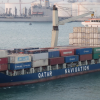
Milaha Launches Qatar-Iraq Container Service
Posted on 07 May 2018 .
Milaha Launches First Ever Container Feeder Service Between Qatar and Iraq
Milaha, a Qatar-based maritime transport and logistics conglomerate, has announced the launch of a direct container feeder service between Qatar and Iraq.
The new service, which will be an expansion of the existing Qatar-Kuwait service that the company launched last year, will follow a Hamad Port-Umm Qasr (Iraq)-Shuwaikh (Kuwait)-Hamad Port rotation, and will be initially served by one vessel with a 1,015 TEU capacity and 110 reefer plugs.
The service will have a transit time of 2 days, making it particularly ideal for dry and refrigerated food stuff, consumer electronics, and construction materials, among other cargo. The first vessel will depart from Hamad Port on 7 May 2018 and reach at Umm Qasr Port on 9 May 2018.
Commenting on the launch of the new service, Milaha’s President and CEO Mr. Abdulrahman Essa Al-Mannai said:
“There has been excellent demand on the Qatar-Kuwait service that we launched last year, and we have been looking at ways to further expand that service to give our Iraqi clients and partners more convenience through greater port coverage and reduced transit times. This new service will contribute to the reconstruction efforts in Iraq, and will also help boost the growing trade and economic relations between Qatar and Iraq.”
(Source: Milaha)
Posted in Iraq Transportation News Comments Off on Milaha Launches Qatar-Iraq Container Service

Qatar, Iraq to Cooperate in Air Transport
Posted on 30 April 2018 .
By John Lee.
Qatar's Civil Aviation Authority (CAA) has announced steps towards cooperation in air transport with Iraq.
The announcement came during a visit by Iraq's Minister of Transport, Kadhim Finjan Al Hammami, during which he met Qatar's Minister of Transport and Communications Jassim bin Saif Al Sulaiti and CAA Chairman Abdullah bin Nasser Turki Al Subaey.
The two sides agreed to cooperate in preparing and issuing new regulations and legislation on civil aviation safety in Iraq in line with European and U.S. systems.
(Sources: QNA, CAA Qatar)
(Picture: Waving flag of Qatar and Iraq, from Aleksandar Mijatovic/Shutterstock)
Posted in Iraq Transportation News Comments Off on Qatar, Iraq to Cooperate in Air Transport
New Shipping Sevice between Iraq and Qatar
Posted on 29 April 2018 .
By John Lee.
A new shipping route has been announced between Qatar and Iraq.
Serving Hamad Port in Qatar and Umm Qasr Port in Iraq, the first ship set to arrive in Iraqi on 1st May.
The announcement was made during the meeting between Ministers of Transport of the two countries.
(Source: The Peninsula Qatar, Qatar Ministry of Transport)
Posted in Iraq Transportation News Comments Off on New Shipping Sevice between Iraq and Qatar

FIFA Lifts Ban on Iraq Hosting Int'l Matches
Posted on 20 March 2018 .
By John Lee.
Soccer's governing body FIFA has lifted its three-decade ban on Iraq hosting international football.
FIFA President Gianni Infantino is quoted as saying that this will allow international matches to be played in Erbil, Basra (pictured) and Karbala, where the security situation was considered to be "stable", but not yet in Baghdad.
Iraq will host Qatar and Syria for a friendly tournament starting on March 21 in Basra.
(Sources: AFP, Reuters)
Posted in Leisure and Tourism in Iraq Comments Off on FIFA Lifts Ban on Iraq Hosting Int'l Matches

Qatar, Iraq sign MoU on Security Co-operation
Posted on 15 March 2018 .
By John Lee.
Qatar and Iraq have signed a Memorandum of Understanding (MoU) to enhance security co-operation between the two countries.
According to Gulf Times the MoU aims to enhancing security co-operation, co-ordination, and the exchange of information and expertise between the two sides.
It covers almost all areas including terrorism and its finance, combating drug and human trafficking, and money laundering.
The MoU also covers security at airports and ports.
(Source: Gulf Times)
Posted in Security Comments Off on Qatar, Iraq sign MoU on Security Co-operation
Mueller witness "Helped Broker" $4.2bn Iraq-Russia Arms Deal
Posted on 11 March 2018 .
By Laura Rozen for Al-Monitor. Any opinions expressed are those of the author, and do not necessarily reflect the views of Iraq Business News.
The dealmaker: Mueller witness helped broker $4.2 billion Iraq-Russia arms deal
A Lebanese-American businessman reported to be cooperating with Special Counsel Robert Mueller’s Russia probe helped broker a controversial 2012 Iraq-Russia arms deal valued at $4.2 billion, Iraqi sources tell Al-Monitor.
The Russia arms deal
George Nader, 58, traveled to Moscow in 2012, telling Russian interlocutors that he represented Iraqi Prime Minister Nouri al-Maliki and the deal should be negotiated through him, according to two Iraqi sources. Nader’s role in the deal was controversial to Iraqi officials because Iraq’s minister of defense was in Russia to conduct the negotiations, and they were unaware that Maliki was working with Nader to bypass official channels.
One of the Iraqi sources, a former Iraqi official who spoke to Al-Monitor on condition that he not be named, personally witnessed Nader’s interactions with Maliki in their Moscow hotel when he accompanied Maliki to Moscow in October 2012 to sign the arms deal with Russian President Vladimir Putin.
Nader’s career as a deal broker in Iraq ran from the mid-2000s until Maliki left office in 2014, the Iraqi sources said. Nader then became an adviser to the powerful Abu Dhabi Crown Prince Mohammed bin Zayed Al Nahyan. It is in that capacity that Nader’s meetings with members of the incoming Donald Trump administration in 2016-2017 — including Trump's son-in-law Jared Kushner, former national security adviser Michael Flynn and former chief strategist Steve Bannon — brought Nader to Mueller’s attention.
The New York Times reported Tuesday that Nader was arrested and questioned by the FBI when he landed at Washington Dulles International Airport on Jan. 17 en route to celebrate Trump’s first year in office at Mar-a-Lago in Florida. He was questioned by Mueller’s grand jury March 2 and is reported to now be cooperating with Mueller’s probe.
One line of inquiry Mueller is reported to be questioning Nader about is whether the United Arab Emirates (UAE) might have funneled money to members of the incoming Trump administration in an effort to curry influence with them, including in their dispute with Qatar.
From journalist to deal-maker
Nader’s recent career as a Middle East deal broker is both an outgrowth and departure from his past. As an editor of Middle East Insight magazine in Washington in the 1980s and 1990s, Nader interviewed President Bill Clinton and Iranian Supreme Leader Ayatollah Ruhollah Khomeini.
During this time, Nader also served as a frequent go-between in informal Syrian-Israeli talks encouraged by the Clinton administration before abruptly disappearing from the Washington scene around 2000.
“He was a reliable go-between, a facilitator,” Martin Indyk, who knew Nader when Indyk served as Clinton’s assistant secretary of state for Near East affairs and ambassador to Israel in the 1990s, told Al-Monitor. “He was not a con man.”
Nader was connected to the Hafez al-Assad regime through then-Syrian Foreign Minister Farouk al-Sharaa and then-Syrian Ambassador to the US and current Foreign Minister Walid Moallem, Indyk said. “He was going to Israel from time to time. He set up an interview of [Syrian Foreign Minister al-Sharaa] with Israeli journalist Ehud Yaari as a confidence-building measure. George is the one that made that happen. … Then he hooked up with [Ron] Lauder. He traveled with Lauder 16 times to Damascus in 1998” in efforts to advance an Israeli-Syrian peace agreement.
“And then when the Clinton administration was gone, George was gone,” Indyk, now executive vice president of the Brookings Institution, said.
“Last time I heard from [Nader] was after the US invasion of Iraq,” journalist Hisham Melham told Al-Monitor. “He called me from Kurdistan. But why would MBZ [the crown prince] need him when he has [UAE Ambassador] Yousef Al Otaiba?”
From dabbling in Syria-Israel peace talks to Iraq postwar dealmaker
Nader appeared in Iraq in the mid-2000s, looking to translate his Rolodex of connections from his Middle East Insight days into work advising various Iraqi political clients, including some of Iraq’s new Shiite political leaders, as well as Kurdish officials.
According to Iraqi sources, Nader helped arrange meetings for the 2005 visit to Washington of leading members of an Iraqi Shiite political party with close ties to Iran, the Supreme Council for the Islamic Revolution in Iraq. In 2010, Nader similarly arranged meetings for then-Iraqi Kurdistan Regional Government (KRG) Prime Minister Nechirvan Barzani with high-level UAE officials, including the crown prince, a second Iraqi source now living in exile told Al-Monitor. But Nader failed to win over the KRG leader, the second Iraqi source said.
“Nader got Nechirvan Barzani meetings with MBZ and [Lebanese Prime Minister] Saad Hariri,” the second Iraqi source said, adding that he advised Iraqi Kurdish interlocutors at the time to be wary of Nader.
Nader had a “knack for claiming that he had unique access to 'mysterious' persons,” the second Iraqi source said. “This way he would be able to latch on from one new confidant to another.”
By 2012, Nader had forged close ties with the Iraqi prime minister and Maliki’s son and deputy chief of staff, Ahmed Maliki, Iraqi sources said. Nader had worked with the younger Maliki on power generation projects, the former Iraqi official said. The relationship that Nader forged with Maliki’s son apparently brought Nader into the father’s inner circle when the huge Russian arms deal was being negotiated.
In August 2012, Iraq’s Minister of Defense Saadoun al-Dulaimi spent 24 days in Moscow to finalize negotiations for the $4.2 billion Russian arms deal. But during the negotiations, the former Iraqi official told Al-Monitor that he received a message from former Russian Energy Minister Yuri Shafranik warning him that there were other people in Moscow claiming that they, and not the defense minister, were representing Maliki, and that the deal should go through them.
Eventually, on Oct. 3, 2012, Shafranik went to Baghdad to try to clarify the situation with Maliki, the former Iraqi official said. Shafranik even offered Maliki a direct communication line with Russian President Vladimir Putin to avoid confusion and leaks.
“The third of October, Yuri [Shafranik] came to Baghdad, met the prime minister and told him clearly that ‘Mr. Putin is suggesting direct relations between you and him to avoid any leakage and … cut any unhealthy things,’” the former Iraqi official said. “The prime minister welcomed that.”
Maliki assured the officials that he welcomed the suggestion to streamline their contacts and signaled that the confusion over who represented Baghdad in the arms deal would be resolved.
So the former Iraqi official was astonished when he accompanied Maliki to Moscow in October 2012 to sign the Russian arms deal to see Nader enter their hotel and take the elevator to Maliki’s suite.
“We were in a Radisson hotel in Moscow,” the former Iraqi official said. “And all of a sudden, George Nader came, walking very fast, entered the elevator, went up and, I saw from the screen over the elevator, went to the level where the prime minister was staying.
“When the minister of defense came down to the ground floor, I asked, did you notice George Nader? And he said yes; he saw him entering the prime minister’s suite,” the former Iraqi official said. “By that time I realized the issue is in-house. The corrupted party, which went to Moscow to represent Maliki, they are not … strange people. They are in the circle with Maliki.”
The former Iraqi official continued, “Also, while we were there we discovered new facts. I myself did not know that those people who traveled to Moscow at the end of August, that they are connected to Maliki and his son. But George Nader I knew very well. I was shocked. Then it immediately came to me — Nader’s relations with the son of Maliki.”
Over the course of the trip to Moscow, “we came to know that one of the three people who had been in Moscow presenting themselves as [Maliki’s] representative was George Nader,” the former Iraqi official said.
A call Wednesday by Al-Monitor to an attorney who represented Nader in an earlier case was not returned. A spokesman for the Iraqi Embassy said it did not have information on the matter.
The Iraqi-Russian arms deal was controversial in Iraq and long suspected to have involved corruption. In November 2012, just a month after it was signed, Iraq’s then-acting Defense Minister Dulaimi announced that the deal was canceled, “citing possible corruption in the contract,” Reuters reported.
But Maliki’s then-media adviser Ali al-Moussawi was cited by Reuters as saying that the deals would be renegotiated and any suspension of the contract was “a precautionary measure because of suspected corruption."
From Iraq to the UAE
After the end of Maliki’s run as Iraq's prime minister in 2014, Nader made his way to become an adviser to the Abu Dhabi crown prince. Until Trump’s election, however, he had maintained such a low profile that even several Washington consultants who have advised the Emirates said they were entirely unaware of his role.
It may now be left to Mueller to help deepen understanding of Nader’s mysterious activities and what role they may have played in influencing the Trump administration’s policies toward the Middle East.
Posted in Politics, Security Comments Off on Mueller witness "Helped Broker" $4.2bn Iraq-Russia Arms Deal
Progress To Defeat ISIS Continues
Posted on 14 February 2018 .
Significant progress in the fight to defeat the Islamic State of Iraq and Syria has resulted in a shift in focus to sustaining military gains in Iraq to ensure a lasting defeat of Islamic State of Iraq and Syria terrorists, The commander of U.S. Air Forces Central Command told Pentagon reporters today.
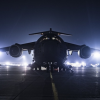
An Air Force C-17 Globemaster III transport jet assigned to the 816th Expeditionary Airlift Squadron sits on the ramp at Bagram Airfield, Afghanistan, Jan. 24, 2018. The C-17 is capable of rapid strategic delivery of troops and all types of cargo to bases throughout the U.S. Central Command area of responsibility. Air Force photo by Tech. Sgt Gregory Brook
Speaking via teleconference from the Combined Air Operations Center at Al Udeid Air Base, Qatar, Air Force Lt. Gen. Jeffrey L. Harrigian said the Feb. 1 standup of a coalition aviation advisory and training team is an example of the transition.
The coalition team of airmen will help the Iraqis build a capable, affordable, professional and sustainable aviation enterprise, he explained. And while the standup of the team does not signal an increase in the U.S.-led coalition’s presence in Iraq, the CAAT will bridge the work toward standing up an air expeditionary wing that will take over that mission, he said.
Preventing ISIS Resurgence
The coalition’s train, advise and assist efforts to build a lasting Iraqi aviation enterprise will not be tied to a timeline, but instead will be conditions-based, proportional to the needs, and in coordination with partners in the Iraq government, Harrigian said.
“As we transition our focus in [Operation Inherent Resolve] to sustain our military gains, let me be clear that we will retain the necessary amount of air power to prevent a resurgence of ISIS,” he emphasized.
Harrigian said the progress to defeat ISIS has allowed the United States to realign some of its deployed combat air power and personnel to Afghanistan, including A-10 Thunderbolt II aircraft, MQ-9 Reaper unmanned aircraft and HH-60 Pave Hawk helicopters.
“These aircraft will provide increased air support to the South Asia strategy, as well as ongoing counterterrorism efforts in Afghan-led operations,” the commander said. “This plus-up in air power is also producing tangible results as part of a deliberate air campaign that we kicked off in late November to decimate the Taliban's primary revenue source -- narcotics production.”
Goal: Choke Off Taliban
The goal is to choke off the Taliban’s ability to pay for its deadly attacks, such as those in Kabul recently, he noted.
Harrigian said the campaign to stop the Taliban’s resource flow will take time and that it will not align with the traditional fighting season in Afghanistan.
“Instead, [the campaign] will be relentless and persistent, as demonstrated by the 321 precision munitions we released this January against Taliban targets in the dead of winter, a time they typically rest and recuperate,” he said.
Such pressure will persist until the Taliban reconcile or die, Harrigian said. “We are already seeing positive reflections from our intelligence that the Taliban are not enjoying their typical winter break.”
(Source: US Dept of Defense)
Posted in Security Comments Off on Progress To Defeat ISIS Continues

Asiacell Revenues Up
Posted on 13 February 2018 .
By John Lee.
Qatar-based Ooredoo has announced that revenue at its Asiacell subsidiary in Iraq increased 6 percent to QAR 4.5 billion, while and EBITDA increased 3 percent to QAR 2.0 billion, for the year ended 31th December 2017.
EBITDA margin was put at 44 percent.
In a statement, the company said:
"A key opportunity in 2017 was restoring our network sites in the liberated areas and helping customers living there to reconnect to our services.
"As a result, Asiacell increased customer numbers by 8% to reach almost 13 million as network recovery advanced in the liberated areas in the north and west of the country."
(Source: Ooredoo)
Posted in Iraqi Communications News Comments Off on Asiacell Revenues Up

NIDC Eyes Iraqi Drilling Market
Posted on 27 January 2018 .
The National Iranian Drilling Company (NIDC) is planning to participate in neighboring Iraq‘s drilling tenders.
Speaking to reported on the sidelines of an oil show in Kish Island, on Tuesday, Sepehr Sepehri, NIDC managing director, said the company’s approach is to secure itself a toehold in global markets, adding NIDC is planning to participate in international drilling tenders in Iraq.
“We have plans to join drilling projects in neighboring countries and we have started correspondences with Iraq in this regard,” the official said.
Sepehri said the two country’s access to Arvand Free Zone, favorable crude oil production capacity in Iraq’s Basra and the good terms the two neighbors are on are among the advantages of working in Iraq.
He further said that NIDC will take part in three drilling tenders that Italy’s ENI is planning to hold in Iraq.
The NIDC official added that Oman is another market the company is seeing to gain a foothold in.
“We have indicated readiness to offer services to Oman, too, and will consider the matter in more depth during a visit by an Omani delegation to Iran within the next few weeks.”
Besides drilling operations, NIDC enjoys massive potentialities in offering drilling services, the CEO added.
“After Iraq and Oman, we are targeting operations in Qatar,” Sepehri added.
(Source: Shana)
Posted in Iraq Oil & Gas News Comments Off on NIDC Eyes Iraqi Drilling Market