


Iran Worries about Losing Ground in Iraq
Posted on 25 November 2018 .
By Ali Mamouri for Al-Monitor. Any opinions expressed are those of the author, and do not necessarily reflect the views of Iraq Business News.
With rising US pressure, Iran worries about losing ground in Iraq
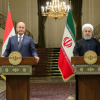
Iraqi President Barham Salih met with Supreme Leader of the Islamic Revolution Ayatollah Ali Khamenei Nov. 17 in Tehran, where Khamenei underlined that Iraq must retain its Popular Mobilization Units (PMU). Khamenei stated that the PMU were among Iraq’s major achievements in the past few years.
Khamenei has reiterated this stance in previous meetings with Iraqi officials, including former Prime Minister Haider al-Abadi, which shows how important this matter is for Iran.
Meanwhile, the Donald Trump administration has insisted on the disarmament and disbanding of pro-Iran military factions in Iraq as part of the 12 conditions that US Secretary of State Mike Pompeo proposed to sign a new agreement with Iran instead of the 2015 Joint Comprehensive Plan of Action, which the United States exited this year.
Posted in Politics, Security Comments Off on Iran Worries about Losing Ground in Iraq

Siemens may have to share $15bn Power Deal with GE
Posted on 18 October 2018 .
By John Lee.
Germany's Siemens may have to share a $15-billion contract to supply power-generation equipment to Iraq with US rival General Electric (GE).
The Financial Times reports that although it appeared that Siemens would win the deal, the Trump administration successfully intervened on behalf of GE.
Last month German business newspaper Handelsblatt reported that Chancellor Angela Merkel had personally intervened with Prime Minister Haider al-Abadi to persuade the Iraqi Government to award the contract to Siemens.
(Source: Financial Times)
Posted in Iraq Industry & Trade News Comments Off on Siemens may have to share $15bn Power Deal with GE
Iran masses Troops on Iraq Border
Posted on 18 October 2018 .
By Fazel Hawramy for Al Monitor. Any opinions expressed here are those of the author and do not necessarily reflect the views of Iraq Business News.
IRGC masses troops on Iraq border amid rising tensions with Kurdish groups
Iran’s Islamic Revolutionary Guard Corps (IRGC) is launching increasingly daring operations to degrade the capabilities of armed Kurdish opposition groups.
In its latest move, it has deployed thousands of troops to difficult mountain ranges in the western part of the country used as safe havens by the groups for decades.
The IRGC's operations have taken on an air of urgency since US President Donald Trump's May 8 announcement that he was withdrawing the United States from the Joint Comprehensive Plan of Action, the nuclear deal between Iran and six world powers, and re-imposing sanctions against Iran.
Posted in Security Comments Off on Iran masses Troops on Iraq Border
Iraq offers to Mediate between Trump, Iran
Posted on 08 October 2018 .
By Laura Rozen for Al Monitor. Any opinions expressed here are those of the author and do not necessarily reflect the views of Iraq Business News.
Concerned that tensions between Iran and the United States could blow back onto Iraq, a senior Iraqi diplomat said today that Iraq would be willing to facilitate dialogue between the two nations.
“Iraq is capable and willing to facilitate and create communication between not only … the US and Iran, but with all the countries in the region,” Ahmed Mahjoub, spokesperson for the Iraqi Ministry of Foreign Affairs, told a small group of journalists and analysts at the Iraqi Embassy in Washington.
“During the recent two years, Iraq was able to solve a couple of problems between states,” Mahjoub said, adding that he could not discuss the details because the parties agreed not to disclose the Iraqi role in those mediations. “But I assure you that Iraq managed to solve problems between states during the last few years, and I believe that Iraq is willing to continue to this role."
Posted in Politics Comments Off on Iraq offers to Mediate between Trump, Iran

How Iraq Should Respond to the Strait of Hormuz Crisis
Posted on 08 August 2018 .
By Youssef Ali.
Any opinions expressed are those of the authors, and do not necessarily reflect the views of Iraq Business News.
President Donald Trump’s decision to pull out of the nuclear deal and sign the executive order to reimpose sanctions on Iran has had a significant impact on the global oil markets.
This move poses a severe threat to the economies of major oil exporting countries including Iraq, the second largest oil exporter in OPEC after Saudi Arabia and the third in the world after Russia and Saudi Arabia by 4.4 million barrel per day. Many analysts are reflecting on the effects that this conflict has on the economy of Iraq, which heavily relies on oil.
The sanctions mainly target the Iranian energy sector, which supplies Iran with foreign exchange and at the same time represents about 40% of revenues of its budget. The goal of the sanctions is to prevent Iranian oil exports by imposing sanctions on its customers.
Eliminating Iranian oil supplies will cause unrest in the oil markets around the world because it will lead to price surges, hence substantial economic losses on importing countries, which are already fearing a potential recession. That is why the U.S. tried to convince some of OPEC’s members to increase their supplies contrary to the recent deal amongst OPEC and non-OPEC countries to decrease production, and that in order to compensate Iranian supplies and prevent the disruption of the oil market to prevent damage to the global economy.
This move led to massive disputes between the major suppliers and pushed Iran to threat blocking oil exports from the Middle East altogether if it was to be prevented from exporting its own oil to the international market. If Iran follows through with its threat, it would mean massive losses for the Gulf countries, including Iraq whose economy is primarily depended on oil exports.
That said, completely stopping Iranian oil exports would be practically unlikely for the following reasons:
The nature of oil markets which is volatile and is based on trust. If the OPEC members in the Gulf Region, especially Saudi Arabia and UAE decided to replace the sanctioned Iranian oil supplies, the possibility alone that Iran would follow through its threat of closing the Strait of Hormuz would diminish the trust in that market. The supplies which pass through the strait would be considered as unstable, importers would start looking for alternate sources. This would destroy energy markets in the Middle East, meaning massive losses to the economies of all parties involved, including neutral states such as Iraq.
On a global basis, the mentioned encounter will damage the international economy that is fearing a potential recession, because this encounter, if it happens will cause a massive increase in global oil prices, leading to a domino effect that would create a hike in the prices of many goods and services.
This is why it is expected that while the sanctions will be implemented, all parties involved will allow for under-the-table arrangements in order to avoid such mutual destruction by allowing Iran to open an limited channel to export its oil, as it has happened in the past. Prior to signing the nuclear deal, UAE oil brokerage companies and banks played such a role before they were shut down after the recent pull out of the nuclear deal by the U.S. Allowing for such back-channels would mean that the sanctions will have their impact on the Iranian economy by disrupting the traditional oil export routs and limiting its revenue, yet allowing for a backdoor deal that will help the international community avoiding a conflict that could have grave impact on the global economy.
There is a role for Iraq to play in this crisis. The current policy of Iraq in regards to this conflict, in which it is trying to mediate between the parties involved is a wise policy. It is in the interest of nobody to escalate the situation in the Gulf region. On the other hand, Iraq could, given the circumstances, gain enormous benefits by performing the same role that UAE brokerage companies and banks were playing, which would be a win-win for everyone involved.
In other words, Iraq can empower its private sector to establish companies and banks that facilitate the financial transactions related to the Iranian oil export, which would add important revenues to the economy of Iraq and increase the financial movement in the country; at the same time it would ensure the interests of Iran and decrease the likelihood of an encounter in the Gulf, which would serve the Gulf Arabs well.
Iraq must exploit this opportunity, especially since the Europeans countries along with Russia and China have already expressed their willingness to play this role. This opportunity could also be a significant incentive for Iraq to improve its ailing banking system to be able to implement such operation.
However, this is not possible without negotiating with the U.S. on this issue in order to avoid being subject of the sanctions. The U.S. has in the past exempted Iraq from the sanctions for dealing with Iran, given its special circumstances. The U.S. also has expressed its readiness this time to allow some exceptions. This could be Iraq’s chance to negotiate an arrangement that serves everyone well, at least for the short-term.
On the long term however, Iraq has to find alternate routes to export its oil in order to avoid the increasingly unstable oil routes of the Arabian Gulf. Viable solutions could be the Iraq-Jordan pipeline that would start in Basra and end in Aqaba. Iraq needs to accelerate building this pipeline. Another option is the rehabilitation of the Iraq-Syria pipeline that begins from Kirkuk and ends in Banias, which, of course, would only be an option if the security in Syria improves.
Iraq is either the core, or constantly caught in the middle of many crisis that are shaking the Gulf region. These reoccurring crisis pose huge obstacles in front of rebuilding and investment. If Iraq wants to survive them, it needs to play a constructive role and aim for stability and profit for all parties involved.
Posted in Iraq Oil & Gas News Comments Off on How Iraq Should Respond to the Strait of Hormuz Crisis

Internet Shuts Down, Fake News Blossoms
Posted on 29 July 2018 .
This article was originally published by Niqash. Any opinions expressed are those of the author, and do not necessarily reflect the views of Iraq Business News.
By Mustafa Habib.
Iraqi Internet Shuts Down, Fake News Blossoms During Information Blackout
When it came to disinformation, shutting down the Internet to prevent protests in Iraq may have backfired. Iraqis get most of their information from social media and there was none, so false reports circulated wildly.
On June 14, the Iraqi government shut down the Internet in an effort to try and prevent the spread of anti-government protests. The demonstrations, which called for better state services, power and water, had spread from the southern city of Basra to nine other provinces, including Baghdad. And clearly the government wanted to prevent them from going any further.
For the past few years, these types of protests have broken out every summer. In stifling heat rising to 50 degrees Celsius, the lack of power to refrigerate foods or keep houses cool and the fact that water coming out of the taps is salty, is enough to drive Iraqis to protest. But these demonstrations spread further than previous years.
And one imagines that the Iraqi government was trying to prevent the spread of information about the protests, in order to contain them. They are able to block the Internet thanks to the fact that most of infrastructure used for relaying the Internet is government-owned.
However the Internet blockage seemed to only frustrate Iraqis further. Locals here rely heavily on social media to get their news; they tend not to trust local media, believing it to be partisan or funded by interested parties who push their own agenda. What friends and relatives post on Facebook has become a major and important source of information – and when the Internet is down they obviously cannot access this.
So locals found themselves watching TV to get more information about the protests or resorting to VPN – virtual private networks – to access the online world. Iraqis have become accustomed to using this kind of software when the government shuts down, or throttles the Internet here, but as digital privacy experts point out, these too can be dangerous, especially with regard to privacy.
Clearly Iraqis right around the country were interested to know more about the protests. But pictures and videos were hard to come by, given the Internet shutdown. This led dozens of Facebook pages, specializing in Iraqi news and current affairs, to write up stories about the protests – but as they did, they also used older pictures and videos and many ended up publishing unsubstantiated rumours.
Iraqis who sympathized with the demonstrators didn’t just publish news reports on their pages, they also uploaded pictures and videos to Facebook – some of these were real and some were not. News organisations, like NIQASH, received these kinds of items via messages from people who appeared to be private citizens; however, due to the Internet shutdown, it was difficult to verify the content that was being sent and some of it was certainly not from the current demonstrations.
In fact, as Internet-rights activist and head of the Ansam Network, Haidar Hamzouz, says, the Internet blockade may well have had the opposite of the government’s intended effect. “Shutting down the Internet is a violation of the freedom of expression,” Hamzouz told NIQASH. “And the decision to do this was not the right one – it actually contributed to the spread of false news and it also became very difficult to inform anyone that certain items were false news.”
It seems that in Iraq, as elsewhere in the world, false reports and emotion-generating half-truths spread far faster than the truth.
Even though the government owns the public broadcaster, Iraqi Media Network, and they have huge resources, they still have not been able to stop the spread of these false reports and rumours, Hamzouz says. “We need institutions that are capable of relaying the facts and combatting fake news, rather than those who just shut down the Internet,” he argues. “Combatting fake news and untrue reports requires a change in the communal culture, one that values verification and checks sources. Unfortunately this doesn’t yet exist in Iraq,” he notes.
One of the more dangerous pieces of false news involved reports that the security forces, who were clashing with the demonstrators in the south, were actually from elsewhere, and more specifically from Anbar and Mosul. The message was that Sunni Muslim soldiers – who mainly come from central and northern Iraq - were abusing Shiite Muslim protestors, who mainly live in southern Iraq. It was clearly a report aimed at fuelling sectarian conflict.
“It is so unfortunate that this news incited hatred against us,” says Ali al-Rubaie, a police captain based in Rustafa, Baghdad. “The members of the security forces who were deployed to the protests were actually residents from the same cities. Each province has its own police and counter-terrorism forces. It would be impossible to do that job with troops from outside of the provinces in which the protests occurred,” he argues.
Additionally when the protests first started, news that the demonstrators were clashing with Iraqi security forces spread fast. But given the internet blockade, it was difficult to find pictures from incidents. One picture that was shared many times shows an Iraqi soldier pointing his gun at an unarmed civilian lying on the ground. However the picture was actually taken during a military training exercise in 2014, organized for a military training graduation ceremony in Karbala.
Another dangerous piece of news had Talib Shaghati, the head of Iraq’s special forces troops, commenting on the clashes between the demonstrators and the security forces. “This is not our battle and we will not stain our hands with the blood of our sons and brothers for the sake of some corrupt officials,” Shaghati was alleged to have said in a statement that was widely circulated on social media.
The same report said that Shaghati had been asked to send his troops to the protests but he had refused, and that he had asked the government to listen to the demonstrators’ demands before it was too late. Thousands of Iraqis believed this report and some even said that there should be a military coup because it was clear that the protests had no impact on the government, and the military were on the protestors’ side.
The US was not coming to the rescue either: One report said that US president Donald Trump had said his government was keeping a close eye on the protests in Iraq. This was followed by video footage of two military divisions landing at Baghdad airport. None of this was true: The video was an old one.
Saudi Arabia was not coming to the rescue either. As the protest movement gained momentum, its critics were divided. Some said Iran was behind the protests because the neighbouring nation was going to stop supplying power to Iraq. Others said Saudi Arabia was at fault and was pushing people to demonstrate in order to cause chaos in Iraq.
One of the obviously false reports was started by a page on Facebook called Saudi News. It said that Saudi Arabia’s ruling monarch had ordered water lines and electricity transmission lines to be built urgently for the southern parts of Iraq. The report spread quickly throughout Iraqi social media despite its fanciful nature.
Posted in Iraqi Communications News, Politics, Security Comments Off on Internet Shuts Down, Fake News Blossoms
Iraq's Pro-Iran Factions shrug off US Sanctions Push
Posted on 06 June 2018 .
By Ali Mamouri for Al-Monitor. Any opinions expressed are those of the author, and do not necessarily reflect the views of Iraq Business News.
Two pro-Iranian militias active in Iraq and Syria declared that possible US sanctions targeting them would be ineffective and claimed that such sanctions would actually strengthen their presence and expansion in the Middle East.
The US House of Representatives on May 24 passed sanctions against Asaib Ahl al-Haq and Harakat Hezbollah al-Nujaba as an amendment to annual defense legislation. The bill called for sanctions against “persons that are officials, agents, affiliates of or owned and controlled by” the two groups.
Laith al-Azari, a member of Asaib Ahl al-Haq's political bureau, said on May 30, “Including Asaib Ahl al-Haq, along with some other Iraqi armed factions, on the terrorist list will increase our own ability to confront terrorism and confront US plans in Iraq.”
He did not explain how sanctions could lead to this result, but sees the action as an effort to thwart the pro-Iranian axis of resistance, which includes Iraq, Syria and Lebanon, and confront Islamist movements. The sanctions vote followed US President Donald Trump's May 8 announcement withdrawing the United States from the Iranian nuclear deal, ostensibly in order to reach a better deal that would limit Iran's military power in the region.
In a May 30 interview with Rudaw, Mohammad Mohi, spokesman for the Hezbollah Brigades, played down the importance of possible US sanctions, stating, “The US decision is not new as far as Harakat Hezbollah al-Nujaba is concerned. This is not a new issue, but one that has been tackled on an annual basis.” Nujaba leader Akram al-Kaabi was sanctioned in 2008 by the Treasury Department, which designated him an individual "fueling violence" in Iraq.
Mohi linked the House vote to a decision by the Iraqi parliament three months ago obligating the Iraqi government to schedule the withdrawal of US troops from Iraq, measures supported by the two groups targeted for sanctions. While condemning foreign interference in Iraqi affairs, including the US and Turkish military presence, Mohi praised the Iranian presence, stating, “Without Iranian support, Iraq would not have defeated the Islamic State [IS]. Had it not been for Iran's support, Erbil would have fallen [to IS] along with Baghdad and other Iraqi cities. This is why Iran's intervention was in the interest of the Iraqi people, and it came at a time when other countries were idly watching Iraq head toward an unknown fate.”
The House's sanctions vote followed Iraq's May 12 legislative elections, in which the political organizations of the pro-Iranian militias emerged as the second largest coalition, meaning they might have a shot at forming the new government. Asaib Ahl al-Haq looks like it will occupy at least 14 of the 47 seats won by the Al-Fateh Alliance, consisting of pro-Iran factions and headed by Hadi al-Amiri, leader of the Badr Organization. Al-Fateh came in second, behind the Sairoon Alliance, headed by the cleric Muqtada al-Sadr, which won 56 seats. There are 328 seats in the Council of Representatives.
Despite the Sairoon Alliance's lead, its position could be undermined by independent candidates. It is being reported that a number of independents will be joining the Al-Fataeh Alliance. So far, only one such candidate for Shabak, Qusay Abbas, has joined Al-Fateh after winning a seat.
Sheikh Qais al-Khazali, leader of Asaib Ahl al-Haq, expects his movement to end up with at least 15 seats once the official results are announced, following the resolution of disputes over balloting irregularities. The Badr Organization is also thinking that it will be allotted additional seats after the results are in. Meanwhile, the State of Law Coalition, another ally of Iran, won 26 seats, and is fully prepared to forge an alliance with Al-Fateh given their common political agendas.
All this means that should Al-Fateh's natural allies join it, it would beat out the Sairoon Alliance and be in a position to form a government consisting mostly of pro-Iranian factions. If this scenario transpires, the United States could find itself in the very awkward situation of having to deal with a government it is sanctioning, should the sanctions ultimately be adopted. Would the United States actually sever ties with the Iraqi government, a key partner since 2003, or, finding that scenario unpalatable, simply decide to waive or put off new sanctions?
Another scenario that might be even more difficult for the United States would see Sairoon and Al-Fateh coming together around their shared goal of US forces withdrawing from the country and curbing US influence in Iraq and the region. Before that could happen, however, big differences between the two alliances would have to be overcome. Al-Fateh opposes the United States in favor of expanding Tehran's influence in Iraq and the region, while Sairoon wants an Iraq independent of Iran, free to manage its own internal affairs and regional positions.
Of note, Israeli-Russian understandings, with US buy-in, are being concluded to keep pro-Iranian militias away from the southern border of Syria, which would, of course, undermine the Iranian role in Syria. Regardless, in terms of US interests in Iraq, it appears the United States might ultimately find itself in the dilemma of having to choose between the lesser of evils.
The spokesman for Harakat Hezbollah al-Nujaba, Hashim al-Moussawi, believes Washington launched a war on the resistance axis when it reneged on the Iranian nuclear deal and then prepared to impose economic sanctions on Hezbollah supporters. “This is an expected reaction to the losses suffered by the US by the Islamic resistance factions,” he said. “The elections in Lebanon and Iraq and the victory of the resistance [against IS in Iraq] showed the US the high level of threat it is facing.”
Moussawi touts the showing by the Al-Fateh Alliance as a victory for the Iranian axis. “This is why it [the US] is seeking to plunge Iraq into the spiral of permanent chaos,” he said. “The entry of the resistance into political circles will embarrass Washington, which is politically seeking to bypass the axis of resistance.”
Posted in Iraq Industry & Trade News, Politics, Security Comments Off on Iraq's Pro-Iran Factions shrug off US Sanctions Push
US Congress Targets Iraq Election Winners
Posted on 02 June 2018 .
By Bryant Harris for Al Monitor. Any opinions expressed here are those of the author and do not necessarily reflect the views of Iraq Business News.
As parliamentarians in Baghdad work to form a new governing coalition in the wake of this month’s elections, their counterparts in Washington are seeking to sanction more than a dozen of the Iraqi legislators over their links to Iran.
The House of Representatives unanimously voted last week on legislation requiring President Donald Trump to sanction “persons that are officials, agents, affiliates of or owned and controlled by” two prominent Iran-backed militias that operate in Iraq and Syria.
The amendment from Rep. Ted Poe, R-Texas, to a must-pass annual defense authorization bill targets Asaib Ahl al-Haq and Harakat Hezbollah al-Nujaba, both of which are part of the Shiite-led Popular Mobilization Units battling the Islamic State.
Both militias joined with other Iran-backed military forces as part of the Fatah, or Conquest, political coalition, which came in second in the May 12 elections with 47 out of 329 parliamentary seats. Asaib Ahl al-Haq won 14 of those 47 seats, according to Iraq analyst Kirk Sowell, while Harakat Hezbollah al-Nujaba did not field any candidates.
“The US Department of Treasury will ultimately determine if the political wing constitutes an affiliate or entity controlled by” Asaib Ahl al-Haq, a Poe aide told Al-Monitor. “Congressman Poe believes [Asaib Ahl al-Haq] will likely be subject to these penalties unless it completely breaks all ties with the armed wing, renounces violence and acts solely as [an] Iraqi political party with no backing from Iran.”
“Political parties are about engaging in peaceful civil discourse, not about representing armed thugs who commit violent atrocities to achieve political ends,” the aide added.
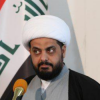
The Trump administration has taken an increasingly hawkish approach to Iran following the US withdrawal from the nuclear deal earlier this month, vowing to go after Iran’s proxies throughout the region. If it so chooses, however, the administration has some wiggle room to avoid sanctioning the 14 new Asaib Ahl al-Haq lawmakers as Iraqi law requires political parties to formally separate themselves from the militias. However, the parties retain the same names as their respective militias and Asaib Ahl al-Haq’s leader, Qais al-Khazali [pictured], has landed a seat in parliament.
The Iraqi Embassy did not respond to Al-Monitor’s inquiries about its positions on the provision.
After Poe introduced similar legislation last year, a Harakat Hezbollah al-Nujaba spokesman denounced the bill as a “conspiracy and victory for the Islamic State and all other terrorist organizations supported by Washington.”
Despite the conspiratorial rhetoric, both the Asaib Ahl al-Haq and Harakat Hezbollah al-Nujaba militias formed an alliance of convenience with the United States during the fight against the Islamic State. Previously, both groups had battled US forces following the 2003 invasion of Iraq with the backing of Iran’s Islamic Revolutionary Guard Corps (IRGC). The United States has sanctioned the leader of Harakat Hezbollah al-Nujaba, Akram al-Kaabi, since 2008.
Despite Washington’s fear of growing Iranian influence in Iraq, Shiite cleric Muqtada al-Sadr’s nationalist Sairoon Alliance won the most seats. He is now working with Prime Minister Haider al-Abadi’s Nasr (Victory) coalition in an attempt to establish a new government, even as disgruntled parties are demanding a recount.
While Sadr previously directed the Mahdi Army against US troops following the 2003 invasion, he is also critical of Iranian influence in Iraq. This has prompted IRGC commander Qasem Soleimani to coordinate with pro-Tehran parties in Baghdad as a bulwark against Sadr.
Other than potential sanctions on the 14 Iraqi parliamentarians, it remains unclear how much of an impact such measures would actually have on Washington’s ability to do business with Baghdad as Iraqi politicians attempt to create a new coalition.
“The most meaningful impact of sanctions like these is often less on the direct targets and more on their environment,” Nathaniel Rabkin, the managing editor of the newsletter Inside Iraqi Politics, told Al-Monitor. “The more Iraqi entities and persons you sanction, the more US businesses will be cautious about doing business in Iraq more generally and the more carefully they’ll be vetting Iraqi partners.”
The Senate Armed Services Committee advanced its own draft of the annual defense bill last week, but has not publicly released the text.
Posted in Politics, Security Comments Off on US Congress Targets Iraq Election Winners

US puts Sanctions on Iraqi Bank
Posted on 16 May 2018 .
The U.S. Department of the Treasury’s Office of Foreign Assets Control (OFAC) imposed sanctions on the Governor and a senior official of the Central Bank of Iran, an Iraq-based bank and its chairman, and a key Hizballah official, all of whom have moved millions of dollars on behalf of the Islamic Revolutionary Guard Corps-Qods Force (IRGC-QF) to Hizballah.
They were designated as Specially Designated Global Terrorists (SDGTs) pursuant to Executive Order (E.O.) 13224, which targets terrorists and those providing support to terrorists or acts of terrorism.
“Iran’s Central Bank Governor covertly funneled millions of dollars on behalf of the IRGC-QF through Iraq-based al-Bilad Islamic Bank to enrich and support the violent and radical agenda of Hizballah. It is appalling, but not surprising, that Iran’s senior-most banking official would conspire with the IRGC-QF to facilitate funding of terror groups like Hizballah, and it undermines any credibility he could claim in protecting the integrity of the institution as a central bank governor,” said Treasury Secretary Steven T. Mnuchin.
“The United States will not permit Iran’s increasingly brazen abuse of the international financial system. The global community must remain vigilant against Iran’s deceptive efforts to provide financial support to its terrorist proxies.”
Today’s action cuts off Iran’s use of a critical banking network and follows last Thursday’s disruption of an IRGC-QF-associated currency exchange network procuring millions of dollars through the UAE. Both actions seek to stifle Iran’s ability to abuse the U.S. and regional financial systems. These actions continue the aggressive campaign against the IRGC and its proxies that the Treasury Department has led under this Administration.
These actions build upon President Trump’s May 8 decision to cease the United States’ participation in the Joint Comprehensive Plan of Action (JCPOA) and begin reimposing U.S. sanctions that had been lifted under the JCPOA, including against the Central Bank of Iran.
The IRGC-QF was designated pursuant to E.O. 13224 on October 25, 2007. The IRGC-QF’s parent organization, the Islamic Revolutionary Guard Corps (IRGC) itself was also designated on October 13, 2017 pursuant to E.O. 13224 for its support to the IRGC-QF, and consistent with the Countering America’s Adversaries Through Sanctions Act.
Hizballah was designated by the Department of State as a Foreign Terrorist Organization in October 1997 and as an SDGT pursuant to E.O. 13224 in October 2001. It was listed in January 1995 in the Annex to E.O. 12947, which targets terrorists who threaten to disrupt the Middle East peace process, and also designated in August 2012 pursuant to E.O. 13582, which targets the Government of Syria and its supporters.
Iran’s Central Bank Governor and a Senior Staff Officer
OFAC is designating Valiollah Seif, Iran’s Central Bank Governor, for assisting, sponsoring, or providing financial, material, or technological support for, or financial or other services to or in support of, the IRGC-QF. Seif has conspired with the IRGC-QF to move millions of dollars through the international financial system in a variety of foreign currencies to allow the IRGCQF to fund its activities abroad. Seif has also supported the transfer of IRGC-QF-associated funds to al-Bilad Islamic Bank, an Iraq-based bank which is also being designated today.
OFAC also is designating Ali Tarzali, the assistant director of the International Department at the Central Bank of Iran, for assisting, sponsoring, or providing financial, material, or technological support for, or financial or other services to or in support of, the IRGC-QF. Tarzali has worked with Hizballah and proposed that the terrorist group send funds through Iraq-based al-Bilad Islamic Bank.
As a result of today’s actions, Veifollah Seif and Ali Tarzali are subject to secondary sanctions pursuant to the Iranian Financial Sanctions Regulations (IFSR), which implement, among other authorities, the Comprehensive Iran Sanctions and Divestment Act of 2010 (CISADA). Pursuant to the IFSR, OFAC can prohibit or impose strict conditions on the opening or maintaining in the United States of a correspondent account or a payable-through account by a foreign financial institution that knowingly facilitates a significant transaction for designated agents or affiliates of the IRGC or persons designated pursuant to E.O. 13224 in connection with Iran’s support for international terrorism or E.O. 13382 in connection with Iran’s proliferation of weapons of mass destruction and their means of delivery.
Today’s designations of Valiollah Seif, Iran’s Central Bank Governor, and Ali Tarzali, assistant director of the International Department at the Central Bank of Iran, do not extend to the Central Bank of Iran. However, due to President Trump’s May 8, 2018 decision to cease the United States’ participation in the JCPOA, as of August 7, 2018, the United States Government will re-impose sanctions that extend to certain transactions with the Central Bank of Iran, including sanctions on the purchase or acquisition of U.S. dollars banknotes by the Government of Iran. Furthermore, on November 5, 2018, additional sanctions will be re-imposed on persons knowingly engaging in certain significant transactions with the Central Bank of Iran.
Al-Bilad Islamic Bank and Its Chairman and Chief Executive
OFAC is designating Aras Habib, the Chairman and Chief Executive of Al-Bilad Islamic Bank, for assisting, sponsoring, or providing financial, material, or technological support for, or financial or other services to or in support of, the IRGC-QF. Aras Habib enabled the IRGC-QF’s exploitation of Iraq’s banking sector to move funds from Tehran to Hizballah, jeopardizing the integrity of the Iraqi financial system. Habib, who has a history of serving as a conduit for financial disbursements from the IRGC-QF to Iranian-backed Iraqi groups, has also helped provide IRGC-QF financial support to Lebanese Hizballah. Al-Bilad Islamic Bank is being designated for being owned or controlled by Aras Habib.
As a result of today’s actions, Aras Habib and Al-Bilad Bank are subject to secondary sanctions pursuant to the IFSR, which implement, among other authorities, CISADA. Pursuant to the IFSR, OFAC can prohibit or impose strict conditions on the opening or maintaining in the United States of a correspondent account or a payable-through account by a foreign financial institution that knowingly facilitates a significant transaction for designated agents or affiliates of the IRGC or persons designated pursuant to E.O. 13224 in connection with Iran’s support for international terrorism or E.O. 13382 in connection with Iran’s proliferation of weapons of mass destruction and their means of delivery.
Hizballah Official Working with IRGC-QF
OFAC is designating Muhammad Qasir (Qasir) for acting for or on behalf of Hizballah. Qasir acted as a critical conduit for financial disbursements from the IRGC-QF to Hizballah. Qasir has worked with the IRGC-QF to transfer funds.
Qasir is subject to secondary sanctions pursuant to the Hizballah Financial Sanctions Regulations, which implements the Hizballah International Financing Prevention Act of 2015. Pursuant to this authority, OFAC can prohibit or impose strict conditions on the opening or maintaining in the United States of a correspondent account or a payable-through account by a foreign financial institution that knowingly facilitates a significant transaction for Hizballah, or a person acting on behalf of or at the direction of, or owned or controlled by, Hizballah.
Identifying information on the individuals and entities designated today.
(Source: U.S. Department of the Treasury)
Posted in Iraq Banking & Finance News, Security Comments Off on US puts Sanctions on Iraqi Bank

Saudi Arabia looks to Expand its Footprint in Iraq
Posted on 25 March 2018 .
By Ali Mamouri for Al-Monitor. Any opinions expressed are those of the author, and do not necessarily reflect the views of Iraq Business News.
Following Iraqi Prime Minister Haider al-Abadi's two visits to Saudi Arabia last year, Saudi Crown Prince Mohammed bin Salman is set to visit Iraq soon, according to Iraqi parliamentarian Saadoun al-Dulaimi.
Although neither Riyadh nor Baghdad have officially announced the visit, Dulaimi said in a March 12 tweet that Prince Mohammed will spend two days in Iraq, first meeting with Abadi in Baghdad to "sign agreements," followed by a visit to Najaf to meet religious leaders.
Saudi Arabia was scheduled to reopen its consulate in the oil-rich city of Basra, which is adjacent to Iran, in March, but this was delayed for administrative reasons. Some reports say that Mohammed may open the consulates in Basra and Najaf, the Shiite religious center that is home to top Shiite clerics, during his upcoming visit to Iraq.
Meanwhile, the Saudi Embassy in Iraq is in the process of setting up the consulate office at the Sheraton Hotel in Basra. The consulate was closed in 1990 in the wake of the Gulf crisis that erupted during the regime of Saddam Hussein, and remained closed as a result of tensions in Saudi-Iraqi relations.
The Saudi kingdom opened a consulate in Erbil, the capital of the semi-autonomous Kurdistan Region of Iraq, in early 2016.
The decisions to expand Saudi Arabia’s diplomatic representation in Iraq come as part of a broader framework to strengthen the official political relations between the two governments. Saudi Arabia is seeking to establish economic and social bridges between the two countries in various fields.
Abdul Rahman al-Shahri, head of the Saudi delegation responsible for the establishment of the consulate in Basra, said that these measures are carried out to “provide services and incentives to both religious pilgrims and economic delegations between the two countries.”
Abdul Aziz al-Shammari, Saudi ambassador to Iraq, said in a statement in January, “Saudi Arabia is mostly interested in developing relations between the two countries in all areas that serve their aspirations.”
In late February, a friendly soccer game was held between Saudi Arabia and Iraq in the city of Basra, the first between the two countries in three decades. The game was attended by Saudi delegations and a large crowd of Iraqi fans.
The media office of Abadi said in a statement March 5 that the prime minister had received a phone call from Saudi King Salman bin Abdulaziz Al Saud, in which the latter pledged to build a soccer stadium in Baghdad for 100,000 spectators. It was later announced that Saudi Arabia would increase the number of seats to 135,000.
The statement said that “King Salman expressed his readiness and commitment to expand the positive relations between Iraq and Saudi Arabia at the economic, commercial, popular and cultural levels, as well as all levels of interest to both countries.”
Saudi companies, most recently the Saudi Basic Industries Corporation, one of the world's leading petrochemicals companies, have been opening offices in Baghdad and Basra to expand economic exchange between the two countries.
Saudi Arabia is focusing its attention on Basra because it is the richest city in Iraq with the country's largest oil fields and gateway to the Persian Gulf. It is also the most populous city after Baghdad, is adjacent to the Iranian border and home to an overwhelming majority of Shiites who share the same tribal and ethnic origins with Saudi tribes. In addition, many Saudi and Basra families are linked through marriage.
Saudi Arabia is also receiving Shiite figures who are viewed as independent of Iran. These include Sadrist movement leader Muqtada al-Sadr, who visited Saudi Arabia last year and met with King Salman and Prince Mohammed. He was warmly received amid much fanfare.
Saudi news sites, most notably Al-Arabiya, are refraining from criticizing supreme Shiite cleric Ali al-Sistani, because his views are independent from those of Tehran and has broad influence among Iraqi Shiites.
All this has been a matter of concern for Iran, which has allegedly mobilized parties to raise banners in Basra condemning the opening of the Saudi Consulate and the various economic and sporting activities.
The State of Law Coalition led by former Prime Minister Nouri al-Maliki, who is close to Iran, opposes Saudi Arabia's opening of a consulate in Najaf.
Iraq is seemingly determined to pursue rapprochement and cooperation with Saudi Arabia, and is organizing regular visits by political, economic and media delegations. These included Abadi’s visit to Saudi Arabia last October, during which the memorandum of establishment of the Saudi-Iraqi Coordination Council was signed to develop relations between the two countries.
Interior Minister Qasim al-Araji also visited Saudi Arabia last year, and Abadi insisted on receiving Saudi delegations even if they were not high level. In February, for instance, he received the Saudi media delegation that visited Iraq at the invitation of the Iraqi Journalists Union.
In October, Saudi Arabia resumed its flights to Iraq after 27 years, and it opened in October 2017 its border crossing in southern Iraq to expand economic travel and increase tourist and religious travel between the two sides.
The first initiatives to expand relations between the two countries were directly sponsored by the United States with Secretary of State Rex Tillerson attending the meeting of the establishment of the Saudi-Iraqi Coordination Council in Riyadh in October.
The Iraqi-Saudi rapprochement appears to take place in the context of the new US policy that followed the support garnered by President Donald Trump from the US allies in the region to form a united front to counter Iran's rise in the Middle East.
Saudi Arabia has seemingly made great progress in achieving rapprochement with Iraq and expanding its areas of influence within the last year. Such rapprochement is likely to get stronger should Abadi manage to keep his seat for another term in the elections scheduled for May.
Posted in Investment, Iraq Industry & Trade News, Iraq Oil & Gas News, Politics, Security Comments Off on Saudi Arabia looks to Expand its Footprint in Iraq