


Mueller witness "Helped Broker" $4.2bn Iraq-Russia Arms Deal
Posted on 11 March 2018 .
By Laura Rozen for Al-Monitor. Any opinions expressed are those of the author, and do not necessarily reflect the views of Iraq Business News.
The dealmaker: Mueller witness helped broker $4.2 billion Iraq-Russia arms deal
A Lebanese-American businessman reported to be cooperating with Special Counsel Robert Mueller’s Russia probe helped broker a controversial 2012 Iraq-Russia arms deal valued at $4.2 billion, Iraqi sources tell Al-Monitor.
The Russia arms deal
George Nader, 58, traveled to Moscow in 2012, telling Russian interlocutors that he represented Iraqi Prime Minister Nouri al-Maliki and the deal should be negotiated through him, according to two Iraqi sources. Nader’s role in the deal was controversial to Iraqi officials because Iraq’s minister of defense was in Russia to conduct the negotiations, and they were unaware that Maliki was working with Nader to bypass official channels.
One of the Iraqi sources, a former Iraqi official who spoke to Al-Monitor on condition that he not be named, personally witnessed Nader’s interactions with Maliki in their Moscow hotel when he accompanied Maliki to Moscow in October 2012 to sign the arms deal with Russian President Vladimir Putin.
Nader’s career as a deal broker in Iraq ran from the mid-2000s until Maliki left office in 2014, the Iraqi sources said. Nader then became an adviser to the powerful Abu Dhabi Crown Prince Mohammed bin Zayed Al Nahyan. It is in that capacity that Nader’s meetings with members of the incoming Donald Trump administration in 2016-2017 — including Trump's son-in-law Jared Kushner, former national security adviser Michael Flynn and former chief strategist Steve Bannon — brought Nader to Mueller’s attention.
The New York Times reported Tuesday that Nader was arrested and questioned by the FBI when he landed at Washington Dulles International Airport on Jan. 17 en route to celebrate Trump’s first year in office at Mar-a-Lago in Florida. He was questioned by Mueller’s grand jury March 2 and is reported to now be cooperating with Mueller’s probe.
One line of inquiry Mueller is reported to be questioning Nader about is whether the United Arab Emirates (UAE) might have funneled money to members of the incoming Trump administration in an effort to curry influence with them, including in their dispute with Qatar.
From journalist to deal-maker
Nader’s recent career as a Middle East deal broker is both an outgrowth and departure from his past. As an editor of Middle East Insight magazine in Washington in the 1980s and 1990s, Nader interviewed President Bill Clinton and Iranian Supreme Leader Ayatollah Ruhollah Khomeini.
During this time, Nader also served as a frequent go-between in informal Syrian-Israeli talks encouraged by the Clinton administration before abruptly disappearing from the Washington scene around 2000.
“He was a reliable go-between, a facilitator,” Martin Indyk, who knew Nader when Indyk served as Clinton’s assistant secretary of state for Near East affairs and ambassador to Israel in the 1990s, told Al-Monitor. “He was not a con man.”
Nader was connected to the Hafez al-Assad regime through then-Syrian Foreign Minister Farouk al-Sharaa and then-Syrian Ambassador to the US and current Foreign Minister Walid Moallem, Indyk said. “He was going to Israel from time to time. He set up an interview of [Syrian Foreign Minister al-Sharaa] with Israeli journalist Ehud Yaari as a confidence-building measure. George is the one that made that happen. … Then he hooked up with [Ron] Lauder. He traveled with Lauder 16 times to Damascus in 1998” in efforts to advance an Israeli-Syrian peace agreement.
“And then when the Clinton administration was gone, George was gone,” Indyk, now executive vice president of the Brookings Institution, said.
“Last time I heard from [Nader] was after the US invasion of Iraq,” journalist Hisham Melham told Al-Monitor. “He called me from Kurdistan. But why would MBZ [the crown prince] need him when he has [UAE Ambassador] Yousef Al Otaiba?”
From dabbling in Syria-Israel peace talks to Iraq postwar dealmaker
Nader appeared in Iraq in the mid-2000s, looking to translate his Rolodex of connections from his Middle East Insight days into work advising various Iraqi political clients, including some of Iraq’s new Shiite political leaders, as well as Kurdish officials.
According to Iraqi sources, Nader helped arrange meetings for the 2005 visit to Washington of leading members of an Iraqi Shiite political party with close ties to Iran, the Supreme Council for the Islamic Revolution in Iraq. In 2010, Nader similarly arranged meetings for then-Iraqi Kurdistan Regional Government (KRG) Prime Minister Nechirvan Barzani with high-level UAE officials, including the crown prince, a second Iraqi source now living in exile told Al-Monitor. But Nader failed to win over the KRG leader, the second Iraqi source said.
“Nader got Nechirvan Barzani meetings with MBZ and [Lebanese Prime Minister] Saad Hariri,” the second Iraqi source said, adding that he advised Iraqi Kurdish interlocutors at the time to be wary of Nader.
Nader had a “knack for claiming that he had unique access to 'mysterious' persons,” the second Iraqi source said. “This way he would be able to latch on from one new confidant to another.”
By 2012, Nader had forged close ties with the Iraqi prime minister and Maliki’s son and deputy chief of staff, Ahmed Maliki, Iraqi sources said. Nader had worked with the younger Maliki on power generation projects, the former Iraqi official said. The relationship that Nader forged with Maliki’s son apparently brought Nader into the father’s inner circle when the huge Russian arms deal was being negotiated.
In August 2012, Iraq’s Minister of Defense Saadoun al-Dulaimi spent 24 days in Moscow to finalize negotiations for the $4.2 billion Russian arms deal. But during the negotiations, the former Iraqi official told Al-Monitor that he received a message from former Russian Energy Minister Yuri Shafranik warning him that there were other people in Moscow claiming that they, and not the defense minister, were representing Maliki, and that the deal should go through them.
Eventually, on Oct. 3, 2012, Shafranik went to Baghdad to try to clarify the situation with Maliki, the former Iraqi official said. Shafranik even offered Maliki a direct communication line with Russian President Vladimir Putin to avoid confusion and leaks.
“The third of October, Yuri [Shafranik] came to Baghdad, met the prime minister and told him clearly that ‘Mr. Putin is suggesting direct relations between you and him to avoid any leakage and … cut any unhealthy things,’” the former Iraqi official said. “The prime minister welcomed that.”
Maliki assured the officials that he welcomed the suggestion to streamline their contacts and signaled that the confusion over who represented Baghdad in the arms deal would be resolved.
So the former Iraqi official was astonished when he accompanied Maliki to Moscow in October 2012 to sign the Russian arms deal to see Nader enter their hotel and take the elevator to Maliki’s suite.
“We were in a Radisson hotel in Moscow,” the former Iraqi official said. “And all of a sudden, George Nader came, walking very fast, entered the elevator, went up and, I saw from the screen over the elevator, went to the level where the prime minister was staying.
“When the minister of defense came down to the ground floor, I asked, did you notice George Nader? And he said yes; he saw him entering the prime minister’s suite,” the former Iraqi official said. “By that time I realized the issue is in-house. The corrupted party, which went to Moscow to represent Maliki, they are not … strange people. They are in the circle with Maliki.”
The former Iraqi official continued, “Also, while we were there we discovered new facts. I myself did not know that those people who traveled to Moscow at the end of August, that they are connected to Maliki and his son. But George Nader I knew very well. I was shocked. Then it immediately came to me — Nader’s relations with the son of Maliki.”
Over the course of the trip to Moscow, “we came to know that one of the three people who had been in Moscow presenting themselves as [Maliki’s] representative was George Nader,” the former Iraqi official said.
A call Wednesday by Al-Monitor to an attorney who represented Nader in an earlier case was not returned. A spokesman for the Iraqi Embassy said it did not have information on the matter.
The Iraqi-Russian arms deal was controversial in Iraq and long suspected to have involved corruption. In November 2012, just a month after it was signed, Iraq’s then-acting Defense Minister Dulaimi announced that the deal was canceled, “citing possible corruption in the contract,” Reuters reported.
But Maliki’s then-media adviser Ali al-Moussawi was cited by Reuters as saying that the deals would be renegotiated and any suspension of the contract was “a precautionary measure because of suspected corruption."
From Iraq to the UAE
After the end of Maliki’s run as Iraq's prime minister in 2014, Nader made his way to become an adviser to the Abu Dhabi crown prince. Until Trump’s election, however, he had maintained such a low profile that even several Washington consultants who have advised the Emirates said they were entirely unaware of his role.
It may now be left to Mueller to help deepen understanding of Nader’s mysterious activities and what role they may have played in influencing the Trump administration’s policies toward the Middle East.
Posted in Politics, Security Comments Off on Mueller witness "Helped Broker" $4.2bn Iraq-Russia Arms Deal
Pentagon Stops Budgeting for Peshmerga Salaries
Posted on 22 February 2018 .
By Jack Detsch for Al-Monitor. Any opinions expressed are those of the author, and do not necessarily reflect the views of Iraq Business News.
The Trump administration’s budget proposal for next fiscal year does not include peshmerga salaries even as the Pentagon aims to continue training the Kurdish force.
The Department of Defense had requested $365 million in stipends for the year that ends Sept. 30 but did not spend the money after negotiations to extend an expiring memorandum of understanding broke down in September. Iraqi Prime Minister Haider al-Abadi had agreed to pay the peshmerga wages in October, but a US Inspector General report released earlier this month said the Kurdish fighters still hadn’t been paid
“Those documents do not specifically refer to training/stipends for the peshmerga,” Pentagon spokesman Eric Pahon told Al-Monitor in an email today. Lawmakers have yet to weigh in on the $716 billion Pentagon request for fiscal year 2019.
Instead, President Donald Trump’s budget request for the year starting Oct. 1 seeks $850 million to train and equip Iraqi troops with a focus on bolstering the Iraqi Security Forces with Ranger brigades. As part of that amount, the peshmerga force of about 150,000 could still be eligible for up to $290 million in so-called operational sustainment funds aimed at preventing the Iraqi government from becoming more reliant on Iran and Russia, according to budget language.
The shift in focus by the United States comes as the Iraqi Kurds have been marginalized by Baghdad following the Kurdistan Regional Government’s (KRG) controversial independence vote in September. As a result, US and peshmerga officials are at odds over how much assistance is actually getting through to Erbil since Baghdad has to sign off on any weapons shipments to the Kurdish troops.
“Right now, the Iraqis are stopping a lot of stuff,” said Michael Knights, a researcher at the Washington Institute for Near East Policy.
Though the Pentagon acknowledges that the peshmerga proved helpful to the US-backed coalition until the beginning of the Mosul fight in 2016, the Kurdish force has faced difficulties in assimilating US equipment, experts say, in part because the peshmerga relies on its own training structures and tactical formations. The US-led coalition said in December that 5,200 American advisers in Iraq had stopped advising the peshmerga as the Pentagon appears set to draw down its presence.
Over the past year, the United States also sold the Iraqi government nearly $300 million worth of military equipment to outfit two infantry brigades with M-16 rifles, .50 caliber machine guns, up-armored Humvees and mine-resistant vehicles. That was cut down from an initial effort to outfit four peshmerga brigades — each typically between 4,000 to 8,000 troops — including a border unit.
“Peshmerga brigades didn’t fit a US brigade set,” Knights told Al-Monitor. “A lot of the German equipment went everywhere. Gucci German assault rifles got given to commanders and bodyguards.”
The US-led force has trained 26,000 peshmerga over the course of the anti-IS mission that began in 2014. Even though the funding stream appears to be in a winnowing process, the United States and the KRG remain engaged in high-level dialogues, with the peshmerga still playing an important role as the Pentagon aims to curb the influence of Iran-backed Shiite militias that are enmeshed in the Iraqi Security Forces.
In meetings in Washington in November, the head of the KRG’s Department of Foreign Relations called for the United States to do more to encourage talks with Baghdad and keep tenuous supply lines open on the border, including the Fish Khabur crossing, a critical lifeline for the 2,000 US troops serving in Syria.
“We already have border guards,” Falah Mustafa told Al-Monitor in a November interview. “Border guards are wearing Iraqi uniforms, they are on the payroll of the Iraqi government, they are getting instructions and directives from the Iraqi government in Baghdad.”
(Picure Credit: David B. Gleason)
Posted in Politics, Security Comments Off on Pentagon Stops Budgeting for Peshmerga Salaries

Video: River Cruise Weddings return to Basra
Posted on 26 December 2017 .
From AFP. Any opinions expressed are those of the authors, and do not necessarily reflect the views of Iraq Business News.
To the sound of drums and trumpets, an Iraqi groom and his bride this week stepped hand-in-hand onto a speed boat on the river in Basra to celebrate:
Posted in Leisure and Tourism in Iraq 1 Comment
Iraq-Turkey Border Confusion: Who's In Charge Here?
Posted on 12 November 2017 .
By Mahmut Bozarslan for Al-Monitor. Any opinions expressed are those of the author, and do not necessarily reflect the views of Iraq Business News.
Tensions were already high last week between Iraq's central government in Baghdad and the Kurdistan Regional Government (KRG) in Erbil. The stress spiked Oct. 31 near the Iraq-Turkey border when sirens began wailing and a military convoy escorted by tanks was seen moving toward the border. People feared Turkey's army was entering Iraq.
The convoy turned out to be a mixed Iraqi-Turkish one. Iraqis who had come to Turkey to participate in exercises were on their way home.
After the KRG held an independence referendum Sept. 25 and Baghdad responded Oct. 15 by sending in troops to retake disputed territory and squelch any talk of secession, many people wondered what would happen on the Turkey-Iraq border.
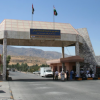
Habur crossing (pictured), known as Ibrahim Khalil border gate on the Kurdish side, is the sole crossing between the two countries. After taking over Kirkuk, Baghdad then decided it wanted control of the crossing. Iraqi soldiers who had flown to Turkey for the exercises were now going back by road for the first time in 26 years.
When the Iraqi army had abandoned that crossing in 1991, nobody had cell phones to report it. It took the world many days to learn that the Iraqis had handed over northern Iraq to the Kurds. But as Iraqi soldiers recently approached the border crossing, the entire world knew about it.
Some Turkish media ran false headlines saying the crossing had been handed over to Baghdad. The Turkish side was pleased with this development, especially when social media began spreading photos of Iraqi soldiers accompanied by senior officers from both sides at the border crossing. Nobody seemed to notice that there was not a single photo or report of a customs administration office being handed over.
Posted in Iraq Industry & Trade News, Politics, Security Comments Off on Iraq-Turkey Border Confusion: Who's In Charge Here?
How Iran helped Baghdad seize back Kirkuk
Posted on 22 October 2017 .
By Fazel Hawramy for Al Monitor. Any opinions expressed here are those of the author and do not necessarily reflect the views of Iraq Business News.
Around 8 p.m. on Oct. 15, an Iranian general from the powerful Islamic Revolutionary Guard Corps (IRGC) accompanied by Iraqi Commanders Abu Mahdi al-Muhandis and Hadi al-Ameri sat down with the Kurdish commanders in Kirkuk.
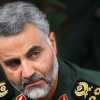
The IRGC commander, known only by his surname, Eqbalpour, who works closely with Quds Force chief Qasem Soleimani (pictured), told the Kurds to give up the city peacefully. “If you resist, we will crush you and you will lose everything,” the general warned the peshmerga commanders, a source with intimate knowledge of the meeting told Al-Monitor.
The Kurdish leadership had turned down repeated requests by Soleimani to cancel the Sept. 25 independence referendum, to his indignation. The peshmerga commanders who had fought Saddam Hussein’s army alongside Soleimani and other IRGC commanders in the 1980s knew that the Quds Force commander would take his revenge. After consulting with the top Kurdish leadership, the peshmerga commanders told Eqbalpour that they would not give up Kirkuk.
The Iranian commander took out a map of the area and spread it out in front of his Kurdish counterparts. “This is our military plan. We will hit you tonight from three points — here, here and here,” the Quds Force officer stated, and then left the meeting with his entourage.
Not far from the main Patriotic Union of Kurdistan (PUK) building in Kirkuk, where the meeting took place, a group of American military advisers sat at the sprawling K1 air base. The soldiers would keep their silence as Soleimani and the Iraqis orchestrated the attacks on Kirkuk. One Kurdish official even suggested that there must have been an international agreement to launch such a coordinated strike. The Kurds were in for a big surprise.
Posted in Construction & Engineering In Iraq, Iraq Oil & Gas News, Politics, Security Comments Off on How Iran helped Baghdad seize back Kirkuk
US stops paying Peshmerga amid Kurdish Independence Backlash
Posted on 11 October 2017 .
By Jack Detsch for Al-Monitor. Any opinions expressed are those of the author, and do not necessarily reflect the views of Iraq Business News.
Pentagon stops paying peshmerga salaries amid Kurdish independence backlash
The US government has stopped paying Kurdish peshmerga fighters’ salaries after a yearlong agreement expired over the summer, and there are no current plans to renew it.
Under the deal negotiated by the Barack Obama administration in July 2016, the United States agreed to pay stipends to some 36,000 Kurdish fighters battling the Islamic State (IS) in Iraq. The agreement was expected to be renewed over the summer for another year, but US and Kurdish officials tell Al-Monitor that talks stalled as the Kurdistan Regional Government (KRG) pursued a divisive referendum on independence and the IS presence in the region began to collapse.
“The department does not currently fund stipend payments for the peshmerga,” Defense Department spokesman Eric Pahon told Al-Monitor. “The memorandum of understanding between the Department of Defense and the KRG facilitating stipend support during the Mosul operation expired in July 2017, and the final stipend payment was transferred in early September.”
Peshmerga sources flatly accuse the Donald Trump administration of withholding support because of opposition to last month’s nonbinding referendum. The United States has taken Baghdad’s side in the dispute and refused to recognize the results, which indicate overwhelming support for Kurdish independence.
There was a plan to renew and sign a new similar memorandum of understanding, but the United States discontinued it because of the referendum, Brig. Gen. Hajar Omer Ismail, director of coordination and relations for the Ministry of Peshmerga, told Al-Monitor. He said no weapons had been received for a while even before the memorandum of understanding expired.
Pahon declined to comment on what he called “internal business matters.” He said the United States and the KRG did not have “any talks on the table” about renewing the memorandum of understanding for months prior to the Sept. 25 vote, “so the referendum has no effect at this point.”
Posted in Politics, Security Comments Off on US stops paying Peshmerga amid Kurdish Independence Backlash
Post-Referendum Threats And Demands
Posted on 01 October 2017 .
This article was originally published by Niqash. Any opinions expressed are those of the author, and do not necessarily reflect the views of Iraq Business News.
Iraqi Kurdish Politicians Talk About Post-Referendum Threats And Demands
While many uncertainties remain about Iraqi Kurdistan’s referendum on independence, there is one thing that seems clear to the people on the streets: On the day, the semi-autonomous region felt united in a way that it has not been for a long time.
Part of the reason Iraqi Kurdistan has remained an oasis of relative calm and security, while the rest of Iraq fell apart during the recent security crisis caused by the extremist group known as the Islamic State and earlier, is that the Kurdish people have always considered their ethnicity more important than the religious sect they belong to.
Ethnicity has trumped religion in their case and, despite infighting, has tended to unite locals in this area, with the long-term goal being to form their own nation.
In many other situations recently, the Kurdish have been divided – often between the two zones that basically make up the semi-autonomous northern region, which are run by the two major political parties, the Kurdistan Democratic Party, or KDP, and the Patriotic Union of Kurdistan, or PUK.
Up until the very last minute some of the region’s political parties remained opposed to the referendum. The KDP, the PUK and the Kurdistan Islamic Union had supported the referendum while the Change movement, also known as Goran, and the Islamic Group of Kurdistan wanted it postponed.
Just one day before the referendum though, when it became clear it was going ahead, the Islamic Group of Kurdistan relented and senior members said they would be voting “yes” in the poll.
Even the Change movement, a long-time opposition group in the region that formed on an anti-corruption platform, told members to follow their own consciences. Then the movement also told members they should vote, and that they should vote “yes”.
Posted in Iraq Industry & Trade News, Iraq Oil & Gas News, Iraq Transportation News, Politics, Security Comments Off on Post-Referendum Threats And Demands
Govt Settles in First Lawsuit on Trump Muslim Ban
Posted on 01 September 2017 .
From the American Civil Liberties Union. Any opinions expressed are those of the author, and do not necessarily reflect the views of Iraq Business News.
The Trump administration today settled with the plaintiffs in the first legal challenge to the president’s original executive order, which sought to bar travelers from certain majority Muslim countries from entering the United States and to dramatically curtail the admission of refugees.
The settlement ensures that all travelers who were barred from the country on the basis of the ban and have not since returned to the United States are informed of their right to reapply for a visa and provided with a list of free legal services organizations that can help them do so.
The settlement came in the case of Darweesh v. Trump, which was filed as a nationwide class-action in federal district court in New York City on the morning of January 28, 2017, only hours after the first Muslim ban went into effect.
The ban had plunged airports across the country into chaos as the Trump administration haphazardly implemented its discriminatory policy, leading to the separation of families and exclusion of refugees fleeing persecution.
By the evening of January 28, the court had issued a nationwide injunction prohibiting the Trump administration from removing anyone from the country on the basis of the Muslim ban. As a result, the administration’s effort to bar Muslims and refugees from the country was halted barely 24 hours after it went into effect.
Having succeeded in halting detentions under the Muslim ban, the lawsuit then sought to address the harm done to those already excluded in the chaotic first days of the Muslim ban. In the settlement announced today, the government agreed to contact all individuals who had been barred from entry as a result of the ban and have not since reapplied for a visa or entered the United States, and to inform them of their right to reapply for a visa.
Posted in Iraq Transportation News, Politics, Security Comments Off on Govt Settles in First Lawsuit on Trump Muslim Ban

US Firm to Lobby on behalf of KRI's PAM Media
Posted on 27 June 2017 .
By John Lee.
Public strategy firm Mercury has been chosen to lobby on behalf of Sulaymaniyah-based PAM Media in the United States.
PAM Media is a production company that produces advertisements for commercial products or services; it is owned by Nalia Media Corporation (NMC), which also owns NRT TV.
Documents lodged with the US Senate state that the account will be handled by Brian Lanza, who is listed on the Mercury website as a Managing Director in Mercury’s Washington DC office, specializing in public affairs and media strategy. He is A leading Republican strategist, and was formerly communications director for President Trump’s transition team, and deputy communications director for the Trump-Pence presidential campaign.
The official statement adds that Mercury will "Engage the Executive and Legislative Branches of the Government on foreign relations and policy issues between the US and Iraq/Kurdistan region, trade, development, and potential US legislation, policy, or regulatory actions that could impact the US/Iraq relationship."
(Sources: US Senate, Mercury)
Posted in Iraqi Communications News, Politics Comments Off on US Firm to Lobby on behalf of KRI's PAM Media
Iran, US set for proxy clash on Syrian-Iraqi Border
Posted on 04 June 2017 .
By Mustafa Saadoun for Al Monitor. Any views expressed here are those of the author, and do not necessarily reflect the views of Iraq Business News.
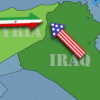
As the Popular Mobilization Units (PMU) continue their operations in the western areas of Mosul, some PMU factions reached the Syrian border May 29 and were met by Syrian army divisions on the other side of the border.
According to the May 29 statements of Hadi al-Ameri, secretary-general of the PMU-affiliated Badr Organization, PMU forces are stationed in the Um Jaris village on the Iraqi-Syrian border, northwest of the Ninevah governorate.
The forces announced that they intend to continue to control the Iraqi-Syrian border toward al-Qaim district, north of the Anbar governorate, stretching over 300 kilometers (186 miles).
International coalition aircraft had previously bombed a convoy of the Syrian army and armed loyalists near the border triangle between Iraq, Syria and Jordan, according to Abu Alaa al-Walai, secretary-general of the Martyrs of Sayyid Battalions, affiliated with the PMU. “The US aircraft bombed Friday night, May 19, PMU forces in the area of Abu Kamal, near the Iraqi-Syrian border,” Walai said.
As the Syrian government headed by Bashar al-Assad prepares to exert influence over the Iraqi-Syrian border with the help of its allies in Iraq and Iran, the opposition armed groups seek to do the same with the support of the international coalition. The border area between Iraq and Syria will turn into a conflict zone between the allies of Tehran and those of Washington.
Ahmad al-Asadi, a PMU spokesman, told Al-Monitor, “The PMU forces will mobilize to secure the Iraqi-Syrian border and then shut it down to prevent the infiltration of terrorist groups.”
Posted in Politics, Security Comments Off on Iran, US set for proxy clash on Syrian-Iraqi Border