


USAID Awards Loans to Displaced Iraq Business Owners
Posted on 03 April 2012 .
The first round of loans, funded by the U.S. Embassy and disbursed through USAID-Tijara Provincial Economic Growth Program, was awarded this week in Erbil, marking the formal launch of the Iraqi Vulnerable Groups Support Initiative (IVGS).
IVGS Initiative will extend small and medium enterprise loans to qualified Iraqi entrepreneurs who have been displaced by civil unrest. Six beneficiaries received loans at the ceremony. So far, 560 borrowers have received a total of $1,842,400 with individual loans averaging $3,300 in size.
Through this initiative, the United States continues to support private sector development and economic growth in Iraq under the auspices of the Strategic Framework Agreement. The IVGS initiative assists minority and disadvantaged business owners who currently have problems borrowing money and is expected to benefit more than 2,000 families.
Mosul Bank borrower Adnan Boutros Baku, a displaced business owner from Hamdniya in Ninewa, will use his ID 10 million ($8,300) to open a glass workshop. “When I heard about the USAID program I was doubtful I would get a loan since I’d never been in a bank before. Now I have money to buy a workbench and different kinds of glass. My plan is to hire an apprentice when I receive my first large order.”
The Iraqi Company for Financing SMEs will provide capital support through private banks in the areas where vulnerable groups are located. Additional U.S. grants will go to microfinance institutions that will lend the funds to qualifying business owners. The program also funds training opportunities to improve the skills and competitiveness of Iraq’s disadvantaged and minority workforce members.
Small and medium enterprise loans offered under this program generally range between ID six million ($5,000) and ID 30 million ($25,000), with smaller loans also available through participating microfinance institutions. Additional information about the IVGS loan program is available from Ashur International Bank, Iraq Middle East Bank, Mosul Bank, Izdiharona Microfinance, Bright Future Foundation and the Al-Thiqa Small Business Loan Fund.
(Source: USAID)
Posted in Iraq Banking & Finance News Comments Off on USAID Awards Loans to Displaced Iraq Business Owners
US Embassy Helps Young Iraqi Entrepreneurs Create Businesses and Jobs
Posted on 16 March 2012 .
The U.S. Embassy’s Iraqi Youth Initiative, which forms part of the Tijara Provincial Economic Growth Program run by the United States Agency for International Development (USAID), will mark its two-year anniversary in April 2012.
Since the start of the program, loans valued at $3,625,100 have enabled 1,045 young entrepreneurs to build businesses that today employ 2,220 Iraqis. The pace of job creation is increasing, with more than 1,000 new jobs created during the last quarter of 2011 thanks to microfinance loans totaling $1.63 million.
The Embassy announced last week that 27 young Iraqis from Baghdad, Karbala, Wasit, Muthanna, Najaf and Dhi Qar provinces have been awarded loans worth $87,700 through the Iraqi Youth Initiative to help them start new businesses that will create an estimated 54 new jobs.
The initiative has also trained 1,222 young Iraqis in its apprentice training program over the past two years, and 690 participants have been placed in apprenticeships with local company sponsors for three months of on-the-job skills development.
An additional 1,300 young Iraqis will complete similar training by the end of June 2012, and over $4.45 million more is budgeted to loan to young entrepreneurs. In all, over 3,800 individuals have benefited from the Tijara program thus far.
Posted in Iraq Education and Training News, Iraq Industry & Trade News Comments Off on US Embassy Helps Young Iraqi Entrepreneurs Create Businesses and Jobs
USAID-Supported SME Centers Creating More Jobs
Posted on 16 March 2012 .
Iraq’s Ministry of Youth Monitoring and Coordination Director General Adnan Al-Sarraj recently praised USAID-Tijara’s network of eight Small Business Development Centers (SBDCs) for helping Iraqis find employment and start new businesses. The compliment came in a SBDC strategy workshop last week in Erbil at which government officials, NGOs and UN agencies joined USAID-Tijara to discuss ways to further stimulate economic growth.
Meeting participants singled out the Iraqi Youth Initiative, a youth employment program that uses SBDCs to impart business skills training to aspiring entrepreneurs. The Ministry of Youth requested the Youth Initiative and the SBDC network continue to work with the ministry to create jobs and establish small businesses for Iraq’s youth.
United Nations Development Program regional representative Rami Samain applauded the Erbil-based SBDC, the Women Empowerment Organization, for its ability to conceive and implement UNDP programs and encouraged other SBDCs to follow-up regarding additional UNDP program needs in other parts of the country.
Since 2008, Small Business Development Centers supported by the USAID-Tijara Provincial Economic Development Program have provided business management training and consulting to more than 16,700 entrepreneurs and conducted over 1,300 courses and workshops, in which 26% of the participants were women.
Posted in Iraq Industry & Trade News Comments Off on USAID-Supported SME Centers Creating More Jobs
Ideas & Partnerships for Innovation - Inviting Thoughts
Posted on 12 March 2012 .
By T. Keyzom Ngodup, co-founder at Ideas sYnergy. Ideas sYnergy is Iraq’s first multiple bottom line advisory company committed to inclusive economic and social development through market-based solutions that help build and scale youth-driven innovative ideas for social change.
Recently, USAID’s Office for Innovation and Development Alliances (IDEA) announced a global request for concepts around public-private partnerships as part of their mandate under Global Development Alliance (GDA). IDEA, a special initiative of USAID Administrator Rajiv Shah, seeks to reach development goals more quickly, cost-efficiently, sustainably, and at wider scale through innovation (“meaning significant, not incremental, improvements in development impact”) and partnership. Under this Annual Program Statement (APS), USAID is inviting the private sector for a mutually beneficial partnership where resources from both the parties will be leveraged equally leading to an increase in the sustainable impact of development assistance programs. Apart from the private sector, USAID has also opened the invitation to submit project ideas that reach out to the private sector and explore ways in which collaboration might help all the partners to more effectively solve key problems, advance respective interests and achieve far greater development results and impacts.
Keeping in mind that many smaller and start-up development stakeholders are often deterred by lengthy and meticulously detailed proposals (running over 50 pages), initial submission under this APS is limited to 5-page concept notes, which if chosen, will be invited to submit a full proposal.
At Ideas sYnergy, we are inviting interested Iraqi organizations and individuals to share your ideas and collaborate with us and/or others. As a local Iraqi social enterprise (first in the country), we want to facilitate local organizations’ access and participation in global initiatives. At a recent Harvard Business School and Harvard Kennedy School of Government Conference on Social Innovation, Ideas sYnergy was the only Iraqi organization present, and indeed participants were interested in the social innovation model/s of post-conflict countries.
Some initial ideas that we can build around as a community; ideas that come through experiencing the challenges of working/operating/living in Iraq:
- Money Transactions Beyond Cash: Why can’t mredy charge for its services? Why do small/young organizations like us face problems receiving consultancy payments directly into our company bank account in Iraq? What are other sources that Iraqis can rely on with over 5% fees on transfered funds by banks, and temorary termination of Western Union services?
- Disenchanted Youth: Iraq’s youth (over 30% of Iraq’s population is between the age of 19-32, and approximately 50% less than 19) do not have a voice in driving their country’s future. Although the youth overcame fear of bomb blasts in the recent demonstrations, everyone thought everyone else was a government intelligence agent, inciting paranoia in citizenry.
- Access to Data: Iraq has a number of independent and government affiliated research centers in the country however access to policy relevant data remains a critical challenge to the work of these research centers, including Ideas sYnergy’s monthly publication Iraq Insights. Consequently, the number and quality of evidence-based research from Iraq is severely lacking, and beset with outdated means of communicating and marketing its results and activities.
Do write to us with your feedback, suggestions. We are ‘ideating’ at the moment, and will share further thoughts soon.
By T. Keyzom Ngodup, co-founder at Ideas sYnergy. Ideas sYnergy is Iraq’s first multiple bottom line advisory company committed to inclusive economic and social development through market-based solutions that help build and scale youth-driven innovative ideas for social change.
Posted in Keyzom Ngodup Comments Off on Ideas & Partnerships for Innovation - Inviting Thoughts

Iraq: Don't Mess it Up
Posted on 08 March 2012 .
Iraq is making progress. It is now pumping out 3 million barrels of oil per day for the first time since 1979, it is about to host the Arab League Summit, and its plan to build 2 million new homes is moving ahead.
So why have shares in Iraq-focused oil shares taken a bashing this week?
Part of the reason is a report from HSBC highlighting the political risk in the country:
"After years of conflict, the Iraqi oil industry has opened for business ... the country has huge reserves ... [but] politics is likely to impair value."
In other words, prosperity is there for the taking if the politicians and public servants don't mess it up.
On a rather different subject, Iraq Business News is delighted to welcome a new member to our Expert Blogger panel: Bob Nottelmann has helping the Iraqi agricultural sector and will write for us on Iraqi agribusiness. You can read his first installment here.
Upper Quartile and AAIB are the ideal partners to guide your business through the complexities of Iraqi life. For more information please contact Gavin Jones or Adrian Shaw.

USAID Success in Helping Iraqi Agribusiness
Posted on 07 March 2012 .
By Bob Nottelmann, crop production specialist with California Pacific Plant Exports (Cal Pacific) and Ekland Marketing of California (Emco).
My colleague, Roy Ekland and I worked as short term technical advisers for the USAID Agribusiness project (Inma) in Iraq. As a result of our work and Inma's support, commercial strawberry production is now a lucrative option for Iraqi farmers and Iraq has become an important market for the plant materials we supply. Without the courage and initiative of the Inma staff, this industry would not exist. Although still in its infancy, this is a now a robust industry with a sustainable future.
Inma has a broad and positive influence on agribusiness in Iraq and I am concerned about the present status and future of the project after the troop withdrawal. In a recent correspondence with a USAID representative, we had the following exchange:
Now that the troops have left, what INMA projects are still operational?
USAID Agribusiness project ("Inma") is fully operational. There has been no change in operations as a consequence of U.S. troop withdrawal. USAID-Inma continues to work with partners to strengthen sustainability and competitiveness of the agriculture private sector in Iraq. To achieve this objective USAID-Inma conducts the following activities:
- Establish linkages among USAID-Inma supported enterprises and between the enterprises and markets;
- Develop nurseries, consolidation centers and field-based learning centers;
- Support the development of domestic and export marketing strategies;
- Continue to develop enterprise management and technical capacity; and
- Deliver agricultural and business development services across Iraq.
Posted in 'Your Country' - United States, Bob Nottelmann Comments Off on USAID Success in Helping Iraqi Agribusiness

Cash Only: Why the Messy Banking Sector Endangers Iraqi Development
Posted on 02 March 2012 .
Iraq could be one of the richest countries in the world. Yet over three quarters of Iraqis do not have bank accounts. So where do they keep that wealth, asks this article from NIQASH, and can the Iraqi banking system be dragged into the 21st century?
Any opinions expressed are those of the author, and do not necessarily reflect the views of Iraq Business News.
The banking sector in Iraq reflects the economic mess that the country is in. Basic modern banking practices – like electronic funds transfers for payroll or other banking needs - are almost non-existent and credit facilities are hard to come by. Automatic teller machines remain a novelty while mortgages and loans are a rarity.
Iraq has only a few banks with the ability to transfer funds electronically and the number of branches able to undertake this sits at around 240. Transferring funds directly to Iraqi banks remains a patchy process and it is more often done through other banks in the region, such as more reliable sister bank in Jordan or the United Arab Emirates.
Latest research estimates that around 80 percent of Iraqis do not have a bank account or even access to one. The public's trust in the Iraqi banking sector remains low. Which is why most banks in Iraq simply act as a glorified safety deposit box.
Meanwhile Iraq is on track to become one of the wealthiest countries in the world, with the fourth largest oil reserves in the world and the potential to be one of the globe's leading oil exporters, eventually matching, or even surpassing, Saudi Arabia, currently one of the largest oil exporters in the world. But despite incoming revenue and the potential for growth, economic progress remains slow - and this is partly due to dysfunctional banking sector. There is talk of sector reform and new electronic banking systems - yet this vital sector is still underdeveloped.
Posted in Iraq Banking & Finance News 4 Comments
US-Iraq Joint Coordinating Cmte for Cultural and Educational Cooperation
Posted on 25 February 2012 .
The Government of the United States and the Government of Iraq strongly support the preservation and expression of Iraq’s rich heritage, the establishment of a strong Iraqi education system at all levels, and the continuation of robust educational, cultural, and professional exchanges between our nations. The U.S.-Iraq Joint Coordinating Committee on Cultural and Educational Cooperation met in March 2011 in Baghdad, and in February 2012 in Washington, D.C.
Higher Education:
The United States and Iraq are working together to build a strong Iraqi higher education system with long-term links with U.S. academic institutions. U.S. and Iraqi efforts helped increase the number of Iraqi students studying in the United States by more than 45 percent to 616 students in the 2010-2011 academic year over the previous year. An EducationUSA education advising event featuring up to 10 universities will be held in April 2012, building on the success of the first-ever fair in Erbil in October 2011.
Through educational advising, we will continue to provide accurate information about U.S. higher education to Iraqi students who aspire to study at U.S. institutions. Hundreds of Iraqi students and scholars have studied or conducted research in the U.S. through the Fulbright Program, with 35 students and 35 faculty expected to participate in the 2012-13 academic year.
Seven U.S. and seven Iraqi universities participate in the Iraq University Linkages Program, which pairs U.S. and Iraqi faculty and administrators to strengthen university curricula, enhance and update teaching methods and technology, and improve career services for students. The current linkages match Basrah University with Oklahoma State University; Salahaddin University with the University of Cincinnati; Tikrit University with Ball State University; Kufa University with the University of Kentucky; Baghdad University with Georgia State University; the University of Dohuk with Michigan State University; and the University of Technology with the University of Missouri at Columbia.
Posted in 'Your Country' - United Kingdom, Iraq Education and Training News, Leisure and Tourism in Iraq Comments Off on US-Iraq Joint Coordinating Cmte for Cultural and Educational Cooperation
USAID-Sponsored Bank Provides Financing for Iraqi SMEs
Posted on 20 February 2012 .
The Iraqi Company for Bank Guarantees (ICBG) is a privately-owned non-banking financial institution that guarantees repayment of up to 75% of loans, ranging from $5,000 up to $250,000, that private commercial banks extend to small and medium enterprises (SMEs) in Iraq. Early this year, the company reached a significant milestone when it surpassed $50 million of loan guarantees on loans disbursed to SMEs.
$50 million may not seem like a lot of money in big financial circles. But for the 4,000 entrepreneurs who have started or expanded their businesses thanks to timely, guarantee-assisted bank financing, $50 million has made all the difference for success.
Back in 2006, when the U.S. Agency for International Development started ICBG, private commercial banks rarely disbursed SME loans of any size. Accustomed to a centralized, state-managed economy, bankers were reluctant to loan money to private sector entrepreneurs, often lacking the credit histories or real property sufficient to provide sufficient loan collateral. ICBG’s willingness to absorb up to 75% of loan risk relieved lenders of much of the worry from venturing into SME lending. In the process, some 3,800 new permanent, private sector jobs opened up at these SMEs.
ICBG today is a joint stock company with 34 corporate and private shareholders. It is used by eight private banks, which in return pay a 2% fee for the 75% portion of the guaranteed loan - a cost that is normally passed on to the borrower.
When the USAID-Tijara Provincial Economic Growth Program began in 2008, virtually all partner bank SME loans depended on ICBG support. By 2011 only 38% of the loans facilitated by USAID-Tijara’s SME Bank Lending component were guaranteed. Lenders’ growing confidence in risk assessment had gradually reduced dependency.
“The presence of the Iraqi Company for Bank Guarantees has introduced stability in Iraq’s private sector and has facilitated hundreds of businesses to startup or to expand, 11% headed by women,” says ICBG’s Managing Director, Mr. Ameen Abdul Sattar Ameen. “2011’s results represent a 33% increase over the previous year thanks to lender overall SME loan portfolio expansion, primarily in Iraq’s, small scale manufacturing, commercial trade, and service sectors.”
(Source: USAID-Tijara)
Posted in Iraq Banking & Finance News Comments Off on USAID-Sponsored Bank Provides Financing for Iraqi SMEs
Iraq's Small Business Development Centers Create New Jobs
Posted on 03 January 2012 .
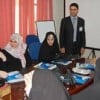
Business training offered in Iraq’s Small Business Development Centers is helping shape a new generation of Iraqi entrepreneurs whose companies someday may become significant private sector employers. So says a survey published this month of 4,329 trainees who graduated last year from SBDC programs that include the two most popular courses, ”How to Start a Business” and “How to Improve a Business.”
Sponsored by the USAID-Tijara Provincial Economic Growth Program, which also supports Iraq’s network of 17 SBDCs, the survey is based on interviews with 1,236 respondents, about 30% of the 4,329 people who took SBDC courses in 2010.
SBDC training emphasizes vocational skills, English literacy, computer and accounting proficiency, but most of the people responding to the survey signed up for courses on how to start or improve a business. The major reason for their interest was unemployment. A full 50% of those taking the two business courses lacked a job when they signed up.
Interviews with survey respondents revealed that 21.4% of those wanting to start their own business succeeded in doing so. These 234 new enterprises produced 834 new direct and indirect jobs throughout Iraq between February 2010 and May 2011. Some 135 people, or 12.3% of the survey respondents, said they had not yet started a business but fully planned to do so.
What of those trainees simply wanting to improve their existing business? Within six months of their SBDC graduation nearly 90% reported improved sales revenues directly resulting from the new techniques and methodologies they learned.
Small Business Development Centers supported by USAID provide services in addition to business training. These efforts range from supporting business conferences, trade fairs and local business exhibitions to assisting international trade delegations and preparing municipal business directories. Recently, SBDCs in nine provinces sponsored market assessment conferences that brought together local government and private business leaders to discuss investment opportunities and constraints to future business growth. SBDCs also play a vital role in communicating the concerns of small and medium enterprises to government regulators and policy makers.
For more information about USAID-Tijara’s Small Business Development Program and the opportunities it provides, click here to visit the Business Development Services section of this Web site or visit the SBDC Web site at www.sbdc.com.
(Source: USAID)
Posted in 'Your Country' - United States, Iraq Industry & Trade News Comments Off on Iraq's Small Business Development Centers Create New Jobs