


Iraq's Building Boom
Posted on 16 July 2010 .
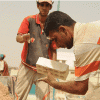
Scaffolding is creeping up the walls of bullet-scarred villas across rubble-strewn Baghdad, and gangs of labourers are piling up bricks as growing security allows a mini-construction boom to take hold in Iraq, according to a report from Reuters.
It may be the leading edge of a building surge as work now limited to a few hundred villas makes way for mega-projects when Iraq starts to restore its infrastructure and housing stock, left in tatters by decades of war, sanctions and neglect.
The Iraqi authorities want to build on a massive scale -- 1 million new housing units in three years. In a single project, plans call for 75,000 units in Baghdad's Sadr City slum. Gulf companies are bidding for many of the projects.
"The local production of construction materials will not be enough for such big projects," said Abdul Rahman al-Mashhadani, an economist at al-Mustansiriya University, who believes a government estimate that Iraq needs more than 3 million housing units is too low.
Iraq's infrastructure needs are daunting, more than seven years after the U.S.-led invasion that toppled Saddam Hussein. Roads, railways, the electricity grid, ports, housing and factories must be rebuilt.
The National Investment Commission has put together a wish list of 750 projects that alone require $600 billion.
That could be good news for early foreign investors such as French cement maker Lafarge(LAFP.PA), which has braved continuing insurgent attacks and political uncertainty to invest in Iraq's construction materials sector.
But it could be bad news for inflation, and for Iraqi consumers, as prices of bricks, cement and plaster, which have tumbled, are pushed higher by soaring demand.
For now, dramatic gains in the last three years after the sectarian slaughter that followed the 2003 ouster of Saddam have allowed Iraqis to renovate decrepit villas or start new ones. Rising government wages have fuelled the boom.
"It feels like a baby or a tree growing before your eyes ..." said Kadhum Jawad, 37, an engineer, as he waited for a cement truck to arrive at a plot in Baghdad where he, his brother and his sister are building a new 150 square metre home.
PRICES, ONCE HIGH, HAVE TUMBLED
In the latter days of Saddam's 1979 to 2003 rule, as the economy tanked under the weight of sanctions and the cost of war, only wealthy families and high-paid officials could afford to build new houses or renovate a home.
The materials market was controlled by a state-run company, and while prices were subsidised, they remained beyond the reach of most homeowners. Ordinary government workers earned the equivalent of around $2.50 a month.
But the price of bricks has tumbled from two years ago, when the cost of waste oil used by brick factories was sky-high and fighting between majority Shi'ites and once dominant Sunnis meant many plants remained shuttered.
Prices of cement, sand, plaster and reinforcing steel used to strengthen walls are also down as old factories reopen, new ones are set up and more importers enter the market.
Materials now flow in from abroad. Importing cement from Pakistan, reinforcing steel from Ukraine and wooden doors from southeast Asia helps keep prices low.
As a result teachers, police officers and other wage earners are tackling home renovations.
"It was a dream for me to sell to a teacher or a government employee. They couldn't afford (these things). I used to sell them used bathroom sets and faucets," said Abu Karrar, a shop owner who sells mostly Turkish and Iranian products.
"Iraqis didn't know what a Jacuzzi or a shower cubicle was."
A tonne of reinforcing steel that sold for $1,270 in 2008 now costs $720, a three-tonne truckload of sand that went for $508 now costs $381 and a tonne of cement has fallen from $200 to $150, said one local trader.
France's Lafarge, the world's largest cement maker, is one company that will benefit from the coming boom.
It already has cement plants in northern Iraq's semi-autonomous and relatively stable Kurdish region and recently launched a $200-million renovation of an Iraqi cement plant near Kerbala in the south to boost production.
Imports will likely be needed nonetheless to meet demand.
"Our cement factories don't cover a quarter of the market's needs," said Abu Baqir, a Baghdad supplier whose plot of land is lined with piles of bags of imported and local cement, sand, stones, and brick.
Iraqis building a home have an increasingly impressive array of choices, not only of basic materials but also of luxuries like decorative tiles, Jacuzzis and shower enclosures.
"Iraqis are dazzled by the different types of ceramics and tiles they have seen since the fall of the regime," said Amer Ali, 47, a government worker building a home.
(Source: Reuters)
Related articles:
Posted in Construction & Engineering In Iraq Comments Off on Iraq's Building Boom
Dutch and American Electicity Proposals in Basra
Posted on 16 July 2010 .
A Dutch firm has proposed an electricity investment project to local authorities in Basra province, southern Iraq.
“The proposal includes the construction of a new power stations in Basra,” the province’s Governor, Shaltagh Aboud al-Mayiah, told Aswat al-Iraq news agency on Wednesday.
He noted that the local authorities in Basra allocate greater importance to electricity sector, because it contributes to all other activities in the province.
“We are looking for quality, speed, and ability to execute projects within conditions put by Electricity Ministry,” al-Mayiah added.
Meanwhile, Aswat al-Iraq also reports that an American company is keen to tackle the electricity crisis in Basra through an investment project to set up small- and medium-sized electricity generating plants within four months, according to a media source.
“A delegation from the company discussed the possibility of buikding electricity plants to deal with the crisis in the province with Basra's Governor,” the source told Aswat al-Iraq news agency.
“The company seeks to establish small and medium electricity generating plants with a capacity between 1-100 Megawatt within four months,” he added.
(Source: Aswat al-Iraq)
Related Articles:
Posted in Iraq Public Works News Comments Off on Dutch and American Electicity Proposals in Basra

Investing in Iraq: Post-Conflict Constraints and Rewards
Posted on 16 July 2010 .
By Tariq Abdell, Founder & Chairman, Mesopotamia Insight.
The opinions expressed here are those of the author, and do not necessarily reflect the views of Iraq Business News.
Iraq's Lebanized democracy coupled with its lingering and convoluted political impasse are perfect recipes for a week and sectarian-based government, that is shackled by the region's geopolitics (e.g., Iran's nuclear and regional ambitions, Saudi Arabia, Syria, Turkey, etc...) consequently turning Iraq into proxy wars battleground for years to come and long after the U.S. forces are gone.
Thus, investors contemplating on doing business in Iraq, given the country's untapped natural resources (billions of oil and gas reserves), are most likely to encounter a series of costly and challenging constraints common to post-conflict environments both internal and regional. These constraints are most likely to derail investors’ market entrée strategies, left unchecked, and damaged their long-term business interests in Iraq:
Internal constraints:
- According to transparency international 2009 corruption index, Iraq is the fourth most corrupt country along with Sudan.
- Well-entrenched tribal laws and archaic costumes undermine central government and foreign investors' interests alike (tribal discontent of the oil companies, for instance).
- 20 to 25 percent of Iraqis still live below the country's poverty line (Ministry of Planning), a potential source of societal and political upheavals.
- Higher illiteracy levels make it difficult for domestic and foreign investors to find a skilled and professionally literate workforce.
- Higher unemployment rates, notably among military-age male population, are direct causes of the sudden surge of organized crime and militia's activities.
- Lack of basic services, e.g., drinking water, electricity, and running sewer nurtures resentment vis-a-vis public officials and foreign investors alike as recently demonstrated by electricity protests across Iraq.
- Deep-seeded distrust and apprehension of oil companies are crippling residues of decades of planned economy, e.g., oil union fervent opposition to the oil law and contracts.
Regional constraints:
- Iran, third's largest oil producer (3.2 million bpd), is a major player in Iraq's politics through its infamous Islamic Revolutionary Guard Corps' elite Qods Force and its proxies. As top U.S. commander in the country Gen. Ray Odierno said "There is a very consistent threat from Iranian surrogates operating in Iraq," (Washington Post July 13th).
- The fallouts of Iran nuclear standoff with the West, United States recent approved new unilateral sanctions against Tehran, could easily spillover to Iraq's internal politics and further undermine its stability. In fact, early signs of undercutting U.S. sanctions already been detected in the northern region where millions of dollars of oil and goods are smuggled to Iran (New York times report July 8).
- The proximity of Iraq's major oil fields to Iraq-Iran porous borders makes international oil companies’ workforce and equipments a vulnerable target for kidnapping and sabotage -Granting Iran invaluable leverage against the west.
- Saudi Arabia, world's largest oil producer (8.2 million bpd), could be a potential destabilizing force if the Shiite establishment continues to marginalize and ignore Sunnis' demands.
- Turkey's recurrent incursion into Northern Iraq in the pursuit of the Kurdish workers party (PKK) elements and PKK assiduous attacks on the northern oil pipelines are a major threat to the country's sovereignty and unity. According to Gen. IIker Basbug, head of the Turkish army, "The presence of PKK bases in northern Iraq will certainly affect Turkey and Iraq's relationship, and will negatively influence relations between the U.S. and Turkey" (VOA News).
- Kirkuk's unsettled dispute (Northern oil hub) is a timed bomb that could expeditiously ignite a second civil war given Kirkuk's ethnic diversity, e.g., Arabs, Kurds, Turkmens, etc...
- U.S. planned hastily withdrawal in the absence of a legitimate and strong government it's a strategic misjudgment with a dangerous and costly repercussions - Foreign investors may need to beef up their security personnel to countervail U.S. troops withdrawal.
Hence, foreign investors' only cogent avenue, to overcome the aforementioned challenges, is to foster a sustainable political capital via a genuine and acculturated corporate social responsibility, and as Abraham Lincoln once said "Public sentiment is everything. With public sentiment, nothing can fail. Without it, nothing can succeed"
Case in point:
According to the terms of certain service contracts, in the absence of the hydrocarbon law, the international oil companies (IOCs) will receive $1.90 for each additional barrel produced, which is then charged with 35 percent tax and 25 percent cut for the state oil partner. Moreover, IOCs must factor in the financial impacts of the oil sector current constraints, for instance:
- Major Oil fields require billions of dollars for rehabilitation and development as result of years of sanctions and wars.
- Current oil workforce is in desperate need of training and know-how.
- The Iraqi federation of Oil Union could be extremely problematic if both the IOCs and the government continue to ignore the Union's demands.
- Oil facilities protection services (FPS) lacks adequate training, equipments, and, most importantly, loyalty.
- Contractually, ministry of oil can ask IOCs to reduce production to either meet Global markets demands (OPEC quotas, for instance) or to avoid systematic bottleneck as result of inadequate infrastructure.
Consequently, in order for IOCs to minimize their capital exposure while safeguarding their bottom line, IOCs should ask the following before committing billions of dollars for years to come:
a) Does the IOC's leadership embody Transcultural competence and strategic insight?
b) What's the IOC’s risk tolerance and price tag it's willing to pay to mitigate the impact of unforeseen externalities associated with the post-conflict environment.
In sum, given international investors and oil companies experiences in high-risk environments, understanding and anticipating policy risks in a politically volatile environment such as Iraq could be a valuable source of a competitive advantage. furthermore, IOCs and investors who adopt business model which entails balanced operational efficiency with sustainable political capital (efficient leverage of trusted relationships) are most likely to survive Iraq's political quagmire for years to come. Conversely, operating impetuously with no apparent understanding of the country's political landmines and nuances could be a costly and dangerous venture with detrimental effects on both humans and capital, and as the renowned American businessman Malcolm Forbes once said "The best vision is insight".
The opinions expressed here are those of the author, and do not necessarily reflect the views of Iraq Business News.
Tariq Abdell, founder & chairman, Mesopotamia Insight and Iraq analyst
Can be contacted at: [email protected]
or
Follow him on twitter: www.twitter.com/atariqx
Posted in Blog, Tariq Abdell Comments Off on Investing in Iraq: Post-Conflict Constraints and Rewards
Electricity Ministry to Increase Production with Foreign Help
Posted on 13 July 2010 .
The Iraqi Electricity Ministry is seeking to increase electricity production to 10,000 MW during the next 3 years," the Director of the Planning & Studies Department at the Electricity Ministry said on Monday.
"The Ministry has developed a plan parallel to the Investment Plan and presented it to investors in the electricity sector to implement projects that will increase the electricity production to 10 thousand MW during the next 3 years," Qusay Abdul-Sattar said.
"Iraq needs foreign expertise to implement its plans ... the country will have a stable electricity supply by 2013, when its production capacity will reach approximately 12,000 MW, and this what Iraq effectively needs," Abdul Sattar said.
(Source: AK News)
Posted in Iraq Public Works News Comments Off on Electricity Ministry to Increase Production with Foreign Help
Fuel Crisis in Baghdad Again
Posted on 13 July 2010 .
"The queues at gas stations in Baghdad were the result of the shortage of electricity and the high temperatures," the spokesman of the Iraqi Oil ministry said today.
"The high temperatures prompted citizens to store petrol for their home generators," Assim Jihad said.
"The Ministry is regularly providing the stations with fuel and gasoline," he added, noting that "the owners of the stations were told to increase their working hours at night."
"If the production of oil derivatives was compared to that of last year, we notice an increase of (20-40%) in the production, and the Ministry is now working on gasoline production which is between 15 to 18 million liters per day," he said.
The Iraqi Oil Ministry allowed foreign and Arab investors to develop the oil fields through the three licensing rounds in 2009 and 2010, in a move that aims to raise the country's exports of crude oil to seven million barrels per day during the next six years.
(Source: AK News)
Posted in Iraq Oil & Gas News Comments Off on Fuel Crisis in Baghdad Again

Iraq to Build Eight Power Stations
Posted on 13 July 2010 .
Dinar Trade reports that The Minister of Electricity and agency, Dr. Hussain al-Shahristani, has announced the building of eight new power stations, with a total capacity of 5,000 MW.
Readers of IBN will remember that Dr Shahristani, who is also the Minister for Oil, took over responsibility for the electricity brief following the riots last month.
The new plants will be built at sites including the Shatt al-Basra, Rumaila, Dhi Qar, Maysan, Muthanna and Diwaniya.
See also:
Posted in Construction & Engineering In Iraq Comments Off on Iraq to Build Eight Power Stations
Waste-to-Energy Power Project in Kirkuk
Posted on 13 July 2010 .
Kirkuk's Governor, Abdulrahman Mostafa, met with representatives of a US consortium on Sunday, investing in the fields of petroleum, refineries, prefab construction and cell phones, and discussed with them a project to produce electricity through waste incineration, a local official said.
“The U.S. investors briefed the Kirkuk officials on the nature of their work and proposed an investment project for WtE power generation,” Delir Samad, Kirkuk’s information director, told Aswat al-Iraq news agency.
Waste-to-energy (WtE) or energy-from-waste (EfW) is the process of creating energy in the form of electricity or heat from the incineration of waste material. WtE is a form of energy recovery. Most WtE processes produce electricity directly through combustion, or produce a combustible fuel, such as methane, methanol, ethanol or synthetic fuels.
(Source: Aswat al-Iraq)
Posted in Construction & Engineering In Iraq, Iraq Public Works News Comments Off on Waste-to-Energy Power Project in Kirkuk
Bahraini Companies Seek to Invest in Basra Energy Sector
Posted on 11 July 2010 .
A delegation from Bahraini investment companies met with the chairman of Basra Council on Thursday to discuss investment in the energy sector in the southern city, according to a report from Aswat al-Iraq.
“Chairman of the Basra council Jabar Amin Jaber received on Thursday a delegation representing Bahraini investment companies in the energy sector,” said the statement received by Aswat al-Iraq news agency.
“The meeting addressed fostering cooperation in the energy sector, to help solve the electricity shortage in the city,” it added.
“The council is ready to facilitate the work of these companies and remove all obstacles that could face them,” the statement quoted Jabar as saying.
Posted in Iraq Oil & Gas News Comments Off on Bahraini Companies Seek to Invest in Basra Energy Sector
Kurdistan to Get Additional 500MW Early 2011
Posted on 11 July 2010 .
The Spokesman of Kurdistan Electricity Ministry declared that the completion of Dohuk's power generating station will cover the power requirements of Kurdistan.
Dohuk's 500 megawatt power generating station is comprised of four units, each producing 125 megawatts, Diyar Baban told AKnews on Thursday
One of the units is expected to be ready by the end of this September.
The second unit is to be completed by the end of 2010 and the rest by early 2011, according to Baban.
Kurdistan Regional Government has been building up the electricity supply in the region over the past three years.
Currently government sources and local generators can provide the residents with 20 hours of power per day.
The region depends on two dams of Dokan and Darbandikhan, and two gasoline stations in Erbil and Chamchamal, for its electricity supply, but it needs 1,700 more megawatts to cope with the needs of its residents - the article was unclear about how this shortage of 1,700MW can be satisfied by the additional 500MW planned.
Posted in Iraq Public Works News Comments Off on Kurdistan to Get Additional 500MW Early 2011
Weekly Security Update
Posted on 08 July 2010 .
National Overview
It is estimated that 150 key figures including politicians, civil servants, tribal chiefs, police officers, Sunni clerics and members of the Sahwa militia (Awakening Council) have been assassinated throughout Iraq since the election on 07 March. This is a notably high incidence of targeted killings and highlights the current period of political instability. Uncertainty in the political arena has reflected in the security of the country, as assassination attacks are carried out on a basis of political point scoring and score settling. The 05 July suicide bomb attack on the provincial government building in Ramadi that is estimated to have killed four civilians and wounded 23 is indicative of this trend. Analysts and politicians have alluded to a tendency amongst political factions to use security as a political bargaining tool as, for instance, Maliki utilises a rhetoric of past security gains to cement his position.
 Several members of Iraqiya have been killed by assassination attacks since the election, using silenced weapons and ‘sticky bombs’ (Under Vehicle Improvised Explosive Devices). Only on 02 July Abdulkarim Hattab, an Iraqiya member, was targeted with an explosive charge against his vehicle in western Baghdad but was unharmed. Iraqiya have listed a number of potential suspects for these attacks, but the current political climate of uncertainty has increased the number of possible enemies, making it harder to discern who is responsible. Allawi’s bloc suspect Iran of meddling in the political affairs of Iraq and believe this could have extended to organising targeted attacks through their Shiite militia allies, due to their desire to limit the political strength of Iraqiya in order to promote Shiite interests.
Sunni extremist groups such as Al-Qaeda in Mesopotamia (AQIM) are likely to be carrying out assassination attacks to destablise Iraq whilst punishing compliant Sunnis for supporting Iraqiya. External pressure from influential countries such as America to resolve the political impasse is mounting and as such Al Qaeda and its affiliates will attempt to block any progress towards stability by launching intimidation attacks and large scale attacks, like those seen at the Central Bank and the Investment Bank in Baghdad. Institutions that represent foreign investment and economic hubs could witness more targeted attacks as will Iraq’s infrastructure as insurgents persist in their goal of weakening Iraq to prevent any positive development. The attack on a mobile phone tower in Jalawlaa, Diyala on 02 July by gunmen, causing it to blow up thus disrupting the network, is a good example of this.
In June, the number of civilian casualties fell for the first time since the election in March. In total 204 civilians were killed last month, dropping from 275 civilian killed in May; a figure that is significantly lower than that of June 2009 when 373 civilians were killed. This yearly comparison is in line with an observed decline in the levels of violence since the height of the sectarian war in 2006/2007 though it does not detract from the daily occurrence of bomb and assassination attacks. Analysts fear that the consolidation of political rule, predicted to begin after Ramadan in September, will not bring with it the security and provision of services that Iraqis desperately need. The remaining “hardcore” of the insurgency will be tough to wipe out, especially as United States Forces begin to drawdown and re-focus their energies in the theatre of Afghanistan.
Elections Overview
Iraqiya’s Allawi has used the threat of assassination attacks against his list to argue that they are the virtuous option for the electorate amidst corrupt parties, who they publicly hold responsible for the attacks. Maliki’s supporters have countered Allawi’s claims of their involvement in assassination attacks by suggesting that he is using the rash of attacks to alleviate his bloc’s position in the struggle to form a government, whilst seeking to diminish the Shiite coalition’s viability. It is difficult to decipher the truth as the political bargaining intensifies and politicians utilise ‘dirty tricks’ to secure their role in the future government.
The power struggle for the top roles in government has persisted as the different factions within the new Shiite “Unity” Coalition, notably the Sadrist bloc and Maliki’s State of Law, stake their claims. The Sadrist bloc is insisting that Ibrahim Al-Jaafari take up the role of Prime Minister as Maliki refuses to give up his post. An increase in meetings between Allawi and Maliki has been seen as an attempt by Maliki to pressure the Sadrist Bloc into conceding to his rule, as his list achieved nearly as many votes as Iraqiya, lending it leverage with which to negotiate.
United States Vice President Joe Biden visited Iraq last week to encourage the different blocs to ease negotiations, reminding them of the importance of promoting inclusion of all factions and of seating the new government swiftly. Following meetings with Iraq’s President Jalal Talabani, Prime Minister Maliki and Iraqiya leader Allawi, Biden announced, “Iraqiya, State of Law, Iraq National Alliance, the Kurdistan Alliance all are going to have to play a meaningful role in this new government for it to work.” This statement has prompted analysts to note a potential shift in focus from facilitating an alliance between the two largest Shiite blocs to enabling a Maliki – Allawi government, the latter of which would be favourable to the United States interests.
The Sadrist bloc rejects any involvement of foreign forces in national affairs and urged Iraqi politicians not to cooperate with Biden and other United States officials. This isolationist stance will not help the Sadrists bid for government as America is wary of Iran’s influence in Iraq and thus will be keen to see a new government that excludes Tehran sympathisers. Moqtadr al-Sadr displayed his awareness of the risk of losing out to secular Iraqiya as he warned, “I advise Allawi and Maliki not to allow the occupier to intervene.” The United States administration has insisted that it is not forcing its preferred outcome of the negotiations upon the leaders, rather it is pressing for the suppression of individual agendas in order to achieve a viable solution for Iraqis. Whether the United States’ influence will encourage the formation of a coalition between the State of Law Alliance and Iraqiya or not remains to be seen, as any fixed outcome remains elusive.
Baghdad
 Baghdad’s security was blighted by a spate of assassination attacks, mainly concentrated in the south of the City, in keeping with the national trend of targeting Sahwa members, military and police officials, civil servants and politicians. On 02 July an Improvised Explosive Device struck a Sahwa headquarters in the southern area of al-Be’ietha, Doura. One Sahwa member was killed and nine others were wounded, among whom was the Sahwa forces commander in Doura, Sheikh Mustaf al-Juburi. Police were also targeted in Doura at a checkpoint on 01 July when unknown gunmen fired silenced pistols, killing two federal officers instantly.
At 10:00 on 05 July the United States Embassy was targeted with two mortar shells, it is thought this incident could be in reaction to Vice President Joe Biden’s visit to Iraq. The Green Zone also witnessed an Indirect Fire attack using two kaytusha rockets; one caused heavy damage whilst the other failed to detonate.
The closure of Joint Services Station War Eagle this month could see a further increase in insurgent Indirect Fire attacks on Camp Taji as it would become the most accessible target in terms of proximity. Indirect Fire attacks are expected to take place during the next full moon phase and for the next 30 days, most likely between the hours of 18:00 and 06:00. The threat levels for kidnapping and Indirect Fire (IDF) against the Taji base remain high in accordance with reports of insurgent movements nearby.
Three Improvised Explosive Devices were reported near Taji in this reporting period. One suspected Al-Qaeda attack to the north of Taji targeted the Iraqi Army, another found and cleared device in the south was reported to be a ‘sticky bomb’ and a further third device attached to a bicycle was found and cleared in south east Taji.
Basra Province
 Incident levels remained low in Basra province though foreign forces continued to be subject to attacks. On 02 July a United States Forces patrol was targeted with an Improvised Explosive Device on the east of cloverleaf intersection in the north of the city. On 03 July Basra Contingency Operating Base was ineffectively targeted with Indirect Fire.
A Private Security Company reported an explosively formed projectile detonation on route Sioux Falls to the north west of Um Qasr and another explosively formed projectile detonated on a section of route Tampa south. It remains unclear as to whether Private Security Companies are being specifically targeted by insurgents, or if they are suffering collateral damage from Improvised Explosive Device / Explosively Formed Projectile incidents more often due to the increase in Private Security Company traffic on the Main Supply Routes. Further attacks can be expected along the Main Supply Routes to the west and south of the City.
There were no further civil disturbances due to electricity shortages in Basra City during the review period and reports suggest that power capacity in the City has improved recently due to the removal of illegal power lines.
US Forces and Iraq Security Forces and their associates will continue to be targeted by insurgent elements with Improvised Explosive Devices and Explosively Formed Projectile attacks on Main Supply Routes and Indirect Fire attacks against the Basra Contingency Operating Base.

Posted in Security, Weekly Security Update Comments Off on Weekly Security Update