


Report on Kurdistan Conference in London
Posted on 22 June 2010 .
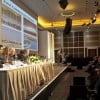
The Kurdistan Region of Iraq’s international trade conference is proclaimed a success as potential investors welcome the strongest news yet on impending oil flows from the Region – and look to seize the wider investment opportunities available in other sectors.
The event on June 15th and 16th was hosted in the City of London by the Kurdistan Regional Government UK Representation with Prime Minister Barham Salih the keynote speaker, and attended by over 500 delegates including potential investors representing international businesses from 26 countries, and diplomats from 12 countries.
Prime Minister Salih declared that the fine detail on international oil contracts would soon be ironed out between the Kurdistan Regional Government and Baghdad, and oil revenues would start flowing into the country again on an increasingly large scale.
Minister for Natural Resources, Ashti Hawrami stated that the Region will have pipeline capacity to carry 100million barrels per day within 15months, will be a net exporter of oil within two years, and will actually be pumping 100million barrels per day out of the ground within four years.
British government ministers joined delegates in heralding the conference a success and welcoming the opportunities it has created.
Speaking at the conference, Alistair Burt, UK Foreign Office Minister for the Middle East, welcomed the “great opportunity for British businesses to build strong commercial links between the UK and the Kurdistan Region”.
Also speaking at the conference, UK Trade and Investment Minister Baroness Wilcox said: "The Iraqi Kurdistan region is a gateway for British companies looking to establish a foothold in Iraq. The Iraqi Kurdistan region offers huge potential across a range of sectors for British companies that want to secure a share of this emerging market."
Paul Brunet, Atlantic Oil Field Services, said: “We are already active in the Kurdistan Region, so we appreciate the stable and secure business environment it offers. News of progress in agreement between Baghdad and Erbil regarding oil revenue-sharing is to be warmly welcomed. This will surely be instrumental in stimulating the Region’s ongoing development.”
Chris Frost, Partner at PriceWaterhouseCoopers, said: “This event has presented great opportunities to renew existing relationships and build new ones. PriceWaterhouseCoopers are delighted to let people know about our office in Erbil, and we’re keen to help facilitate further investment in this exciting and dynamic Region.”
Stephan John, People 1st, said: “This conference has been tremendously successful in demonstrating the breadth of investment opportunities the Kurdistan Region has on offer – not just in the oil and natural gas sectors, but in areas as diverse as education, telecoms, agriculture and finance. We are working to develop higher and vocational education in the Region – something we see a fundamental to its long-term development. We have been extremely impressed by both the ambition of the Region, and the strides it has made so far.”
Pasquale Cataldo, Business Manager at New Holland Agriculture – part of the Fiat Group – said: “This conference has been a huge success, and made clear that the economic regeneration of the Kurdistan Region is no distant dream – rather, an exciting reality. The opportunities are expansive and the territory favourable. The Kurdistan Region has a promising economic future ahead.”
International companies represented a range of critical sectors at the event, including:
- Banking & finance: HSBC, Credit Suisse, the Trade Bank of Iraq, Standard Chartered Bank, Forbes & Manhattan
- Consumer: Pepsico
- Construction: Lafarge, Caterpillar
- Defence & aerospace: Aegis, BAE Systems, Lufthansa
- Oil & gas: Shell, GE International, Heritage Oil, Genel Enerji, Korea National Oil Corporation
- Professional services: PriceWaterhouseCoopers, Norton Rose, DLA Piper, YouGov
- Telecoms: Asiacell, Motorola, Korek Telecom
- Czech Republic
- Germany
- Hungary
- Islamic Republic of Iran
- Kuwait
- Poland
- Spain
- Republic of Slovenia
- Republic of Turkey
- Russia
- USA
- Catalonia
Representatives from the following Embassies attended:
About Kurdistan
The Kurdistan Region is an autonomous region in federal Iraq. It borders Syria to the west, Iran to the East and Turkey to the north. Iraq’s Constitution recognises the democratically elected Kurdistan Regional Government, the Kurdistan Parliament and the Peshmerga guard as the legitimate regional forces.
Economy
Iraq’s GDP was $112 billion in 2009 (this is the figure at purchasing power parity. GDP at the official exchange rate was $71 billion). Iraq’s economy is expected to grow by an estimated 7.3% in 2010, 7.9% in 2011 and at similar rates for the next few years. This is above the average projected growth for the Middle East.
General Investment
A liberal foreign investment law was ratified in 2006, with incentives for foreign investors such as the possibility of owning land, up to 10-year tax breaks and repatriation of profits.
Kurdistan has attracted more than 12 billion US dollars (8.3 billion pounds) from local and foreign investors in non-oil sectors over the last three-and-a-half years, mainly in housing, agriculture and banking.
Foreign companies have invested around $3.1 billion from August 2006 to April this year. The largest foreign investors in terms of money were from Kuwait and Lebanon.
Investment from Iraqi national companies was about $8.7 billion during the same period. Joint ventures accounted for around $664 million.
Top areas of investment since 2006 are: public and high-income housing (nearly $4.8 billion); banking ($2.29 billion); industry ($1.6 billion) and tourism ($1.3 billion).
Oil and Gas Investment
The investment figures above do not include the oil sector, where 35 oil and gas firms from 17 countries have struck production-sharing agreements. These include Austria’s OMV, the Korean National Oil Corporation, India’s Reliance, Channel Islands-based Heritage Oil, Canada’s Talisman and the US’s Hunt. Norway's DNO and Turkey's Genel Enerji are already producing oil from their discoveries.
The Kurdistan Region is also developing gas following the UAE consortium Dana Gas and Crescent Petroleum reappraisal of the Khor Mor gas field in 2008. The field, which is expected to produce 8.5 million cubic metres per day in later phases, now feeds two power plants that together produce 1,250 megawatts of electricity to meet Kurdistan’s growing power needs. The nearby field of Chemchemal may hold gas reserves of 6.2 billion cubic metres.
Case studies
There are 1,200 foreign companies working in Kurdistan including: Byblos bank of Lebanon; National Real Estate of Kuwait; Forbes & Manhattan of the United States – a privately funded investment company; Coca Cola; Pepsi Cola; ArcelorMittal; Lafarge; and Rotana.
Posted in Iraq Industry & Trade News 1 Comment
Electricity Minister Offers to Quit After Violent Demos
Posted on 22 June 2010 .
(Sources: AFP, Associated Press)
Iraqi Electricity Minister, Karim Wahid, offered to resign on Monday after a wave of bloody street protests demanding his dismissal over harsh power rationing in the scorching summer heat.
Public anger with the work of the electricity ministry has boiled over in recent days as temperatures have hit highs of 54 degrees Celsius (130 degrees Fahrenheit) in southern Iraq.
On Monday, hundreds of angry demonstrators pelted riot police guarding the Dhi Qar provincial government headquarters in the southern city of Nasiriyah with stones, putting 17 of them in hospital, a security official said.
Police in the main southern city of Basra killed one demonstrator and wounded two when they opened fire on a frenzied crowd throwing stones at provincial government offices there On Saturday.
Posted in Iraq Public Works News Comments Off on Electricity Minister Offers to Quit After Violent Demos
Is Iraq Reverting to Square One?
Posted on 22 June 2010 .
By Tariq Abdell, Founder & Chairman, Mesopotamia Insight.
Iraq's recent upsurge of violence, fueled by political impasse and regional geopolitics - Notably Iran's Mullacracy suicidal ambitions, could easily undermine its fragile democracy and, thus, plunging the country into a vicious downward spiral. The ongoing ignominious political ploys are creating a toxic environment compelling the majority of the Iraqi people to distrust the legitimacy of their government and its institutions, a dangerous threshold that could hastily throw the country back into its darkest years of lawlessness and sectarian violence (06 - 07) or "Square 1" as Mr. Al-Maliki depicted in his recent interview with the New York times.
Mr. Al-Maliki's decisive victory against the militia in early 2008 "Charge of knights" operations had helped the country recover some of its pride and hope. Moreover, this critical milestone was followed by more ambitious and bold steps triggering, in the process, a major shift in the country's mindset and priorities (security is no longer theme du-jour, for instance). Iraqi people gradually began to dust off some of the hefty residues of the sectarian violence and look optimistically beyond security constraints. Sustained by an abrupt rise of the oil prices (over $100 a barrel), jobs creation and rebuilding were the nation's number one priorities; these positive developments were met with positive reactions (political will) from the international community, which was translated into a massive influx of foreign investors including international oil companies probing for business opportunities. Consequently, the Iraqi government began to harvest the fruits of its hard work, and Mr. Al-Maliki' s party (State of law coalition) was awarded with an unanimous victory in the 2009 provincial elections.
Regrettably, Iraq's political infighting and violence, hitherto, are an imminent threat to its long-term stability and unity, and as Abraham Lincoln once said "a house divided against itself cannot stand". Furthermore, Iraqi politicians have, unsurprisingly, failed to live up to the expectations of their constituents merely of their self-serving agendas and inability to fathom the interdependence and impact of political instability, insecurity, and economic underdevelopment on the country's future. The absence, thus far, of a democratic and accountable government (mirroring the will and the aspirations of the Iraqi people) has created a power vacuum that is stalling the country's institutions and, subsequently, jeopardizeing its highest interests for generations to come.
Despite its vast natural resources ( billions of oil and natural gas reserves), Iraq is still lagging far behind many developed countries - that once surpassed - as result of decades of wars, sanctions, and political instability; hence, Iraq's economy is in desperate need of major structural reforms (e.g., investment law, hydrocarbon law). The Economist Intelligence Unit graded Iraq CC- in its credit ratings - Somewhere next to Sudan and Zimbabwe. For instance, investors, international oil companies, and private businesses are still facing a host of frustrating and hindering issues: Corruption, bureaucracy, lack of transparency, extortion, inconsistent customs procedures, visa problems, etc... Hence, in order for Iraq to overcome these challenges and join the 21st century, it must institute a conducive and transparent business environment compatible with its new constitution, consequently, attracting foreign investments, necessary capital, and greatly needed technological know-how, that is susceptible to resuscitate the country's weakened economy, create jobs, and, ultimately, improve the well-being of millions of its disenfranchised citizens.
Fortunately, giving the current black gold rush, Iraq is well positioned as ever before to become the modern days El Dorado - Giving emerging markets insatiable appetite for energy resources- if it succeeds in rebuilding its political capital and enhancing the operational efficiency of its institutions.
To this end, Iraq must renounce its sectarian-based policies, political violence, and espouse an inclusive democratic system that embraces and protects the country's diversities (UN Universal Declaration of Human Rights). Thus, the new government's long-term strategy should entail an action plan that reflects the country's top priorities and the people aspirations:
- National reconciliation to overcome the sectarian and political violence.
- Overhauling of State's weak and inept institutions to rein in corruption and enhance efficiency.
- Providing access to basic services (e.g., drinking water, electricity, and running sewer)
- Advancing the principles of Human Rights and the Rule of Law.
- Investing in education: Higher illiteracy levels are a serious challenge to the country's future.
- Creating jobs: Higher unemployment could be a source for societal and political unrest.
- Revive the country strategic industries to curtail its dependence on petrodollar.
To this end, national reconciliation is an absolute imperative to stave off sectarian violence, political instability, and, most importantly , the collapse of the State's institution. Conversely, we might have to echo Mr. Al-Maliki saying, “We thought we had gone further in eradicating sectarianism than reality has shown.”(New York Times interview). Alas, for as in years to come will prove, undeniably, that both the country and its future generations will pay dearly for these injudicious choices.
The opinions expressed here are those of the author, and do not necessarily reflect the views of Iraq Business News.
Posted in Blog, Tariq Abdell Comments Off on Is Iraq Reverting to Square One?
Electricity Projects in Basra to be awarded to Foreign Firms Only
Posted on 15 June 2010 .
The Basra Provincial Council has decided that electricity projects in the province have to be executed by foreign firms only.
“Specialized companies will only be allowed to execute such projects,” a source from the council told Aswat al-Iraq news agency on Monday.
He expected that these projects’ value exceeds ID100 billion.
“The Basra Provincial Council will invite foreign firms to delegate their representatives to Basra to discuss these projects,” the source added.
Posted in Construction & Engineering In Iraq 1 Comment
Weekly Security Update
Posted on 15 June 2010 .
National Overview
145 incidents were reported nationally during this reporting period showing a marked increase in the level of incidents from last week when only 92 were officially reported. A slight rise in the use of Explosively Formed Projectiles was also seen this week with four detonations country wide compared to only two last week; three out of the four Explosively Formed Projectiles targeted United States Forces Iraq’s call signs in Baghdad. The fourth incident involving an Explosively Formed Projectile was in the south central region to the north east of Diwaniyah. During the last 30 days there have been seven attacks involving Explosively Formed Projectiles and five finds of these devices.
The north central region saw a rise in incidents from 35 last week to 62 this week, almost a doubling in the number of incidents. Similarly Baghdad saw a substantial rise in the number of incidents from 36 to 54.
On 13 June roughly eight attackers raided Baghdad’s Central Bank of Iraq, after an initial bomb blast caused by five suicide bombers, a three hour gun battle ensued as the Iraqi Security Forces tried to gain control of the situation. Open source reporting has set the casualties from this incident at a figure between 21 and 26 with around 72, mostly civilian, injuries. On 25 May there was a similar raid carried out on a Baghdad goldsmith, seeing fourteen civilian deaths; three civilians were killed in an attack on a gold market in southern Basra on 9 June.
This series of robberies alludes to an emerging national trend for criminal activity which analysts have suggested is a sign that insurgent groupings are seeking alternative funding, in the event of a lack of external funding. The perceived lack of financial support could be the result of effective Iraqi Security Forces reinforcement of the borders with Syria and Iran, both previously porous to smuggling. The gains made by the joint operations of the Iraqi Security Forces and United States Forces Iraq’s against Al-Qaeda and other armed opposition groups through the capture or killing of key leaders are thought to have presented an additional strain on resources. Iraqi Security Forces security operations have been increasingly successful in recovering weapons caches across Iraq, reducing insurgent reserves.
Iraq’s military and police have rushed to secure banks and goldsmiths across the country fearing further attacks of this kind as their efficacy is called into question. At the same time Iraqis are questioning the ability of their parliamentarians, as grassroots issues such as electricity supply are persistently neglected.
Elections Overview
Iraq’s new parliament convened on 14 June though the meeting was largely a matter of protocol with no significant progress made towards forming the next government. On 10 June the two Shiite blocs announced their official alliance under the title of “the National Alliance.” This move has marginalised the Sunni backed Iraqiya and Allawi has sought to counter this by reiteratin
g their right to form the next government, as top Sunni leaders within the movement urge him to concentrate on scoring key posts alongside the Shiite alliance.
Negotiations have been hampered by inter-alliance wrangling as Maliki and Allawi stake their claim for the premiership, with Maliki emphasising the country’s dependence on a strong experienced ruler. The Sadr Movement have also put forward their candidate the vice president Adel Abdul-Mahdi as they have made it clear that they will not support a continuation of Maliki’s reign as he has been, “ungrateful towards the Sadrist blocs”. The struggle to find a suitable leader that satisfies the extensive criteria of all participants is likely to be protracted, extending the difficult period of political uncertainty. Abdul Mahdi deplored the situation, stating, “There is no real progress up to now, nothing real... we are still at a standstill.”
Allawi and Maliki finally met for a 90 minute discussion in what was described as an “ice breaker” meeting on 12 June. The two leaders have agreed on the importance of a unity government, but Allawi’s commentary has become increasingly critical of Maliki, describing his post-electoral strategy as power seeking and elitist. As the battle of wills rages on, Iraq’s citizens have expressed resentment that their elected officials are not meeting the country’s needs. Insurgent groups will continue to exploit this lack of faith and gap in authority by launching attacks on civilians and officials. For neighbouring Iran Iraq’s current status offers an opportunity to strengthen their negotiating position with the U.S. as it seek to withdraw its troops this summer.
Baghdad
The audacious attack on Iraq’s central bank signalled a decline in security in Baghdad this week and challenged the authority of Iraq’s Security Forces. This incident also served as a reminder of the potential for large scale attacks in the city.
There were five Improvised Explosive Device attacks on Route Tampa; these attacks were to the south and north of Camp Taji. Three of these attacks targeted Iraqi Army patrols and two targeted United States Forces Iraq’s patrols. One US soldier was seriously wounded in one of the Improvised Explosive Device attacks – there is no information at this time on the Iraqi Army patrols targeted. It is strongly believed that these Improvised Explosive Device attacks are a continuation of attacks in retaliation to the arrest of a senior Al-Qaeda-Iraq leader near Taji in April this year.
Walid Mahdi, an Al-Qaeda-Iraq cell leader infamous for planning Indirect Fire attacks against United States Forces Iraq’s installations is believed to have relocated near Camp Taji. Walid's historic, and well known, tactics is to fire two mortars in succession and then egress again with the pick up truck that he fired it from. Historically these attacks were on Tuesdays and Thursdays between the hours of 04h00 and 05h00, as well as 20h00 to 21h00. Recent cache discoveries and arrests made by United States Forces Iraq’s forces and Iraqi Army suggest that he intends to carry out these activities in the vicinity of Camp Taji. The threat level on the Forward Operating Base has been raised to Very High for Indirect Fire at this time.
There were no attacks reported against Private Security Details and Route Irish, the International Zone and Baghdad airport did not witness any incidents.
Basra Province
Incident levels remained low in Basra as Iraqi Security Forces continued to seize quantities of arms and ammunition.
Criminal activity was evident in Basra City as on 9 June six gunmen stormed into three gold jewellery shops shortly before 8pm killing the owners and fleeing with a large amount of jewellery. This kind of incident could become more commonplace as insurgents seek to acquire funds and to intimidate the local population.
On 8 Jun at approximately 1640hrs Basra Contingency Operating Base was attacked with two – three rounds of Indirect Fire. It has been confirmed that three rounds were fired at the Contingency Operating Base though the Point Of Origin for this attack is still unknown.
US Forces and Iraq Security Forces and their associates will continue to be targeted by insurgent elements with
Improvised Explosive Devices and Explosively Formed Projectile attacks on Main Supply Routes and Indirect Fire attacks against the Basra Contingency Operating Base.

Posted in Security, Weekly Security Update 2 Comments
Kirkuk Ceyhan Pumping Likely to Resume Thursday
Posted on 10 June 2010 .
The pumping of Iraq's Kirkuk crude through Turkey to the Mediterranean terminal of Ceyhan is expected to resume Thursday, according to shipping sources.
Iraq stopped pumping the crude on Sunday for two separate reasons, the sources said.
"[The] June 6 shutdown [is] due to lack of oil and power [electricity], June 7 a small corrosion on the pipeline, now under repair," a shipping report released Wednesday showed.
It is believed that only one Aframax cargo has loaded since Sunday due to a lack of storage barrels, according to one market source.
Iraq's State Oil Marketing Organization (SOMO) was not available for comment.
The pumping of Kirkuk has been intermittent recently. As a result, SOMO has cut its allocation of Kirkuk crude to some of its customers in June, market sources said at the end of last month.
In the last two weeks of May, the rate of Kirkuk crude pumping was volatile and touched a low of 400,000 b/d some days. The average for the last week of May was 450,000 b/d, according to one source.
It is not clear why the pumping rate has been low but industry sources said there have been operational problems on the Iraqi side, which could not be verified.
Posted in Iraq Oil & Gas News Comments Off on Kirkuk Ceyhan Pumping Likely to Resume Thursday
Iran Wants Lasting Economic Ties with Iraq
Posted on 10 June 2010 .
Iran must find ways to create lasting economic ties with Iraq amid fierce competition from other countries also seeking investment and trade opportunities there, Iran’s ambassador-designate to Baghdad said.
“Four to five years ago, we talked about starting exports to Iraq from scratch,” Hassan Danaeifar told business leaders at the Tehran Chamber of Commerce, Industries and Mines Tuesday. “Today, the challenge is to last in Iraq. This is what we are concerned with.”
Iraq is Iran’s main trade partner, taking one-third of the Islamic republic’s exports, Danaeifar said. Competitors also seeking to establish themselves in the Iraqi market include China, Turkey, India and Syria, said Yahya Ale-Eshagh, head of the chamber, who spoke at the same event.
Iran and Iraq fought an eight-year war that ended in 1988 and left 1 million people dead. Iran has strengthened ties with its western neighbor since the fall of Saddam Hussein’s Sunni Muslim-led regime seven years ago. Iran and Iraq both have Shiite majorities, and Iraq has been ruled by a Shiite-led government since the 2005 election.
Iraq’s economy is reviving after decades of sanctions and war, driven by revenue from the world’s third-largest oil reserves. Officials in Baghdad have called for stronger trade ties with neighbors and say the country needs about $800 billion in investment. Iran is facing fresh sanctions aimed at halting its nuclear program, with the United Nations due to vote on the measures Wednesday.
Within a year and a half of the U.S.-led invasion that ousted Saddam Hussein in 2003, 5,000 foreign companies had registered to do business in Iraq, Danaeifar said. That number has since doubled to 10,000, and only 100 of those companies are Iranian, he said.
“Having common borders does not solve the problems,” he said. “Having common religious beliefs and ethnicities is not enough. They cannot guarantee our economic relations.”
Turkey is Iraq’s biggest trade partner with a volume of nearly $9 billion. It also accounts for nearly 55 per cent of foreign companies registered in the region, according to the Iraqi National Investment Authority.
Iran’s exports to Iraq rose to $6.1 billion, of which about one-third was oil, in the 12 months through March 2010, from $790 million five years earlier, according to Danaeifar, who is due to be dispatched to Baghdad within weeks.
Iran has won projects worth $1.2 billion in Iraq, according to Danaeifar.
Two Iranian banks, Eghtesad Novin and Bank Melli, operate in Iraq, and Iran supplies one-sixth of the country’s electricity needs, he said.
Danaeifar, who is currently the secretary general of the Iran-Iraq Economic Development Center, said Iran should create joint ventures with Iraqi partners, ensure Iranian companies appoint representatives in Iraq, and register its companies in both Arab and Kurdish areas of the country.
“Iraq has huge potential for investment and trade for the world and the region,” Ale-Eshagh said. “It should be multiple times more for us.”
Posted in Iraq Industry & Trade News 1 Comment
Chinese Company Considering Projects in Basra
Posted on 03 June 2010 .
A Chinese company discussed on Wednesday with the Basra Investment Commission (BIC) implementing projects in electricity, agriculture and transport sectors, head of the BIC said.
“The projects include the establishment of a power plant with a production capacity of 600 MW to use it in the oil projects, which are being implemented by foreign companies in Basra,” Haidar Ali Fadel told Aswat al-Iraq news agency.
“The company expressed readiness to implement agriculture projects in south of Basra, as well as other projects in transport sector,” he added.
( Aswat Al Iraq )
Posted in Iraq Public Works News Comments Off on Chinese Company Considering Projects in Basra
Electricity Bills Jump
Posted on 02 June 2010 .
100 percent increases in electricity charges are being received by Iraqis in an attempt to reduce power cuts.
Demand has risen since the 2003, but the national grid still only supplies a few hours of electricity a day. The Electricity Ministry announced that it would send invoices on June 1 for the previous two months based on a new scale by which the price increases based on usage.
"The price will be cumulative, so in order to avoid a high bill the consumer should decrease his consumption," said Deputy Electricity Minister Raad al-Haris.
The price has doubled from 10 to 20 Iraqi dinars per kilowatt/hour for the first 1000 kWh, or to the equivalent of less than $0.02.
Posted in Iraq Public Works News Comments Off on Electricity Bills Jump
Fears of renewed central control
Posted on 01 June 2010 .
The Iraqi economy is familiar with Five Year Plans. In the 1970s, such plans contributed to industrial, agricultural, housing growth and to the overall economic boom. The Ministry of Planning’s new Five Year Plan for 2010-4, which was ratified this month, has prompted economists to voice concern over the balance in the plan between the private and public sectors.
While the plan, which took two years to formulate and is the work of ten specialized committees, focuses on achieving ‘sustainable development’ in Iraq, there is fear that greater economic power will be vested in the central government at a time when Iraq is looking to decentralize and build a strong private sector.
The plan aims to increase GDP by 9.38 percent and to diversify Iraq’s oil-dependent economy. It also calls for a 46 percent share of the economy resting with the private sector and for a strengthening of the decentralization process.
Ragheb Ridha, President of the Iraqi Businessmen Union, sees the promises for a strengthened private sector as mere propaganda. The Five Year Plan may call for almost half the economy to be private but the Iraqi constitution itself also stipulates this and Ridha believes no tangible steps have been taken.
"Iraq might return back to the central system of planning and managing the Iraqi economy," he said. "There are no guarantees whatsoever that such thing would not happen and real guarantees need to be in place."
Under Saddam Hussein, Five Year Plans wrested the economy from the grip of the private sector and put it in the hands of the government. In the early 1970s, 75 percent of the Iraqi economy was private, dropping to 20 percent in the 80s and dipping as low as 13 percent in 2000. That year, the highest contribution to the private sector came from agriculture.
“The new plan did not indicate the means to reach the targeted 46% of the private sector contribution in the Iraqi GDP. It also failed to address how the two sectors will be merged. The annual budgets did not specify the contribution of the private sector,” continued Ridha.
“All these issues should have been specified and details and mechanisms should have been put in place. It is important that the state respects the transformation process into the market economy. It is a process that has proven its efficiency all over the world.”
The views of people like Ridha have done little to dampen the optimism of those who drafted the new plan but Ridha is not the only one who believes the plan is not based on solid grounds. Many cannot see how the plan can be implemented, given the dearth of basic services in the country.
“The main issue to be addressed now is that of electricity supply. Another very important one is the development of the Iraqi infrastructure," said Majid al-Souri, an Iraqi economist.
"If the state is really sincere about solving the economic problems of the country, it should have addressed these two major problems because no development until badly needed preparations is made in these areas. Despite good access to information on the problems, the government has failed in taking real steps towards a solution.
"The government has said many times that it will enhance the participation of the private sector but it hasn't any clear idea on how The government has not determined whether it should directly start its privatization plan or first provide support and rehabilitation and then start with privatization."
Munaf al Saegh, from the Institute of Economic Reform is also critical of the new plan.
“The Five Year Plan did not clearly address the issue of transformation to the market economy and the activation of the private sector role in Iraq. There are bits and pieces of ideas here and there but there is no detailed vision on how to achieve the aims," he said, warning:
"If the coming four years do not witness a participation of the private sector and the building of its capacities, we will fall into the same trap and there will be increased dependency on the state, thus the private sector will be marginalized again."
Iraq’s adoption of a market economy since 2003 has been chaotic at best. When the market there opened, goods from all over the world began to be dumped in the country. That the private sector’s share of the economy has reached 30 percent is due mainly to growth in commerce. No means were specified in the constitutional promise that Iraq would become market-oriented.
“Legislation still reflects the old central system and the routine is widely spread among government departments,” states al-Saegh. “It is not possible to transform the economy overnight but Iraq is yet to institutionalize a modern management basis in line with the needs of the modern era.”
Amir al-Baldaw, an MP and member of the economic committee, responded to the criticism, claiming that the plan does indeed consider carefully the role of the private sector.
“Private companies will partner the government in construction projects. There is also a role for civil society organizations,” she said, specifying that these would be “housing projects, projects related to the development of provinces and regions, and tourism and recreational projects."
She claimed that it was particularly in the housing field that the plan has focused on individual empowerment, adding that, unlike in previous Five Year Plans, this one will retain a focus on “care for marginalized and vulnerable groups, poverty alleviation, the achievement of the Millennium Development Goals, institutional reform and good governance."
While specific details of how the aims will be achieved remained sketchy, she also pointed to government expectations that between 3 and 4.5 million new jobs will be created as a direct result of the plan’s implementation. At the same time, she urged the private sector to “initiate activities without waiting for the government,” claiming there is "no need to wait for the state to give the private sector work to do. The private sector should also be creative in order to achieve real partnership," she explained.
However, al-Saegh believes this is not possible.
"The private sector cannot take the initiative without being supported. We need improved legislation and the activation of a private banking system, so that the private sector can benefit from loans,” he said. “All these points are missing in the new Five Year Plan.”
Posted in Blog Comments Off on Fears of renewed central control