



Iraq to Build Eight Power Stations
Posted on 13 July 2010 .
Dinar Trade reports that The Minister of Electricity and agency, Dr. Hussain al-Shahristani, has announced the building of eight new power stations, with a total capacity of 5,000 MW.
Readers of IBN will remember that Dr Shahristani, who is also the Minister for Oil, took over responsibility for the electricity brief following the riots last month.
The new plants will be built at sites including the Shatt al-Basra, Rumaila, Dhi Qar, Maysan, Muthanna and Diwaniya.
See also:
Posted in Construction & Engineering In Iraq Comments Off on Iraq to Build Eight Power Stations
Waste-to-Energy Power Project in Kirkuk
Posted on 13 July 2010 .
Kirkuk's Governor, Abdulrahman Mostafa, met with representatives of a US consortium on Sunday, investing in the fields of petroleum, refineries, prefab construction and cell phones, and discussed with them a project to produce electricity through waste incineration, a local official said.
“The U.S. investors briefed the Kirkuk officials on the nature of their work and proposed an investment project for WtE power generation,” Delir Samad, Kirkuk’s information director, told Aswat al-Iraq news agency.
Waste-to-energy (WtE) or energy-from-waste (EfW) is the process of creating energy in the form of electricity or heat from the incineration of waste material. WtE is a form of energy recovery. Most WtE processes produce electricity directly through combustion, or produce a combustible fuel, such as methane, methanol, ethanol or synthetic fuels.
(Source: Aswat al-Iraq)
Posted in Construction & Engineering In Iraq, Iraq Public Works News Comments Off on Waste-to-Energy Power Project in Kirkuk
Bahraini Companies Seek to Invest in Basra Energy Sector
Posted on 11 July 2010 .
A delegation from Bahraini investment companies met with the chairman of Basra Council on Thursday to discuss investment in the energy sector in the southern city, according to a report from Aswat al-Iraq.
“Chairman of the Basra council Jabar Amin Jaber received on Thursday a delegation representing Bahraini investment companies in the energy sector,” said the statement received by Aswat al-Iraq news agency.
“The meeting addressed fostering cooperation in the energy sector, to help solve the electricity shortage in the city,” it added.
“The council is ready to facilitate the work of these companies and remove all obstacles that could face them,” the statement quoted Jabar as saying.
Posted in Iraq Oil & Gas News Comments Off on Bahraini Companies Seek to Invest in Basra Energy Sector
Kurdistan to Get Additional 500MW Early 2011
Posted on 11 July 2010 .
The Spokesman of Kurdistan Electricity Ministry declared that the completion of Dohuk's power generating station will cover the power requirements of Kurdistan.
Dohuk's 500 megawatt power generating station is comprised of four units, each producing 125 megawatts, Diyar Baban told AKnews on Thursday
One of the units is expected to be ready by the end of this September.
The second unit is to be completed by the end of 2010 and the rest by early 2011, according to Baban.
Kurdistan Regional Government has been building up the electricity supply in the region over the past three years.
Currently government sources and local generators can provide the residents with 20 hours of power per day.
The region depends on two dams of Dokan and Darbandikhan, and two gasoline stations in Erbil and Chamchamal, for its electricity supply, but it needs 1,700 more megawatts to cope with the needs of its residents - the article was unclear about how this shortage of 1,700MW can be satisfied by the additional 500MW planned.
Posted in Iraq Public Works News Comments Off on Kurdistan to Get Additional 500MW Early 2011
Weekly Security Update
Posted on 08 July 2010 .
National Overview
It is estimated that 150 key figures including politicians, civil servants, tribal chiefs, police officers, Sunni clerics and members of the Sahwa militia (Awakening Council) have been assassinated throughout Iraq since the election on 07 March. This is a notably high incidence of targeted killings and highlights the current period of political instability. Uncertainty in the political arena has reflected in the security of the country, as assassination attacks are carried out on a basis of political point scoring and score settling. The 05 July suicide bomb attack on the provincial government building in Ramadi that is estimated to have killed four civilians and wounded 23 is indicative of this trend. Analysts and politicians have alluded to a tendency amongst political factions to use security as a political bargaining tool as, for instance, Maliki utilises a rhetoric of past security gains to cement his position.
 Several members of Iraqiya have been killed by assassination attacks since the election, using silenced weapons and ‘sticky bombs’ (Under Vehicle Improvised Explosive Devices). Only on 02 July Abdulkarim Hattab, an Iraqiya member, was targeted with an explosive charge against his vehicle in western Baghdad but was unharmed. Iraqiya have listed a number of potential suspects for these attacks, but the current political climate of uncertainty has increased the number of possible enemies, making it harder to discern who is responsible. Allawi’s bloc suspect Iran of meddling in the political affairs of Iraq and believe this could have extended to organising targeted attacks through their Shiite militia allies, due to their desire to limit the political strength of Iraqiya in order to promote Shiite interests.
Sunni extremist groups such as Al-Qaeda in Mesopotamia (AQIM) are likely to be carrying out assassination attacks to destablise Iraq whilst punishing compliant Sunnis for supporting Iraqiya. External pressure from influential countries such as America to resolve the political impasse is mounting and as such Al Qaeda and its affiliates will attempt to block any progress towards stability by launching intimidation attacks and large scale attacks, like those seen at the Central Bank and the Investment Bank in Baghdad. Institutions that represent foreign investment and economic hubs could witness more targeted attacks as will Iraq’s infrastructure as insurgents persist in their goal of weakening Iraq to prevent any positive development. The attack on a mobile phone tower in Jalawlaa, Diyala on 02 July by gunmen, causing it to blow up thus disrupting the network, is a good example of this.
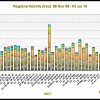
In June, the number of civilian casualties fell for the first time since the election in March. In total 204 civilians were killed last month, dropping from 275 civilian killed in May; a figure that is significantly lower than that of June 2009 when 373 civilians were killed. This yearly comparison is in line with an observed decline in the levels of violence since the height of the sectarian war in 2006/2007 though it does not detract from the daily occurrence of bomb and assassination attacks. Analysts fear that the consolidation of political rule, predicted to begin after Ramadan in September, will not bring with it the security and provision of services that Iraqis desperately need. The remaining “hardcore” of the insurgency will be tough to wipe out, especially as United States Forces begin to drawdown and re-focus their energies in the theatre of Afghanistan.
Elections Overview
Iraqiya’s Allawi has used the threat of assassination attacks against his list to argue that they are the virtuous option for the electorate amidst corrupt parties, who they publicly hold responsible for the attacks. Maliki’s supporters have countered Allawi’s claims of their involvement in assassination attacks by suggesting that he is using the rash of attacks to alleviate his bloc’s position in the struggle to form a government, whilst seeking to diminish the Shiite coalition’s viability. It is difficult to decipher the truth as the political bargaining intensifies and politicians utilise ‘dirty tricks’ to secure their role in the future government.
The power struggle for the top roles in government has persisted as the different factions within the new Shiite “Unity” Coalition, notably the Sadrist bloc and Maliki’s State of Law, stake their claims. The Sadrist bloc is insisting that Ibrahim Al-Jaafari take up the role of Prime Minister as Maliki refuses to give up his post. An increase in meetings between Allawi and Maliki has been seen as an attempt by Maliki to pressure the Sadrist Bloc into conceding to his rule, as his list achieved nearly as many votes as Iraqiya, lending it leverage with which to negotiate.
United States Vice President Joe Biden visited Iraq last week to encourage the different blocs to ease negotiations, reminding them of the importance of promoting inclusion of all factions and of seating the new government swiftly. Following meetings with Iraq’s President Jalal Talabani, Prime Minister Maliki and Iraqiya leader Allawi, Biden announced, “Iraqiya, State of Law, Iraq National Alliance, the Kurdistan Alliance all are going to have to play a meaningful role in this new government for it to work.” This statement has prompted analysts to note a potential shift in focus from facilitating an alliance between the two largest Shiite blocs to enabling a Maliki – Allawi government, the latter of which would be favourable to the United States interests.
The Sadrist bloc rejects any involvement of foreign forces in national affairs and urged Iraqi politicians not to cooperate with Biden and other United States officials. This isolationist stance will not help the Sadrists bid for government as America is wary of Iran’s influence in Iraq and thus will be keen to see a new government that excludes Tehran sympathisers. Moqtadr al-Sadr displayed his awareness of the risk of losing out to secular Iraqiya as he warned, “I advise Allawi and Maliki not to allow the occupier to intervene.” The United States administration has insisted that it is not forcing its preferred outcome of the negotiations upon the leaders, rather it is pressing for the suppression of individual agendas in order to achieve a viable solution for Iraqis. Whether the United States’ influence will encourage the formation of a coalition between the State of Law Alliance and Iraqiya or not remains to be seen, as any fixed outcome remains elusive.
Baghdad
 Baghdad’s security was blighted by a spate of assassination attacks, mainly concentrated in the south of the City, in keeping with the national trend of targeting Sahwa members, military and police officials, civil servants and politicians. On 02 July an Improvised Explosive Device struck a Sahwa headquarters in the southern area of al-Be’ietha, Doura. One Sahwa member was killed and nine others were wounded, among whom was the Sahwa forces commander in Doura, Sheikh Mustaf al-Juburi. Police were also targeted in Doura at a checkpoint on 01 July when unknown gunmen fired silenced pistols, killing two federal officers instantly.
At 10:00 on 05 July the United States Embassy was targeted with two mortar shells, it is thought this incident could be in reaction to Vice President Joe Biden’s visit to Iraq. The Green Zone also witnessed an Indirect Fire attack using two kaytusha rockets; one caused heavy damage whilst the other failed to detonate.
The closure of Joint Services Station War Eagle this month could see a further increase in insurgent Indirect Fire attacks on Camp Taji as it would become the most accessible target in terms of proximity. Indirect Fire attacks are expected to take place during the next full moon phase and for the next 30 days, most likely between the hours of 18:00 and 06:00. The threat levels for kidnapping and Indirect Fire (IDF) against the Taji base remain high in accordance with reports of insurgent movements nearby.
Three Improvised Explosive Devices were reported near Taji in this reporting period. One suspected Al-Qaeda attack to the north of Taji targeted the Iraqi Army, another found and cleared device in the south was reported to be a ‘sticky bomb’ and a further third device attached to a bicycle was found and cleared in south east Taji.
Basra Province
 Incident levels remained low in Basra province though foreign forces continued to be subject to attacks. On 02 July a United States Forces patrol was targeted with an Improvised Explosive Device on the east of cloverleaf intersection in the north of the city. On 03 July Basra Contingency Operating Base was ineffectively targeted with Indirect Fire.
A Private Security Company reported an explosively formed projectile detonation on route Sioux Falls to the north west of Um Qasr and another explosively formed projectile detonated on a section of route Tampa south. It remains unclear as to whether Private Security Companies are being specifically targeted by insurgents, or if they are suffering collateral damage from Improvised Explosive Device / Explosively Formed Projectile incidents more often due to the increase in Private Security Company traffic on the Main Supply Routes. Further attacks can be expected along the Main Supply Routes to the west and south of the City.
There were no further civil disturbances due to electricity shortages in Basra City during the review period and reports suggest that power capacity in the City has improved recently due to the removal of illegal power lines.
US Forces and Iraq Security Forces and their associates will continue to be targeted by insurgent elements with Improvised Explosive Devices and Explosively Formed Projectile attacks on Main Supply Routes and Indirect Fire attacks against the Basra Contingency Operating Base.

Posted in Security, Weekly Security Update Comments Off on Weekly Security Update
Turkey's Construction Sector Focuses on Iraq
Posted on 08 July 2010 .
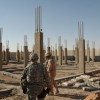
The increase in construction projects in Iraq is considered a positive indicator for Turkey's construction sector in the coming years, according to a report from World Bulletin.
A report by the Undersecretariat of Foreign Trade (Export Development Research Center) said the construction and contracting sectors have entered a rapid growth phase in Iraq.
The report said, "the main infrastructure investments carried out in Iraq focus on water supply projects, waste water treatment plants, electricity power plants, hospitals, school and housing construction, highways, airlines, bridges and port construction."
"Considering the rise in reconstruction, maintenance and construction projects, the amount of investment required is estimated to be around $US100 billion. The market for construction materials, mainly the cement, is envisaged to be dynamic in the coming years," the report said.
The report says that Turkish products are considered a symbol of quality in Iraq.
(Source: World Bulletin)
Posted in Construction & Engineering In Iraq 1 Comment

Refining Iraq's Economy
Posted on 04 July 2010 .
Within five years, Iraq will turn from an importer of petroleum products into the world’s largest exporter, according to the Oil Ministry’s new investment map, unveiled in Nassiriyah this week.
To achieve this, Iraq has opened the door wide for international companies to build four new refineries and refurbish existing ones in order to boost production of oil products up to 1.5 m barrels a day.
The plan aims not only at transforming Iraq into an exporter of petroleum products but also to build the country’s ability to attract skilled scientific professionals.
"Iraq suffers from the absence of specialised cadre in petrochemical manufacturing," claims Hussein Shahrastani, the Oil Minister. He urged the Iraqi youth to join universities and colleges specialising in subjects relating to the petrochemicals industry, because “the oil industry will secure them good jobs in the future.”
Shahristani says Iraq currently produces 550,000 barrels per day (bpd) of oil products, including 12 million litres of gasoline, 15 million litres of Kerosene Oil, and about 9 million litres of white oil.
The bulk of new projects and the largest of all will be in Nassiriyah province, according to Ahmad al-Shammaa, the Ministry of Oil Undersecretary for Oil Refineries and Industries.
The new refinery will carry the name of the province and its production capacity will reach 300,000bpd, generating 600MW of electricity and having access to ports. The refinery is expected to cost US$8 billion.
Karbala is another major target of the map. Though its refinery will be the smallest built under the new plan, it will be the most important. Its production capacity will be 140,000 bpd, producing 400MW of electricity. Its importance lies in its central location, the centre of consumption and the place where all production will be stored.
Two refineries in Missan and Kirkuk, at a cost of US$500,000 each will produce 500MW and 400MW of electricity and supply Iraq’s northern and southern areas respectively.
With Iraq needing to encourage investors to the country, the Ministry of Oil and the Council of Ministers have decided, according to Thamer al-Ghadban, the chairman of the advisors' commission, to provide international companies with incentives.
These include a 5 percent rebate on world crude oil prices. Elsewhere in The Gulf, the discount is only 1 percent.
Investment companies will be allowed to own projects on their own or partner with local firms and their leases on land are expected to be extended from 40 to 50 renewable years.
"Many Asian countries, especially Korea and China, expressed interest in Iraqi refineries, because they need energy, they import crude oil and they want to improve their refining capacities," said al-Ghadban. “There is a mutual benefit for Iraqis and investors.”
Investment incentives will come also from the National Investment Commission.
“According to the law, the commission will be responsible for issuing investment licenses to companies,” said Sami al-Aaraji, the Commission’s Chairman. "The size of investment in refineries will reach some US $25 billion."
The Commission, says al-Aaraji, will guarantee “freedom to move capital in and out of the country, in addition to tax exemptions,” and make registration easier. Existing, off-putting, procedures have been streamlined under the ‘Single Door’ system.
"This procedure has been adopted because of the many complaints received from investors regarding the complicated procedures," said al-Aaraji.
Shahrastani says the refineries are already at the design stage. Investment proposals are expected by the end of the year, when the design of the Karbala refinery will be complete.
"It is then that international companies will be able to see the quality of facilities we want built, the amount of oil products we want to produce, and the time needed for the completion of the work."
US companies will design the Nassiriyah, Missan and Kirkuk refineries, with an Italian company in charge of Karbala’s design.
For Iraqis, the refineries will bring jobs, lower petroleum prices and better quality products, as well as providing fuel for home generators and wattage to help solve Iraq’s chronic energy shortage.
"Iraq needs a budget capable of improving the very weak infrastructure in the country," said Qasem Jaber, an economist.
“Investment must be increased and that is the Oil Ministry’s responsibility, because it provides about 85-90 percent of Iraq’s GDP. Other sectors are still inactive and they all need oil to start functioning.
"The developments will not take place overnight. The implementation will take up to five years,” Jaber explained.
He urged the government to invest in the country’s existing refineries.
"There is a gap between the production capacity of existing refineries, which is about 800,000 bpd and their actual production of 500,000 bpd.”
The Ministry of Electricity needs approximately 9 million litres of kerosene a day to run its plants. However, the Oil Ministry is only able to supply 4 million litres. The difference is being covered by imports from Kuwait and Iran.
“Any real improvements will only come if that gap is bridged. There is a chance now that the Oil Ministry has taken over energy production since the sacking of Iraq’s Electricity Minister, Kareem Wahid."
Hamza al-Jawahiri, an oil expert, described a change among oil-producing countries from exporting cheaper crude oil to exporting the pricier products of refining, bringing greater benefits to their economies, pointing to the example of Algeria.
"Now, the country is getting so close to exporting oil products instead of exporting crude oil," he said.
Not only does this mean more money coming in for refined petroleum products but it also means more jobs in refineries and service facilities for local workers.
However, al-Jawahiri warned that all the government’s ambitious plans for improving the oil sector must meet international environmental and safety standards.
“Failure to apply international standards in environmental protection and industrial safety are the most alarming risks. The Iraqi government must set strict public safety standards and rules and remain aware of all possible risks.”
(Source: Niqash)
Posted in Iraq Oil & Gas News Comments Off on Refining Iraq's Economy
$300m "Squandered" in Diyala for Electricity
Posted on 04 July 2010 .
An advisor to the governor of Diyala revealed on Thursday that the sum of $300 million was “squandered” in payments to Iran for the supply of electricity.
“Iran’s Karmanshah line that supplies Diyala with electric power since 2004 caused the waste of $300 million paid to the Iranians, despite beign a mediocre service that provides the province with 200 megawatts of power while the province’s actual need is up to 500 megawatts,” Rassem Ismail, an advisor on reconstruction and investment affairs, told Aswat al-Iraq news agency.
“The sums paid for the Iranian side ever since the project commenced were enough to build 10 power stations at a total capacity of 2250 megawatts,” he added.
(Source: Aswat al-Iraq)
Posted in Iraq Public Works News Comments Off on $300m "Squandered" in Diyala for Electricity
Multi-billion Gas Deal with Shell and Mitsubishi
Posted on 01 July 2010 .
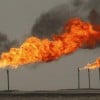
Iraq's cabinet has approved a multi-billion dollar deal with Royal Dutch Shell and Japan's Mitsubishi Corp. The deal, signed on Tuesday, will provide much needed electricity from natural gas that is currently being burned off.
The State-owned South Gas and Basra Gas companies in southern Iraq will take a 51 percent stake in the contract, with Shell taking 44 percent, and Mitsubishi taking a 5 percent share.
Lacking the technology needed to capture the gas for power generation, Iraq produces a negligible quantity of gas compared with the size of its reserves, and currently flares off most of what is produced as a by-product of its crude oil production.
The joint deal with Shell and Mitsubishi will exploit gas in the Rumaila, Zubair, West Qurna and Majnoon fields near Basra.
At the time said the deal was first proposed in 2008, the government expected it to be worth around $4bn, but no specific financial figures were given on Tuesday.
As we reported recently, Iraq has invited international energy firms to submit bids in an auction for three gas fields, in a third major tender aimed at developing the war-torn state's oil and gas sectors.
Existing power plants in Iraq have proved incapable of generating sufficient electricity to meet peak summer demand, forcing draconian rationing that sees consumers receive supply for one hour in five, or less.
Iraq's LNG reserves are estimated at 110 trillion cubic feet.
(Sources: AFP, WSJ)
Posted in Iraq Oil & Gas News 1 Comment

Iran's TCI Offers to Help Iraq Telecom Sector
Posted on 01 July 2010 .
The managing director of the Telecommunication Company of Iran in Kurdestan province, Mohammad Saeed Ahmadi, told Fars News Agency that his company was ready to help upgrade the telecommunication infrastructure and fiber-optic systems in Iraq's northern regions.
"In addition to fiber-optic projects, we have the ability to undertake all kinds of telecom activities in the region," he said.
He was speaking on the sidelines of an exhibition of Iranian companies' capabilities in the northern Iraqi city of Sulamaniya.
Ahmadi said Iranian companies have the technical know-how to carry out complex telecom projects overseas. "We will start our work whenever authorities of Iraq's northern region voice their readiness."
Referring to TCI successes inside the country in recent years, he said "We have announced our ability and willingness" to help share the experience with the Iraqis and rebuild their telecom infrastructure.
More than 185 companies from 21 Iranian provinces participated in the exhibition displaying Iran's capabilities in the Iraqi Kurdish city.
As we reported last week, Iran said it is ready to export electricity to Iraq.
"We have the possibility of supplying 500 to 1,000 megawatt of electricity to the Bashmakh market in Iraq," head of the Power Distribution Company of Iran's Kurdestan province Mohammad Mostafa Najafian said.
(Source: Iran Daily)
Posted in Iraqi Communications News Comments Off on Iran's TCI Offers to Help Iraq Telecom Sector