


Iraq Invites Bids to Install 2,500 MW Turbines
Posted on 11 May 2010 .
Baghdad, 11 May 2010 - Reuters
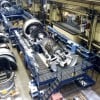
Iraq's Electricity Ministry has invited foreign companies to bid to install 20 gas turbines that would boost the country's power capacity by 2,500 megawatts in the next few years, an Iraqi official said on Monday.
In 2008, Iraq agreed a 1.5 billion euro deal with Siemens for 16 gas turbines and a deal with General Electric worth $3 billion for 56 turbines.
The turbines are expected to add nearly 9,000 megawatts of capacity to a country starved of power after decades of war, sanctions and economic decline.
The 20 turbines were purchased from GE, and each generates 125 MW, said Laith al-Mamury, the head of investments and contracts in the Electricity Ministry. The turbines would be installed in Baghdad, Kerbala and Diwaniya provinces.
"Some of these turbines will arrive soon... So far, we have received eight turbines from GE. We should receive a total of 32 GE turbines this year," Mamury told Reuters in an interview.
"The companies will present their bids within a month," he said, adding that the installation process involves engineering, procurement and construction contracts.
He did not give an estimate for the contracts, but according to previous data from the electricity ministry, they are worth roughly $350,000 per installed megawatt.
The ministry also plans to issue new tenders for installing eight turbines with total capacity of around 1,900 MW, in three locations, Kirkuk, Baiji and Basra, he said. Those turbines are part of the Siemens deal.
Around 36 companies have been shortlisted for the tender, said Mamury. Among them are Korea's Hyundai Heavy Industries, Swiss engineering group ABB AG, Canada's SNC-Lavalin Group Inc. and Kuwait's al-Ghanim Company.
Iraq plans to treble power capacity to 27,000 megawatts from 9,000 MW in four years after opening its gas sector to foreign investment and sealing a gas capture deal with Royal Dutch Shell, the electricity minister said on Sunday.
Posted in Construction & Engineering In Iraq Comments Off on Iraq Invites Bids to Install 2,500 MW Turbines
Residential Compound for Wassit University’s Professors
Posted on 11 May 2010 .
Wassit university approved on Monday a project to establish a residential compound for the university’s professors at a cost of 5.948 billion dinars, the university’s president said.
“The project will cover 42 donums in three stages to establish 150 houses within one year,” Dr. Jawad al-Moussawi told Aswat al-Iraq news agency.
“The project contains an elementary school, a clinic, a nursery, mosque, a mall and a water and electricity network,” he added.
( Aswat Al Iraq )
Posted in Construction & Engineering In Iraq Comments Off on Residential Compound for Wassit University’s Professors
Iraq Plans Power Boost After Gas Fields Auction
Posted on 10 May 2010 .
Doha, 10 May 2010 - Reuters
Iraq plans to boost power capacity to 27,000 megawatts in four years after opening its gas sector to foreign investment and sealing a gas capture deal with Royal Dutch Shell, a minister said on Sunday.
The OPEC member would need to invest at least $3 billion to $4 billion per year to reach that target, Iraq’s Electricity Minister Karim Waheed told Reuters on Sunday.
He did not say how Iraq plans to raise such funds. It has struggled to finance its previous power generation plans.
Reaching the ambitious power capacity target would depend mainly on finalising a venture with Shell to capture and use gas now being burned in the southern oilfields around Basra, and on output from three gas fields, which Iraq is auctioning off in September, Waheed said.
‘This depends on both the gas fields — the announcement for the third round — and on capturing the burned gas deal with Shell,’ he said in an interview on the sidelines of an energy conference in Qatar.
Waheed said if Iraq does not come to an agreement with Shell, the ministry will have to rethink its power plans.
Iraq is close to signing a final deal between its South Gas Company, Shell and Japan’s Mitsubishi, after it sent the final draft of the agreement to the cabinet for approval, Iraqi Oil Minister Hussain Al Shahristani said on Thursday.
Shahristani also said that Iraq will invite 45 international companies, which were prequalified for two oil auctions last year, to bid to develop Akkas gas field in Iraq’s western desert, Mansuriyah gas field in eastern Iraq and Siba in the southern oil hub of Basra.
Waheed said he expects the gas fields now being tendered to start producing in two to three years.
TENDERS
Iraq plans to issue new tenders next week for installing turbines as part of the ministry’s plans to boost electricity capacity, Waheed said.
In 2008, it said it had agreed a 1.5 billion euro ($2.03 billion) deal with Siemens for 16 gas turbines and a deal with General Electric worth $3 billion for 56 turbines. The turbines are expected to add nearly 9,000 megawatts of capacity over the next few years.
Iraq scrambled for ways to finance the purchase after a plunge in oil prices in 2008 deprived it of revenues and forced it to slash its 2009 budget three times. It had offered investors stakes in the electricity turbines it has ordered, and said it would repay investors from future electricity sales.
In March, the finance minister said Iraq raised $2.1 billion from local banks via a one-year treasury bond issue to fund electricity projects.
‘Next week, we will tender for bids for installing turbines at two more sites, at Baiji for six turbines of 160 MW and Kirkuk for one turbine of 260 MW,’ Waheed said.
‘Some 38 companies will participate and compete for the deals. Just to install the turbines, we’ve already bought the turbines.’
Waheed put Iraq’s available power capacity at 9,000 MW, and installed capacity at 11,000 to 12,000 MW. Demand is estimated to be at least 12,000 MW.
Frequent fuel shortages and constant maintenance are a main reason behind the shortfall in available power capacity in Iraq, where dilapidated infrastructure has been hit hard by years of war, insurgency attacks and underinvestment.
Seven years after the U.S.-led invasion, Iraq’s national grid still only supplies a few hours of power each day. Intermittent electricity is one of the public’s top complaints.
Baghdad, the capital, is expected to enjoy about eight hours of electricity a day when temperatures hit 50 degrees Celsius in the summer, Waheed said.
With the new power plans, Baghdad, with current 3,000 MW of power available, could finally have 24 hours a day of electricity in two years.
Posted in Construction & Engineering In Iraq, Iraq Oil & Gas News Comments Off on Iraq Plans Power Boost After Gas Fields Auction
Operation of Power Station in Missan Starts Up
Posted on 10 May 2010 .
Staff from the Iraqi Electricity Ministry on Sunday launched the process of preliminary operation of a new power station in Missan province.
“The station’s capacity is 180 Mwatt,” a local media source told Aswat al-Iraq news agency.
He noted that the station will improve power supply in the province, especially in the marshes.
( Aswat Al Iraq )
Posted in Iraq Public Works News Comments Off on Operation of Power Station in Missan Starts Up
Iraq to Launch 3rd Gas Field Auction
Posted on 07 May 2010 .
Baghdad, 06 May 2010 - AFP
Iraq is set to call for bids from energy firms to develop its gas fields, the oil ministry said on Wednesday, as the war-ravaged country seeks new revenue sources to rebuild its battered economy.
"The ministry will announce tomorrow (Thursday) the launch of a tender to develop gas fields and it will invite international companies to participate," ministry spokesman Assem Jihad said.
"The product of these fields will initially be used to supply electricity stations and for other domestic needs, with the rest to be exported. The ministry hopes that Iraq will reach the level of other gas producers in the region."
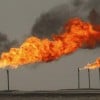
Iraq produces a negligible quantity of gas compared with the size of its reserves, and currently flares off most of what it produces.
A report last month in the Middle East Economic Survey (MEES), a regional oil and gas newsletter, said Iraq will offer three gas fields with more than 7.5 trillion cubic feet (tcf/210 billion cubic metres) of combined proven non-associated, or free gas reserves.
They are the 4.5 tcf (trillion cubic feet) Akkaz field in the western province of Anbar, the Mansuriya field in Diyala with three tcf and Sibba field in Basra with 60 billion cubic feet, MEES said, adding that 15 firms have been pre-qualified and invitations will be issued soon.
Akkaz and Mansuriya were offered in a round of bidding on oil fields last June but were not awarded.
French oil giant Total has already said it would "definitely" participate in the gas bid round.
Last year, Iraq awarded international oil majors contracts to develop 10 large oil fields in an attempt to ramp up its crude production capacity to 12 million barrels per day by 2017, from around 2.5 million bpd.
Iraq is highly dependent on crude exports for its government revenues, with 85 percent of its income coming from oil sales.
It has launched a major programme to build gas-fired power stations in an effort to triple electricity consumption nationwide by 2014, according to the planning ministry.
As part of the expansion plan, the government has signed contracts worth more than five billion dollars with General Electric and Siemens.
Posted in Construction & Engineering In Iraq Comments Off on Iraq to Launch 3rd Gas Field Auction
Shanghai Co. Startup Al Zubaydiah Thermal Power Station
Posted on 06 May 2010 .
Shanghai Company, began on Saturday, the implementation of the Al Zubaydiah thermal power station project north of Kut, at a cost of 924 million dollars.
Director of Information in the province , Majid Al Atabi , said that the project is under the supervision of ten Chinese experts, accompanied by Director General of projects in the Ministry of Electricity and governor of Wasit province, Latif Hamid Tarfa.
He added that the station covers an area of 650 dunums, this major electrical project has four generating units with production capacity of 330 MW each , as well as two more for future expansions.
The foundation stone for Zubaydiah power plant project , was laid on the third of October 2009 in the presence of the Minister of Electricity Kareem Waheed, The Shanghai Co. started implementing the early stages of the plant in the same month at a cost of 940 million dollars and a capacity of 1320 MW , but work stopped shortly afterwards.
The Board of Wasit province, decided to dismiss the project manager of Zubaydiah thermal station , Raed Kadhim Hassan, and appointed Engineer ,Samer Abd Ali , instead because of delays in completing the project phases
( Iraq Directory )
Posted in Iraq Public Works News Comments Off on Shanghai Co. Startup Al Zubaydiah Thermal Power Station
Iran Exports 1.5 Million Litres of Fuel a Day to Iraq
Posted on 06 May 2010 .
Iran has agreed to ship 1.5 million liters of fuel to breathe life into some Iraqi power plants made idle due to fuel shortages.
The agreement was struck during a visit by a high level Iraqi delegation to Tehran, a statement by the Ministry of Electricity said.
The agreement comes as power outages have worsened recently with major cities and provinces going without electricity for up to 20 hours a day.
All promises of regularizing power supply have come to nothing.
Billions of dollars have been poured into the sector, but supply has yet to reach what was available prior to the 2003-U.S. invasion.
How much the Iranians are going to reap from their fuel shipments to Iraq is not known but Tehran expects the value of its Iraq-bound exports to hit $8 billion this year.
The ministry blames fuel shortages, maintenance and lack of security for the outages.
The statement said power output could reach 8 500 megawatts. It is far beyond the pre-war level, but the ministry is known to have rarely met its own predictions.
( Azzaman )
Posted in Iraq Oil & Gas News Comments Off on Iran Exports 1.5 Million Litres of Fuel a Day to Iraq
Iraq to Launch Gas Field Auction: Ministry
Posted on 06 May 2010 .
Iraq is set to call for bids from energy firms to develop its gas fields, the oil ministry said on Wednesday, as the war-ravaged country seeks new revenue sources to rebuild its battered economy.
"The ministry will announce tomorrow (Thursday) the launch of a tender to develop gas fields and it will invite international companies to participate," ministry spokesman Assem Jihad said.
"The product of these fields will initially be used to supply electricity stations and for other domestic needs, with the rest to be exported. The ministry hopes that Iraq will reach the level of other gas producers in the region."
Iraq produces a negligible quantity of gas compared with the size of its reserves, and currently flares off most of what it produces.
A report last month in the Middle East Economic Survey (MEES), a regional oil and gas newsletter, said Iraq will offer three gas fields with more than 7.5 trillion cubic feet (tcf/210 billion cubic metres) of combined proven non-associated, or free gas reserves.
They are the 4.5 tcf (trillion cubic feet) Akkaz field in the western province of Anbar, the Mansuriya field in Diyala with three tcf and Sibba field in Basra with 60 billion cubic feet, MEES said, adding that 15 firms have been pre-qualified and invitations will be issued soon.
Akkaz and Mansuriya were offered in a round of bidding on oil fields last June but were not awarded.
French oil giant Total has already said it would "definitely" participate in the gas bid round.
Last year, Iraq awarded international oil majors contracts to develop 10 large oil fields in an attempt to ramp up its crude production capacity to 12 million barrels per day by 2017, from around 2.5 million bpd.
Iraq is highly dependent on crude exports for its government revenues, with 85 percent of its income coming from oil sales.
It has launched a major programme to build gas-fired power stations in an effort to triple electricity supply nationwide by 2014, according to the planning ministry.
As part of the expansion plan, the government has signed contracts worth more than five billion dollars with General Electric and Siemens.
( AFP )
Posted in Iraq Oil & Gas News Comments Off on Iraq to Launch Gas Field Auction: Ministry
Electricity Substation Opened in Kirkuk
Posted on 04 May 2010 .
A new electricity substation has been opened on Monday in northern Kirkuk city.
“The substation is French made, 33 x 11 KV, with a capacity of 31.5 Mwatt,” a provincial media source told Aswat al-Iraq news agency.
He noted that the total cost of the project was ID4.450 billion.
( Aswat Al Iraq )
Posted in Iraq Public Works News Comments Off on Electricity Substation Opened in Kirkuk
Basrah Official: ‘We Won't Stand Still Over National Interventions’
Posted on 04 May 2010 .
Engineer Zeead Ali, electricity commission chairman in Basrah council, confirmed that the Provincial Council will not stand still regarding central intervention to assert national control and the deprivation of citizens from a fair share of electrical power.
Zeead told Eye Media reporter "The council will take steps concerning workers of electricity departments who overburdened the Iraqi citizen."
He also pointed out that "The council is going to demand Basrah's full share of power, in addition to its stability."
( Eye media company )
Posted in Iraq Public Works News Comments Off on Basrah Official: ‘We Won't Stand Still Over National Interventions’