


International Forum for Rule of Law Initiatives in Iraq
Posted on 31 March 2011 .
As the international community moves forward with several rule of law initiatives in Iraq, the Rule of Law International Policy Committee (RIPC) held a meeting today at UNAMI Headquarters in Baghdad with the participation of representatives of 14 countries, the United Nations, the World Bank and EUJUST LEX Iraq, the European Union Integrated Rule of Law Mission for Iraq.
Ambassadors, top officials and international rule of law experts continued their monthly dialogue on human rights, good governance and the rule of law in Iraq. They shared information in view of coordinating their work in the field of human rights and Rule of Law in Iraq with the aim of promoting the protection of human rights and judicial and legal reform in the country.
The meeting provided for a review of the work of its three working groups dealing with trafficking in persons and juvenile justice, international judicial cooperation and rule of law and judiciary reform/legislation and parliamentary oversight.
The Committee meeting also included three presentations on the Iraq Rule of Law Strategy of RIPC partners and the activities of the US-supported National Center for State Courts and USAID-funded Iraq Access to Justice Program.
The RIPC serves as a monthly rule of law forum chaired by various missions. The Committee is made up of Australia, Denmark, European Union, Egypt, Italy, Japan, France, Germany, Korea, Turkey, Sweden, United Arab Emirates, United Kingdom, United States, United Nations and EUJUST LEX Iraq.
(Source: UNAMI)
Posted in Construction & Engineering In Iraq Comments Off on International Forum for Rule of Law Initiatives in Iraq
MSMEs – A Prerequisite for Inclusive Economic Development
Posted on 25 February 2011 .
By T. Keyzom Ngodup, co-founder and Executive Director at Ideas sYnergy, an Iraq based private sector development consulting company.
Recent demonstrations across the country in Sulimaniya, Kirkuk, Basra, Kut and other provinces are indicative of the growing disenchantment among the youth who are often jobless or underemployed despite Iraq’s tremendous oil and gas resources. According to the Iraqi Ministry of Planning and Development Corporation, unemployment is estimated at 35-40% as of 2009.
Drawing parallels from similar resource-based countries, oil & gas sector’s contribution to GDP is among the highest while contribution to employment as a percentage is as low as 1%. Historically, resource-based economies have made clear attempts to diversify their economies through focus on niche markets or exploitation of relative advantage, both in real economy and in financial markets. Supporting the development of micro, small and medium enterprises (MSMEs) has been inherent to economic diversification and employment generation.
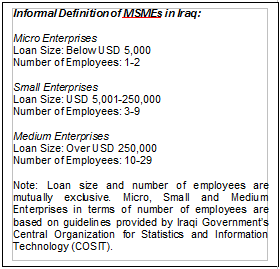 MSMEs are recognized as the engine of economic growth and for their role in promoting equitable development. Globally, they constitute over 90% of total enterprises in most economies and are credited with generating the highest rates of employment growth and account for a major share of industrial production and exports. In Iraq, the exact number of MSMEs and their characteristics are largely unknown, however it is estimated that there are over a million MSMEs, most of them operating informally, and contribute almost two thirds of private sector employment. Despite their rapid growth in recent years, MSMEs face two major obstacles: access to sustainable financing (Iraq ranks 168 out of 181 countries in ‘Ease of Getting Credit’) and access to business development services. Donor agencies such as USAID Economic Development Program Tijara, UNDP Private Sector Development Program among others are attempting to address these gaps, however progress has been limited due to lack of scale, albeit the aforementioned interventions have generated positive attention from local and federal governments. Government of Iraq’s Ministry of Labor and Social Affairs (MOLSA) launched a nation-wide micro-credit scheme in 2007 targeting unemployed youth, however without a sector development approach to improving the overall ecosystem within which the MSMEs operate, all interventions will generate short-lived results without sustainable impact.
Iraq’s ‘Ease of Doing Business’ ranking at 166th is indicative of the difficult bureaucratic registration procedures for MSMEs. In addition, current supply of credit through 12 NGO Microfinance Institutions (MFIs) and SME Lending Units at 14 private banks, supported by USAID-Tijara, outstrips demand. MSMEs require better access to financing and BDS––this includes the deepening and development of financial markets (e.g., improved banking services, venture capital and SME financing) along with systemic improvements in the provision of non-financial business services. Please click here to see a diagram of the challenges in a MSME’s lifecycle.
Despite absence of conducive regulatory environment, business infrastructure and scalable financing mechanisms, Iraqi MSMEs have demonstrated an ability to thrive and provide a basis for the expansion and diversification of the economy. Ideas sYnergy, a recently established multiple bottom line consulting company focused on inclusive private sector development in Iraq, aims to support the creation of MSME lobby clusters/groups in a range of sectors. Ideas sYnergy will work in partnership with ‘enablers’ to build collective capabilities of MSMEs and a wide array of knowledge products towards comprehensive understanding of the MSME landscape in the country.
In world-acclaimed economist Thomas Friedman’s words, ’20-year-olds’ are one of the three major sources of change in today’s world against forces that are upholding the status quo. The Government of Iraq has an opportunity to listen to Iraq’s youth and create opportunities towards building an inclusive economy, where no one is left behind.
T. Keyzom Ngodup is co-founder and Executive Director at Ideas sYnergy, an Iraq based development consulting company committed to economic and social development through market-based solutions that help build and scale innovative businesses for sustainable and inclusive private sector development.
Posted in Keyzom Ngodup 1 Comment
Iraq Microfinance Celebrates Innovative Loan Products
Posted on 14 December 2010 .
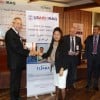
USAID-Tijara’s Inclusive Financial Services Stakeholders’ Conference began with a pledge to provide greater financial services to people living below Iraq’s poverty line of $2.20 a day and ended with a celebration of innovative loan products that have created or sustained 203,500 jobs since 2003.
Participants at the Nov. 28-30 symposium in Erbil debated new Iraqi laws and procedures for small- and medium-sized enterprises, as well as balancing risks, returns, transparency and opportunities. Sessions covered mobile banking, Islamic (Al Murabaha) lending, alternative collateral options, and the IMFI.org website.
“The success of Iraq can only be assured when all Iraqis are involved in the nation’s economic development,” said Alexandre Deprez, the U.S. Agency for International Development’s deputy mission director in Iraq. “Microfinance not only provides many different financial services, but, more importantly, offers ordinary Iraqis the opportunity for entrepreneurship and an indispensible role in building the nation.”
With over 150 participants and 25 speakers from the Middle East and Central Asia, the Inclusive Financial Services Stakeholders’ Conference was the largest microfinance event ever held in Iraq.
The gathering included microfinance executives, government officials, investors, donors, and speakers from the commercial insurance industry.
Posted in Iraq Banking & Finance News Comments Off on Iraq Microfinance Celebrates Innovative Loan Products
USAID-TIJARA Plans Microfinance Conference
Posted on 09 November 2010 .
The USAID-Tijara “Putting the Poor First” microfinance symposium, a program supported by the U.S. Government, will be held November 28-30 in Erbil.
The Inclusive Financial Services Stakeholders’ Conference will bring together leaders from the 12 microfinance institutions (MFIs) that provide financial services throughout Iraq. The forum will attract Iraqi policy makers, donors, banks, small business development centers (SBDCs), and all registered Iraqi MFIs.
Since 2003, Iraq’s microfinance industry has made 230,000 microloans with a total disbursed value of $523 million. There currently are 70,000 clients with an outstanding loan portfolio of $100 million. Many are disadvantaged men and women operating small businesses, farms, or cottage industries. Loans like these create jobs contributing to Iraq’s stability.
Participants at the “Putting the Poor First: Improving the Regulatory Environment, Industry Infrastructure, and Institutional Performance for Greater Impact” conference will discuss opportunities for building a more inclusive financial sector.
There will be panels on mobile banking, as well as the development of alternative collateral options. The MFIs, Central Bank of Iraq and the NGO Assistance Office will address the regulatory and institutional challenges that are faced by NGO-MFIs transforming into non-banking financial institutions.
United Gulf Bank, PlaNet Finance and Amwal Electronic Banking Services are among the microfinance industry leaders participating in the conference.
For more information, visit the Iraqi Microfinance Knowledge Portal (www.imfi.org) or write to [email protected]
Posted in Iraq Banking & Finance News, Iraq Industry & Trade News Comments Off on USAID-TIJARA Plans Microfinance Conference
USAID Allocates $80m to Iraqi Health Sector
Posted on 26 October 2010 .
A Kurdish official has reported that USAID, the United States Agency for International Development, has allocated $80 million to develop the health sector in Iraq.
Speaking to AKnews on Tuesday, Khalis Qadir, spokesman for Kurdistan's Health Ministry, said USAID announced the allocation on Monday in a conference in Tikrit, 140 km northwest of Baghdad.
The Kurdish health officials also participated in the teleconference where the organization also illustrated the health projects it implemented in Iraq in 2009. Qadir said last year's projects were basically for areas other than Kurdistan Region, "but this year Kurdistan will take the greater part."
The fund is to be spent on capacity building, training, and generally improving services in health centers, according to the spokesman.
(Source: AKnews)
Posted in Iraq Public Works News Comments Off on USAID Allocates $80m to Iraqi Health Sector
Tenders for $180m Contract to Overhaul Iraq’s Civil Service
Posted on 05 October 2010 .
The U.S. Agency for International Development (USAID) has outlined proposals in its request for bidders for a $180 million contract to set up civil service laws and regulations, and to create local institutions to deliver services to the population.
The four-year program is called the "Iraq National and Provincial Administrative Reform Project".
Applications are to be submitted by 4:00 pm (Eastern Standard Time), October 31st, 2010.
Please see USAID Iraq tender (RFP 267-10-012).
Posted in Employment, Iraq Industry & Trade News, Iraq Public Works News, Tenders Comments Off on Tenders for $180m Contract to Overhaul Iraq’s Civil Service

Iraq's reconstruction: Strategy and players
Posted on 07 September 2010 .
By Tariq Abdell, Founder & Chairman, Mesopotamia Insight.
The opinions expressed here are those of the author, and do not necessarily reflect the views of Iraq Business News.
The end of U.S. combat operations in Iraq presents a unique opportunity for a new beginning in U.S.- Iraq’s relationship. However, given Iraq’s crippling challenges and U.S. sluggish economy, the success of a such strategic partnership is contingent upon the political will of both U.S. and Iraqi governments, the support of the international community, and the genuine commitment of the international oil companies - Iraq’s biggest investors.
Drawing on past experiences, the stakeholders (U.S. government, Iraqi government, UNDP, World Bank, international oil companies, etc…) need to devise a concerted post-conflict reconstruction strategy, Marshall plan type, that is capable of a) averting the collapse of State's institutions and b) creating the conditions for a sustainable socio-economic recovery. However, before undertaking a such colossal challenge, stakeholders need to build a strategic framework defining the mission's objectives (attainable and realistic), organizational design (steering committee, for instance) , stakeholders' roles and responsibilities, needed resources, and performance metrics.
Respectively, I'll explore key stakeholders' roles and responsibilities in Iraq's post-conflict reconstruction as it's mandated by their respective missions.
Iraqi government
In this process, Iraqi government should be treated as an equal partner that is fully responsible and accountable of its actions before its constituents and the international community. Consequently, the new elected government needs to formulate a comprehensive development strategy in concert with key stakeholders, including the planning for the impending multi-billion dollar mega-reconstruction projects, and the followings are some key areas of common interest and cooperation:
- National reconciliation to fend off ethno-sectarian strife and political violence.
- Reining in corruption and enhancing institutions efficiency.
- Providing basic services (e.g., drinking water, electricity, running sewer, health care, education, etc....)
- Promoting rule of law and human rights.
- Tackling illiteracy challenges, a serious threat to the country’s future.
- Creating jobs, higher unemployment rates are source of societal and political upheavals e.g., organized crime, militias, etc....
- Revamping severely languished infrastructure.
- Reviving the country strategic industries to curtail its dependence on petrodollars.
U.S. Government
To ensure the success of its new mission "New Dawn" in Iraq, the U.S. needs to learn from its past mistakes - $53 billion of unfinished or poorly executed projects-- and capitalize on its acquired knowledge and understanding of Iraq's ethno-sectarian fabric, political landscape, and socio-economic dynamics. Thus, U.S. Department of State's Iraq strategic partnership office ISPO and USAID should play a crucial role in coordinating and overseeing the reconstruction efforts in concert with other stakeholders e.g., Iraqi government, UNDP, etc....
United Nations Development Programme
Given UNDP extensive experience --Honest broker-- in conflict and post-conflict zones, the UNDP is well-positioned to promote and oversee national reconciliation, rule of law, and rehabilitate State's decadent institutions to enhance efficiency and inclusiveness - Hiring and promotions are merit-based and not politically dictated.
World Bank
Given the decay of Iraq's financial institutions as result of decades of wars and sanctions, the World Bank's role, key partner in this reconstruction efforts, is to provide post-conflict reconstruction expertise, financial and technical assistance, which are key ingredients for a sustainable development.
International oil companies (IOCs)
Given the current Peak Oil and IOCs vested interest in a stable and secure Iraq, IOCs should play a major role in this reconstruction efforts. Oil sector is the engine of Iraq’s economy -%90 of government revenue. Nonetheless, the oil sector challenges are hampering the country's economic recovery:
- Major oil fields require billions of dollars for rehabilitation and development as result of decades of wars and sanctions.
- Current oil workforce is in desperate need of training and technological know-how.
- Oil sector is a highly politicized field.
Thus, given Iraq's vast reserves of oil and gas, IOCs' should help revamp the oil sector swiftly by introducing technological know-how, the industry best practices, and fostering local workforce. With such perspicacious initiatives, IOCs will help enhance the oil sector efficiency, increase production, spur economic recovery; and, eventually, countervail some of deep-seated distrust and apprehension.
In sum, in the absence of a clear post-conflict reconstruction strategy, Iraq's convoluted political impasse and the international community inaction -- lack of political will-- are recipes for a prolonged political instability and ethno-sectarian strife; subsequently, jeopardizing all the hard-earned successes (e.g., fair elections, strong Army, etc...) and exacerbating geopolitical tensions. Moreover, given the endured sacrifices, thus far, in blood and treasure -- thousands of lives and over $ 751 billion war price tag -- it's imperative to stand by Iraq in these difficult times to prevent it from reverting to a military dictatorship or ,worst, religious tyranny. In his speech to congress (12th March, 1947), President Truman exquisitely puts it when he warns us against lose of hope, destitution, and their grim outcomes chiefly chaos and tyranny:
"... The seeds of totalitarian regimes are nurtured by misery and want. They spread and grow in the evil soil of poverty and strife. They reach their full potential when the hope of a people for a better life has died. We must keep that hope alive. If we falter in our leadership, we may endanger the peace of the world - and we shall surely endanger the welfare of our own nation..."
The opinions expressed here are those of the author, and do not necessarily reflect the views of Iraq Business News.
The author, Tariq Abdell, is an Iraq analyst, and Founder & Chairman of Mesopotamia Insight
He can be contacted at: [email protected]
or
Followed on twitter: http://www.twitter.com/atariqx
Posted in Blog, Iraq Oil & Gas News, Tariq Abdell 1 Comment

US Contractor Investigated for 'Overcharging'
Posted on 15 August 2010 .
Federal prosecutors in the U.S. are investigating whether a major contractor overcharged the government.
They are investigating allegations that the Louis Berger Group (LBG) submitted inflated invoices to the U.S. Agency for International Development (USAID), which oversees international development projects.
The company works in countries including the U.S., Iraq, Afghanistan and India.
LBG's Chairman, Derish M. Wolff, sued the U.S. Justice Department last week, saying the government 'suggested' he resign and sever ties to the company by Friday. Wolff sought to bar the government from urging the company to terminate him, limit his employment in any way, and withhold his buyout proceeds in an escrow account. A judge denied his request.
The company has undertaken infrastructure and capacity building projects that "address the sources and consequences of political and economic fragility".
(Sources: Bloomberg, Washington Post, Associated Press)
Related article:
Posted in Construction & Engineering In Iraq, Iraq Public Works News Comments Off on US Contractor Investigated for 'Overcharging'
Innovative Agriculture Loan for Farmers in Ninawa
Posted on 15 August 2010 .
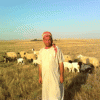
Access to quality financial services, especially for rural small-scale farmers is a challenge anywhere in the world. USAID-Tijara microfinance institution (MFI) partner Tal’afar Economic Development Center (TEDC) launched a new agricultural loan product focused on small-scale rural farmers to help them meet this challenge in the northern Iraq Province of Ninawa.
At a ceremony to disburse loans totaling $26,000 to six small-scale farmers at the TEDC headquarters in Al-Qala’a, Tal’afar on Wednesday, July 21st, the Executive Manager, Mr. Bashar Ali Redha, said that the MFI is ready and plans to expand rural-based lending. The ceremony to disburse the loans to the six farmers was presided over by the TEDC Board Chairperson, Mr. Abdullah Wahab, two other Board members, a USAID-Tijara local official and other TEDC staff.
Small-scale farmers in rural areas such as those in the Ninawa Province face numerous obstacles. They cannot normally access the financial services they need from the three banks in the province. Also, up until now, they could not access loans from MFIs due to limited access to more limited guarantee choices. Small-scale farmers further lack the capital needed to invest in the irrigation technology needed to boost productivity and profits. Agriculture is a key component of Ninawa’s economy, particularly cereal production, with 39% of the 2.4 million population living in rural areas. Of the nearly one half million living in the province below the poverty line of just over U.S. $2 per day, over 80% are in rural areas.
The agricultural loan product TEDC now offers is an innovative one that comes with a longer repayment period, a grace period of three months and larger loan sizes of up to $5,000. Innovation comes from repayments scheduled according to the seasonal outputs of farmers. It also comes from how the loan can be guaranteed – one guarantor or co-signer with means (and not necessarily a salaried government worker), witnessed by two others.
This product will add to TEDC’s already impressive menu of loan products to small-scale manufactures, traders and service providers. MFI performance and profitability should increase. The MFI, since its founding in July 2007, has a portfolio of $ 3.5 million to almost 2,700 clients and near perfect loan recovery. According to Mr. Qasim Mohammed Younis, one of the farmers receiving his loan, “I needed money to dig a tube well to solve the problem of water scarcity for my livestock. I tired to get a loan from one of the banks in my district but they did not approve it. Through TEDC, I can use the $5,000 to make these investments to improve my family’s income. I can also start saving to buy a small truck to sell my dairy products in the city.”
Related articles:
Posted in Iraq Banking & Finance News Comments Off on Innovative Agriculture Loan for Farmers in Ninawa
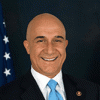
Ex-Im Bank Helps US Businesses Sell to Iraq
Posted on 04 August 2010 .
The Export-Import Bank of the United States (Ex-Im Bank) has opened in Iraq to help finance short-term and medium-term sales of U.S. exports to Iraqi buyers in both the public and private sectors.
"Iraq's economy is growing, offering specific opportunities for U.S. exporters in a variety of industries. Ex-Im Bank can help by reducing the repayment risk, especially for small businesses at this time," said Ex-Im Bank Board Member Bijan R. Kian.
Ex-Im Bank can provide export-credit insurance, loan guarantees and direct loans for creditworthy export sales to Iraq. Short-term insurance is available for transactions with repayment terms of 180 days or less, and up to 360 days for capital goods. Medium-term insurance, loan guarantees and loans are available for transactions with terms of up to seven years.
The Bank's working capital guarantees (which help U.S. exporters or their suppliers to obtain funds to produce or buy goods or services for export) are available to support exports to Iraq.
The Bank can consider providing long-term support where there are financing arrangements that eliminate or externalize country risks, such as asset-backed financings and structures that earn revenues offshore in a third country.
The Country Limitation Schedule at www.exim.gov provides specific criteria for structuring transactions in both the private and public sectors.
Ex-Im Bank, an independent, self-sustaining federal-government agency, helps create and maintain U.S. jobs by filling gaps in export financing and strengthening U.S. export competitiveness. The Bank provides a variety of financing mechanisms, including working capital guarantees to help small and medium-sized U.S. businesses, export-credit insurance to protect against nonpayment by foreign buyers, and loan guarantees and direct loans to assist foreign buyers of U.S. goods and services.
In fiscal 2009, overall Ex-Im Bank financing totaled $21 billion, and authorizations supporting small-business exports reached a historic high of $4.4 billion, nearly 21 percent of total authorizations.
In the first nine months of fiscal 2010 (through June 2010), Ex-Im Bank authorized $17.4 billion in loans, guarantees and insurance - more than the total amount authorized in fiscal 2008. For more information, see Ex-Im Bank's Web site at www.exim.gov.
Related articles:
Posted in Iraq Banking & Finance News, Iraq Industry & Trade News Comments Off on Ex-Im Bank Helps US Businesses Sell to Iraq