


Iraq Cabinet to consider National Poverty Reduction Strategy (2025-2029)
Posted on 02 July 2025 .
By John Lee.
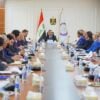
The Permanent Technical Committee for Poverty Reduction Policies, chaired by Deputy Prime Minister and Minister of Planning Dr Mohammed Ali Tamim, has approved Iraq's third national poverty reduction strategy, covering the years 2025 to 2029.
Dr Tamim described progress made during the previous phase as positive, with poverty rates falling from 30% in 2021 to 17.5% in 2024, and unemployment declining to 13.5%. He emphasised that the new strategy reflects a national and moral commitment to vulnerable groups and aims to strengthen sustainable development and social justice.
The strategy targets a reduction in poverty to below 10% by the end of 2029. However, Dr Tamim warned of existing challenges, particularly climate change, which has caused widespread rural-to-urban migration, the disappearance of villages, and the expansion of informal settlements, adversely affecting public services.
The strategy is based on human rights, sustainable development, social justice, and protection principles. It includes 7 core outcomes and 38 operational activities, informed by Iraq's 2023 household social survey and national census data.
The final strategy will be submitted to the Council of Ministers for formal approval, with implementation planned over the next five years.
(Source: Ministry of Planning)
Posted in Politics Comments Off on Iraq Cabinet to consider National Poverty Reduction Strategy (2025-2029)
Iraq's Ministerial Council for Economy Convenes in Baghdad
Posted on 15 May 2025 .
By John Lee.
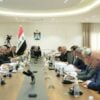
Iraq's Ministerial Council for Economy, held its 13th and 14th sessions in Baghdad on May 12, 2025.
Discussions included enhancing coordination between federal and regional quality control authorities, with a focus on streamlining goods inspection at border crossings. The Council approved measures to recognize the Kurdistan Region's quality control tests for imported goods, aiming to reduce inspection redundancies.
The Council also discussed contractor classification, setting a three-month deadline for previously classified companies to regularize their status. Additionally, the Council approved initiatives to support poverty reduction, highlighted by a drop in the poverty rate to 17.6% in 2024, and unemployment to 13.4%.
Other approved measures included hiring individuals with disabilities in contractor roles, improving infrastructure in Al-Shinafiyah and Babylon, and adjusting gas oil prices for religious endowments and licensed industrial plants.
Full statement from the Ministry of Foreign Affairs:
On Monday, May 12, 2025, Deputy Prime Minister, Foreign Minister and Chairman of the Ministerial Council for Economy, Mr. Fuad Hussein, chaired the 13th (morning) and 14th (evening) sessions of the Council, held at the Council's headquarters. The two sessions were attended by the Deputy Prime Minister and Minister of Planning, as well as the Ministers of Finance, Agriculture, Industry, Labor and Social Affairs, the Secretary-General of the Council of Ministers, the Governor of the Central Bank of Iraq, the Deputy Oil Minister, the Vice Head of the National Investment Commission, and the economic and legal advisors to the Prime Minister.
The Council discussed items on its agenda and adopted appropriate decisions accordingly.
Additionally the Council hosted the Head of the Central Organization for Standardization and Quality Control Authority (COSQC) at the Federal Ministry of Planning, the Director General of Industrial Development and Regulation at the Ministry of Industry, the Head of the Standardization and Quality Control Authority in the Kurdistan Region, and an advisor from the Region's Ministry of Interior, who are members of the Diwani Order Committee No. (79), tasked with evaluating and aligning goods and contractor classification regulations.
The Council heard a detailed presentation from the head of COSQC on the committee's work and its recommendations, which were unanimously approved. These recommendations aim to facilitate the inspection of goods entering through official border crossings. Key recommendations include:
• Recognition by the Kurdistan Region's quality control authority of tests conducted by the federal Central Organization for Standardization and Quality Control Authority and officially authorized inspection companies, for goods and products imported via official border crossings.
• Inspection and monitoring of goods entering through officially recognized border points in the Kurdistan Region by the regional quality control authority and duly authorized inspection companies.
• The region's quality control authority shall apply the approved standards, including technical requirements issued by the federal Central Organization for Standardization and Quality Control Authority, in addition to other recommendations regulating inspection operations at border crossings.
Regarding contractor classification instructions, the Council approved the joint minutes, will be reviewed through the company's capital documents, the number of engineers, legal consultants, and accountants, in addition to the tax tax clearance, and social security. These documents will be submitted through the Region's Registrar of Companies.
The Council also assigned the Federal Ministry of Planning to notify previously classified companies to regularize their status within a maximum period of three months for active contractors.
It was agreed that identity cards issued by the Region will be valid for 90 days from the date of the minute, during which the Region shall provide the federal government with data on active contractors, including names, classification, and validity dates.
The Council also hosted the Technical Deputy Minister of Planning to review the ministry's procedures and the current status of stalled or delayed projects, investigate the causes of delays, and explore suitable solutions. The Deputy Minister presented a report on the federal government's measures to implement the national poverty reduction strategy, which is considered a critical challenge to development and progress.
The report highlighted a decline in the poverty rate from 20.5% in 2018 to 17.6% in 2024, and a drop in unemployment from 16.5% in 2021 to 13.4% in 2024.
The Council approved a request from the Ministry of Agriculture's Board of Opinion to donate 32 tons of confiscated barley to the Ministry departments for use as animal feed.
Additionally, The Council approved the Ministry of Planning's proposal to hire individuals with disabilities as part of the required quota for contractors (both Iraqi and foreign). It was emphasized that the quantity tables and specifications for buildings and related additions (such as pathways, directional signs, etc.) must be included as part of the work scope in tenders.
The Council also approved the promotion of the supplies order to construct a bypass road in Al-Shinafiyah, along with the preparation of designs for a concrete bridge over the Euphrates River and the new bypass road approaches.
Furthermore, the Council recommended that the Cabinet approve the final accounts for the year 2017, taking into account the observations of the Federal Board of Supreme Audit. The Council also agreed to increase the cost for the construction of the Babylon Directorate of Nationality building as part of the regional development projects for Babylon Province.
Additionally, the Council approved the Ministry of Oil's request to set the price of vacuum gas oil supplied to licensed industrial plants at 300 IQD per liter, with a review to take place six months after the decision's implementation.
In the same context, the Council approved adjusting the price of gas oil sold to the Christian, Yazidi, and Mandaean Religious Endowments to 400 IQD per liter, down from 750 IQD.
(Source: MoFA)
Posted in Iraq Industry & Trade News, Politics Comments Off on Iraq's Ministerial Council for Economy Convenes in Baghdad
Five New Initiatives to Empower Iraqi Women
Posted on 05 March 2025 .
By John Lee.
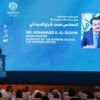
Prime Minister Mohammed S. Al-Sudani announced five developmental projects and programs aimed at supporting and empowering women, during a celebration marking the National Day of Iraqi Women on March 3.
The initiatives include:
- The Third National Plan for Women, Peace, and Security (2025-2030) to enhance women's participation in decision-making, strengthen protections against violence, and support those affected by conflict.
- The National Data Platform to provide accurate and updated information on women's challenges.
- The National Network of Women Peace Mediators, bringing together female volunteers from all provinces to support peacebuilding efforts.
- The Women, Peace, and Security Institute, a specialized center for advancing women's role in conflict resolution.
- The "Pioneers of Change" Program, a leadership training initiative for women in public and mixed sectors to enhance institutional performance.
On the sidelines of the event, the Prime Minister visited an exhibition showcasing home-made products, artistic works, and traditional crafts created by Iraqi women, under the theme "The Women of Earth, the Essence of Life."
Full text of the statement from the Prime Minister's Office:
Prime Minister Mohammed S. Al-Sudani Announces Five Developmental Projects and Programs to Support and Empower Women on the National Day of Iraqi Wome
Prime Minister Mohammed S. Al-Sudani, on Monday evening attended the celebration of the National Day of Iraqi Women, which the Council of Ministers designated to be observed annually on March 3.
In his speech during the event, Prime Minister Al-Sudani commended all efforts dedicated to serving, supporting, and empowering Iraqi women, emphasizing their distinguished contributions to development in various fields. He also announced five developmental projects and programs that align with the government's objectives to improve the status of women and provide the necessary means to support them.
Among these initiatives, he unveiled the Third National Plan for Women, Peace, and Security (2025-2030), aimed at enhancing women's participation in decision-making, developing mechanisms to protect women and children from violence, and providing support to those affected by conflicts. Additionally, he announced the launch of the National Data Platform to provide accurate and updated information on women and address the challenges they face.
Prime Minister Al-Sudani also introduced the National Network of Women Peace Mediators, which includes female volunteers from all provinces to support peacebuilding efforts. Furthermore, he announced the establishment of the Women, Peace, and Security Institute.
To enhance leadership skills among women, he launched the "Pioneers of Change" Program, a training initiative for female leaders in the public and mixed sectors to develop their leadership skills, overcome challenges, and improve institutional performance.
On the sidelines of the celebration, Prime Minister Al-Sudani visited an exhibition featuring home-made products, artistic works, and traditional crafts created by women participants in the event, which carried the theme "The Women of Earth, the Essence of Life."
Key Highlights from the Prime Minister's Speech:
- The government's executive program has dedicated a significant space to supporting women.
- Many women now hold leadership positions in the ministerial cabinet, serve as deputy ministers, or work in the judiciary and public prosecution.
- Currently, 111 women hold Director General positions, while 47 women serve as Assistant Director Generals, alongside thousands of female employees leading various administrative departments.
- The current parliamentary term includes 97 female MPs, exceeding the women's quota of 83 seats.
- The government has supported women's inclusion in the armed forces and security agencies to contribute to Iraq's stability.
- Today, Iraq's armed forces include 786 female officers in the Ministry of Defense and 691 female officers in the Ministry of Interior, in addition to thousands of female personnel across security agencies.
- Over 573,000 women have been included in the social welfare system, ensuring financial support for widows and divorced women.
- The government has increased the stipend for female heads of households under social protection to 325,000 IQD and is working to expand coverage.
- The government has outlined economic empowerment plans to create job opportunities for women and improve their living conditions.
- The Social Security and Retirement Law for Workers (Law No. 18 of 2023) ensures protection for women working in the private sector.
- This law grants women retirement benefits in terms of service years and age, along with maternity benefits for working mothers.
- The Survivors Law (Law No. 8 of 2021), which supports Yazidi, Turkmen, Christian, and Shabak survivors of ISIS atrocities, has been fully activated.
- The Parliament Members Replacement Law (Law No. 15 of 2023) mandates that any vacant seat occupied by a woman must be filled by another woman.
- The government proudly recognizes the pivotal role of Iraqi women in resisting ISIS terrorism, supporting and standing alongside security forces.
- The National Strategy for Iraqi Women (2023-2030) was launched to promote protection, economic and social empowerment, and political participation.
- The Updated National Strategy to Combat Violence Against Women and Girls (2023-2030) has been adopted as part of comprehensive protection measures.
The Supreme Council for Women's Affairs was established to institutionalize efforts to enhance women's participation and empowerment. - Within the Riyada (Entrepreneurship) Initiative, 425,000 young men and women have applied for employment opportunities, and 5,000 scholarships have been announced for students to pursue education abroad.
- The government continues efforts to reduce unemployment and illiteracy rates among women while supporting rural women and recognizing outstanding achievements across all fields.
(Source: PMO)
Posted in Construction & Engineering In Iraq Comments Off on Five New Initiatives to Empower Iraqi Women
Unified Retirement Law: "A Step Towards Improving Retirees' Lives"
Posted on 15 February 2025 .
From Education International. Any opinions expressed are those of the author(s), and do not necessarily reflect the views of Iraq Business News.
Iraq: The Unified Retirement Law: A step towards improving retirees' lives and creating job opportunities
In a significant step towards achieving social justice and equality among retirees, the Kurdistan Regional Government in Iraq recently announced the implementation of the Unified Retirement Law No. 9 of 2014.
The Kurdistan Teachers Union (KTU) welcomes this long-awaited decision, which not only improves the conditions of retirees but also extends its impact to creating new job opportunities for young people, particularly in the education sector.
Improving retirees' salaries: Long-awaited justice
According to KTU President Ahmed Saber, the implementation of the Unified Retirement Law in response to the ruling of the Federal Supreme Court issued in November 2022 marks "a significant milestone for retirees in the Kurdistan Region," raising the minimum pension from 220,000 dinars to 500,000 dinars (around 160 euros to 370 euros) per month. This increase enhances retirees' financial stability and contributes to improving their living conditions.
New job opportunities for graduates: Addressing unemployment
With the enforcement of the law, many employees will be retired, creating new job vacancies that require young and qualified candidates. Saber also noted:
"In the education sector, this decision will open the door for employment opportunities for graduates of colleges of education and sciences, helping to reduce the high unemployment rates among young people."
The Government's crucial role in supporting employment
To maximize the benefits of these opportunities, KTU calls on the regional government to take a series of supportive measures, such as:
- Developing clear employment plans to accommodate new graduates.
- Allocating budgets to support new appointments in schools.
- Organizing training programs to prepare young graduates for integration into the educational job market.
Education in Kurdistan: A promising future with young professionals
Introducing young teaching professionals into the educational field contributes to improving the quality of education in the region. The KTU leader further highlighted:
"New graduates bring modern knowledge and expertise aligned with contemporary teaching methods. Additionally, revitalizing educational institutions with fresh talent helps alleviate pressure on current teaching staff, ultimately leading to better academic performance in schools."
Saber concluded:
"The implementation of the Unified Retirement Law in the Kurdistan Region is a positive step on multiple levels. It ensures justice for retirees and creates job opportunities for graduates, particularly in the education sector. With proper planning by the relevant authorities, this decision could serve as a turning point in improving the job market and enhancing the quality of education in the region."
Posted in Employment, Iraq Education and Training News, Politics Comments Off on Unified Retirement Law: "A Step Towards Improving Retirees' Lives"
IBBC holds successful Dubai Business Conference
Posted on 17 December 2024 .
From the Iraq Britain Business Council (IBBC).
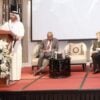
IBBC holds successful Dubai business conference with senior membership and government dignitaries
IBBC held a successful two-day conference in Dubai including a full education day followed by the business day, attended by senior officials from Iraq including HE Mohammed Al Darraji, senior technical advisor to the Iraqi PM and president of sovereign guarantee initiative, and Professor Hamid Khalaf Ahmed, PM advisor and executive director the Higher committee for education development in Iraq and PM office, Dr Hazim Al Zubaidi - Ministry of Higher education and Scientific research, HE Dr Mohammed Shukri, Chairman of Kurdistan investment board, and hosted by HE Abdullah Al Saleh, Undersecretary of the ministry of economy UAE, Dr Abduladheem Khalil, Iraq supreme Maritime Authority, and Director General Technical of Iraq's Transport ministry Mr Abbas Iamran Al Zubaidi.
IBBC members were out in full force, including British Universities of London, Newcastle, and Oxford through to Senior executives of Shell, BP, Basra Gas Company, Wood, GE Vernova, SC, Sardar Group, SAP, Al Zaman, SABIS, Hydro C, Basra Gateway, London Sky and MSelect many others and new businesses.
The Education Day has rapidly grown in stature and influence, as both Iraqi Higher educators and secondary schools' leadership attend, and many IBBC members interested in training and skills, including Wood, Sardar, SAP, BP and BGC keen to share their insights and commitment to developing employees and their qualifications in Iraq.
Chaired and curated by Professor Mohamed Al Uzri and sponsored by GEMS.
 The importance of shaping the curricula and making training and skills relevant from primary to higher education to the current and future needs of Iraq was the overarching theme. Professor Gunter in his Ease of doing business report, signalled that for Iraq's growing population, 350,000 new jobs must be found each year for unemployment to stand still. The Government is now unable to fund additional jobs, so the private sector and entrepreneurship is the only solution to deliver opportunities. Panels discussed skills training, and the importance of attitude and the new style of learning, towards critical decision making and pupil empowerment away from rote learning, to enable business and jobs ready students.
The Tech Forum platformed a diverse range of Members' presentations of their innovative business offers and markets - From Innovate Uk's Chandila Fernandez who explained what and how the UK is supporting UK registered start ups with unparalleled access to support, grants and business contacts, to grow innovation and the next set of Unicorns, followed by Iraq venture Partners' Hady Al Samra, who presented Iraq's growing start up and scale up economy, and the businesses they are investing in with their fund, to DPD Date Palm based in UK and new to IBBC, culturing and growing thousands of top quality, disease resistant date palms from stem cells that are repopulating Iraq's farms in Basra, and those of Egypt. William Page of 1001 (Iraq's largest streaming platform) informed us they now have over 2.5million subscribers and are the largest Streaming platform in Iraq. The good news is they now exclusive distribution for top football and sports leagues (e.g. La Liga) in Iraq, with content across film and TV from around the Arab world, the biggest challenge is IP theft and competition from Pirate stations in Iraq, that the Government now recognise are a threat to producers and ethical business development in Iraq.
Riad Chehyab ex Serco, presented his new business advising on air taxi developments, which are coming to the Mena region now.
Finally, Bath Spa University's Professors Sarah Hayes and Kate Pullinger discussed the use of AI in academia and how to manage the up and downsides and evolve best guidelines for pedagogy and learning.
Friday 13th saw the main business day chaired by IBBC GCC Representative Mr Vikas Handa - with opening speech from HE Abdullah Al Saleh and Baroness Nicholson who hosted and welcomed the guests, HE Mohammed Al Darraji and Mr Sardar Al Bebany and Ms Azheen Mustafa of SABIS Schools.
Fascinating panels then followed with a topical 'Iraq and the region' a geopolitical overview of Iraq - chaired by Jon Wilks CMG, Ms Mina Al Oreibi (The National) and Mr Norman Ricklefs of Namea Group- on the current situation with Syriah and its impact on Iraq, an analysis of the new powers in the Middle East; Turkey and Israel and the prospects for Iran and Iraq.
The Infrastructure and Maritime panel, convened for the first time, to reflect IBBCs increasing maritime membership, the establishment of a committee to help the Government of Iraq become a White flag operator of shipping at international standards, and to expand the opportunity of the new Al Fawr port and its impact on international trade between the Asia and Europe, via Turkey, and the 100,000 jobs in new hubs and towns expected to be developed along the route. Mr Ahmed Shaban as Chairman of the IBBC Maritime committee, put his weight behind creating new jobs and building the skills academy in Basra. Dr Abdulraheem Khalil of Iraq Supreme Maritime Authority joined the panel who engaged with Mr Tugrul Titanoglu of CJ-ICM, Amar Shubar of Management Partners and chair of the IBBC Maritime committee and Mr Ahmed Al Asady of the General maritime transport company.
Roundtables with Professor Frank Gunter on 'ease of doing business in Iraq' report, included Jon Wilks, Ms Lena Ali Khadhim of Toyota, Dr William Page of 1001 and Mr Amir Al Bebay of Sardar group and Ms Mina Al Oreibi, The National and a full room for the IBBC women's group, led by Baroness Nicholson discussed 'Women in business driving economic empowerment. Jon Wilks also chaired a KRG roundtable.
A distinguished Finance panel included Dr Samir Fakhri Noama of Central bank of Iraq, Mr Bilal Al Sugheyer of IFC, Mr Mohammed AL Delaimy of IBBC, Mr Jamil Choucair of SC, Mr Ahmed AL Haidary of MP and chaired by Mr Raed Hanna of Mutual finance. The final panel on energy fielded Iraq's top energy producers under IBBC chair Vikas Handa; Ziad Elyaseri of BP, Mr Marfa Al Asady of BGC, Ellis Renforth of Wood, Mr Rasheed Al Janabi of GE Vernova, Mr Hassan Heshmat of Hydro C and Laith Al Shaher of IBBC Advisory Council. Mr Christophe Michels concluded the event- and thanked everyone who came, joined the panels and the sponsors:

Posted in Construction & Engineering In Iraq, Investment, Iraq Industry & Trade News, Iraq Oil & Gas News, Politics Comments Off on IBBC holds successful Dubai Business Conference
Supporting Youth-Led SMEs at "Riyada" Initiative Conference
Posted on 16 December 2024 .
By John Lee.
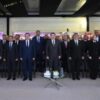
The "Riyada" Initiative Conference was held on Saturday in Baghdad under the theme: "Investing in Human Potential to Enhance Iraq's Economy... Toward an Entrepreneurial Society."
According to a statement from Prime Minister's office, the event showcased the government's commitment to empowering youth through entrepreneurship as a core pillar of economic development.
Prime Minister Al-Sudani also inaugurated the First Riyada Exhibition, reviewing projects established by young entrepreneurs. These ventures span critical sectors, including agriculture, industrial production, artisanal crafts, and innovative businesses leveraging artificial intelligence-all facilitated by loans issued under the initiative.
He congratulated the conference organizers, emphasising the government's vision to alleviate unemployment and shift societal reliance away from public-sector jobs.
Since its launch on March 4, 2023, the Riyada Initiative has trained over 750 public and private institutions, received 16,845 loan applications, and created 10,747 job opportunities across various industries.
Full text of press release:
Prime Minister Mohammed S. Al-Sudani Reaffirms Government's Commitment to Supporting Youth Small and Medium Enterprises
Prime Minister Mohammed S. Al-Sudani presided over "Riyada" Initiative Conference, held today, Saturday, in Baghdad under the theme: "Investing in Human Potential to Enhance Iraq's Economy... Toward an Entrepreneurial Society."
Prime Minister Al-Sudani also inaugurated the First Riyada Exhibition, toured its venue, and reviewed various enterprises established and implemented by young entrepreneurs using loans provided under the initiative. These ventures encompass agriculture, industrial production, artisanal crafts, and innovative businesses leveraging artificial intelligence.
Prime Minister Al-Sudani congratulated the organizers of the conference and extended his gratitude to all those who contributed to the success of this initiative. The initiative was launched by the government at the start of its executive duties on March 4, 2023, aligning with a vision to prioritize unemployment relief in the government program and shift societal perceptions away from exclusive reliance on public-sector employment. He highlighted that over 750 public and private institutions participated in training programs under the initiative. Loan applications have reached 16,845, resulting in the creation of 10,747 job opportunities across various sectors.
The Prime Minister highlighted the findings of the recently announced population census, which revealed that Iraq has a predominantly youthful population, stressing the need to harness their potential to empower young people and enable them to contribute actively to the nation's development. He emphasized the goal of "Riyada" Initiative is to foster a youth-driven entrepreneurial society through training, empowerment, and consistent support throughout the business lifecycle, ensuring its success and economic feasibility.
Key Highlights from the Prime Minister's Speech:
- Riyada Initiative integrates digital solutions, aligning with the government's commitment to digital transformation, artificial intelligence, modern technologies, and simplified procedures.
- We inherited a system in the Iraqi state, rooted since its establishment, that relies heavily on the government for job creation and graduate employment-a model that is unsustainable for the state's future.
- Iraq's youth possess the skills, education, and determination needed to create a brighter future for their country.
- Riyada Initiative represents a dream realized for ambitious Iraqi youth, capitalizing on available opportunities to achieve progress.
- The initiative's success has been driven by the collective efforts of the initiative's team, advisors, ministers, and governors.
- Families have engaged with the initiative, integrating business planning ideas alongside academic studies and specializations.
- Iraq is entering a new era of investing its vast potential and natural resources, which have long remained neglected.
- Small projects under "Riyada" Initiative will serve as the foundation for medium and large-scale enterprises in the future.
- Economic development is being pursued across all sectors, with partnerships with international companies prioritizing the inclusion of local products.
- Local workshops can play a role in manufacturing parts for industries such as automobile production, with government banks supporting Riyada initiatives.
- The vision focuses on empowering youth to fulfill local market needs through domestic production.
(Source: PMO)
Posted in Investment, Iraq Industry & Trade News Comments Off on Supporting Youth-Led SMEs at "Riyada" Initiative Conference
US Investment Climate Statement for Iraq
Posted on 11 December 2024 .
By John Lee.
The US State Department issued its 2024 Investment Climate Statement for Iraq earlier this year.
The report covers the following key areas:
- Openness To, and Restrictions Upon, Foreign Investment
- Bilateral Investment and Taxation Treaties
- Legal Regime
- Industrial Policies
- Protection of Property Rights
- Financial Sector
- State-Owned Enterprises
- Responsible Business Conduct
- Corruption
- Political and Security Environment
- Labor Policies and Practices
- U.S. International Development Finance Corporation (DFC) and Other Investment Insurance or Development Finance Programs
- Foreign Direct Investment Statistics
- Contacts
Full text of the State Department report:
EXECUTIVE SUMMARY
STRONG GROWTH: Iraq is building apartment towers and new shopping malls, upgrading airports and ports, planning new roads, modernizing its agriculture, and striving to strengthen trade ties with neighbors and the west. Iraqis seek American and western consumer goods. Prime Minister Mohammed Shiaa al-Sudani, in office since late 2022, takes a hands-on involvement in reiterating that his country is ready to do business. Trade and investment were the centerpieces of Sudani's official visit to the White House in April 2024.
The Iraqi constitution grants the Iraqi Kurdistan Region (IKR) semi-autonomous rights, and IKR often serves as a starting location for U.S. businesses in Iraq. Among the IKR's commercial attractions is foreign companies may keep 100% ownership, whereas in federal Iraq, foreign ownership is limited to 49%. Neighboring countries figure strongly in Iraq's trade, with Turkiye and Iran at the top, along with China.
ECONOMY: The Government of Iraq (GOI) steers Iraq's economy, a legacy of decades of communist and autocratic decision-making, which to this day manifests itself in bloated ministries directing three-quarters of the economy. Oil exports serve as the foundation of Iraq's GDP. Iraq's GDP grew 7% in 2022, shrunk 2% in 2023, and is expected to grow moderately in 2024; headline inflation was 4.4% in 2022 and 4.0% in 2023 (all IMF data). Much of the non-state, non-oil economy is informal, cash-based, and vibrant. Investors will find opportunities from one extreme to the other: massive energy deals with ministries and importing brands to Iraqi kitchens.
SECURITY: Some militia groups mobilized in the fight against ISIS remain deployed, under only nominal GOI control, and influenced by Iran - as demonstrated by frequent attacks on Coalition and U.S. government installations October 2023 - February 2024. Notably, such violence did not target American businesses in Iraq, nor are U.S. businesses particularly targeted by criminal groups for being American. Militia groups were implicated in criminal activities, ranging from extortion to destruction of internet infrastructure to bombing energy infrastructure.
DUE DILIGENCE: Investors should complete due diligence on Iraqi partners before entering commitments. Iraq is an honor culture where relationships matter, but its courts are ill-equipped to sort out more dishonorable commercial issues that might arise between businesses. Iraq took a positive step in 2024 by signing the UN Singapore Convention on commercial mediation.
Companies could face long delays in getting paid if projects are tied to the federal Iraq budget, especially from GOI entities.
Difficulties with corruption, business registration, customs, taxes, selective application of regulations, dispute resolution, electricity shortages, and access to financing are common complaints for local and foreign companies in Iraq.
OPPORTUNITY: Despite these challenges, the Iraqi market offers potential for U.S. exporters. Iraq regularly imports U.S. rice and other agricultural commodities, machinery, consumer goods, aircraft, and defense articles. Iraq imported $950 million in goods from the United States in 2022 (most recent year available). Government contracts and tenders continued as the source of most commercial opportunities in all sectors. The GOI closed a giant $27 billion energy sector deal with France's TotalEnergies in 2023. Other deals were in the works that could help Iraq produce additional gigawatts of electricity through improved efficiency, new natural gas-fired plants, and - once the electrical grid is modernized - solar.
Tenders for two mega-projects are expected at the end of 2024: rehabilitating Baghdad's International Airport and building a north-south corridor of rail and roadways (the "Development Road"). Resolution of an oil dispute between the GOI and the IKR could also encourage additional hydrocarbon investment in the IKR.
IRAQI KURDISTAN REGION: While investors in the semi-autonomous IKR face many of the same challenges as investors elsewhere in Iraq, the IKR's friendlier investment climate (as noted, allowing 100% foreign ownership of a business) and a more commercial-friendly legal framework appeal to many U.S. firms and franchises.
Yet, concerns also abounded in the IKR: disputes with the central government over oil revenues and the Iraq-Turkiye Pipeline, tensions between the IKR's main political factions, domination of the economy by politically powerful families, significant non-payment or delays to foreign companies on government contracts, and reduced consumer demand when government salary payments are missed or delayed. Iran and Iran-aligned militia groups carried out dozens of missile attacks and drone strikes in the region, including lethal ones in Erbil and Khor Mor gas field in January and April 2024. Turkiye also routinely bombed alleged terror targets in IKR, though this activity infrequently affects international companies.
Trade data resources in addition to Table 1 Key Business Metrics and Rankings include:
- https://oec.world/en/profile/country/irq
- https://wits.worldbank.org/CountryProfile/en/IRQ#:~:text=Iraq%20had%20a%20total%20export,is%20222%2C434%2C137%2C055.84%20in%20current%20US%24 .
| Measure | Year | Index/Rank | Website Address |
|---|---|---|---|
| TI Corruption Perceptions Index | 2023 | 154 of 180 | https://www.transparency.org/en/cpi/2023 |
| Global Innovation Index | N/A | N/A | https://www.wipo.int/global_innovation_index/en/2023/ |
| U.S. FDI in partner country ($M USD, historical stock positions) | N/A | N/A | https://apps.bea.gov/international/factsheet/ |
| World Bank GNI per capita | N/A | N/A | http://data.worldbank.org/indicator/NY.GNP.PCAP.CD |
1. Openness To, and Restrictions Upon, Foreign Investment
2. Bilateral Investment and Taxation Treaties
3. Legal Regime
4. Industrial Policies
5. Protection of Property Rights
6. Financial Sector
7. State-Owned Enterprises
8. Responsible Business Conduct
9. Corruption
10. Political and Security Environment
11. Labor Policies and Practices
12. U.S. International Development Finance Corporation (DFC) and Other Investment Insurance or Development Finance Programs
13. Foreign Direct Investment Statistics
14. Contact for More Information
Embassy Baghdad Economic Section
Al-Kindi Street, International Zone, Baghdad
Office: +1-301-985-8841 x3013
[email protected]
https://iq.usembassy.gov/business/getting-started-iraq/
Posted in Agriculture, Construction & Engineering In Iraq, Employment, Healthcare, Investment, Iraq Banking & Finance News, Iraq Commodities & Mining News, Iraq Education and Training News, Iraq Industry & Trade News, Iraq Oil & Gas News, Iraq Public Works News, Iraq Transportation News, Politics, Security Comments Off on US Investment Climate Statement for Iraq
Project to drive Decent Work and Affordable Housing in Iraq
Posted on 10 December 2024 .
By John Lee.
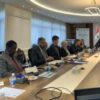
The Ministry of Planning (MoP), in collaboration with the International Labour Organization (ILO), UN-Habitat, and the International Trade Centre (ITC), hosted the first Steering Committee Meeting of the Building Equitable and Inclusive Transformation (BEIT) Towards Decent Work and Affordable Housing in Iraq project, funded by the European Union (EU).
The BEIT initiative promotes inclusive economic growth by creating decent work opportunities and improving access to affordable housing across Iraq. It aligns with Iraq's national development strategies, addressing pressing challenges such as unemployment and housing shortages. During the meeting, stakeholders reviewed progress achieved during the inception phase and discussed plans for 2025 implementation.
During his speech, Dr. Mohamed Mohsen Al Sayed, the Director General of Local and Regional Development Directorate, at the Ministry of Planning, stated:
"This project is one of the fruits of Iraq's cooperation with the European Union and the United Nations Agencies, aligning with Iraqi priorities in the housing sector, job creation, and private sector development.
"The initiative will establish a scalable housing model, which will be piloted in Anbar and Mosul, where 200 units are planned for construction. Additionally, the technical cooperation will focus on capacity-building interventions across various aspects and contribute to the development of a national housing policy, informed by the positive indicators emerging from the population and housing census that was recently implemented."
Lennart Derrider, Head of Cooperation for the EU Delegation to Iraq, highlighted the EU's support, saying:
"The project has taken concrete steps to uphold decent work standards and tackle child labour. It is laying the groundwork for the development of a National Housing Policy and is strengthening Iraq's business eco-system in the construction sector."
The country representatives of the three implementing UN agencies, Mr. Muslim Qazimi (UN-Habitat), Mr. Eric Buchot (ITC), and Dr. Maha Kattaa (ILO), gave an overview of progress to date, and presented the planned next steps for the Steering Committee's approval.
They jointly emphasized the importance of collaborative efforts, highlighting the commitment of UN-HABITAT, ITC and ILO to the project's multi-disciplinary and inclusive approach in technical support and technical assistance, as well as the commitment to tackling Iraq's housing shortage while creating meaningful employment opportunities through private sector engagement and the empowerment of SMEs.
They underscored the need for collaboration during the pilot phase in providing affordable green housing, enhancing trade performance and fostering job creation. It was anticipated that the Project Steering Committee would ensure strategic alignment to deliver affordable, impactful, sustainable eco-friendly solutions that integrate policy, trade facilitation, investment mobilization, and climate-resilient housing development with decent green jobs. Project Managers from the three agencies then provided detailed updates on the project's achievements so far.
BEIT partners provided insights into progress made during the inception phase and outlined collaborative strategies planned for 2025. Key elements of progress in 2024 included:
- commencement of the development of an updated national housing policy
- commenced design of green affordable housing units
- established a technical working group with international housing finance experts
- continued road map process for establishment of a national public works programme
- initiated labour governance reforms addressing child labour, inclusiveness, safe workplaces and dialogue among social partners
- capacity building for partners
- completed two construction market surveys on supply and demand sides
- established collaborations and partnerships
- commenced development of sustainable construction curriculum.
The project emphasizes collaboration across multiple sectors to ensure equitable access to employment and housing, focusing on vulnerable communities to promote inclusivity.
Questions were then taken from Steering Committee members, focusing on issues around the initiative's implementation strategies, ensuring equitable access, and addressing the specific needs of vulnerable communities. Attention was highlighted to supporting Iraq's marginalized and vulnerable populations, ensuring that the initiative fosters sustainable solutions for equitable economic growth.
The meeting concluded with a commitment from all partners to advance BEIT's objectives and ensure tangible outcomes for Iraq's communities in 2025 and beyond. Through BEIT, Iraq is taking a significant step toward building a more inclusive and sustainable future for its people.
(Source: UN)
Posted in Construction & Engineering In Iraq, Employment, Iraq Industry & Trade News Comments Off on Project to drive Decent Work and Affordable Housing in Iraq
Major New IBBC Report on 'Ease of Doing Business in Iraq'
Posted on 04 December 2024 .
The Iraq Britain Business Council (IBBC) has published its Advisory Council report on the Ease of Doing Business in Iraq.
The report outlines the challenges businesses face and provides actionable recommendations for the Iraqi government to foster a more business-friendly environment. The full report is now available on the IBBC website here.
According to data from the World Bank, Iraq continues to face significant challenges in becoming competitive for businesses across various indices-particularly in the provision of public services, ease of starting a business, navigating regulations, and securing credit.
Key Challenges Identified by Professor Gunter
Professor Frank Gunter highlights several critical drivers for change:
- Rapid Population Growth: Iraq's population is expanding by approximately 1 million people annually. To prevent unemployment rates from worsening, the government must create 350,000 new jobs every year.
- Declining Oil Revenues: With oil accounting for 96% of government income, falling oil prices (forecasted at $70 per barrel) threaten economic stability. Diversifying income sources through taxation, sales tax, or industrial production is essential to bridging the fiscal gap and generating jobs.
- Education Misalignment: Iraq's education system is predominantly geared toward preparing students for public sector roles. A shift is needed to equip students for private-sector opportunities, particularly in energy and other growing industries.
- Public-Private Partnerships (PPPs): PPP frameworks are currently failing due to frequent government renegotiations, which render long-term private investments unsustainable.
- Exchange Rate Challenges: The recent 11% appreciation of the Iraqi dinar against the dollar has made imports cheaper but hurt the competitiveness of local producers and exporters.
- Corruption: Despite progress being made by the Sudani Government corruption remains at all levels of society remains the main inhibitor to business.
The Role of the Private Sector
Expanding the private sector is seen as the only viable option to create jobs, spur innovation, and diversify income sources. However, systemic issues such as corruption and bureaucracy remain significant barriers. For example, setting up a business in Iraq takes an average of 160 days, and corruption is estimated to cost companies 20% of their turnover.
Proposed Solutions
To stimulate private sector growth, Professor Gunter recommends the following:
- Combat Corruption and Reduce Bureaucracy: Accelerate anti-corruption measures and simplify regulatory processes to encourage investment.
- Enhance Business Regulation: Introduce simpler, more transparent regulations to foster entrepreneurship.
- Improve Access to Banking and Finance: Expand banking services to provide businesses with easier access to credit.
- Reduce Public Sector Employment: Transition the workforce towards private-sector roles by scaling down state-owned enterprises.
- Streamline Insolvency Processes: Create a fair and efficient system to resolve business insolvencies.
- Reform Education: Broaden and deepen educational curricula to produce graduates ready for private-sector industries, such as engineering and business.
- Adjust the Exchange Rate: Adopt a sustainable exchange rate that balances import competitiveness with local producer profitability.
- Facilitate International Trade: Implement policies that enable smoother trade relations and reduce barriers for exporters.
The Stakes Are High
Professor Gunter underscores the urgency of these reforms:
"Improvement in these areas will require both focus and the expenditure of political capital. But the cost of failure will be high. Continued dependency on oil-export-funded government employment will become steadily more difficult over the next decade, resulting in higher unemployment and underemployment, particularly among young men. This outcome is not only economically inefficient but also socially and politically destabilizing."
Learn More
The report, complete with detailed analysis and recommendations, is now available for download on the IBBC website here.
Click here to download the full report [English].
Click here to download the full report [Arabic].
Professor Gunter will discuss the findings further at a roundtable during the IBBC Dubai Conference, taking place on 12th and 13th December. To learn more or register for the conference, visit the IBBC website here.
(Source: IBBC)
Posted in Investment, Iraq Industry & Trade News, Politics Comments Off on Major New IBBC Report on 'Ease of Doing Business in Iraq'
Video: Prof Gunter on Iraq's Private Sector; Shwan Aziz on Energy Opportunities
Posted on 29 November 2024 .
From the Iraq Britain Business Council (IBBC):
Professor Frank Gunter outlines what Iraq needs to do to support the private sector and IBBCs Shwan Aziz on Iraq's energy opportunities via Iraq 24 channel
Professor Frank Gunter Economics professor at Lehigh University and long-term observer of Iraq's economy, is launching an 'Ease of Doing business 'report for IBBC, with observations and recommendations for changes at the IBBC Dubai conference on 13th December.
Here he undertakes a long interview outlining what the issues are and steps the Government of Iraq needs to consider supporting the economy going forward.
The key issues outlined here include: the rapid growth of the Iraqi population at 1millon a year, means the Government needs to create 350,000 jobs a year just to stop unemployment getting worse. Government income from oil is set to decline ( currently 96% revenues from oil exports) in the medium term due to price reductions to $70 per barrel, and it must find other sources of income from taxes, sales taxes or industrial production to fill the income gap and to provide investment and opportunities for jobs.
The education system is geared for pupils to get government jobs, but must reorientate towards the private sector, for engineers and businesspeople to work in the energy and other expanding sectors. Furthermore, the PPP system is not working as Governments have renegotiated terms after a year or two to make the long-term private investment conditions unviable.
Finally, the exchange rate was also uprated 11% to the dollar, which has made imports cheaper and exports more expensive and competitive for local producers. Expanding the private sector is the only real option to provide jobs, opportunities, and sources of income
All these conditions must change, to create incentives for the private sector to invest in Iraq. Professor Gunter is holding a roundtable at the IBBC Dubai conference for member and attendees to hear more about the report, its solutions to easing business in Iraq and what can be done to address the key issues outlined above.
Register here
During the same program, channel 24 Iraq, Mr. Shwan Aziz,also a member of IBBC's Advisory Council, discussed the electricity sector, pointing out that Iraq offers significant investment opportunities in power generation, particularly through clean energy sources like solar and wind.
However, the transmission and distribution sectors face considerable challenges, including limited profitability and difficulties in effectively collecting consumption fees from citizens and various sectors, which hinder the sector's overall growth and efficiency.
Mr. Aziz also discussed the potential shift in focus under the Trump administration, highlighting how its interest in Iraq is likely to extend beyond political considerations. He emphasized Iraq's strategic significance in the Middle East and suggested that the administration might prioritise strengthening economic ties, bolstering the private sector, and attracting both U.S. and international investments to drive sustainable development in the country.
Regarding Iraqi businesses, Mr. Aziz highlighted that the Iraqi economy faces significant challenges in transitioning small businesses into medium-sized enterprises due to pervasive government bureaucracy and rising inflation, both of which obstruct job creation and economic growth.
He stressed that ensuring a conducive business environment in Iraq requires robust support for the private sector, positioning it as a key partner for foreign companies. Prioritising collaboration with local private enterprises over reliance on the public sector is essential to enhance competitiveness and drive sustainable development.
Register here to attend IBBC Autumn Conference 2024 in Dubai
Posted in Iraq Industry & Trade News, Iraq Oil & Gas News, Politics Comments Off on Video: Prof Gunter on Iraq's Private Sector; Shwan Aziz on Energy Opportunities