



Iraq Development Plan Allocates $65bn to Private Sector
Posted on 14 May 2026 .
By John Lee.
A spokesman for the Ministry of Planning has told the state-run Iraqi News Agency (INA) that poverty has declined from 22 to 17 percent and unemployment from 16 to 13 percent in recent years, attributing the improvement to government measures and private-sector cooperation.
Abd al-Zahra al-Hindawi added that the private sector is set to account for 35 percent of investment under the country's five-year National Development Plan (NDP), equivalent to around IQD 84 trillion (USD 65 billion).
Al-Hindawi said the Ministry of Planning had held a scientific conference in cooperation with the Ministry of Higher Education and Scientific Research, with participation from:
- University presidents and faculty deans
- Academics and subject-matter experts
- Private-sector representatives
The conference aimed to identify the root causes of unemployment and develop remedies, with al-Hindawi noting that understanding the cause represents half the solution.
He said the conference's findings and recommendations would be submitted to the incoming government for action, and that those recommendations would be translated into administrative policies and field-based work programmes. The private sector, he added, was central to the proposed remedies for absorbing unemployment and containing poverty.
(Source: Iraqi News Agency)
Posted in Investment, Iraq Industry & Trade News Comments Off on Iraq Development Plan Allocates $65bn to Private Sector
Conscription Plans Ignite Debate in Iraq
Posted on 04 May 2026 .
From Amwaj Media. Any opinions expressed are those of the author(s), and do not necessarily reflect the views of Iraq Business News.
Parliamentary push to bring back conscription ignites debate in Iraq
Iraq's parliament has completed its first reading of a bill that would reintroduce mandatory conscription for men.
Backed by Parliament Speaker Haibat Al-Halbousi, supporters have promoted the draft legislation as a tool to instill discipline among youth, strengthen national cohesion and reduce unemployment.
However, critics charge that it will further militarize society and burden Iraq's already creaking budget, which has been hit hard by plunging oil exports.
Posted in Politics, Security Comments Off on Conscription Plans Ignite Debate in Iraq

The Changing Perceptions of Iraq
Posted on 03 March 2026 .
From the Iraq Britain Business Council (IBBC):
You could be forgiven for thinking that Iraq is only dependant on oil and is a country struggling with conflict. However, reality has moved on from old perceptions and scarcely reflect the recent changes and dynamics that are tangible and progressing well. With a stable economic and political stability, Iraq is back and modernising. Indeed, in the context of the current middle east scenarios, Iraq has been relatively unscathed, muted, and mature in its handling of tensions.
Iraq's financial and investment landscape is remodelling as reforms are starting to show measurable results across a range of sectors and an economy diversifying at pace. IBBC's members have likewise reflected the sectoral diversification, including streaming platforms, event companies, design consultancy capabilities, maritime industries, tourism, recruitment and increasing applications of AI to manage production installations.
For a taster of what has been happening under the noses of the world's media let's see whats been happening across various sectors:
Non-oil GDP has grown at an average rate of about 4% between 2021 and 2023, signalling diversification after years of volatility. Foreign direct investment inflows reached a new record of $24bn in 2025 up from $2.6 billion in 2020, reflecting opportunities and investor confidence.
The Banking sector is modernization: electronic payment usage increased by more than 120% between 2021 and 2023, driven by greater adoption of POS systems and digital wallets. The CBI launched the National Financial Inclusion Strategy (2025-2029) to expand digital banking and microfinance supporting the private sector and restructuring major state-owned banks. These shifts are changing how regional and global markets view Iraq's financial stability.
Oil is important as Iraq plans to double oil production but also diversify its energy mix, to 8mb/d by 2027, expand energy infrastructure, including nuclear, gas, and solar projects, with significant investments totalling USUSD 620bn by 2030. Key initiatives involve increasing power capacity to 44GW by 2025, developing 11GW of nuclear energy, and enhancing regional electricity interconnections, corresponding to 33% of the power capacity mix thanks to a sharp increase in solar capacity (5.3% in 2024). including a $500 million waste-to-energy plant in Baghdad and the distribution of loans via the Central Bank of Iraq for residential solar panel installations. Shell has returned to Iraq to convert gas to electricity and gas as a form of power is increasingly important. The 2024-2028 plan intends to reduce the oil sector's contribution to GDP by up to 25% and bring unemployment down to 10%.
Across the broader economy, reconstruction and diversification efforts are reshaping both domestic and international perceptions. Iraq recorded a GDP of roughly $267 billion in 2023, making it one of the largest economies in the region.
Government spending on education rose to 9% of total public expenditures, supporting workforce development. Enrolment in Iraqi universities has grown by 30% since 2018, reflecting increasing emphasis on skills needed for a diversified economy. Combined with infrastructure projects these activities are shifting Iraq towards modernization and long-term economic planning.
Technology and agriculture are showing data-backed evidence of transformation. Iraq's ICT market grew by an estimated 14% in 2023, supported by expanded fibre-optic coverage and rising demand for digital services. Investment is being directed into agriculture (agritech), manufacturing, and the technology/media sectors, as the government prioritises climate-smart agriculture to combat water scarcity and have secured investments for three new industrial cities to stimulate local manufacturing. In agriculture, wheat production reached over 6 million tons in 2023, one of the highest outputs in Iraq's history, due to improved irrigation and government procurement programs.
E-government adoption has accelerated, as over 1.5 million citizens are using new online government platforms since 2022.
A $17 billion transport corridor of highways and railways are set to link the Grand Faw Port in Basra to the Turkish border, positioning Iraq as a regional trade hub between Asia and Europe. IBBC's own members are part of the push to develop the Maritime industry in Basra with an academy and investment into ship building.
IBBC's members reflect the dynamics of change, with initiatives in the Maritime economy, Tech, education and renewable power and finance. Iraq is back and its modernising. Now is the time to engage in one of opportunity economies in the region, early adopters will benefit from market entry as reality is ahead of perception
At IBBCs Mansion House conference on 9th June we are focusing on these changes with the people making the changes, and the opportunities the evolving Iraqi economy offers investors and citizens alike.
Posted in Construction & Engineering In Iraq, Investment, Iraq Banking & Finance News, Iraq Industry & Trade News, Politics, Security Comments Off on The Changing Perceptions of Iraq
Iraq Approves Loan Initiative for Unemployed Drivers
Posted on 03 December 2025 .
By John Lee.
Iraq's Ministry of Labour and Social Affairs has launched a lending initiative aimed at reducing unemployment by providing job opportunities for registered unemployed citizens.
Under the programme, the Ministry's Department of Labour and Vocational Training -- through its Small Projects Funds -- will issue loans for the purchase of modern passenger vehicles with capacities ranging from 11 to 21 seats.
The loans will be granted exclusively to unemployed individuals registered in the Ministry's database who also hold the appropriate driving licences. The plan includes accrediting specialised transport companies to employ the borrowers and their vehicles through contracts with government entities requiring staff transportation.
The scheme also includes the development of an electronic application for citizen transport requests, as well as services for school and university students and private-sector companies. Qualified transport firms, approved by the Ministry, will contract the borrowers under annually renewable agreements for vehicle-and-driver hire. Monthly wages will be paid via bank cards, with deductions applied for social security contributions.
(Source: PMO)
Posted in Iraq Banking & Finance News, Iraq Industry & Trade News, Iraq Transportation News Comments Off on Iraq Approves Loan Initiative for Unemployed Drivers
BEIT Project Addresses Iraq's Housing and Employment Challenges
Posted on 23 November 2025 .
From the United Nations (Iraq):
The BEIT Project Integrates Policy, Legal Frameworks, and Practical Solutions to Address Iraq's Housing and Employment Challenges
The Building Equitable and Inclusive Transformation (BEIT) towards Decent Work and Affordable Housing in Iraq project held its second Steering Committee Meeting in Baghdad. In his opening remarks, Dr. Mohamed Mohsen Al Sayed, Director General of the Local and Regional Development Directorate at the Ministry of Planning and Chair of the meeting, said:
"The BEIT project is one of the important initiatives to provide adequate and affordable housing, contributing to addressing the housing crisis through collaboration between the Ministry of Planning, the relevant ministries, and international organizations."
Under the leadership of the Ministry of Planning (MoP) and in collaboration with UN-Habitat, the International Labour Organization (ILO), and the International Trade Centre (ITC), the European Union-funded BEIT project is driving systemic changes that position housing as a catalyst for sustainable growth. The project addresses housing deficits through increased supply and affordability; tackles unemployment through job creation, improved working conditions, and enhanced professional skills; and strengthens the sector through innovation and capacity-building for a greener and more sustainable housing market.
Mr. Ali Al-Naseri, Programme Manager for the cooperation section of EU Delegation to Iraq, highlighted the EU's support, saying:
"The European Union, through the BEIT project, is committed to an integrated approach that interlinks social protection, decent work, and green growth, strengthening governance while ensuring that individuals and communities play an active role in the recovery process in Iraq."
In the past year, BEIT has continued to strive to support the Government of Iraq to embed development strategies into the policy and legal framework relating to affordable housing for lasting impact, while showcasing practical examples that demonstrate feasibility and scalability.
Significant progress achieved in 2025
The launch of the Iraq National Housing Policy in October, developed with UN-Habitat's support, reflected the government's commitment to sustainable, inclusive, and affordable housing nationwide. Its principles will soon be put into practice through the construction of 200 pilot housing units in Mosul and Ramadi, designed to meet green and affordable standards. From policy formulation to pilot implementation in post-conflict areas, UN-Habitat is helping Iraq demonstrate that housing can be both sustainable and cost-effective while reducing the national housing shortage.
Housing development also drives job creation and demands better working conditions. The International Labour Organization (ILO) has strengthened labour market institutions and advanced decent work, providing technical support to reform labour laws and reinforce governance frameworks. In 2025, 702 government officials, workers, and employers directly benefited from ILO capacity-building initiatives, while thousands more were reached through the national "Safe Work" campaign on occupational safety. The ILO also finalized the National Public Works Programme roadmap, organized Iraq's first National Conference on Occupational Heat Stress, established a Tripartite Task Force on Child Labour, and launched the National Forum for Social Dialogue, marking major progress toward safer, fairer, and more inclusive employment in Iraq.
To ensure the sector meets growing demand with sustainability and competitiveness, ITC is enhancing Iraq's regulatory and business environment for construction. Through investment facilitation reforms, procurement improvements, and value-chain-based reports on construction services informed by firms and consumer surveys, ITC has identified opportunities for Micro, Small, and Medium Enterprises (MSMEs) to promote innovation and attract sustainable investments. ITC has also introduced a national energy auditing tool 'AuditmyBEIT' to improve building performance and accelerate Iraq's clean energy transition. Complementary capacity-building programmes on solar energy, thermal insulation, and retrofitting techniques are strengthening national expertise and promoting climate-adaptive construction.
Strengthening coordination and sustainable impact
The Steering Committee served as a platform for partners to guide, reflect on progress and discuss coordinated actions to ensure sustainable results. By aligning policy reform with on-the-ground solutions, BEIT is strengthening Iraq's capacity to create conditions for affordable housing, decent employment, climate resilience, and inclusive economic growth. Stakeholders reaffirmed their joint commitment to scale up pilot housing models, promote climate-resilient construction, and strengthen decent work across Iraq's construction and housing sectors.
About BEIT
Building Equitable and Inclusive Transformation (BEIT) is a European Union-funded project jointly implemented by UN-Habitat, the International Labour Organization (ILO), and the International Trade Centre (ITC). The Project aims to drive sustainable economic growth by creating decent employment opportunities through the advancement of Iraq's affordable and green housing initiatives and the strengthening of the construction sector.
Posted in Construction & Engineering In Iraq, Employment Comments Off on BEIT Project Addresses Iraq's Housing and Employment Challenges

Youth and Innovation Power Iraq's Green Future
Posted on 16 November 2025 .
From United Nations Iraq:
Over sixty young innovators, including many talented young women, gathered at the American University of Iraq - Baghdad (AUIB) for the Green Iraqi Innovators Conference and Competition.
The event was co-organized by the UN Youth Advisory Council (UNYAC) and the Green Club at AUIB, in collaboration with the United Nations in Iraq and coordinated by the Resident Coordinator's Office (RCO).
Representing the UN Resident Coordinator, Ms. Hind Jalal, UNFPA Representative in Iraq, delivered remarks on behalf of Mr. Ghulam M. Isaczai, highlighting the creativity and determination of Iraq's youth - and the importance of giving equal opportunities to young women and men to drive sustainable change.
She noted that the path toward a greener Iraq cannot be separated from the country's broader development challenges. Despite progress, many young Iraqis continue to face barriers to employment, with youth unemployment exceeding 31 percent, and young women particularly affected, at around 40 percent. Addressing these gaps, she said, is essential to unlocking Iraq's full potential.
"Iraq's future lies not only in its rich history and natural resources, but in the boundless creativity and determination of its young people," Ms. Jalal emphasized.
The event featured a panel discussion on "The Future of Green Innovation in Iraq" with experts from the UN, academia, and the private sector, followed by a youth competition where six teams presented practical ideas on renewable energy, sustainable agriculture, waste management, and digital innovation. Judges from FAO, the Iraq Green Building Council, and the Center for Climate Change, Water Security and Environmental Sustainability selected the winning projects.
Three projects stood out for their creativity, scientific depth, and potential impact:
1. Fuel and Lead - by Yaqoob and Arwa
A research-based project assessing the health and environmental impact of lead in fuel through field sampling and community awareness campaigns, calling for stricter fuel regulations and public education to reduce pollution and protect children's health.
2. ABZU Project - by Ameer Saad
An innovative dual-purpose system that generates clean electricity while purifying water, designed to be low-cost, scalable, and environmentally sustainable.
3. Climate Change Consultant Internship (CCCI) - by Qaysar Alwardi
A six-month training programme creating Iraq's first generation of climate consultants through scientific sessions, fieldwork, and partnerships with green companies.
The atmosphere was filled with energy and optimism as participants showcased innovative solutions to some of Iraq's most pressing environmental challenges, ranging from renewable energy and waste recycling to sustainable construction and green technology.
Ms. Hind Jalal commended the enthusiasm and creativity of the young participants, noting how both young women and men are taking ownership of Iraq's green future and finding smart, practical ways to protect the environment. She emphasized that Iraq's youth are not waiting for solutions - they are creating them.
Organized under the theme "Youth for a Sustainable Iraq", the conference provided a platform for participants to share ideas, network with mentors, and explore opportunities to advance climate action and innovation in their communities.
The Green Iraqi Innovators Conference is part of the UN's ongoing efforts, coordinated by the RCO, to promote youth participation, women's empowerment, and sustainable development in Iraq.
Congratulations to all participants and the winning team for their passion and innovative spirit in building a greener, more inclusive Iraq.
Posted in Iraq Education and Training News, Iraq Industry & Trade News Comments Off on Youth and Innovation Power Iraq's Green Future
Soft Loans for Women's Enterprises in Iraq
Posted on 06 November 2025 .
By John Lee.
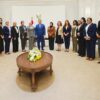
Prime Minister Mohammed Shia Al-Sudani announced on Wednesday the launch of the Basmat (Fingerprint) Initiative, which provides soft loans for women to establish small and medium-sized projects, in cooperation with several national banks.
Al-Sudani praised the efforts of all those who contributed to this national initiative, which aims to enhance women's participation in the economy and strengthen their essential role in national and social development. He affirmed the government's prioritisation of women's sectors through several measures, notably the establishment of the Higher Council for Women, which coordinates national efforts to support women.
The Prime Minister emphasised that the government is committed to women's economic empowerment as part of its strategy to reduce unemployment and create job opportunities for women, while supporting activities that offer both material and moral assistance. He referred to the "Riyada" (Entrepreneurship) Initiative, which has already included more than 500,000 young men and women, with women representing 27% of applicants.
Al-Sudani also commended the role of the private sector, particularly banks, in supporting initiatives such as Basmat. He added that the government will complement these loans with training, advisory, and support platforms for various women-led projects.
The Basmat Initiative will finance a diverse range of women's projects across productive, service, and technical sectors -- including home-based food production, tailoring, small e-commerce, agriculture, women's service centres, childcare facilities, and design-related ventures. The loans will be offered under simplified conditions tailored to the needs of women's small and medium enterprises.
(Source: Prime Minister's Office)
Posted in Iraq Banking & Finance News, Iraq Industry & Trade News Comments Off on Soft Loans for Women's Enterprises in Iraq
Dinar RV: Will Iraqi Election Speed the Process?
Posted on 29 October 2025 .
By Guest Blogger. Any opinions expressed are those of the author(s), and do not necessarily reflect the views of Iraq Business News.
Dinar RV: Will Iraqi Election Speed the Process?
For years, speculators in Iraqi dinar have clung to the dream of an imminent "revaluation" or "RV" that would dramatically increase the currency's value overnight, transforming modest investments into massive windfalls. With each Iraqi election cycle, a familiar refrain emerges in dinar speculation communities: Could this political event finally trigger the long-awaited RV?
The RV Fantasy
The concept of a dinar revaluation rests on a fundamental misunderstanding of how currencies and economies work. Proponents believe Iraq will suddenly revalue its currency at rates that would make it one of the world's most valuable -- sometimes claiming it will reach or exceed the value of the US dollar. These expectations are not grounded in economic reality.
Iraq's economy, while resource-rich, faces significant challenges, including:
- Ongoing political instability
- Infrastructure damage from decades of conflict
- Heavy dependence on oil revenues
- High unemployment and inflation
- Corruption and governance issues
A massive currency revaluation would be economically catastrophic for Iraq, making its exports uncompetitive, thus crippling its economy.
Why Elections Don't Trigger Currency Miracles
Dinar speculation communities often point to elections as potential catalysts for revaluation, but this connection is purely imaginary. Elections in Iraq, like elsewhere, are political processes that may lead to policy changes over time, but they don't directly cause currency revaluations.
Central banks adjust currency values based on economic fundamentals, not political calendars. The Central Bank of Iraq (CBI) has repeatedly stated it has no plans for a dramatic revaluation. When currencies do appreciate, it happens gradually through market forces or careful central bank management -- never through the sudden, massive jumps that dinar speculators envision.
The Real Winners
The true beneficiaries of dinar RV speculation are not the hopeful investors, but the dealers and promoters who sell dinars at enormous markups and profit from spreading false hope. These dealers often charge commissions of 20% or more above the actual exchange rate, making money regardless of whether any revaluation occurs.
Many promoters operate through websites, YouTube channels, and conference calls where they perpetually claim the RV is "imminent," citing fabricated insider information, misinterpreted news stories, or completely fictional sources. When predictions fail, they simply move the goalposts and set new dates.
A Pattern of False Promises
The dinar RV community has a long history of failed predictions tied to specific events:
- "It will happen after the new government forms"
- "It will happen when Iraq exits Chapter VII sanctions" (which occurred in 2013 with no RV)
- "It will happen when the budget is published"
- "It will happen after the election"
Each milestone comes and goes without the promised revaluation, yet believers remain convinced the next event will be different.
The Bottom Line
Iraqi elections, like any other political event in Iraq, will not trigger a dinar revaluation. The RV is a speculative fantasy that ignores basic economic principles and preys on people's hopes for quick wealth.
If you're holding Iraqi dinars hoping for an RV:
- Understand that you've likely already lost money through dealer markups
- Recognize that the dinar may appreciate modestly over many years, like any currency, but will not suddenly skyrocket in value
- Be skeptical of anyone claiming insider knowledge or setting specific dates for revaluation
- Consider whether your money might be better invested in legitimate, diversified assets
The Iraqi dinar is an exotic, illiquid currency from a developing nation with significant economic and political challenges. Elections may bring political change, but they won't transform bad investments into good ones through magical currency revaluations that violate economic reality.
The sooner investors recognize the RV for what it is-an unrealistic expectation perpetuated by dealers profiting from hope-the sooner they can make informed financial decisions based on reality rather than fantasy.
For more information on the Iraqi dinar, check out IBN's Dinar Page here: https://www.iraq-businessnews.com/the-dinar-page/?swcfpc=1
See also:
Iraqi Central Bank Reduces Supply of Dinars
Trump & Crypto: Will Bitcoin's Success Translate to the Iraqi Dinar?
Posted in Iraq Banking & Finance News 4 Comments
Iraq Designates 4th March as National Entrepreneurship Day
Posted on 21 October 2025 .
By John Lee.
Prime Minister Mohammed Shiaa Al-Sudani has announced that 4th March will officially be recognised as National Entrepreneurship Day in Iraq.
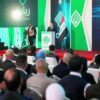
The declaration was made during the opening of the second "Riyada" (Entrepreneurship) Conference and Exhibition in Baghdad on Saturday.
Al-Sudani praised the "Riyada" initiative as a key element of his government's economic reform programme, designed to support private sector development and empower youth-led innovation. He highlighted that over 500,000 young Iraqis have joined the initiative so far, with women representing around 27 percent of applicants.
He also commended the Central Bank of Iraq (CBI) and other financial institutions for their positive engagement in supporting the programme through training and loans.
Key points from Al-Sudani's remarks included:
- The initiative will evolve into an institutional body linking youth with financial institutions and training partners.
- The government is committed to supporting female participation and reducing unemployment among women.
- Entrepreneurship education has been introduced in 80 vocational schools and will expand to universities.
- The programme reflects a youth-driven economic awakening that aligns with Iraq's transition toward a stronger private sector.
- Partnerships with the private sector are crucial to turning crises into opportunities and generating sustainable employment.
(Source: PMO)
Posted in Investment, Iraq Industry & Trade News Comments Off on Iraq Designates 4th March as National Entrepreneurship Day
Iraq's Verdict on America, Britain, and Iran After 2003
Posted on 13 September 2025 .
By Dr. Layth Mahdi. The opinions expressed are those of the author, and do not necessarily reflect the views of Iraq Business News.
Iraq's Verdict on America, Britain, and Iran After 2003
Two decades after the U.S.-led invasion, Iraqis remain sceptical of the promises made in 2003. Operation Iraqi Freedom toppled Saddam Hussein but left behind a fractured system that has enriched elites while failing ordinary citizens.
Pre-2003 vs. Post-2003 Iraq: A Comparison
Before 2003, Iraq had a relatively stable but perhaps corrupt system that served ordinary citizens in ways the post-invasion promises of "freedom" never materialized. At that time, Iraq's agricultural sector contributed 12% to the GDP, while industry contributed 14%. Illiteracy was virtually non-existent. However, by 2025, these figures had dramatically declined: agriculture's contribution to GDP fell to 1.3%, industry to just 2%, while illiteracy increased, affecting 25% of the population.
Democracy or Dysfunction?
The post-2003 parliamentary system splintered into nearly 300 political parties. Instead of building a functioning democracy, these groups divided ministries and state institutions like spoils of war. Paralysis, corruption and embezzlement became the hallmarks of governance.
The shortcomings of Iraq's ruling class are often glaring. Some leaders cannot distinguish between a million, a billion, and a trillion. Others struggle to read policy documents. For many Iraqis, this captures the decay of a system that promised democracy but delivered dysfunction.
Iran's Expanding Influence
The U.S. and Britain's invasion of Iraq created a power vacuum that Iran quickly moved to fill. Tehran extended its influence into Iraq's politics, security, and economy, often with tacit approval from Washington.
Today, Iran-backed militias operate outside Baghdad's control, undermining the authority of the state. Iran's reach extends into Iraq's parliament, judiciary, and key ministries. Many Iraqis believe that Tehran has deliberately weakened the country's agricultural and industrial sectors to ensure that Iraq remains dependent on Iran for economic survival.
The People Left Behind
While politicians and militias have prospered, ordinary Iraqis continue to endure worsening conditions and poverty. Successive governments have failed to provide basic services such as electricity, clean water, healthcare, education, and jobs.
Southern Iraq suffers most. Poverty exceeds 50 percent, with Muthanna Governorate approaching 60 percent. Unemployment is widespread, corruption entrenched, and illiteracy affects an estimated 10 million Iraqis, about one in four citizens.
The scale of corruption is staggering. According to a report from Iraq's Central Bank in collaboration with the World Bank, $1.46 trillion in public funds has been stolen since 2003. Only 2% of that amount recovered. More than $600 billion has been smuggled abroad, much of it funnelled to Iran through proxies.
A Fragile State
Iraq today is trapped in a cycle of instability. The government is widely seen as illegitimate and incapable of governing effectively. The Prime Minister relies on over 100 advisors, many of whom are relatives, friends, or loyalists with little expertise.
The bloated public sector, with 10 million employees, relies almost entirely on oil revenues. A sharp drop in oil prices could trigger a national crisis, fuel mass protests, and even collapse the government.
Meanwhile, Iraq's population grows by about a million every year, further straining the weak infrastructure, collapsing services, and a stagnant economy.
Searching for a Future
Some Iraqis argue that fundamental change is needed. Proposals include moving from a parliamentary to a presidential system, creating an independent legislature, and reforming the public sector with investment in vocational training and economic development.
But such reforms require stability, something Iraq has struggled to achieve since 2003.
When U.S. Ambassador Paul Bremer promised Iraqis a future of democracy, stability, and prosperity, it captured the hopes of a nation. Yet, twenty years later, many Iraqis feel that these promises have not been delivered.
Posted in Blog Comments Off on Iraq's Verdict on America, Britain, and Iran After 2003