


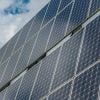
Iraqi PM invites Solar Power Companies to Conference
Posted on 12 March 2025 .
By John Lee.
The National Team for Renewable Energy Projects and Energy Efficiency at the Iraqi Prime Minister's Office has invited "specialized companies in the field of solar energy project implementation" to participate in a conference.
The conference will take place at the Training and Energy Research Directorate of the Ministry of Electricity on Thursday, March 13, 2025, at 12:00 PM.
The event aims to present the technical requirements for executing projects related to environmentally friendly government buildings.
Local and international specialists from relevant companies are encouraged to attend and bring their company profiles and credentials for participation.
(Source: PMO)
Posted in Construction & Engineering In Iraq, Iraq Industry & Trade News Comments Off on Iraqi PM invites Solar Power Companies to Conference
BP Signs Initial Agreement to Develop Kirkuk Oilfields
Posted on 11 March 2025 .
By John Lee.
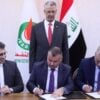
Iraq's Ministry of Oil has signed an initial agreement with BP to develop four oilfields in Kirkuk.
The agreement, signed by North Oil Company (NOC) and North Gas Company (NGC), covers the development of the Avana and Baba domes of Kirkuk, Bai Hassan, Khabbaz, and Jambur fields.
Minister of Oil Hayan Abdul Ghani highlighted the importance of this deal in enhancing state revenues and increasing national oil and gas output. He noted that after a period of stagnation, the project would contribute to higher oil production and greater gas utilisation, particularly for electricity generation.
Senior officials from the Ministry of Oil, including deputies for extraction, gas, and refining, as well as directors from Basra Oil Company (BOC), Midland Oil Company (MdOC), and North Gas Company, attended the signing ceremony.
The contract also includes rehabilitation and expansion of gas facilities at North Gas Company, further supporting Iraq's energy sector development.
(Source: Ministry of Oil)
Posted in Iraq Oil & Gas News Comments Off on BP Signs Initial Agreement to Develop Kirkuk Oilfields
Iraq Reviews Summer Electricity Plan, Oil Developments
Posted on 11 March 2025 .
By John Lee.
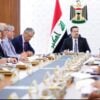
Iraqi Prime Minister Mohammed S. Al-Sudani chaired a meeting on Sunday to assess summer electricity supply plans and the progress of oil sector projects.
The Minister of Electricity outlined strategies to ensure stable power supply, including fuel station operations, while the Minister of Oil detailed fuel supply plans for power plants, including floating and mobile platforms under review.
Key decisions included:
- Completion of a gas transmission line from Basra's power plants to a floating platform.
- Approval of a new 40km gas pipeline from Al-Mahmoudiya to Bismayah to ensure full-capacity operation of the Bismayah power plant.
- Assessment of fuel oil supply, storage, and import logistics.
The meeting also reviewed strategic oil projects, including:
- Basra-Haditha oil pipeline.
- Seawater supply pipelines and treatment plant at Basra Oil Company (BOC).
- Offshore pipeline expansions (third, fourth, and fifth phases).
- Artawi [Ratawi] gas complex (Phase II).
- Mansouriya, Akkas, and Faihaa [Block 9] field developments.
- FCC fluid catalytic cracking unit project.
- Fifth and sixth licensing rounds.
The meeting assessed progress on government program projects, with an update on execution rates as of February 2025.
(Source: PMO)
Posted in Iraq Oil & Gas News Comments Off on Iraq Reviews Summer Electricity Plan, Oil Developments
Mike Waltz: Investment Coordinator should facilitate US Business in Iraq
Posted on 10 March 2025 .
By John Lee.
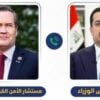
US National Security Advisor Mike Waltz held a call with Iraqi Prime Minister Mohammed S. Al-Sudani on Sunday, reaffirming Washington's commitment to strengthening bilateral relations with Baghdad.
Mr. Waltz extended Ramadan greetings and expressed concern over recent flooding in Baghdad. Discussions focused on economic cooperation, with Prime Minister Al-Sudani outlining his government's reforms to foster a stable, transparent, and investment-friendly environment. He reiterated Iraq's commitment to expanding economic ties with the US and attracting American investment.
Mr. Waltz linked the non-renewal of the sanctions waiver on Iranian electricity exports to President Trump's "maximum pressure" strategy against Iran, citing concerns over nuclear development and regional security threats. He encouraged Iraq's energy independence and called for greater US private sector involvement in Iraq's oil and gas sectors.
He also urged Baghdad to resolve contract disputes with the Kurdistan Regional Government (KRG) and settle arrears owed to US energy firms. Additionally, he proposed the appointment of an investment coordinator to facilitate US business operations in Iraq.
Both sides reaffirmed their strategic partnership, stressing the importance of building a self-reliant Iraq capable of maintaining sovereignty and stability.
Full statement from the Media Office of the Iraqi Prime Minister:
Prime Minister Mohammed S. Al-Sudani received a phone call today, Sunday, from U.S. National Security Advisor Michael Waltz, during which both sides reaffirmed their commitment to strengthening and deepening the strategic partnership between Iraq and the United States.
The discussions focused on enhancing bilateral cooperation in economic and security matters. Prime Minister Al-Sudani reiterated Iraq's commitment to expanding economic relations with the United States, encouraging American companies to invest in Iraq's growing market. He also reviewed key reforms and initiatives implemented by his government to create a stable, transparent, and investment-friendly environment.
For his part, National Security Advisor Waltz encouraged Iraq to engage more with American companies and work to resolve obstacles facing U.S. businesses operating in the country, including in the Kurdistan Region. He stressed the importance of facilitating their work and investment in Iraq.
Both sides also emphasized joint efforts to build a strong Iraq capable of self-reliance. The discussions covered resolving outstanding issues and the role of American companies in supporting Iraq's economic development. The United States reaffirmed its commitment to supporting Iraq's energy independence and expressed readiness to cooperate in accelerating progress toward this goal.
On security matters, Waltz reiterated the United States' unwavering commitment to Iraq's security and stability amid regional and international challenges. Both sides underscored the importance of continued cooperation to safeguard Iraq's sovereignty and long-term stability, especially given the current regional conditions.
Waltz also noted that the decision to end the waiver for Iranian-supplied electricity aligns with the Maximum Pressure Policy, emphasizing the need for bilateral coordination to mitigate any potential impact on Iraq's stability.
The call reaffirmed the strong partnership between Iraq and the United States, with both sides expressing a shared vision for a secure, prosperous, and sovereign Iraq.
Full statement from U.S. National Security Advisor Michael Waltz:
National Security Advisor Mike Waltz spoke on Sunday morning with Iraqi Prime Minister Mohammed Shiaa al-Sudani. The National Security Advisor wished Prime Minister Al-Sudani a Ramadan Kareem, and expressed his concerns regarding the recent flooding in Baghdad.
Mr. Waltz emphasized the importance of moving towards a win-win relationship based on mutual security interests and enhanced trade. Mr. Waltz noted that the decision to not renew the waiver of sanctions on Iranian electricity exports was consistent with President Trump's "maximum pressure" strategy on Iran, and that pressure on Iran would increase if Iran continued to develop a nuclear weapons capability and support terrorism across the region, including in Iraq.
Mr. Waltz welcomed the Iraqi Prime Minister's efforts to achieve energy independence for Iraq, and encouraged the Iraqi government to welcome more western and U.S. energy companies into Iraq's oil and gas sectors. The National Security Advisor urged the Iraqi government to work with the Kurdistan Regional Government to address remaining contract disputes and pay arrears owed to U.S. energy companies, and also requested that the Iraqi government retain an investment coordinator to work with U.S. companies seeking to invest and operate in Iraq.
The National Security Advisor thanked the Prime Minister for his commitment to the bilateral U.S-Iraqi relationship, and emphasized the Trump administration's commitment to deepening energy and economic ties between the two countries to benefit both the American and Iraqi peoples.
(Sources: PMO, @MikeWaltz47)
Posted in Investment, Iraq Industry & Trade News, Politics, Security Comments Off on Mike Waltz: Investment Coordinator should facilitate US Business in Iraq
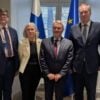
Iraq, Finland Discuss Strengthening Economic and Investment Ties
Posted on 08 March 2025 .
By John Lee.
Ambassador Mohammed Hussein Bahr Aluloom, Undersecretary of the Iraqi Foreign Ministry for Bilateral Relations, met in Helsinki with Jarno Syrjälä, Under-Secretary of State for International Trade of Finland, to discuss ways to enhance economic, trade, and investment cooperation between the two countries.
Ambassador Bahr Aluloom highlighted Iraq's economic progress, emphasizing security stability and an improved business environment, which have made Iraq an attractive destination for foreign investments. He cited the United Kingdom's decision to lower travel warnings to Iraq as an example of international confidence in Iraq's progress. The Ambassador also encouraged Finnish companies to invest in strategic projects, particularly the Development Road and the energy sector.
Under-Secretary Syrjälä welcomed Iraq's economic reforms, acknowledging their role in enhancing the investment climate. He expressed Finnish companies' interest in returning to the Iraqi market.
The two sides agreed to develop practical mechanisms to strengthen cooperation, including a delegation of Finnish companies visiting Iraq to explore investment opportunities in renewable energy, electricity, digital transformation, and artificial intelligence.
(Source: Ministry of Foreign Affairs)
Posted in Investment, Iraq Industry & Trade News Comments Off on Iraq, Finland Discuss Strengthening Economic and Investment Ties
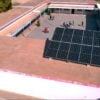
81 Schools in KRI now Powered by Solar Energy
Posted on 06 March 2025 .
The Ministry of Education of the Kurdistan Regional Government (KRG) has installed solar power systems in 81 schools across the governorates of Erbil, Slemani, Duhok, Halabja and Kirkuk.
Saman Siwayli, spokesperson for the ministry, stated that the initiative aims to ensure schools have uninterrupted 24-hour electricity, eliminating reliance on power generators.
To further expand the project, KRG Prime Minister Masrour Barzani has allocated IQD 5 billion to equip 76 additional schools with solar power systems. The initiative will continue until all schools across the Kurdistan Region are fully powered by solar energy.
(Source: KRG)
Posted in Iraq Education and Training News, Iraq Industry & Trade News Comments Off on 81 Schools in KRI now Powered by Solar Energy
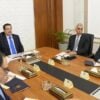
PM Directs Immediate Launch of Govt Renewable Energy Projects
Posted on 04 March 2025 .
By John Lee.
Iraqi Prime Minister Mohammed S. Al-Sudani chaired a meeting of the National Team for Renewable Energy Projects and Energy Efficiency, where he reviewed plans to enhance clean energy production and improve energy efficiency across Iraq.
The Prime Minister emphasized the critical role of solar power in reducing reliance on traditional fuels and directed the immediate launch of the Government Palace solar energy project as part of the Energy-Efficient Government Buildings initiative. This will be followed by similar implementations in 164 government buildings nationwide.
Key Initiatives Discussed:
- Renewable Energy Investments:
- Completion of project designs for government solar energy initiatives.
- A pilot solar power plant for the Ministry of Interior, currently in the bidding phase.
- The Army Canal solar project (100 MW capacity) to be offered as an investment opportunity soon.
- Expansion of Smart Energy Solutions:
- The first pilot solar energy project for residential complexes is under development.
- Launch of smart energy projects in Al-Muthanna, Al-Anbar, and other provinces.
- Integration of smart energy solutions into service and billing contracts for electricity distribution companies.
- Technical Advancements:
- Finalization of technical requirements for new solar power stations.
- Broader strategies to reduce carbon emissions and improve energy efficiency in Iraq.
(Source: PMO)
Posted in Iraq Industry & Trade News Comments Off on PM Directs Immediate Launch of Govt Renewable Energy Projects
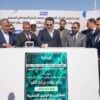
Major Infrastructure and Energy Projects in Muthanna
Posted on 02 March 2025 .
By John Lee.
Iraqi Prime Minister Mohammed S. Al-Sudani concluded his visit to Al-Muthanna Governorate, during which he launched and inaugurated several key projects across energy, housing, healthcare, infrastructure, and industry.
Key Announcements:
- Energy Sector:
- Launched construction of the Samawa Gas Power Plant (250 MW) as an investment project.
- Approved the establishment of a new electricity production branch in Al-Muthanna.
- Housing & Infrastructure:
- Launched construction of Al-Ghadeer Residential City (40,000 housing units), including 10,000 units for educators.
- Launched an integrated sewage project in Samawa.
- Inaugurated the Hajama-Sawa railway line and three concrete bridges.
- Allocated Al-Muthanna 736 billion dinars for seven major infrastructure projects, including:
- Construction of Al-Rumaitha Hospital (200 beds).
- Multiple wastewater treatment and sewerage projects across the governorate.
- Healthcare & Education:
- Launched construction of Al-Khidhir General Hospital (100 beds).
- Initiated construction of Mehd Al-Hedharat University.
- Agriculture & Industry:
- Launched the Al-Anaam Company's commercial and livestock complex.
- Inaugurated a food production plant and launched livestock and food packaging projects in Al-Najmi District.
According to a statement from the Prime Minister's Office, these projects align with the government's development agenda, aiming to boost infrastructure, enhance essential services, and stimulate economic growth in the governorate.
(Source: PMO)
Posted in Construction & Engineering In Iraq, Healthcare, Investment, Iraq Education and Training News, Iraq Industry & Trade News Comments Off on Major Infrastructure and Energy Projects in Muthanna
Shanghai Company Advances Waste-to-Energy Project in Iraq
Posted on 01 March 2025 .
By John Lee.
Iraq's National Investment Commission (NIC) hosted a high-level delegation from China's Shanghai Environment Company [Shanghai SUS Environment] to discuss investment contract requirements for Iraq's first waste-to-energy power plant.
The company, which holds the investment license for the project, aims to develop a high-efficiency incineration plant that will generate up to 100 MW of sustainable electricity.
Key Project Developments:
- The company will finalise agreements with Iraq's Ministry of Electricity, Ministry of Environment, and Baghdad Municipality to align technical, legal, and investment aspects.
- The project is expected to reduce emissions and minimise environmental pollution caused by traditional waste disposal methods.
- The NIC sees this initiative as a model for future projects across Baghdad and other provinces.
The delegation reaffirmed its commitment to project success, noting the company's expertise in integrated energy solutions and smart manufacturing. Shanghai Environment has completed over 80 waste treatment projects globally, contributing 20,000 MW of power from 110,000 tonnes of daily waste, covering 70% of China's waste-to-energy capacity.
The company views Iraq as a promising market for expanding similar investments in the region.
(Source: NIC)
Posted in Construction & Engineering In Iraq, Iraq Industry & Trade News Comments Off on Shanghai Company Advances Waste-to-Energy Project in Iraq
Iraqi PM Launches New Housing Project
Posted on 01 March 2025 .
By John Lee.
Prime Minister Mohammed Shia Al-Sudani inaugurated the construction of 10,000 serviced residential plots in Nahrawan, Baghdad, as part of the government's broader housing initiative. The 2,500-donum project aims to provide integrated infrastructure, including water, electricity, roads, schools, and healthcare facilities.
Al-Sudani emphasized the government's strategy of expanding towards urban outskirts to alleviate the housing crisis, citing developments such as Al-Fursan City for Ministry of Defence personnel and the 100,000-unit Al-Ward City project [Ali Al-Wardi Residential City], alongside Bismayah and other new housing schemes.
Key remarks from the Prime Minister:
- Housing remains a top priority, with new projects aimed at resolving the crisis and offering diverse options based on citizens' income levels.
- The 500,000-unit housing target is progressing, despite bureaucratic delays.
- The real estate development model will be further applied to accelerate housing delivery nationwide.
Al-Sudani reaffirmed the government's commitment to executing its agenda efficiently and transparently.
(Source: PMO)
Posted in Construction & Engineering In Iraq Comments Off on Iraqi PM Launches New Housing Project