


Youth Strike Balance Between Conservatism, Modernity
Posted on 18 September 2013 .
By Wassim Bassem for Al-Monitor. Any opinions expressed are those of the author, and do not necessarily reflect the views of Iraq Business News.
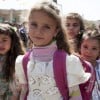
The youth in Iraq are taking advantage of the summer months to wear the clothes they like and flaunt their flexibility in changing hairdos and giving themselves makeovers. In light of the increasing social openness and society's improving purchasing power, advocates of conservatism find themselves at odds with the emergence of modern trends.
Imad Saqr, a social researcher and youth-affairs activist, told Al-Monitor, “The young people who follow modern traditions are religiously conservative and expressive and enthusiastic when it comes to religious events.”
It is now common in Iraq to show religious affiliations through fashion, blending local religious culture with Western and modern style. Mohammad Kamel, 18, has his armed tattooed with the sword of Imam Ali, which is currently in fashion in Iraq. In Adhamiyah in Baghdad, Rahim Maher had his wrist tattooed with the name of Omar, an influential 6th century caliph.
Saqr highlights a love for “change” among Iraq's youth, who follow the latest trends in clothing, hairstyles and cellphones. Even young boys buy the latest technological devices that broadcast religious texts, prayers and Quranic recitation, embodying an amazing harmony between love for modern technology and attachment to social and religious customs and values.
Saqr accuses Western nations of seeking to spread their culture via the modern technology exported to various countries around the world.
Posted in Politics 2 Comments
Iraqi Youth – Key Statistics And Resources
Posted on 18 September 2013 .
A range of studies and surveys reveal that Iraqi youth face many challenges. The United Nations Population Fund (UNFPA), together with the Government of Iraq, conducted a National Youth Survey in 2009 that provided the first comprehensive insight into the reality of being a young person in today’s Iraq.
The United Nations, the Central Organization for Statistics, and the Kurdistan Region Statistics Office also produced the Iraq Knowledge Network Survey in 2011 which provides specific information on youth attitudes and issues.
These surveys reveal some startling statistics. Of those youth aged between 15 and 24 years old at the time of the survey, only 56.9% felt optimistic about the future. At the same time, only 52.3% in this same age group were supportive of the idea of women going out to work. Almost 50% of these young people said that youth have no trust in politics. Almost 17% of young Iraqis expressed a strong desire to emigrate.
Iraq is facing a ‘youth bulge’ a demographic term applied to countries where the vast majority of the population is young. In Iraq, the number of young people entering their reproductive years and the labour force is expected to increase significantly between 2011 and 2015, creating both an opportunity and a challenge to Iraq’s society and economy.
Conflict has significantly limited young people’s educational and employment opportunities in Iraq. The enrolment ratio in intermediate education is barely 40 percent; for secondary education it is less than 30 percent. The illiteracy rate is high, and the unemployment rate for both sexes combined is estimated at about 30 percent.
Adolescent girls are worse off than boys in every respect. There is a high probability that girls will be married before their 18th birthday without their consent. Girls’ freedom of movement is much more restricted.
In terms of participation, only 40 percent of youth perceive the value of taking part in social and political life. Youth in Iraq are also exposed to risky health behaviour, with only 46 percent of youth able to identify the ways in which HIV/AIDS is transmitted, and only 26 percent able to recognize means of protection. There has also been an alarming increase in drug and substance abuse.
(Source: United Nations Assistance Mission for Iraq)
Posted in Iraq Education and Training News Comments Off on Iraqi Youth – Key Statistics And Resources

New Iraqi Protest Movement Targets Corrruption
Posted on 14 September 2013 .
By Harith Hasan for Al-Monitor. Any opinions expressed are those of the author, and do not necessarily reflect the views of Iraq Business News.
Iraq is currently witnessing a huge discrepancy between the performance of the political class and the security, social and economic pressures experienced by the people.
Despite its apparent failure in dealing with the security, economic and social issues that have placed Iraq at the top of the list of “failed states,” the political class decided to reward itself with unprecedented privileges, expressing extreme indifference toward the voters.
During the past few years, the legislative, executive and independent institutions issued decrees that granted their members very high salaries and huge additional privileges. Lawmakers earn an estimated $22,500 each month in salary and allowances for housing and security. In contrast, a mid-level government employee makes around $600 a month.
While these extensive privileges were supposed to serve as motivation for the lawmakers to work harder, failure continues to plague the Iraqi parliament, which seems unable to hold frequent meetings because of the chronic absence of more than half of its members.
The fact is that Iraq is a rentier country where the political elite oversees the distribution of oil revenues in a way that serves its interests. An equitable relationship between taxation and representation does not exist in rentier states, where the ruling elite practically turn into owners that distribute the wealth as it sees fit, while the people become dependent on donations from the rulers.
Such a relationship had explicitly existed under the regime of former President Saddam Hussein. The official media outlets of the time used to label any financial or material grant given by the government to the citizens as a “gift from the leadership.”
Such rhetoric no longer exists today, but the investment of the easy money from oil proceeds still serves the goals of political forces. The political conflict is basically about each group seeking to control a greater share of the oil revenues.
Posted in Politics, Security 4 Comments
Young Grads to get Loans to Start Businesses
Posted on 12 September 2013 .
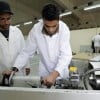
The United Nations Educational, Scientific and Cultural Organization (UNESCO) organized today 9 September 2013, an official ceremony to honour the young graduates that will be granted business loans by the Ministry of Labour and Social Affairs in the Kurdistan Regional Government (KRG) in order for them to start their new businesses after successfully undergoing an entrepreneurship training, and submitting their business plans in the framework of the project "Fighting Youth Unemployment Through Education".
Held in Rotana Hotel in the northern City of Erbil, and attended by the General Director at Minister of Labour and Social Affairs Dr. Arif Hito, and Director of UNESCO Office in Iraq Mrs. Louise Haxthausen, in addition to senior officials involved in this project from the KRG, the ceremony featured the distribution of special certificates for technical and vocational Education and Training (TVET) graduates who participated in the entrepreneurship Knowledge About Business course (KAB) and were selected based on their business plans to receive loans from the ministry to start their own businesses.
In his opening speech, representing the Minister of Labour and Social Affairs HE Asous Najib Abdallah, Dr. Hito praised this project as it meets "with the strategic priorities of the Kurdistan Regional Government, through enabling youth to develop themselves and introduce them to the employment environment". Dr. Hito also thanked the trainers for their hard work, acknowledging UNESCO's international expertise and their constructive participation in this project.
Posted in Employment, Iraq Industry & Trade News Comments Off on Young Grads to get Loans to Start Businesses
Youths Plan ‘Mini-Iraq’ the Way it Should Be
Posted on 07 September 2013 .
By Ahmad al-Rubaie.
This article was originally published by Niqash. Any opinions expressed are those of the author, and do not necessarily reflect the views of Iraq Business News.
Fantasy Buffer Zone: Baghdad Youths Plan ‘Mini-Iraq’ the Way it Should Be
For many educated young Iraqis, there’s no escaping the grim realities of daily life: unemployment, violence, religious conflict. Which is why one group is campaigning to create a concrete-walled buffer zone where they would be free of all of that; they want the perfect mini-Iraq inside Baghdad.
“I am an Iraqi and I demand a buffer zone”. This is the name of a new campaign launched by a group of young Iraqis on Facebook on August 28. It may sound confusing at first but what the young campaigners are asking for is a United Nations-sponsored buffer zone, where they will be safe, free from violence and political or religious trauma and able to live in relative safety and prosperity.
Basically what we want is a kind of an Iraq within an Iraq, Wissam Hassan, the founder of the campaign, told NIQASH. The idea came to him and his friends when they were talking about how desperate they were to get out of Iraq. “We didn’t think we could seek asylum,” he explains. “So we decided that our only option was to establish a country inside our own country.”
Even over the first four days, the campaign has struck a chord. It already has over 429 supporters on Facebook, most of them university students or graduates in Baghdad. They have all confirmed their commitment to building a mini-Iraq and the campaign organizers are hoping to get a million Iraqis to undersign the initiative eventually.
Computer engineer Alaa-Edin Sabah is one of the campaign’s supporters. “A lot of young people dream about getting out of Iraq,” the twenty-something says. “But most of us will never be able to do that. But we still want to live a decent life and feel respected. That’s why we’re supporting this campaign.”
Posted in Construction & Engineering In Iraq, Iraq Industry & Trade News, Politics, Security Comments Off on Youths Plan ‘Mini-Iraq’ the Way it Should Be
Nation Building : Empowering Women in Business and Employment
Posted on 23 July 2013 .
By Madeleine White, educationalist, writer and Head of Strategic Partnerships, Whizz Education.
Apologies for not writing my usual monthly update. I do have a good reason though, I was involved with an inspiring conference at the end of June in London and have been working to respond to the passion, ideas and concepts shared ever since.
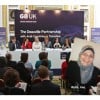
The members of the Deauville Partnership with Arab Countries in Transition (DP) met with business women from the Arab World, G8 and other nations on 25-26 June 2013 to strengthen opportunities for women in employment and trade following the calls of women during the uprisings of 2011-13.
The topic was Women’s Role in Arab Countries, the issue was how to create the environment and support the need of business women in the Middle East to thrive, and thus contribute to the economies of ‘countries in transition’.
Figures released by the World Bank Group show that closing the gap between male and female employment rates would have huge implications for the global economy, boosting American gross domestic product (GDP) by as much as 9 percent, Eurozone GDP by 13 percent and Japanese GDP by 16 percent. Globally, women represent 49.6 percent of the total population, but only 40.8 percent of the total workforce in the formal sector. In the Middle East OECD figures are much starker. Only 27% of women join the labour force compared with 78% of men. In a region already deemed as sluggish in terms of entrepreneurial activity, again women lag considerably behind men,11% compared to 22%.
In Iraq the picture is even starker. A summary provided by the UN states that:
“ Armed conflicts have led to deterioration in the lives of women in Iraq and an associated loss to the country since women are marginalized and unable to contribute economically, socially, and politically. Iraqi women today suffer from a lack of educational opportunities, a lack of health care and limited access to the labour market as well as high levels of violence and inequality. These conditions are often exacerbated by misconceptions of traditions, cultural and social values, false perceptions, and a lack of awareness of women’s rights and potential, as well as institutional and legal barriers.”
Iraq was represented within an extraordinary line up of delegates from across the MENA region and the G8. The voices that spoke were strong and clear, from Charifa Beja an agricultural worker who demanded the right for fairer working practices to Tunisia’s Minister Badi, who reminded us that women in the MENA region needed a 'yes' from everyone, powering support and inclusion across the world and thus giving them the drive and support to reach their potential.
Ordinary businesswomen and delegates, as well as Ministers of State from the UK and across the region, economists from World Bank and the OECD made it absolutely clear that there was specific data and research available, able to demonstrate that the economic and social empowerment of women is fundamental to the economic development of the MENA region. It was also clear that there was a need and a hunger for immediate action.
So what is this action, and what are the implications for Iraq and indeed Kurdistan in terms of capacity building around gender equity?
It is clear that women have equal potential to men in terms of potential contribution to the economy yet face disproportionate challenges in many areas. However, this is a blog focused on building education and skills within a human capacity pipeline, so let’s start there…
Education and training were highlighted as a driving factor for creating an empowered female population, able to contribute to nation building. Indeed, the level of female education has been shown to have an impact on economic growth, both positive and negative, according to a recent Goldman Sachs study. Their finding show that effects of gender inequality in education may have reduced potential annual per capita income growth by 0.5 ppt to 0.9 ppt in much of South Asia, Sub-Saharan Africa, the Middle East and North Africa.
With these hard financial facts in mind in mind, one should consider the major school building programme, state-owned but also private sector driven, coming online in Iraq and Kurdistan over the next year. The concept of gender equity in terms of access, security, curriculum and finally the pipeline to employability should be considered in this light.
As the IFC points out: Financing girls’ education may well be the world’s highest return investment, it is also a business opportunity.
Some interesting links to funding, ideas and opportunities:
- Kiva Microfinance launch - How to create opportunity for women business owners in Iraq
- Wafa’s story. Wafa is a graduate of International charity Women for Women international, showing how investing in Iraqi women can change lives.
- e4e a joint IFC and Islamic Bank initiative, launched in 2011 over five years, with the aim of bridging the gap between existing knowledge and skills with those needed for employment. There is specific emphasis on dealing with the world’s highest female youth unemployment. Ideas and suggestions are welcomed.
- And finally, following the conference, a £4 million Arab Women in Business Challenge Fund has been announced that ‘’ will improve the competitiveness of women entrepreneurs in the Arab world, helping them to take advantage of new opportunities and markets. This will also provide their UK and G8 equivalents with potential new contacts, networks, suppliers and markets. You can contribute and participate at the newly formed Arab Business Women's Forum and the linked education, skills and training sub group.
Posted in Iraq Education and Training News, Madeleine White 1 Comment

Drug Use Spreads Among Iraqi Youth
Posted on 04 July 2013 .
By Adnan Abu Zeed for Al-Monitor. Any opinions expressed are those of the author, and do not necessarily reflect the views of Iraq Business News.
The negative effects of illegal drugs in Iraq are becoming more apparent. Iraq is being transformed from a country that exports drugs to the Arabian Gulf into a consumer of them. A decade ago, it was rare to see a group of young people sitting on the river bank or in a cafe smoking marijuana or using heroin. No more.
A young man who asked not to be identified told Al-Monitor why he chose to take drugs. “We live in a miserable world with high unemployment, a lot of daily worries, security disturbances and family problems.
So it's OK if the youth try to take their minds off all that with drugs.” What’s even more surprising is that this young man is a university graduate. He smokes five joints a day — when he has the money to buy them — otherwise, he gets them from his friends.
The justifications that young people cite for using a variety of mind-altering substances range from the personal, such as the disintegration of their family, to the social, such as high unemployment and frequent bombings.
From late evening until morning throughout Iraqi cities, growing numbers of youth are high on drugs, a high that they try to maintain by smoking hookahs, cigarettes and other kinds of nicotine-saturated paper.
Ahmad al-Jubouri, a middle school teacher from Babel (100 kilometers [62 miles] south of Baghdad) is unable to help his heroin-addicted brother, because the city has no drug rehabilitation center.
Speaking to Al-Monitor, Jubouri admits to having severely beaten his brother once to make him overcome his drug habit. In this conservative society, Jubouri was more concerned about his family’s reputation than about his brother’s health.
Posted in Security Comments Off on Drug Use Spreads Among Iraqi Youth
Kurdistan Lawyers Speak Out Against New Law
Posted on 03 June 2013 .
By Abdel Hamid Zebari for Al-Monitor. Any opinions expressed are those of the author, and do not necessarily reflect the views of Iraq Business News.
Lawyers in the Iraqi Kurdistan region objected to the recent amendment to the bar association law, introduced by the Iraqi Kurdistan parliament. This amendment allows foreign lawyers to practice their profession in the region, especially those specializing in rare fields, such as the oil and gas sector and the investment sector.
During its ordinary session held on May 21, the Iraqi Kurdistan region’s parliament ratified Article 3 of the proposed draft amendment to the bar association law, and added subparagraph 3 to Article 19, paragraph 1, allowing foreign lawyers to practice law in the Kurdistan region according to the principles set forth by the law. After MPs deliberated among themselves and listened to one another’s opinions, the article was voted on and obtained the majority of votes (according to a statement issued by parliament).
The amendments proposed by the Kurdistan Regional Government (KRG) came following the economic boom witnessed in the region, especially in the oil and gas sector. There are dozens of foreign companies operating in this sector, not to mention the existence of investments estimated at more than $26 billion at the end of 2012, according to the statistics issued by Kurdistan Board of Investment. Moreover, the statistics issued by KRG Ministry of Trade and Industry indicate that there are more than 2,250 foreign companies operating in the region.
Attorney Dara Hussein Rwandouzi said that the amendment represented a harmful blow to lawyers in the region and harmed their credibility. He blamed the region’s bar association for approving such an amendment.
Rwandouzi told Al-Monitor: “This paragraph, which was added to the law, was not included in the recommendations approved by our last conference held last year, and it was not subject to referendum. It was ratified by the parliament without the knowledge of any lawyers in the region.”
Rwandouzi noted that there are around 6,000 lawyers in the region and new graduates cause this number to increase every year. He warned that this high number will become a major burden on the government if foreign lawyers were allowed to practice their profession in the region, as this will cause unemployment among Kurdish lawyers.
Rwandouzi confirmed that the “KRG requested this amendment under the pretext that there is a lack of experienced lawyers in the region. We consider this an insult, as Kurdish lawyers have pleaded before the Supreme Iraqi Criminal Tribunal.”
Posted in Construction & Engineering In Iraq Comments Off on Kurdistan Lawyers Speak Out Against New Law

Maliki Prioritises Health Care
Posted on 28 May 2013 .
By Omar al-Shaher for Al-Monitor. Any opinions expressed are those of the author, and do not necessarily reflect the views of Iraq Business News.
Last week, despite the major political crises that have been ongoing for several months now due to protests against his policies by his opponents, Iraqi Prime Minister Nouri al-Maliki seemed to show interest in the issue of health care services in the country, stressing the importance of advancing these services.
Over the past week, Maliki stressed twice the need to expedite the completion of the construction of 10 hospitals in various Iraqi provinces, each including 400 beds. Even though construction was supposed to be completed by the end of the year, a number of these projects have been delayed.
According to a governmental statement received by Al-Monitor, in a meeting held at the end of last week with a number of senior officials from the Ministry of Health at Maliki’s office, the latter gave them a one-year time limit to complete the construction of these 10 hospitals, asserting that he will hold all defaulting parties accountable.
It is worth mentioning that Iraq allocates an estimated $5 billion annually to cover the needs of the health care sector, the infrastructure of which is obsolete.
In this respect, the chairman of the Health Committee in the Iraqi Parliament, Liqaa al-Yassin, indicated to Al-Monitor that the state allocates around 5% of its budget to the health care sector, adding that the Ministry of Health only spends around 55% of its share in Iraq's budget.
Yassin clarified that the current Iraqi infrastructure in public and private hospitals is unable to provide special health care services, indicating the need to encourage foreign and local investors to enter the health care sector and build private hospitals fulfilling the growing needs.
Posted in Healthcare Comments Off on Maliki Prioritises Health Care
Iraq's Future: Post-2015 Development Agenda
Posted on 14 May 2013 .
Iraqis came together on Sunday to agree on their country’s most pressing needs, and send a message to the international community on what issues should be prioritised after 2015.
With only two years remaining before the deadline of the Millennium Declaration Goals (MDGs), the UN is consulting with a wide range of Iraqi civil society, persons living with disabilities, academia, women and youth groups to add their voices to the global conversation on what issues the international community should prioritise beyond 2015.
“The importance of making this a civil society-led process cannot be understated,” explained Jacqueline Badcock, Resident Coordinator of the United Nations in Iraq. “The concerns of the most vulnerable, persons living with disabilities, women and youth are often drowned out. This series of consultations has ensured the voiceless are given a voice.”
The MDGs were established in 2000 to respond to the world’s greatest development challenges. They set concrete targets around which global efforts could be mobilised. Despite an increase in the level of income in Iraq, significant improvements are needed to address the needs of vulnerable groups including unemployment, gender-equality, food-security and environmental sustainability.
Iraq’s Minister of Planning, Dr. Ali Shukri, noted “We have made excellent progress in mapping and measuring progress related to the MDGs in Iraq. We look forward to working with our partners in the UN Development Programme to continue strengthening Iraq’s ability to track progress and identify where more work needs to be done.”
The UN designed the consultation process in Iraq to specifically hear from those who have traditionally been excluded from or underrepresented in the development process. Agreeing on priorities for a new global development agenda must be based on an open, inclusive, transparent process hearing from private individuals, to complement on-going inter-governmental discussions.
Civil society groups made the process possible by reviewing and validating recommendations from consultations held in Basrah, Baghdad and Erbil, on employment generation, political inclusion, access to basic services, and the management of natural resources.
(Source: UNAMI)
Posted in Construction & Engineering In Iraq, Iraq Public Works News 1 Comment