


Iraq Set to Expand Free Trade Zones
Posted on 03 April 2013 .
By Omar al-Shaher for Al-Monitor. Any opinions expressed are those of the author, and do not necessarily reflect the views of Iraq Business News.
Iraq, with its privileged geographical location, plans to improve the performance of its three free-trade zones. It also intends to establish new free-trade zones as part of efforts to diversify its imports and lessen its reliance on oil revenues.
Three "free zones" currently operate in Iraq: Basra in the south, Nineveh in the north and al-Qaem in the west. Trade has slowed in al-Qaem, which is adjacent to the Syrian border, since the armed Syrian conflict breached Iraq’s border.
Free zones are small districts within Iraq's political boundaries, but they are considered outside the country’s customs border. As a result, everything that comes in and out of the free zones is not subject to import and export controls and duty.
Earlier this year, Iraq agreed to a contract designed to create the first free zone in Baghdad. Some hope that these plans will help stem the tide of growing unemployment in Iraq.
The Free Zone Law in Iraq affords extensive privileges to investors. These include industrial production and consumption activities, including the assembly, manufacturing, packing, warehousing, re-export, trade and transportation, banking activities, which include insurance and reinsurance, and professional support services.
The Free Zone Authority, part of the Iraqi Ministry of Finance, is reported to have signed an investment contract for public transport and civil aviation affairs in the free zone in Khor al-Zubair in the Basra province.
Posted in Iraq Industry & Trade News Comments Off on Iraq Set to Expand Free Trade Zones
IBBC Welcomes Private Sector Jobs Initiative
Posted on 18 March 2013 .
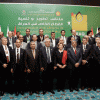
The Iraq Britain Business Council (IBBC) has welcomed a new initiative to boost the Iraqi jobs market.
A weekend conference in Basrah - sponsored by the Ministry of Oil and supported by Shell - has been investigating how to revitalise the Iraqi private sector by ensuring contracts with oil majors went to local firms.
Oil Minister Dr AbdulKarim al-Louaibi [Abdul Kareem Luaibi, Elaibi] said expanding the Iraqi private sector was an absolute priority to lift local companies up to international standards. "This is a new beginning, " he said.
Basrah Governor Dr Khalaf al-Khalaf emphasised the need for the involvement of private companies which would expand economic growth in the region. He noted lack of skilled local manpower and low grade industrial equipment in Basrah which has a population of 3 million, but he said: "These obstacles must be overcome. "
And another conference speaker Baroness Nicholson, Executive Chairman of the Iraq Britain Business Council added:
"Unemployment in Iraq is unacceptably high and it is absolutely vital jobs go to the local private sector. I know our members working in Iraq are fully committed to this principle. This is the first conference of its kind and follow up is essential. "
Chairman of Shell's companies in Iraq, Hans Nijkamp said Shell was totally committed to developing local private industries and described the conference as: "a landmark event."
He went on:
"It is time local companies were involved and we have to find out a way of structuring Iraqi companies into the system. We are very pleased to help the Ministry of Oil who are driving this with us. I hope this conference becomes an annual recurrence. The other international oil companies are going to get involved.
"It is the private sector which builds our oil and gas projects. As an IOC you have a choice. You can bring in a lot of international companies to build the project or you can make the efforts and the choices and do the hard work which is necessary to ensure it is local Iraqis as much a possible. I think we have a responsibility in that respect and I think the other IOC's should think about it in the same way.
"If Shell is not relevant to Iraq we have no reason to be here."
Shell already employs thousands of local people especially in ancillary work like construction. It has also shown a commitment to the local community by building roads, schools and housing and supporting local charities such as the AMAR Foundation.
* Dr Al-Louaibi said Iraq will spend US$130 billion on the country’s upstream sector up to 2017 to help raise production capacity to 9 million barrels a day. He also said the country will allocate $US18 billion to raise natural gas output and US$25 billion to expand refinery capacity. Iraq forecasts US$600 billion in revenue from the oil expansion.
Al-Louaibi added oil exports in February reached 2.54 million barrels a day. Production from Iraq’s Majnoon oilfield will reach 100,000 barrels a day in May 2013 and 200,000 daily by the end of the year, he said.
Delegates also heard Shell plans to spend US $ 1billon developing Al Majnoon.
* Two car bombs rocked Basrah region the day after the conference. One ripped through a bus station at Garmat Ali 11 miles north of Basrah killing at least 10. The other was near South Oil headquarters in Basrah city and injured 2.
(Source: IBBC)
Posted in Employment, Iraq Industry & Trade News, Iraq Oil & Gas News Comments Off on IBBC Welcomes Private Sector Jobs Initiative
US-Sponsored Projects Assist Vulnerable Communities
Posted on 26 February 2013 .
The U.S. Embassy in Baghdad hosted the “Victories from Iraq” bazaar on February 16, 2013, featuring the work of Iraqi artists who have benefitted from U.S. Government-funded skills and business training programs.
Since 2007, the U.S. State Department has provided over $53 million to the International Organization for Migration (IOM) to implement livelihood projects for 145,000 Iraqis. One of the IOM’s most recent projects, the Community Revitalization Program (CRP), partners with grassroots NGOs to extend vocational and business skills training to vulnerable communities in over 13 governorates in Iraq. Training ranges from weaving to organic farming to dental lab work. Beneficiaries are then offered business courses on how to market their new skills and manage their finances.
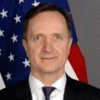
Addressing representatives from international organizations, local NGOs, and diplomatic counterparts, U.S. Ambassador Stephen Beecroft (pictured) said:
"This event represents what can be accomplished when governments partner with international organizations and grass roots NGOs to collectively address problems of unemployment, underemployment, displacement, and destitution."
The bazaar also featured international award-winning artwork from children at the Iraq Safe House for Orphans and a performance by the local band “Quartet InJazz.”
(Source: Embassy of the United States)
Posted in 'Your Country' - United States, Iraq Education and Training News Comments Off on US-Sponsored Projects Assist Vulnerable Communities
Diyala Needs 33,000 New Homes to Replace Slums
Posted on 07 February 2013 .
By John Lee.
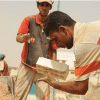
The Province of Diyala has urged the government to allocate resources for the construction of 33,000 new homes to replace its slums.
Rasem al-Ukaili, the official in charge of reconstruction and investment, said:
"The slums are an affront to the general well-being [of the population] ... There is urgent need for the construction of 33,000 housing units to tackle the phenomenon of haphazard housing (slums) by offering decent living conditions for the poor and the needy."
He went on to say that poverty and unemployment breed anxiety and violence and "the slums are having a negative impact".
The slums are scattered across 20 locations in the provincial capital and its outskirts, and are inhabited by low-income and impoverished families.
(Source: Azzaman)
Posted in Construction & Engineering In Iraq Comments Off on Diyala Needs 33,000 New Homes to Replace Slums
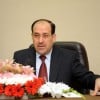
Maliki Makes Concessions on De-Baathification
Posted on 23 January 2013 .
By Ali Abel Sadah, for Al-Monitor. Any opinions expressed are those of the author, and do not necessarily reflect the views of Iraq Business News.
Iraqi Prime Minister Nouri al-Maliki has been forced to make new concessions to Sunni demonstrators and is finally losing his firm grip on the Accountability and Justice Law, also known as de-Baathification.
Iraqi legislators passed a 2008 law designed to dismantle the Baath Party’s entities in Iraq, bring to justice any members who committed acts of violence against Iraqis and deprive those members of public-sector jobs.
The Maliki government was accused of double standards in implementing of the law. Some alleged that Maliki exempted Baathists who showed allegiance to him.
Rafie Rifai, the Mufti of Iraq and a Sunni cleric, says: “Maliki is selective in dealing with the Accountability and Justice Law, because many employees at his office would be affected by this law. However, he is enforcing it on university professors and ordinary people.”
Maliki has denied these accusations on several occasions, and he has tried to distance himself from suspicions that he could abuse his power in applying the law. In a recent television interview, Maliki said, “The government has nothing to do with the work of independent bodies, which include the one in charge of overseeing the implementation of the law. It prosecutes perpetrators of crimes and does not target innocent Baathists.”
Maliki and the ruling Shiite coalition bowed to pressure from the Shiite religious authority in Najaf, which told a delegation representing Maliki that it intends to curb his ambitions and carefully examine “Sunni complaints.” Immediately afterwards, Maliki established a high-level committee, led by his prominent Shiite ally Hussain al-Shahristani, who made decisions that favored dozens of Iraqi Baathists.
Posted in Politics, Security Comments Off on Maliki Makes Concessions on De-Baathification
How Much Does Iraq Really Need For its Budget?
Posted on 28 December 2012 .
By Seerwan Jafar.
This article was originally published by Niqash. Any opinions expressed are those of the author, and do not necessarily reflect the views of Iraq Business News.
Iraq’s 2013 budget amounts to US$118 billion. But the figures don’t add up. Doing the sums results in one conclusion: unless something is done differently, Iraq will face serious debt and development problems.
In late October, the Iraqi Cabinet, headed by Iraqi Prime Minister Nouri al-Maliki, approved the 2013 draft budget. The total amount approved was USD $118 billion, making for an US$18 billion increase on 2012’s budget and making the budget Iraq’s highest ever. The draft will eventually go to the Iraqi Parliament for ratification.
If one considers the state of Iraq – still plagued by power cuts, growing youth unemployment and almost totally dependent on oil revenues – then an increase is surely a positive thing. But will this upcoming budget do the trick?
If Iraq is to become a more developed nation, is this increase enough and is it sustainable? And if it’s not, then what would the Iraqi budget be ideally?
A look at the facts and the figures around this issue may help to work out an answer to those questions. Iraq is near to completely reliant on oil revenues. Oil exports account for 95 percent of government revenues and are equal to 70 percent of the country’s gross domestic product.
Posted in Iraq Banking & Finance News, Politics 8 Comments
Lack of Skilled Iraqi Employees Preventing Oil Industry Progress
Posted on 18 August 2012 .
By Mayada Daood.
This article was originally published by Niqash. Any opinions expressed are those of the author, and do not necessarily reflect the views of Iraq Business News.
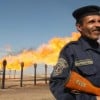
In a country where the unemployment rate has caused mass demonstrations, one local economist believes that Iraq lacks thousands of skilled workers for the oil industry – and that this is preventing progress in the all-important oil industry.
It is the lack of skilled local labour in Iraq’s oil and gas industries that is preventing this all-important industry from progressing the way it should. At least, that is the opinion of Iraqi economist, Abdul Rahman al-Mashhadani, who heads the Mustansiriya Centre for Arab and International Studies, part of Mustansiriya University in Baghdad.
Al-Mashhadani estimates that, in order for Iraq to reach its much vaunted target of 12 million barrels of oil a day by 2017, the country needs another 150,000 skilled workers for the oil industry.
“We cannot achieve our great ambitions with the number of workers we have now,” al-Mashhadani told NIQASH. “The difference between the number of skilled workers needed and the actual number of skilled workers Iraq has accounts for the many foreign labourers here. There are hundreds of foreign workers in places like Basra and Amara, where much of Iraq’s oil is being produced.”
The Ministry of Oil in Iraq also admits that the country needs thousands more skilled labourers but, unlike al-Mashhadani, it was unable to put an actual number on that need as it is only just finalizing a report on the study.
Posted in Construction & Engineering In Iraq Comments Off on Lack of Skilled Iraqi Employees Preventing Oil Industry Progress
Iraqi Unemployment "to be Eliminated" by 2016
Posted on 08 August 2012 .
By John Lee.
The Undersecretary of the Iraqi Ministry of Labour, Dara Yara, has said that unemployment in Iraq will be eliminated by 2016 under a new “strategic plan”.
According to the Labor Ministry’s figures, about 16% of Iraq’s workforce is unemployed, but other estimates put the figure much higher.
“We are working on eliminating unemployment in Iraq and for that purpose we have designed a strategic plan that will be put into effect next week.”
Under the plan, the Iraqi labor Ministry will train unemployed people in 33 trades so that they can set up their own businesses.
“These 33 professions have been selected according to Iraqi market’s current need for them [so] the unemployed will be trained on a profession that is needed by the Iraqi market.”
(Source: AKnews)
Posted in Construction & Engineering In Iraq Comments Off on Iraqi Unemployment "to be Eliminated" by 2016
KRG Forms Cmte for Foreign Workers in Kurdistan
Posted on 06 August 2012 .
By John Lee.
The KRG is to form a committee to lay down the mechanism for foreign workers to apply for work in the Kurdistan Region, according to AKnews.
Abbas Akram, press secretary for Ministry of Labour and Social Affairs, said the committee is intended to help to secure the rights of the foreign workers and to prevent the unemployment rate from rising in Kurdistan.
The committee will also include representatives of Union of Chambers of Commerce and Industry, the Kurdistan Workers Syndicate, the Ministry of Labour and Social Affairs, and the Ministry of Interior .
Akram explained that foreign workers have been employed without any mechanism or law to systematize their recruitment.
(Source: AKnews)
Posted in Employment Comments Off on KRG Forms Cmte for Foreign Workers in Kurdistan
Iraq Needs Services, Not Heavy Weapons
Posted on 27 July 2012 .
By John Lee.
The second deputy speaker of the Iraqi parliament said Iraq needs to build and provide public services rather than buy heavy weapons, according to a report from AKnews.
Commenting on the visit of Iraq's Defense Minister Sadoun al-Dlemi [Sadoun al-Dulaimi, Sadun al-Dulaymi] to Russia to buy heavy weapons, Arf Taifur expressed his surprise at the timing of the visit because Iraq is witnessing sensitive and political problems.
He said the government must concentrate on providing more services and lift the burden on Iraqis by solving the electricity crisis, reducing unemployment, and looking after those affected by wars and terrorist attacks.
(Source: AKnews)
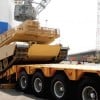
(Picture: M1A1 Abrams tank being delivered at Umm Qasr, August 2010)
Posted in Iraq Public Works News, Security Comments Off on Iraq Needs Services, Not Heavy Weapons