


Ethical Procurement - a Warning from the Field
Posted on 08 December 2018 .
By Elena Kornienko.
Any opinions expressed are those of the author, and do not necessarily reflect the views of Iraq Business News.
A few months ago I was approached by one of my LinkedIn connections, an expat based in Iraq, with an exciting training opportunity for one of the largest oil companies in the region.
Some messages back and forth to clarify details and I am asked to submit a proposal and training programs content. And at this point of time my inner voice of procurement professional with 17 years of buying goods and services for various companies started asking me questions: “Why you have not received an official enquiry and all correspondence is LinkedIn based? “ – “Well, that’s how the modern world works these days! Social media became integral part of our lives”. My inner voice said: “Ok, fair enough. But why this person did not use corporate e-mail account?” – “Well, it is easier to keep correspondence on a subject in one place, and it will be easier to refer to all discussion details”.
And my inner voice was satisfied with that explanation too. But it kept asking me more questions: “If that is a formal inquiry for services, it have to come using company’s standard, and this company absolutely have templates and even automated procurement system…”, and the next question was “Submission of training materials to a client is always subject to signing “Non-disclosure agreement” where Intellectual Property Rights are clearly defined. So why it does not happen this time?”. And that was the time when I listened to my inner voice and started asking the same questions the potential counterpart. It did not take long to understand that it was a fraud inquiry with a purpose of stealing information which was covered by big and famous name…
It is not a secret that most of International Oil Companies, including the ones which operate in Iraq, have as a part of their contract template schedule “Code of Business Conduct and Ethics” and a failure to comply with all rules is considered as material breach of a contract which leads to further collection of damages or early termination. This contract schedule establishes company’s standards that include business practices and regulatory compliance that applies to all company’s employees.
These standards are expected to be followed by contractors as a part of commitment to execute contracts in trustful and faithful manner. For those of readers who did not come across with such contract articles, here just a few examples of what is typically covered: alcohol and drug policy, insider information trading, bribery, corruption, business records, confidential information, computer and system security, conflict of interest, gifts, engagement with media and information partners. This is typical content of “Code of Business Conduct and Ethics” which is adopted by most of the players in the Oil and Gas industry, however is it enough to make sure that all parties involved are acting in a good faith to all concerned?
The Chartered Institute of Purchasing and Supply (CIPS) developed and implemented Corporate Code of Ethics with more focus for procurement professionals. It guides companies on ethical behavior in supply chain and promotes usage of procurement strategies to drive away unethical practices from the supply chain, assists to ensure that procurement decision minimize any negative impact, helps to put ethical policies and procedures in place to ensure compliance and the most important - mandates the education and training of all staff involved in sourcing, contractor selection and management to professional standards. Great initiative that helps not only companies, but procurement professionals to set and follow rules of ethical procurement. It promotes professional behavior of procurement personnel who have the biggest exposure in a company for potential fraud and corruption.
While some of the companies are more advanced in implementing and following ethics standards in procurement, for others it is a new unknown road. Iraq has its own challenges in procurement and we can all contribute the development of ethics in supply chain by letting our inner voice ask questions even in circumstances when we feel great excitement for fantastic business opportunity.
Elena Kornienko has more than 15 years of professional experience in contracts, procurement and tendering in various roles from demand-identification to contract close-out. She has worked on major international oil and gas projects, including the Sakhalin-1 and Sakhalin-2 fields in Russia, and Iraq’s West Qurna-2. Now based in Dubai, she provides consultancy services to the oil and gas industry. Elena is a fluent English and Russian speaker, and a graduate of the Moscow State University of Commerce, holding a degree in Economics. She also graduated with distinction from the School of Business Administration at Portland State University and holds a CIPS diploma.
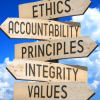
(Picture: Ethics signpost, from 3D-creation/Shutterstock)
Posted in Elena Kornienko, Iraq Industry & Trade News, Iraq Oil & Gas News Comments Off on Ethical Procurement - a Warning from the Field
Putin may visit Baghdad amid growing Russian-Iraqi Contacts
Posted on 30 November 2018 .
By for Al Monitor. Any opinions expressed here are those of the author and do not necessarily reflect the views of Iraq Business News.
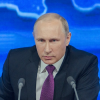
Putin eyes visit to Baghdad amid growing Russian-Iraqi contacts
Lately, official Russian-Iraqi contacts have been intensifying noticeably.
On Nov. 23, Russian Foreign Minister Sergey Lavrov and Iraqi President Barham Salih met behind closed doors within the agenda of the Mediterranean Dialogue in Rome. On Nov. 20-21, Mikhail Bogdanov, the Russian deputy foreign minister and special presidential envoy for the Middle East and North Africa, met all of Iraq's key decision-makers when he was in Baghdad. The sides agreed to further develop relations and make efforts to hold a meeting on the highest level.
Russian officials' increased contacts with their Iraqi counterparts have become a virtual necessity as a result of the changes in Iraq's domestic politics brought about by the latest electoral cycle. The number, level, and scale of the meetings are indeed exceptional, and all the more so considering the constant foreign trips Iraqi politicians themselves make.
Posted in Investment, Iraq Industry & Trade News, Iraq Oil & Gas News, Politics, Security Comments Off on Putin may visit Baghdad amid growing Russian-Iraqi Contacts

Iraq Considers Importing Wheat from Russia
Posted on 13 November 2018 .
By John Lee.
Iraq reportedly wants to allow Russian-origin wheat to be bought in its state tenders to supply the country's massive food rationing programme.
According to Reuters, the Trade Ministry will send a delegation to Russia before the end of the year to study the suitability of its wheat for Iraq's needs.
Iraq needs between 4.5 million and five million tonnes of wheat annually, of which about two million tonnes is imported.
(Source: Reuters)
Posted in Agriculture Comments Off on Iraq Considers Importing Wheat from Russia
Iraq, Syria lay plans to Reopen Border
Posted on 08 November 2018 .
By Adnan Abu Zeed for Al Monitor. Any opinions expressed here are those of the author and do not necessarily reflect the views of Iraq Business News.
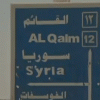
n an interview with Russia's Sputnik Nov. 1, Syrian Transportation Minister Ali Hammoud said Syria is preparing to open checkpoints on its border with Iraq now that security has returned and is looking forward to working with Iraq on logistics.
The Iraqi government received a request from Syria at the end of October to send a special delegation headed by Foreign Minister Walid al-Muallem to discuss reopening the border crossings. Baghdad reportedly welcomed the idea.
Posted in Iraq Industry & Trade News, Iraq Transportation News, Security Comments Off on Iraq, Syria lay plans to Reopen Border
Oil Production to Start at Block 10 in 2021
Posted on 12 October 2018 .
By John Lee.
Russia's Lukoil will start production at Block 10 in 2021, according to a report from Platts.
The Chinese company Bohai has started to drill the 4th well at the block in southern Iraq.
In February 2017 Lukoil announced Iraq's largest discovery of oil for twenty years at the Eridu field in Block 10, with recoverable reserves in excess of 2.5 billion barrels of crude.
(Source: Platts)
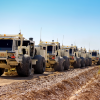
(Picture: Seismic Survey at Block 10)
Posted in Iraq Oil & Gas News Comments Off on Oil Production to Start at Block 10 in 2021

Petrel Resources "Re-Establishing its Baghdad Operations"
Posted on 26 September 2018 .
Irish-based Petrel Resources has said it is "re-establishing its Baghdad operations".
In its interim statement for the six months ended 30 June 2018, the company said:
"As we approach the end of 2018, Iraq is fitfully emerging from conflict, and again open for responsible business. Baghdad has re-established its authority, by defeating Da'ech insurgents and recovering Kirkuk.
"Pro-business parties won the 2018 elections. While it proved difficult to form a National Government in 2018, which contributed to turbulent protests in southern Iraq during 2018, prospects are now more encouraging than at any time since 2010.
"Iraq has endured an almost continuous period of conflicts and/or sanctions since 1980, from which it is only now emerging. Much trauma has been inflicted, as shown by the difficulties forming a government in 2018 and the protests in southern Iraq - a region generally supportive of Baghdad governments since 2005.
"Yet, despite 2018 difficulties, we believe Iraq is finally turning a corner: pro-business parties open to international investment polled well in the May 2018 general election. But no one party holds a majority and, as of September 2018, negotiations on new government formation were ongoing.
"So far, the impact of this unrest on oil production from the southern fields has been limited, with August 2018 output stable at 4.65 million barrels daily (mmbod). Internal demand of 0.8 mmbod leaves nearly 3.8 mmbod available for export - which has remained consistent despite infrastructural and decision-making challenges - though well below the 2008 target of 6.5 mmbod and the 2012 target of 8.5 mmbod. Iraqi output is actually higher than immediately before the November 2016 OPEC + Russia cuts, and also higher than its current official OPEC quota of 4.444 mmbod.
"The Western Desert, where Petrel has an interest in exploration ground, is still impossible for international companies to effectively operate."
(Source: Petrel Resources)
Posted in Iraq Oil & Gas News Comments Off on Petrel Resources "Re-Establishing its Baghdad Operations"

Iraqi Airways carries 9,200 Passengers between Iraq, Russia
Posted on 20 September 2018 .
By John Lee.
Iraqi Airways has reportedly carried 9,200 passengers between Iraq and Russia in the first 12 months of operating flights.
According to rusaviainsider.com, this consisted of 5,200 inbound to Russia and 4,000 outbound.
The majority of those passengers flew between Moscow's Vnukovo Airport and Baghdad, with the rest flying between Vnukovo and Basra.
(Source: rusaviainsider.com)
Posted in Iraq Transportation News Comments Off on Iraqi Airways carries 9,200 Passengers between Iraq, Russia

Cyprus: A Powerful Investment brings a European passport
Posted on 17 September 2018 .
Advertising Feature
By Veronica Cotdemiey, CEO of Citizenship Invest.
Recently Cyprus has been recognized as the ‘super star’ of the citizenship by investment programs worldwide. The country has the most appealing second citizenship program being the only European country which grants the nationality in only 6 months without ever having to reside there. Cyprus has officially and by far, the fastest form of legally obtaining a European citizenship and passport which enables living, working and studying in any of the 28 countries members of the European Union.
Moreover, Cypriot passport holders can travel to major destinations without applying for visas. It allows instant visa free travel to over 170 countries including the UK, UAE, European Union countries, Canada, Australia among other major countries and often allows a stay from 30 up to 90 days at a time depending on each country.
Most importantly, the citizenship can be inherited by family members and future generations. Children, grandchildren, great-grandchildren and beyond also have the right to obtain the citizenship and passport through a very simple process which takes only two weeks.
Unlike many of the fast track citizenship programs which require a non-refundable financial contribution to a Government fund, Cyprus offers its investors the possibility of earning a good return while obtaining the citizenship. The Cypriot citizenship law requires a temporary investment of EUR 2 million in a Real Estate investment in Cyprus which is required to be held for 3 years and thereafter can be sold while maintaining a property worth 500,000 EUROS. It is certain that not everyone can afford it, but for those who can, this is potentially on of the best investment they would have made in their lifetimes, leaving their families a great legacy.
The program has become so popular among HNWI citizenship applicants from all over the world especially Asia, Middle East and Russia, that the Cypriot Government has recently announced a cap of only 700 applications per annum to maintain its high standards. According to Cypriot news agencies, the Government of Cyprus has released reports of issuing passports for over 3,300 families bringing into the economy approximately USD 4.5 Billion. This has helped turning the Cypriot economy around becoming one of the fastest growing GDP’s in Europe. At the moment, Cyprus GDP levels are considerably higher than those of the Eurozone and the European Union according to a report released by the international firm KPMG.
The Cypriot citizenship by investment program is one of the many incentives established by the Government to attract foreign direct investment to the country. The first amendments to the citizenship law were introduced back in 2013. Since its inception, the program has undergone various improvements to make it more accessible and attractive for investors. In September 2016, the Government of Cyprus introduced an amendment which reduced the minimum investment amount to EUR 2 million (from EUR 2.5 million) and the option to add the parents of the main applicant for an additional EUR 500,000 plus VAT investment in a property in Cyprus.
According to official statistics from the Department of Land and Surveys, in 2017 Cyprus has recorded a 24% increase in real estate sales contracts, 30% of which accounted to non-nationals. Not surprisingly 31% of the real estate transactions in 2017 were properties valued at around 2 million EUROS, which indicates that a high number of investors are purchasing real estate as a mean to obtain the Cypriot citizenship.
The contribution of real estate to Cyprus’ GVA amounted to EUR 2,4 Billion in 2017. Construction activities from 2013 onwards indicate to have broken through the slowdown of the financial crisis, which has been clearly left way behind, and entered into an expansion period which until 2019 is set stretch to pre-2013 levels where Cyprus recorded all-time highs in real estate transactions.
From a taxation point of view Cypriot passports holders actually benefit. Non-tax residents are not liable for income tax generated outside the country. More importantly Cyprus does not impose inheritance tax on property, which gives the ability to pass it down to future generations without incurring costs.
So how does all this benefit investors? Cyprus has become one the of the most attractive real estate investments in Europe. This injection of billions of Euros in luxury real estate and infrastructure is turning the Cypriot landscape around. Limassol will soon have ‘One’ the tallest residential tower in Europe, Ayia Napa is undergoing the non-stop 24/7 construction of the most luxurious marina in the region with high end international restaurants and villas worth EUR 5 million with their own private berths. The whole country is having a radical facelift with modern contemporary architecture of glass and refined design are taking over. In the next 3 years, when allowed to re-sale, investors will be able to appreciate the growth of their investments as part of this radical transformation.
One can understand the excitement of savvy businessmen when considering buying property in Cyprus, after all they know that they are purchasing luxury real estate in a newly booming property market.
It is clear that Cyprus has not only become the ‘super star’ of citizenship programs but also earned a prime position amongst the most profitable real estate investments worldwide. Demand translates into growth which then translates into high profits. Whether applying for citizenship or not, Cyprus seems to be the place to invest in.


Posted in Investment, Iraq Banking & Finance News, Security Comments Off on Cyprus: A Powerful Investment brings a European passport

Basra Protests spark Govt Scramble to Create Jobs
Posted on 26 August 2018 .
By Adnan Abu Zeed for Al Monitor. Any opinions expressed here are those of the author and do not necessarily reflect the views of Iraq Business News.
The Iraqi Cabinet announced Aug. 12 that it has approved a regulation by the Ministry of Labor requiring that 50% of foreign oil company employees working in the country be Iraqis.
The move followed mass demonstrations in Basra calling for better public services, including clean water and working and reliable electricity, and job opportunities for the unemployed in the city. Iraq's largest oil reserves lie beneath Basra province.
Basra Governor Assaad al-Eidani had on July 31 announced that an agreement had been concluded with the foreign oil companies to secure job opportunities for Basra residents. Days earlier, the Associated Press reported Deputy Governor Dhirgham al-Ajwadi saying that the unemployment rate in Basra, population 4 million, had risen sharply to at least 30%.
On July 13, demonstrators had stormed the headquarters of the Russian oil company LUKOIL at Basra's West Qurna 2 field, one of the largest, leading workers to pack their belongings. A number of them were evacuated by helicopter.
Click here to read the full story.
(Picture Credit: Ahmed Mahmoud)
Posted in Employment, Iraq Oil & Gas News, Politics Comments Off on Basra Protests spark Govt Scramble to Create Jobs

How Iraq Should Respond to the Strait of Hormuz Crisis
Posted on 08 August 2018 .
By Youssef Ali.
Any opinions expressed are those of the authors, and do not necessarily reflect the views of Iraq Business News.
President Donald Trump’s decision to pull out of the nuclear deal and sign the executive order to reimpose sanctions on Iran has had a significant impact on the global oil markets.
This move poses a severe threat to the economies of major oil exporting countries including Iraq, the second largest oil exporter in OPEC after Saudi Arabia and the third in the world after Russia and Saudi Arabia by 4.4 million barrel per day. Many analysts are reflecting on the effects that this conflict has on the economy of Iraq, which heavily relies on oil.
The sanctions mainly target the Iranian energy sector, which supplies Iran with foreign exchange and at the same time represents about 40% of revenues of its budget. The goal of the sanctions is to prevent Iranian oil exports by imposing sanctions on its customers.
Eliminating Iranian oil supplies will cause unrest in the oil markets around the world because it will lead to price surges, hence substantial economic losses on importing countries, which are already fearing a potential recession. That is why the U.S. tried to convince some of OPEC’s members to increase their supplies contrary to the recent deal amongst OPEC and non-OPEC countries to decrease production, and that in order to compensate Iranian supplies and prevent the disruption of the oil market to prevent damage to the global economy.
This move led to massive disputes between the major suppliers and pushed Iran to threat blocking oil exports from the Middle East altogether if it was to be prevented from exporting its own oil to the international market. If Iran follows through with its threat, it would mean massive losses for the Gulf countries, including Iraq whose economy is primarily depended on oil exports.
That said, completely stopping Iranian oil exports would be practically unlikely for the following reasons:
The nature of oil markets which is volatile and is based on trust. If the OPEC members in the Gulf Region, especially Saudi Arabia and UAE decided to replace the sanctioned Iranian oil supplies, the possibility alone that Iran would follow through its threat of closing the Strait of Hormuz would diminish the trust in that market. The supplies which pass through the strait would be considered as unstable, importers would start looking for alternate sources. This would destroy energy markets in the Middle East, meaning massive losses to the economies of all parties involved, including neutral states such as Iraq.
On a global basis, the mentioned encounter will damage the international economy that is fearing a potential recession, because this encounter, if it happens will cause a massive increase in global oil prices, leading to a domino effect that would create a hike in the prices of many goods and services.
This is why it is expected that while the sanctions will be implemented, all parties involved will allow for under-the-table arrangements in order to avoid such mutual destruction by allowing Iran to open an limited channel to export its oil, as it has happened in the past. Prior to signing the nuclear deal, UAE oil brokerage companies and banks played such a role before they were shut down after the recent pull out of the nuclear deal by the U.S. Allowing for such back-channels would mean that the sanctions will have their impact on the Iranian economy by disrupting the traditional oil export routs and limiting its revenue, yet allowing for a backdoor deal that will help the international community avoiding a conflict that could have grave impact on the global economy.
There is a role for Iraq to play in this crisis. The current policy of Iraq in regards to this conflict, in which it is trying to mediate between the parties involved is a wise policy. It is in the interest of nobody to escalate the situation in the Gulf region. On the other hand, Iraq could, given the circumstances, gain enormous benefits by performing the same role that UAE brokerage companies and banks were playing, which would be a win-win for everyone involved.
In other words, Iraq can empower its private sector to establish companies and banks that facilitate the financial transactions related to the Iranian oil export, which would add important revenues to the economy of Iraq and increase the financial movement in the country; at the same time it would ensure the interests of Iran and decrease the likelihood of an encounter in the Gulf, which would serve the Gulf Arabs well.
Iraq must exploit this opportunity, especially since the Europeans countries along with Russia and China have already expressed their willingness to play this role. This opportunity could also be a significant incentive for Iraq to improve its ailing banking system to be able to implement such operation.
However, this is not possible without negotiating with the U.S. on this issue in order to avoid being subject of the sanctions. The U.S. has in the past exempted Iraq from the sanctions for dealing with Iran, given its special circumstances. The U.S. also has expressed its readiness this time to allow some exceptions. This could be Iraq’s chance to negotiate an arrangement that serves everyone well, at least for the short-term.
On the long term however, Iraq has to find alternate routes to export its oil in order to avoid the increasingly unstable oil routes of the Arabian Gulf. Viable solutions could be the Iraq-Jordan pipeline that would start in Basra and end in Aqaba. Iraq needs to accelerate building this pipeline. Another option is the rehabilitation of the Iraq-Syria pipeline that begins from Kirkuk and ends in Banias, which, of course, would only be an option if the security in Syria improves.
Iraq is either the core, or constantly caught in the middle of many crisis that are shaking the Gulf region. These reoccurring crisis pose huge obstacles in front of rebuilding and investment. If Iraq wants to survive them, it needs to play a constructive role and aim for stability and profit for all parties involved.
Posted in Iraq Oil & Gas News Comments Off on How Iraq Should Respond to the Strait of Hormuz Crisis