


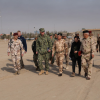
NATO Stepping Forward on Training Mission to Iraq
Posted on 05 August 2018 .
NATO’s Allied Joint Force Command in Naples is stepping out smartly to establish the alliance training mission in Iraq, said Navy Adm. James Foggo, the commander of the Joint Force Command, in a recent interview.
The NATO effort will build on past NATO involvement in the country. In the past, seven personnel acted as facilitators for NATO efforts. The training mission will have about 500 personnel in the nation to push forward. A Canadian major general will be the commander in Iraq, Foggo said.
The Iraqi government does not want to make the same mistakes that led to the Islamic State of Iraq and Syria taking over much of the country in 2014. Iraqi security forces had let their training lapse and ISIS was able to capture the western part of the nation and much of the north. The crown jewel in the ISIS effort was the capture of Mosul, the second-largest city in the country.
“Thankfully, we formed a coalition that went in and did some significant training and work with Iraqi forces who pushed them back,” Foggo said.
Fighting ISIS, Rebuilding
This was an incredible effort on part of the Iraqis and coalition personnel, the admiral said. Iraqi security forces were holding off ISIS, while rebuilding for the long-term fight against the terrorist organization.
NATO was a part of that effort. At the time, NATO teams concentrated on triage and medical training for Iraqi forces heading to the field, showing them how to counter improvised explosive devices and conducting explosive ordnance disposal training. “This is significant because the amount of unexploded ordnance there, particularly in Mosul, is huge,” Foggo said.
The NATO trainers also helped train Iraqis in repair of old Russian equipment like T-72 tanks and BMPs -- amphibious tracked infantry fighting vehicles. “We did all that with a very small number of about seven people in Baghdad,” Foggo said. “They served as facilitators to bring in the training teams, the medical teams [and] the mechanics operating out of a couple forward operating areas in country.”
The new NATO mission formalizes the effort and commitment of the alliance. The mission will also facilitate a bigger mission set. The Iraqis have asked for more technical training, more advanced training and “they would also like to become much more proficient in the area explosive ordnance disposal,” he said.
‘It’s a Good Mission’
Foggo said a meeting he had recently in Iraq illustrates the need. He was visiting Besimayah Range in Iraq earlier this year and met with the Iraqi team tasked with going into Mosul to disarm the unexploded ordnance in the city. “These guys went in and they got everything they could above ground, to pave the way for people to return their homes and they get back to rebuilding and reconstruction,” the admiral said.
“It’s a good mission,” he continued. “It’s one NATO embraces and we look forward to leading it here in the future.”
The troops themselves are dedicated and willing, Foggo said. At that meeting in Besimayah, he spoke with Iraqi personnel who had served in Mosul. “The first thing that struck me was that they were very professional, stand-up young men who looked me in the eye,” he said. “One of the EOD specialists had been gassed. He had been disarming some sort of device that went off. It was chlorine gas and they got exposed. They were very proud of the fact that they were taken to an American field hospital to be treated.”
“I see them as being brave, very professional and very focused on the task that they have to rebuild their country now that they have succeeded in taking it back,” the admiral added.
The needs of Iraqi forces will change over time, Foggo noted. EOD may be the big need now, but something else may be more important next year. “As we get there and we provide a level of expertise that the NATO alliance can provide with all the different warfare specialties that we have and all the skill sets that we have, the alliance is a very powerful and robust and resource rich alliance,” the admiral said.
“We have people who understand how to maintain the infantry branch, maintain the armor corps, how to teach strategy and tactics, how to disarm bombs -- we’re going to find things where there may be gaps or seams where the Iraqi armed forces might need help with,” he said..
“If it is in our mandate and under the rubric of training and nonkinetic activity … then we can slide into that and adapt to that fairly easily,” Foggo said.
(Source: US Dept of Defense)
Posted in Security Comments Off on NATO Stepping Forward on Training Mission to Iraq

Rosneft to start work in Duhok
Posted on 28 July 2018 .
By John Lee.
Rosneft has reportedly sent a delegation to Duhok to discuss starting work on three oilfields next month.
According to the report from Rudaw, the state-controlled Russian company will work at three locations: Batle, Zawita, and in Sarsang and Chamanke in Amedi.
It is expected to extract 180,000 barrels of oil per day.
In October, Rosneft signed Production Sharing Agreements (PSA) with respect to five production blocks in Iraqi Kurdistan.
(Source: Rudaw)
Posted in Iraq Oil & Gas News Comments Off on Rosneft to start work in Duhok

Citizenship and Residency Programs made Simple
Posted on 24 July 2018 .
Advertising Feature
By Veronica Cotdemiey, CEO of Citizenship Invest.
Obtaining a dual a nationality or second citizenship has long been a significant goal for many families in the Middle East.
The constant struggle of not being able to travel freely; being scrutinized by immigration and governmental entities; as well as being a citizen of countries with political and economic distress are the main drivers that encourage individuals to consider investing in a second nationality.
There are two main approaches for obtaining a second citizenship by investment. The first way is through Fast Citizenship programs which are prevalent in the Middle East as they provide the quickest route to owning a lawful second citizenship. Countries like St. Kitts & Nevis, Antigua & Barbuda, Grenada, Dominica, St. Lucia and Cyprus allow foreigners to financially contribute or invest in real estate to obtain a legal citizenship within a period of less than 6 months.
Furthermore, these countries’ citizenship legislative acts do not pose any relocation requirements, which means that the applicants and their families do not need to move to another country in order to obtain or keep the citizenship. The non-relocation requirement makes these programs highly popular among Middle Eastern businessowners and successful professionals. These programs have a strong effect in raising the country’s GDP but it can also culminate in long-term economic prosperity through investment in housing and infrastructure.
Some of these programs have existed for over 30 years and are sought-after by nationals from all over the world included Americans. From Middle East the key nationalities searching for these programs are Iraqis, Syrians, Yemenis, Lebanese and many more who are constantly faced with travel restrictions. An alternate passport opens up an entirely new world on visa-free travel including the UK, Schengen countries, Singapore, Malaysia, Russia, China, Hong Kong. Additionally, many nations in the Middle East face political and economic problems, which makes it difficult to predict the future of these nations, and their family futures along with them. Therefore, having a second citizenship or passport is a strong contingency plan for many individuals in the region.
Nevertheless, there is another option available for investors and it is through Residency programs. There are many countries around the world that grant applicants a permanent residency through investment. Let us take Spain as an example. Spain’s Golden Visa includes the main applicant, spouse, and all dependent children, after the applicant purchases a property in Spain. The duration of the Residence Permit in total is 5 years, Permanent Residence may then be applied for a further 5 years where you must reside in Spain to be eligible to apply for the citizenship. Residents may study, work and live indefinitely in Spain and travel visa-free within the European region. Best of all, they will own a European nationality, which consequently allows them to live anywhere in Europe and grants them visa-free access to over 170 countries worldwide.
Another example is Portugal, which is a member of the European Union and also has its own Residency program. Unlike Spain, this program does not require investors to physically live in Portugal to obtain the Portuguese citizenship. The country has a high quality of life with modern business and medical facilities, which makes Portugal a beautiful country with high standards of living. The citizenship will be granted to the applicant and family after a period of 6 years, therefore the entire family will benefit from being European nationals and will be able to pass the nationality to future generations through naturalization.
To make things simple, permanent residency programs are primarily for investors who plan to relocate to benefit from living in a European country and eventually becoming European citizens. However, it is the long route towards obtaining a second nationality and their citizenship is no 100% secure as it is up to the Government’s discretion.
Fast citizenship by investment programs on the other hand, pose different advantages. They are more suitable for individuals who do not wish to disrupt their current lives by immigrating to a different country, who do not want to wait 6 to 10 years and who are not willing to take a language test.
Posted in Investment, Iraq Banking & Finance News, Security Comments Off on Citizenship and Residency Programs made Simple
New Tenders for Development of West Qurna-2
Posted on 19 July 2018 .
By John Lee.
Russian oil company Lukoil has published tenders for two projects at its West Qurna-2 oilfield:
- Decentralised Water Injection Facilities - click here for more information;
- Gas Turbine Power Plant Expansion - click here for more information.
Interested companies have until 23rd July to apply for documents, and bids will be accepted until 23rd August.
(Source: Lukoil)
Posted in Iraq Oil & Gas News, Tenders Comments Off on New Tenders for Development of West Qurna-2
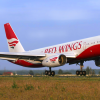
Russian Airline launches Moscow-Baghdad Service
Posted on 21 June 2018 .
By John Lee.
Russian airline Red Wings reportedly made its maiden flight to Iraq on Wednesday.
This marks the resumption of services between Moscow and Baghdad following the Iraqi War in 2003.
The new service will begin with one regular flight per week.
(Source: AFP)
Posted in Iraq Transportation News Comments Off on Russian Airline launches Moscow-Baghdad Service

Iraq's Pro-Iran Factions shrug off US Sanctions Push
Posted on 06 June 2018 .
By Ali Mamouri for Al-Monitor. Any opinions expressed are those of the author, and do not necessarily reflect the views of Iraq Business News.
Two pro-Iranian militias active in Iraq and Syria declared that possible US sanctions targeting them would be ineffective and claimed that such sanctions would actually strengthen their presence and expansion in the Middle East.
The US House of Representatives on May 24 passed sanctions against Asaib Ahl al-Haq and Harakat Hezbollah al-Nujaba as an amendment to annual defense legislation. The bill called for sanctions against “persons that are officials, agents, affiliates of or owned and controlled by” the two groups.
Laith al-Azari, a member of Asaib Ahl al-Haq's political bureau, said on May 30, “Including Asaib Ahl al-Haq, along with some other Iraqi armed factions, on the terrorist list will increase our own ability to confront terrorism and confront US plans in Iraq.”
He did not explain how sanctions could lead to this result, but sees the action as an effort to thwart the pro-Iranian axis of resistance, which includes Iraq, Syria and Lebanon, and confront Islamist movements. The sanctions vote followed US President Donald Trump's May 8 announcement withdrawing the United States from the Iranian nuclear deal, ostensibly in order to reach a better deal that would limit Iran's military power in the region.
In a May 30 interview with Rudaw, Mohammad Mohi, spokesman for the Hezbollah Brigades, played down the importance of possible US sanctions, stating, “The US decision is not new as far as Harakat Hezbollah al-Nujaba is concerned. This is not a new issue, but one that has been tackled on an annual basis.” Nujaba leader Akram al-Kaabi was sanctioned in 2008 by the Treasury Department, which designated him an individual "fueling violence" in Iraq.
Mohi linked the House vote to a decision by the Iraqi parliament three months ago obligating the Iraqi government to schedule the withdrawal of US troops from Iraq, measures supported by the two groups targeted for sanctions. While condemning foreign interference in Iraqi affairs, including the US and Turkish military presence, Mohi praised the Iranian presence, stating, “Without Iranian support, Iraq would not have defeated the Islamic State [IS]. Had it not been for Iran's support, Erbil would have fallen [to IS] along with Baghdad and other Iraqi cities. This is why Iran's intervention was in the interest of the Iraqi people, and it came at a time when other countries were idly watching Iraq head toward an unknown fate.”
The House's sanctions vote followed Iraq's May 12 legislative elections, in which the political organizations of the pro-Iranian militias emerged as the second largest coalition, meaning they might have a shot at forming the new government. Asaib Ahl al-Haq looks like it will occupy at least 14 of the 47 seats won by the Al-Fateh Alliance, consisting of pro-Iran factions and headed by Hadi al-Amiri, leader of the Badr Organization. Al-Fateh came in second, behind the Sairoon Alliance, headed by the cleric Muqtada al-Sadr, which won 56 seats. There are 328 seats in the Council of Representatives.
Despite the Sairoon Alliance's lead, its position could be undermined by independent candidates. It is being reported that a number of independents will be joining the Al-Fataeh Alliance. So far, only one such candidate for Shabak, Qusay Abbas, has joined Al-Fateh after winning a seat.
Sheikh Qais al-Khazali, leader of Asaib Ahl al-Haq, expects his movement to end up with at least 15 seats once the official results are announced, following the resolution of disputes over balloting irregularities. The Badr Organization is also thinking that it will be allotted additional seats after the results are in. Meanwhile, the State of Law Coalition, another ally of Iran, won 26 seats, and is fully prepared to forge an alliance with Al-Fateh given their common political agendas.
All this means that should Al-Fateh's natural allies join it, it would beat out the Sairoon Alliance and be in a position to form a government consisting mostly of pro-Iranian factions. If this scenario transpires, the United States could find itself in the very awkward situation of having to deal with a government it is sanctioning, should the sanctions ultimately be adopted. Would the United States actually sever ties with the Iraqi government, a key partner since 2003, or, finding that scenario unpalatable, simply decide to waive or put off new sanctions?
Another scenario that might be even more difficult for the United States would see Sairoon and Al-Fateh coming together around their shared goal of US forces withdrawing from the country and curbing US influence in Iraq and the region. Before that could happen, however, big differences between the two alliances would have to be overcome. Al-Fateh opposes the United States in favor of expanding Tehran's influence in Iraq and the region, while Sairoon wants an Iraq independent of Iran, free to manage its own internal affairs and regional positions.
Of note, Israeli-Russian understandings, with US buy-in, are being concluded to keep pro-Iranian militias away from the southern border of Syria, which would, of course, undermine the Iranian role in Syria. Regardless, in terms of US interests in Iraq, it appears the United States might ultimately find itself in the dilemma of having to choose between the lesser of evils.
The spokesman for Harakat Hezbollah al-Nujaba, Hashim al-Moussawi, believes Washington launched a war on the resistance axis when it reneged on the Iranian nuclear deal and then prepared to impose economic sanctions on Hezbollah supporters. “This is an expected reaction to the losses suffered by the US by the Islamic resistance factions,” he said. “The elections in Lebanon and Iraq and the victory of the resistance [against IS in Iraq] showed the US the high level of threat it is facing.”
Moussawi touts the showing by the Al-Fateh Alliance as a victory for the Iranian axis. “This is why it [the US] is seeking to plunge Iraq into the spiral of permanent chaos,” he said. “The entry of the resistance into political circles will embarrass Washington, which is politically seeking to bypass the axis of resistance.”
Posted in Iraq Industry & Trade News, Politics, Security Comments Off on Iraq's Pro-Iran Factions shrug off US Sanctions Push

Rosneft Discovers Oil at Block 12
Posted on 23 May 2018 .
By John Lee.
Bashneft, a subsidiary of Russia's Rosneft, has found oil at its Salman-1 exploratory well at Block 12 in Iraq.
In a statement, the company said that an exploration well was successfully drilled to depth 4,277 metres; oil was found, "which gives grounds for expecting the discovery of industrial reserves".
Rosneft said it views this discovery as an important milestone in the development of exploration and production projects abroad.
China-based company Zhongman Petroleum and Natural Gas Group (ZPEC) was previously announced as the general drilling contractor.
(Source: Rosneft)
Posted in Iraq Oil & Gas News Comments Off on Rosneft Discovers Oil at Block 12

Moscow’s Iraq Strategy: Make Lots of Friends
Posted on 11 May 2018 .
By for Al Monitor. Any opinions expressed here are those of the author and do not necessarily reflect the views of Iraq Business News.
Moscow’s interest in the Middle East and the growing Russian presence in the region go beyond Russian involvement in the Syrian civil war. For several years Russia has been building partnerships with various regional powers, and Iraq — with parliamentary elections only days away — has been a priority.
The Soviet Union helped Iraq industrialize its economy and was the country’s largest weapons provider until the union collapsed in 1991. Iraq’s invasion of Kuwait and the subsequent Western sanctions against it interfered with the Russia-Iraq weapons relationship. Then, after the US-led coalition’s overthrow of Iraqi President Saddam Hussein in 2003, Iraq got most of its weapons from the United States.
Under President Vladimir Putin, Russia has been trying to gradually rebuild its ties with Iraq on numerous levels. Moscow sees Iraq’s May 12 parliamentary elections as an opportunity to breathe new life into relations to create a comprehensive partnership.
In 2014, as Islamic State militants neared Baghdad and the Iraqi government couldn’t immediately receive the arms it needed from the United States, Moscow jumped on the opportunity to provide “without delay” the weapons and equipment needed, including aircraft. Maxim Maximov, Russia’s ambassador in Iraq, later commented that the deliveries represented a long-term commitment.
“We have always said that we are ready to give this country various types of assistance in strengthening its army,” Maximov said in a February interview with Interfax. “The Russian military industry has already provided the Iraqi government with a massive installment of weapons that proved their efficiency in battles against [IS], including MI-35M and MI-28N helicopters, Su-25 jet aircraft, Kornet-E anti-tank guided missiles and other military products.”
Some vital 2017 contracts for T-90 tanks are now being filled. There have been reports that Iraq is going to buy Russian S-400 surface-to-air missile defense systems, but Iraq’s ambassador to Moscow, Haidar Hadi, has denied that possibility.
Russian energy companies operating in Iraq are another critical tool for Moscow. These companies had been in Iraq long before the United States invaded in 2003 and had bid on oil and gas projects. Currently, there are two companies developing such projects in Iraq: Gazprom Neft Middle East and Lukoil.
Business for Russia's Rosneft corporation is still uncertain. The company had contracts in the Kirkuk oilfields with the Kurdistan Regional Government, but when Baghdad overtook Kirkuk last year, the Iraqi Oil Ministry renounced those deals. Negotiations are still possible according to Russian business media reports, but the company has not confirmed the news.
Iraq is important for Russia not only as an economic and trade partner, but also as a factor in influencing regional policy. Russia clearly understands that its possibilities in the country are limited, as Iran and the United States are the main foreign players with direct influence on Iraq. Saudi Arabia, which took a number of steps to reinforce its influence in the country in the past year, still lags behind.
China, Iraq’s key economic partner, keeps a rather low profile regarding Iraq’s domestic politics. What’s important for Russia is that Iran partially and cautiously supports Baghdad’s collaboration with Moscow and the United States doesn’t openly oppose it.
That said, it’s not quite accurate to think Tehran is the one inviting Moscow to Iraq, hoping to create a counterbalance to Washington. In recent years, Baghdad politicians have increased their ability to implement independent foreign policy, and relations with Russia have been important to Iraqi officials. Russia, in turn, doesn’t seek to intervene in Iraq’s internal matters and basically operates by building pragmatic relationships with any government looking for such an arrangement. This approach helps Russians forge important political and business contacts.
For its part, Baghdad supports strengthening Moscow’s positions in an exchange that creates a new point of influence in the country potentially able to balance both Iran and the United States. Iraq thus gets a broader space for maneuvering among all the interested parties.
Certain areas of cooperation that Russia and Iraq have been exploiting have tangible potential. Military sales and energy cooperation are the most obvious ones, but Moscow is also becoming what it sees as a “natural ally” of Iraq in the fight against terrorism.
Since Russia, Syria, Iran and Iraq formed an information-sharing group in 2015, Russia has sought to deepen this area of cooperation through joint operations against radical groups. Russian lawmaker Ziyad Sabsabi has coordinated activities within that group to rescue Russian children whose parents joined IS from Iraq and Syria.
The fight against IS will gradually shift from the front line to broader counterterrorist initiatives, and Russia will be there to experience new forms of engagement with Iraq.
Institutional interaction between Moscow and Baghdad is already rather comprehensive. In addition to the counterterrorism information center and the rescue group, there’s a Russian-Iraqi action group for cooperating in the power industry and a Russian-Iraqi commission on trade, economic and scientific cooperation — a key coordinating intergovernmental body.
Russia takes advantage of all of these formats to interact with Iraqi and Kurdish governments as well as with the highest-level political leaders and contacts among “unofficial players” in the region.
Based on Maximov’s recent meetings, one can see Moscow’s attempts to maintain contacts with virtually all important actors — from major politicians in Iraqi Kurdistan such as Massoud Barzani, Iraqi Secretary-General of the Council of Ministers Mahdi al-Alaq, Vice President Nouri al-Maliki and National Wisdom Movement leader Ammar al-Hakim, among many others.
Therefore, while Russia’s strategy in Iraq aims to develop of all kinds of relationships with Baghdad and stresses support of the country’s territorial integrity, it is also multifaceted, seeking to engage with virtually all players from the country’s leadership to the leaders of the Popular Mobilization Units.
This path is meant to provide the policy flexibility necessary to maintain and increase cooperation regardless of who holds power after the upcoming elections.
Posted in Iraq Industry & Trade News, Iraq Oil & Gas News, Politics, Security Comments Off on Moscow’s Iraq Strategy: Make Lots of Friends

Fifth Licensing Round: Some Preliminary Considerations
Posted on 07 May 2018 .
By Alessandro Bacci.
Any opinions expressed are those of the author, and do not necessarily reflect the views of Iraq Business News.
Iraq’s Fifth Licensing Round: Some Preliminary Considerations After the Auction
On the morning and afternoon of April 26, 2018, I participated in a petroleum scholar workshop organized in London by the Association of International Petroleum Negotiators (A.I.P.N.). There I gave the presentation “Current Trends Concerning Petroleum Service Contracts in the Middle East.”
I explained the difficulties that Iraq was experiencing with its technical service contracts (T.S.C.s) and that, exactly while we were discussing in London, Iraq was holding in Baghdad its fifth licensing round after the introduction of some amendments to its service contracts in the previous weeks. After the end of the workshop, I stopped in café where I started collecting information concerning the results of the licensing round.
Iraq’s fifth licensing round was related to the offering of 11 blocks. In specific, 10 onshore blocks located along the Iraqi borders with Kuwait and Iran, and 1 offshore block in the Persian Gulf waters. In the end, six blocks were awarded, while five of the exploration blocks did not receive any bids. So, what is a correct evaluation of this fifth licensing round? Probably, a balanced answer would be that Iraq’s fifth licensing round ‘on the day of the auction’ obtained a mixed result.
In fact, if, on the one side, it’s true that six blocks were awarded, on the other side, it’s also true that no major international oil company (I.O.C.) won any bids. Of the big names in the petroleum industry, Italy’s E.N.I. alone decided to participate and made two unsuccessful bids. U.A.E.-based Crescent Petroleum obtained three blocks, China’s Geo-Jade two blocks, and China’s United Energy Group one block.
One initial explanation for the mixed result might be that the Iraqi government had previously changed the date of the auction. Initially, the Ministry of Oil wanted to have the auction in June 2018, but, then, it moved the date of receiving the offers of the international qualified companies for the licensing round forward to April 15. At the same time, the Oil Ministry’s Petroleum Contracts and Licensing Directorate sent the document concerning the final form of the tender, the conditions of the tender, and the formula of the exploration, development, and production contract (E.D.P.C.) and of the development production contract (D.P.C.) only on April 13.
However, when the Oil Ministry realized that the I.O.C.s—fourteen companies had purchased the documents required to participate in the bid round—would have had only two days to study the new contracts and submitting an offer, it postponed the deadline for submitting an offer to April 25. Then, the Oil Ministry held the licensing round on April 26. In any case, the time for studying the dossier relating to the 11 blocks was limited according to either deadline. On top of this, Iraq will hold its national elections on May 12, and, before committing to investing on a long-term basis in additional projects in Iraq, investors might want to know the results of the coming elections.
For sure, political reasons played a role for changing the date of the bid round. Until a few months ago, the official schedule required that the final contract and tender protocol be issued by the end of May 2018 and that the submission of bids and the awards occur in June 2018 (see also BACCI, A., Iraq’s Fifth Licensing Round, in Iraq Business News, Dec. 20, 2017). Honestly, because Iraq has not been investing in the development of the border fields for the last 50 years, it’s is difficult to see what would have been the economic loss for Iraq’s government if Iraq had organized the auction two months later, i.e., in June, as it had previously planned. Two months would not have been a stark difference for the government, but it would have been a consistent difference for the I.O.C.s, which might have studied more completely the offered blocks and the new contract.
So, politics played a role. In Iraq, 320 members out of the 329 members of the Parliament are elected through the open list form of party-list proportional representation—the remaining 9 seats are reserved for the minorities. Iraq’s 18 governorates act as the constituencies. The ten onshore offered blocks are in the following Iraqi governorates: Basra, Diyala, Wasit, and Missan. In total, in May, these four governorates will be responsible for the election of 60 seats, or more than 18% of the seats (Basra, 25; Diyala, 14; Missan, 10; and Wasit, 11). However, at the same time, these governorates are home to the majority of Iraq’s most important oil fields (in particular Basra Governorate). And, because in Iraq the economy is dominated by the petroleum sector, which provides about 90% of government revenues and 80% of foreign exchange earnings, it’s easy to understand the pivotal economic role played by these governorates.
Moving forward the development of the additional blocks located in the above-mentioned governorates to before the elections may indeed provide a political support to Oil Minister Jabar Ali al-Luaibi who is a member of the Victory Alliance, which is led by Prime Minister Haider al-Abadi. In practice, holding the fifth licensing round would be a sort of additional tool to increase the chances of victory for a specific political group in the affected areas, because this move shows that the present government is concerned with the economic development of the above-mentioned governorates. And considering Iraq’s present fragile political environment, this political move has a certain logic. Now, according to the schedule, the deals must be signed on May 10. If they are not approved by the present government, it will be the task of the new government to approve them.
Considering these political reasons, it’s difficult to say whether we can consider the fifth licensing round finished and not just a politically useful stopgap. In any case, what is surprising is that important amendments to the structure of the offered service contract have been carried out with limited input from the industry and the stakeholders. In fact, the basic truth of the petroleum industry is that if a contractor is able to generate a return exceeding its planned internal rate of return (I.R.R.) threshold, it will go ahead with its investment. If the planned return is less than the I.R.R. threshold, the contractor will not invest.
This problem stood out very clear in 2009 during Iraq’s first licensing round. The day of the auction the result was negative because the companies did not see any profitability in what was offered. In practice, only after a few months of additional negotiations, was the government able to transform a failed licensing round into a success. What happened at that time was that the average cash outlay was renegotiated so that the I.O.C.s could have an improved profitability. And in just a few months, Iraq could sign contracts for the Rumaila field, the Zubair field, the West Qurna 1 field, and the Maysan field.
Moreover, after the end of the fifth licensing round, the Ministry of Oil correctly affirmed that the lack of bids for five exploration blocks— Zurbatiya and Shihabi on the border with Iran, Jebal Sanam and Fao on the border with Kuwait, and the offshore block—was also linked to additional difficulties, which could have increased the costs for the contractors. In fact, some blocks cover former battlefields (Zurbatiya and Shihabi), some have an infrastructural gap, and the offshore block lacks complete data.
Crescent Petroleum, a subsidiary of the multinational conglomerate Crescent Enterprises, is the first and the largest private upstream oil and gas company in the Middle East. It has operations in the U.A.E. and in the Kurdistan Regional Government (K.R.G., a.k.a. Iraqi Kurdistan). In the U.A.E., the company operates the Sharjah onshore concession and the Sir Abu Nu’ayr concession, while in the K.R.G. it operates the Khor Mor and the Chemchemal gas fields. In addition, Crescent Petroleum is the founder and the largest shareholder in Dana Gas, which is the first and largest publicly listed private-sector natural gas company in the Middle East.
Geo-Jade Petroleum is an oil exploration and production company with operations in Kazakhstan and Russia. This company started its oil and gas investments only in 2010—before the company was involved exclusively in real estate. Today, it is independently operating six exploration blocks and three development blocks. United Energy Group (U.E.G.) is an oil and gas exploration company having projects in Pakistan and Indonesia. In 2017, U.E.G. had an annual production of more than 4 million tons. After the acquisition of BP Pakistan in 2011, the company has expanded its operations in the country, and, today, U.E.G. and United Energy Pakistan Limited (U.E.P., U.E.G.’s Pakistani subsidiary) are the largest foreign E&P company and investor in Pakistan.
With reference to the contracts, the Ministry of Oil has introduced some amendments that have changed the structure of Iraq’s service contracts. During the previous four licensing rounds, Iraq had used service contracts in which there was a per-barrel fee remuneration linked to an R-Factor. The amended contract is different in that it sets a link between oil prices and the remuneration given to the I.O.C.s. At the same time, it introduces a 25% royalty on gross production.
In practice, out of the overall revenue, first, the contractors will pay a 25% royalty on gross production, second, they will recover the incurred costs according to a specific formula, third, they will split the remaining part, i.e., the net revenue share, with the government according to the percentage established at the time of the bid round, and fourth, they will pay the 35% corporate income tax (C.I.T.) on their percentage of net revenue share. Moreover, the amended contract does not consider any longer oil byproducts (for instance liquified petroleum gas) as companies’ revenue.
The key to understanding the new contractual framework is Article 19 of both the exploration, development, and production contract (E.D.P.C.) and of the development and production contract (D.P.C.). Art. 19 explains that in any quarter, Iraq’s involved regional oil company (R.O.C.) shall be entitled to a royalty of twenty-five percent (25%) of the deemed revenue, which is the value of net production in barrels of oil equivalent. With reference to the petroleum costs, Art. 19.5 explains that
[i]n respect of Petroleum Costs, in any Lifting Quarter due and payable Petroleum Costs shall be paid to Contractor to the extent of the Percentage of Net Deemed Revenue. The Percentage of Net Deemed Revenue shall be determined by reference to SOMO’s [the contract here means the State Oil Marketing Organization or its successors] average OSP [official selling price] during the Spending Quarter and in accordance with the following formula:
Percentage of Net Deemed Revenue= (Average OSP / 50) * (70%) * Net Deemed Revenue
The said formula shall be applied throughout the Term, provided that where the average OSP is equal to or less than twenty-one point five US Dollars (US$ 21.50) per Barrel, the Percentage of Net Deemed Revenue shall be thirty percent (30%) of Net Deemed Revenue and where the average OSP is equal to or greater than fifty US Dollars (US$ 50.0) per Barrel, the Percentage of Net Deemed Revenue shall be seventy percent (70%) of Net Deemed Revenue.
The percentage of net deemed revenue means the available portion of net deemed revenue allocated for the payment of the petroleum costs. The net deemed revenue means deemed revenue less royalty.
Then, the contractor shall be entitled to a remuneration equal to the product of the remuneration percentage bid and the remaining net deemed revenue. The remuneration percentage bid means the percentage of the remaining net deemed revenue bid by the contractor. And the remaining net deemed revenue means the net deemed revenue that remains after the payment of the petroleum costs to the extent of the percentage of net deemed revenue.
And then, the contractor shall pay the corporate income tax at a percentage of thirty-five percent (35%) on the actually received remuneration generated from the implementation of the contract to the General Taxation Commission in accordance with the Law No.19 for year 2010.
These are the remuneration percentage bids according to the six awarded blocks:
- Khashim Ahmer-Injana (gas, Diyala Governorate): 19.99%, Crescent Petroleum
- Naft Khana (oil and gas, Diyala Governorate): 14.67%, Geo-Jade
- Khider al-Mai (oil, Basra Governorate): 13.75%, Crescent Petroleum
- Gilabat-Qumar (gas, Diyala Governorate): 9.21%, Crescent Petroleum
- Huwaiza (oil, Missan Governorate): 7.15%, Geo-Jade
- Sindabad (oil, Basra Governorate): 4.55%, United Energy Group
A first consideration is that the percentage of the remuneration varies consistently according to the considered block. However, this should not be surprising because these blocks might well, for instance, have different geological characteristics. In fact, already with the technical service contracts used in the first four licensing rounds, the per-barrel fee was different according to each auctioned field. Now, with the new contract model, the Oil Ministry is trying to provide a fee that is based on commodity prices and costs.
At least on paper, the Oil Ministry should be able to give in this way more flexibility to its contracts. In fact, the three main factors that determine the amount of resource wealth linked to a petroleum field (oil and gas) are the produced volume; the price of the petroleum; and the involved exploration, development, and production costs. From an economic point of view, the best option for both the contractor and the government would be when the following three factors coexist: a high production level; low exploration, development, and production costs; and high oil prices in the international markets.
Thanks to the new contractual structure, the government would like to force the contractors to act in a more efficient manner, while at the same time, because the remuneration fee is based on the remuneration percentage bid, the contractor would now be affected positively by the increase and negatively by the decrease in oil prices. At the same time, the new contracts have a time limit concerning the requirement for the contractors to stop flaring. Iraq would like to stop completely flaring by 2021.
Iraq has currently a daily oil production of about 4.43 million barrels from Baghdad-controlled oil fields (March 2018). The country’s exports averaged 3.45 million barrels a day last month from the southern ports. According to a 5-year development plan, the government wants to reach a production of 6.5 million barrels per day by 2022.
Alessandro Bacci is an independent energy consultant in relation to business strategy and corporate diplomacy (policy, government, and public affairs). Much of his activity is linked to the MENA region, an area where he lived for four years. Alessandro is now based in London, United Kingdom (www.alessandrobacci.com), and he is a member of the Association of International Petroleum Negotiators (A.I.P.N.). A multilingual professional, Alessandro holds a Bachelor of Laws and Master of Laws from the University of Florence (Italy), a Master of Public Affairs from Sciences Po (France), and a Master in Public Policy from the Lee Kuan Yew School of Public Policy (Singapore).
Posted in Iraq Oil & Gas News Comments Off on Fifth Licensing Round: Some Preliminary Considerations

Iraq Awards New Oilfield Licences: FULL LIST
Posted on 27 April 2018 .
By John Lee.
Iraq's Ministy of Oil has awarded all four development projects, and two of the seven exploration blocks, that it offered in its fifth auction of oil licences.
Only nine of the 26 companies originally pre-qualified took part in the auction, with majors such as Lukoil (Russia), ExxonMobil (US) and Total (France) not bidding.
Development blocks:
- Gilabat-Qumar, in Diyala: Crescent Petroleum (UAE)
- Khashim Ahmer-Injana, in Diyala: Crescent Petroleum (UAE)
- Huwaiza, in Missan (Maysan): Geo Jade Petroleum (China)
- Khudher Al-Mai [Khider al-Mai], in Basra and Muthana: Crescent Petroleum (UAE)
Exploration blocks:
- Naft Khana, in Diyala: Geo-Jade Petroleum (China)
- Sindibad [Sindbad] field in Basra: United Energy Group (UEG) (Hong Kong)
- Zurbatiya [Zarbatia, Zurbatia], in Wasit and Diyala: not awarded
- Shihabi in Missan and Wasit: not awarded
- Fao, in Basra: not awarded
- Jabal Sanam [Jebel Sinam, Jebel Sanam], in Basra: not awarded
- Offshore Gulf block: not awarded
Abdul Mahdi al-Ameedi, director general of the Petroleum Contracts and Licensing Directorate (PCLD), told Reuters that the failure of five blocks to attract bids was due to a combination of factors, including the fact that some of them cover former battlefields, some are hard to access, and the one offshore plot needs more data.
He said another round could be held for those five blocks.
More details here from Iraq Oil Report (subscription required)
(Sources: Iraq Oil Report, Reuters, Associated Press, AFP)
Posted in Iraq Oil & Gas News Comments Off on Iraq Awards New Oilfield Licences: FULL LIST