


Iraq begins Importing Turkish electricity
Posted on 23 July 2024 .
By John Lee.
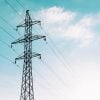
Prime Minister Mohammed Shia Al-Sudani opened the Iraqi-Turkish electricity interconnector on Sunday, via a video conference.
The new line connects through the Al-Kisk station west of Mosul to supply the northern region with a capacity of 300 MW. The ceremony was attended by the Minister of Electricity.
Al-Sudani praised the efforts of the Ministry of Electricity's teams, especially those from the General Company for Northern Electricity Transmission, for completing this project which has been delayed since 2004.
Al-Sudani highlighted the strategic importance of extending the connection to the Turkish grid and potentially to the European network. This initiative is part of the government's vision for regional connectivity, including plans to link with the Gulf Cooperation Council (GCC) power grid by the end of the year, enhancing Iraq's integration into the regional energy system for diversified and reliable electricity supply.
The project involved the construction of the 400 kV Al-Kisk substation, the first-time use of ultra-precision thermal wires for the 115 km transmission line, the extension of a 132 kV line to Tal Afar, and the installation of voltage stabilizing capacitors.
This power link will transfer 300 MW from Turkey to Iraq, helping to meet peak demand in the provinces of Nineveh, Salahuddin, and Kirkuk.
(Source: PMO)
Posted in Construction & Engineering In Iraq, Iraq Industry & Trade News Comments Off on Iraq begins Importing Turkish electricity
NIC Discusses Climate Investment Plan with UNDP
Posted on 20 July 2024 .
By John Lee.
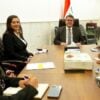
On Thursday, Dr. Haider Mohammed Makkiya, President of the National Investment Commission (NIC), met with a team from the United Nations Development Programme (UNDP), led by Mr. Mamunur Rashid, the Environment, Energy, and Climate Change Program Portfolio Manager.
According to a statement from the NIC, the discussions focused on enhancing cooperation between the Kuwait Direct Investment Promotion Authority (KDIPA) [!?] and the United Nations to improve the country's investment environment, emphasizing the importance of social and environmental justice, and considering citizens' rights concerning climate change and investment.
Dr. Makkiya highlighted the NIC's role in providing investment opportunities aimed at reducing emissions. This includes granting an investment license to the French company TotalEnergies for a solar power plant projected to produce 1000 MW of electrical energy. Collaborative efforts are also underway with the Ministry of Electricity on additional solar energy projects.
Dr. Makkiya stressed that Iraq currently presents an attractive environment for foreign investments. He noted that Iraq's laws now recognize foreign judgments, which enhances its appeal to international investors. Additionally, KDIPA is working with the UNDP to develop a comprehensive climate investment plan in collaboration with relevant sectoral entities.
(Source: NIC)
Posted in Investment Comments Off on NIC Discusses Climate Investment Plan with UNDP

US renews Waiver for Iraq to purchase Iranian Electricity
Posted on 18 July 2024 .
By Elizabeth Hagedorn for Al Monitor. Any opinions expressed here are those of the author(s) and do not necessarily reflect the views of Iraq Business News.
US renews sanctions waiver for Iraq to purchase Iranian electricity
The waiver issued on July 11 permits Iraq to pay neighboring Iran for electricity imports without running afoul of US sanctions.
Click here to read the full article (subscription required).
Posted in Iraq Industry & Trade News Comments Off on US renews Waiver for Iraq to purchase Iranian Electricity
Iraq Achieves Record Electricity Production
Posted on 08 July 2024 .
By John Lee.
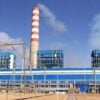
Iraq's Minister of Electricity, Engineer Ziyad Ali Fadel, has announced that Iraq's electrical system has reached an unprecedented production rate of 27,000 MW.
A statement from the Ministry says that this is an increase of 3,000 MW on the same period last year.
The minister attributed this success to the continuous support from Prime Minister Mohammed Shia' Al Sudani and the efforts of the ministry's dedicated employees, despite a shortfall of 7 million cubic meters per day in the agreed gas supplies.
(Source: Ministry of Electricity)
Posted in Iraq Industry & Trade News Comments Off on Iraq Achieves Record Electricity Production
Engagement and Momentum, IBBC's 15th Anniversary Conference Report
Posted on 05 July 2024 .
From the Iraq Britain Business Council (IBBC):
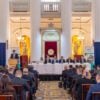
The IBBC 15th Anniversary Mansion House conference presented a range of engaging ministerial and business attendees. As Iraq's economy is expanding and diversifying, the delegates reflected this in the range of topics and debates. Baroness Nicholson and Christophe Michels welcomed everyone at this milestone time and thanked all founders and members who supported IBBC over the years and both were pleased to announce IBBC is now its strongest, most influential and confident with much optimism for the future.
Iraq's top companies and minsters were freely available to discuss business with delegates, until the end of the day, including CEO's of BP, TotalEnergies, Basrah Gas Company, Mitsubishi, EY, SC, Wood, Sardar Group, the Central Bank of Iraq, Trade Bank of Iraq, CJ ICM, UB Holdings, Martrade, Vitol and Government advisors and Ministers, including: H.E. Dr Abdulkareem Al-Faisal (Chair of PM's advisory commission), Dr Luay Al Khateeb (Former Minister of Electricity), Professor Hamid Khalaf (PM's Advisor on Education), Dr Fareed Yasseen (Climate Envoy), Mr Ezzeldin Sajid Yousif (CBI), and officials from the KRG Ministry of Agriculture. The British Home office and foreign office DBT officials also on hand as observers and engagers.
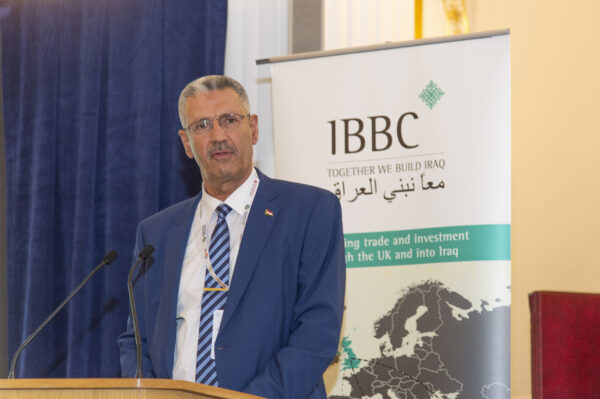
Central to discussions was H.E Hayan Abdul Ghani Al-Sawad, Deputy Prime Minister and Minister of oil, who outlined Iraq's intent to end gas flaring by 2028, build three new refineries, become self-sufficient and diversify oil products, petroleum, and chemical manufacture for export and produce 5m barrels per day (and have already reduced imports from $5b to $1bn). He called for more private sector investment in oil production and gas capturing for energy production and fertilizers, while encouraging the expansion of solar power, carbon reduction and use of sea water in processes. You can see his speech here.
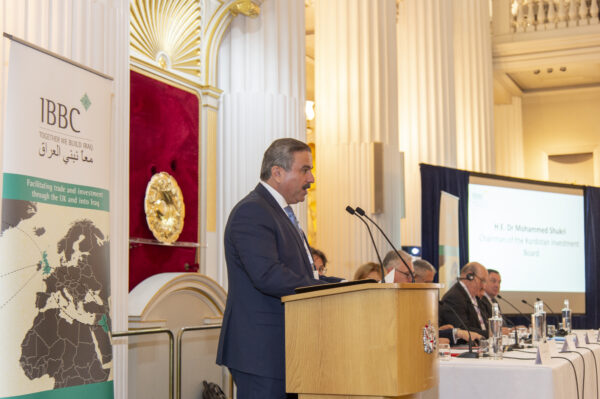
Chair of KRG Investment board Dr Mohammed Shukri speaking on behalf of Prime Minister Barzani said KRG is open to investment in various sectors including agriculture, renewables, construction materials, fertilisers, plastics, infotech and education.
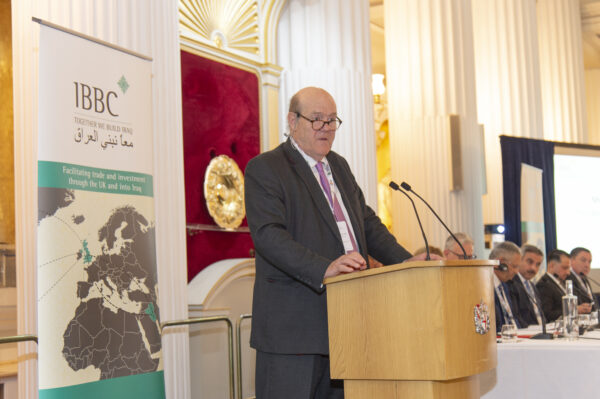
Rupert Soames chair of the Confederation of British Industries (CBI) articulated that trade is a stimulus for growth and while supply chains and economies are becoming hard to navigate, there is hope that a new reset will happen with the new UK Gov. Equally, Iraq can prove it can be well regulated and a reliable investment partner. He said working together with IBBC, CBI and governments presents an opportunity for all.
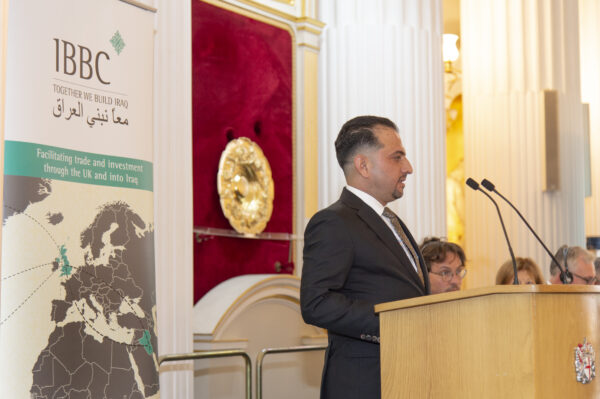
Dr Amet Selman of AAA holdings, principal sponsor, recognised the high level of collaboration between the UK and Iraq in contributing to food and climate security and supporting Iraq in its fertiliser requirements. Jon Wilks, Senior IBBC Advisor, who witnessed the birth of IBBC in 2009, was pleased to see it flourish, and knows that members care about Iraq and engage in real projects. As a former ambassador, he knows how important to have partners like IBBC and that the UK will be the strongest partner for Iraq.
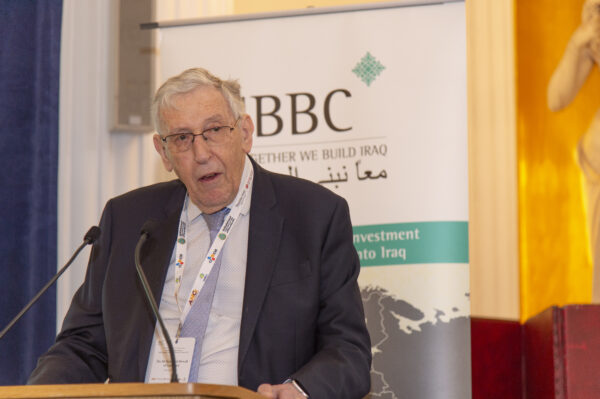
Lord Howell made a significant macro speech on the eve of the UK, French and USA elections. He condemned the trivia of political debate, and warned 'the world is on fire', the forces of darkness and dangerous undercurrents are trying to destabilise democracy, there is war, climate change and digital disruption at the doors of states, struggling to uphold public services, stark choices face countries. We must look to strategies of resilience, honesty, civilised debate, to develop trust and respect in our political system and even survival strategies and rule of law if we are to prevail. 85% of the world depends on fossil fuels and its not practical to just stop, so a pragmatic timeline for transition and investment is necessary. Civilised debate and democracy must prevail. You can see his speech here.
This year a significant number of packed roundtables saw large numbers of attendees, including Finance (Hogan Lovells), KRG, Education (Prof Hamid), Exchange rate report (Prof Gunter), and full platform panels including the new Climate Change and AgirTech, chaired by Mr. Richard Cotton, with Dr. Shamal Mohammed, Dr Fareed Yasseen and Sara Akbar of Oilserv. Energy Transition chaired by Dr Luay Al Khateeb, Centre on Global Energy Policy, Oilserv, TotalEnergies, Basra Gateway, Wood and Hydro C completed a most engaging and dynamic discussion. To add to the round table discussions, a high-profile finance panel chaired by Mr. Ardil Salem of Hogan Lovells and speakers Mr. Jamil Choucair of Standard Chartered, Bilal al Sugheyer, IFC, Mr. Taiseer Jawad of TBI, and Prof. Frank Gunter. The panel discussions focused on the development of the banking system in Iraq and the fluctuating dollar exchange rate in addition to the new regulatory framework and the new technological advancement that the Iraqi banks are perusing to meet international standards.
Transport session chaired by Prof. Frank Gunter, featured also with Mr Tugrul Titanoglu, CJ-ICM; and Mr Steve Alexandar, Sardar Group focused on regulatory change to open transport markets and a rare but required focus on the aged vehicle population in Iraq and its consequential pollution - with ideas for change.
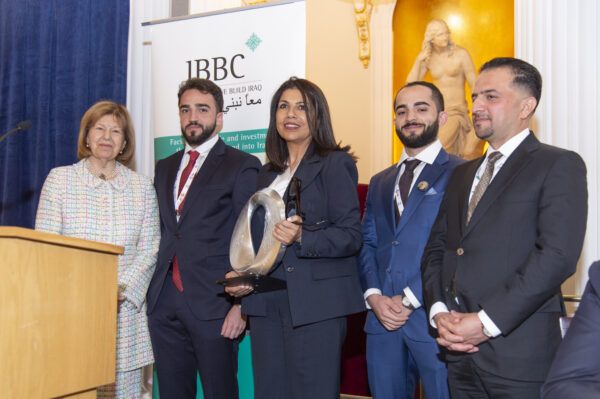
The Rasmi Al Jabri Award for business excellence was awarded to Ms Hadeel Hassan of HHP Law in the presence of Rasmi Al Jabri's grandsons. This prestigious annual business award recognises business excellence in Iraq and is now in its 4th year. The Previous winners are Al Burhan Group, Sardar Group and AAA.
Newcastle University exhibited the fascinating new online Gertrude Bell archive and the Heritage Session, chaired by Prof. Mohammed Al Uzri, saw top archaeologists John McGinnis and Prof Mark Horton of RAU, talk of the latest Nimrod palace discoveries and questioned why Iraq is not as well-known as Egypt in the media - an opportunity waiting to happen.
The previous day, IBBCs Tech Forum hosted top Microsoft Cyber expert Karl Niblock, who spoke about AI and its threats and opportunities, and Entrepreneurs Nadine Benchaff (AgriTech) and Omar Al Hasan (Iraq tech ventures and the station) spoke about barriers and opportunities to tech growth in Iraq. View discussion here.
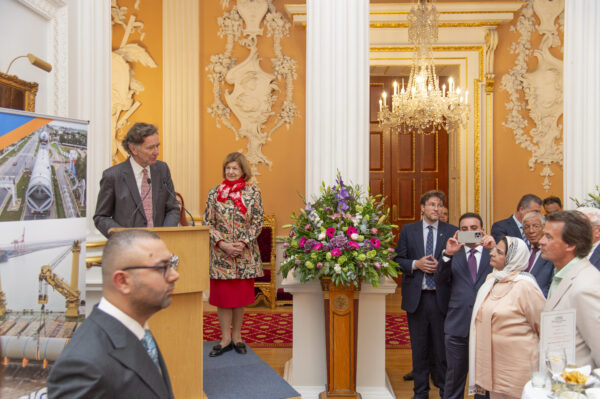
The forum was followed by an evening reception at the Mansion House to celebrate the 15th anniversary of IBBC. IBBC Vice President Lord Green addressed a large audience alongside Baroness Nicholson and the evening's Sponsor Sardar Group.
IBBC is grateful to all of its members for their support throughout the years and would like to tank AAA, CJ ICM, Hydro-C, TBI and Sardar Group for sponsoring this exceptionally rich and intense 15th anniversary event. We are were also grateful for the support and encouragement given by the Iraqi Embassy in London, the British Embassy in Baghdad and UK Visa and Immigration.
Posted in Investment, Iraq Industry & Trade News, Iraq Oil & Gas News, Politics, Security Comments Off on Engagement and Momentum, IBBC's 15th Anniversary Conference Report
New Social Housing Project for Returnees in Mosul
Posted on 05 July 2024 .
The Embassy of Japan in Iraq, Ninewa Governorate, and UN-Habitat have laid the foundation stone for a new social housing project for returnees in Mosul.
Following the high-level Round Table Meeting with key stakeholders, including Ambassador Futoshi Matsumoto and Governor Abdulqadir al-Dakhil, the foundation stone for the Japan Village Project was laid in Mosul.
The project will provide housing for around 50 households with approximately 350 beneficiaries, focusing on the most vulnerable returnees, particularly female-led households and people with disabilities. Additionally, the project will build capacity on the construction skills and work experience of 100 unemployed youths, including more than 40 females, and enhance the capacity of up to 1,000 individuals to address climate-related challenges.
Mr. Futoshi Matsumoto, Ambassador of Japan to Iraq said:
"Japan has been standing by all the people of Mosul (Moslaween). We have been strongly supporting IDPs in their most difficult time in Nineveh Governorate. Providing low-cost housings through UN-Habitat to more than 3,300 IDP families since 2014 is a clear demonstration of the goodwill by the people of Japan toward them.
"Today, all Japanese partners including TOYOTA Iraq, Sumitomo Corporation, Al Sardar Group (TOTO and KOMATSU), MEENAR (Nippon Paint), and Peace Winds Japan gathered together in Mosul to express their further support to the people in need, wishing for the early recovery of Mosul and Ninewa."
The Ninewa Governorate will support this initiative by facilitating access to essential infrastructure services such as electricity, water, sewage, irrigation, green areas, roads, and parking lots, thereby improving living conditions for the entire Rajm Hadeed neighborhood. Governor Abdulqadir al-Dakhil, during the ceremony, expressed his optimism about the project's outcomes, drawing from the excellent example of the Bab Sinjar Housing Complex, a previous collaboration funded by the Government of Japan and executed by UN-Habitat.
"There is still a dire need of houses for the returnees in Mosul, and we are committed to supporting and investing in this project to improve living conditions in the Rajm Hadeed neighborhood, confident that Mosul residents and returnees will benefit greatly from it."
Muslim Qazimi, Head of the UN-Habitat Iraq Programme, used the opportunity to share the broader vision behind the project related to adequate housing. He said:
"UN-Habitat's role transcends the provision of housing; we are dedicated to fostering sustainable urban development and ensuring the well-being of human settlements. By expanding this project to accommodate 3,000 returnees in the coming years, we are working towards our broader goal of ensuring access to adequate, safe, and affordable housing for all by 2030, as outlined in the Sustainable Development Goals."
The Japan Village Project is a significant step towards providing safe and sustainable housing and better living conditions for returnees, contributing to the ongoing development and durable solutions in the region and beyond.
(Source: UN)
Posted in Construction & Engineering In Iraq Comments Off on New Social Housing Project for Returnees in Mosul
Iraq Allocates $229m for Electricity Sector Improvements
Posted on 03 July 2024 .
By John Lee.
Iraq's Council of Ministers (Cabinet) has approved an increase in financial allocations for the Ministry of Electricity, amounting to 300 billion dinars [$229 mllion] from the operational budget to cover the following projects:
- 125 Billion Dinars: For urgent plan projects to alleviate distribution sector bottlenecks, including critical projects, feeders, and substation rehabilitation, as directed by the Prime Minister.
- 100 Billion Dinars: For purchasing transformers (self-transformers, power, distribution) for the transmission and distribution sectors from the Ministry of Industry and Minerals.
- 75 Billion Dinars: For purchasing specialized vehicles for the distribution sector, according to regulations.
(Source: PMO)
Posted in Construction & Engineering In Iraq Comments Off on Iraq Allocates $229m for Electricity Sector Improvements
Iraqi PM Announces Development Projects for Adhamiya
Posted on 02 July 2024 .
By John Lee.
Prime Minister Mohammed Shia' Al-Sudani announced the launch of several projects aimed at developing the city of Adhamiya in Baghdad, during his visit on Saturday.
These projects span various sectors, including traffic management, urban services, electricity, education, healthcare, and heritage conservation.
Key initiatives include:
- Traffic Alleviation: Construction of a new bridge connecting Kadhimiya and Adhamiya, and linking Mohammed Al-Qasim Bridge with Al-Mashatel Street, Antara Square, and Al-Dalal Square.
- Urban Services: Cleaning and refurbishing streets and alleys, developing residential areas 308 and 310, enhancing eight main streets, and creating new city gates. Additionally, the Tigris River banks will be developed over a 1,650-meter stretch.
- Electricity: Installation of a new 33/11 kV substation and distribution stations to alleviate power supply issues.
- Education: Allocation of land for 21 new schools and the rehabilitation of 47 existing schools.
- Healthcare: Rehabilitation of 10 health centers and the renovation of the old Al-Numan Hospital.
- Heritage Sites: Restoration of the Imam Abu Hanifa mosque and shrine, along with the expansion of associated facilities and a new multi-story parking lot.
- Community Projects: Renovation of the youth forum, resolution of issues at the Scout Stadium, refurbishment of the Al-Talea Theatre, improvement of the elderly care home, and initiation of a river taxi service.
Al-Sudani emphasized that these projects are part of broader efforts to enhance services in Baghdad and other provinces, addressing historical, religious, and commercial aspects of Adhamiya. He noted the impact of population growth on service pressure, particularly in education and healthcare, and highlighted the importance of easing traffic congestion and diversifying transport routes.
A committee led by the Director of the Prime Minister's Office and representatives from relevant departments will oversee the implementation of these projects.
(Source: PMO)
Posted in Construction & Engineering In Iraq Comments Off on Iraqi PM Announces Development Projects for Adhamiya
Iraqi Cabinet Approves Measures to Enhance Electricity Supply
Posted on 26 June 2024 .
By John Lee.
In its latest session, the Iraqi Cabinet has approved several measures to address the electricity needs during peak summer periods and to develop the country's power infrastructure.
The key decisions include:
- Contract with Mass Holding Company:
The Ministry of Electricity has been authorized to contract with Mass Holding Company to supply electricity specifically to the northern region and the national grid. This contract is crucial due to the peak summer demand and the need for a stable electricity supply. The contract duration is three months, based on financial viability.
- Contract with Kar Group:
The Ministry of Electricity has also been approved to contract with Kar Company for the supply of electricity from Turkey. This agreement follows a reduced price formula approved by the Ministry of Electricity and is also for a duration of three months, addressing the peak summer demand and the financial capabilities of the ministry.
- Financial and Developmental Approvals:
-
- Authority for Loan Agreement: The Cabinet has empowered the Minister of Finance, or an authorized delegate, to sign the loan agreement for funding the project to supply and install five 132 KV substations. These substations will be located in South Khalidiya, Al-Suwaira, Al-Rumaitha, North Kirkuk, and Al-Rifai, benefiting the Ministry of Electricity. This approval is in line with the Federal Budget Law for the fiscal years 2023-2025.
- Approval of Financing Terms: The Cabinet has agreed to the financing terms outlined in the Ministry of Finance's letter dated June 23, 2024.
According to a press release from the Prime Minister's office, these measures are part of the government's broader strategy to ensure a reliable power supply, particularly during high-demand periods, and to advance the country's electrical infrastructure to support economic growth and stability.
(Source: PMO)
Posted in Iraq Industry & Trade News Comments Off on Iraqi Cabinet Approves Measures to Enhance Electricity Supply
New Bids Sought for Sadr City Housing Project
Posted on 24 June 2024 .
By John Lee.
Prime Minister Mohammed Shia Al-Sudani chaired a meeting on Sunday with the higher committee overseeing the New Sadr City Project.
The meeting focused on the steps needed to complete this significant residential project and the overall financing mechanism to ensure all requirements are met. Al-Sudani instructed the Ministry of Electricity to quickly submit a comprehensive study, detailing the precise plan for the power station site that will supply the project.
Discussions also covered the project's final economic model, including execution phases, service complexes, and urban centers, aiming to finalize a design that suits the social and developmental needs of the beneficiaries.
The meeting approved re-inviting qualified companies to participate, with five out of 34 applicants initially found eligible. Two companies submitted proposals, but their costs were 17 percent above the project's estimated budget. This led to reissuing invitations for new bids and proceeding with invitations to companies for the infrastructure of the first phase, which includes 10,000 housing units.
(Source: PMO)
Posted in Construction & Engineering In Iraq Comments Off on New Bids Sought for Sadr City Housing Project