


Iraq orders Closure of 12 News Outlets
Posted on 26 November 2019 .
Iraq's media regulator should reverse its decision to order the closure of 12 broadcasters over a licensing dispute and should allow media outlets to freely cover protests in the country, the Committee to Protect Journalists (CPJ) said on Monday.
On November 12, the Communications and Media Commission (CMC), Iraq’s media regulator, ordered the closure of eight television broadcasters and four radio stations for three months for allegedly violating media licensing rules, and issued a warning against five more broadcasters over their coverage of protests, according to a copy of the closure decision, which CPJ reviewed, and reports by local news organizations and press freedom groups.
According to the decision, the commission also renewed the closure of U.S.-funded broadcaster Al-Hurra for an additional three months. The outlet was shuttered on September 2 after it aired a report on alleged state corruption, as CPJ reported at the time.
The decision includes a recommendation to the prime minister’s office to send security forces to the outlets to force them to close. According to CPJ’s review of the outlets’ broadcasts, and an official with the media regulator who spoke to news website Arab News, none of the outlets have been closed as of November 25.
The outlets have critically covered the protests that have taken place throughout Iraq since October over a lack of basic services, unemployment, and government corruption, according to CPJ’s review of their broadcasts.
“Iraqi authorities are using all the means at their disposal, legal and otherwise, to intimidate outlets in an effort to prevent them from covering the ongoing protests in the country,” said CPJ Middle East and North Africa Representative Ignacio Miguel Delgado. “We call on the Iraqi Communications and Media Commission to reverse this order and to allow TV broadcasters, radio stations, and journalists to do their jobs.”
The outlets listed in the decision are the Amman-based Dijlah TV and Anb TV, the Dubai-based Al-Sharqiya TV, the Saudi-funded Al-Arabiya Al-Hadath, the U.S.-funded Radio Sawa, the Sulaymaniyah-based NRT News and Radio Nawa, and the Baghdad-based Al-Rasheed TV, Al-Fallujah, Hona Baghdad, Radio Al-Nas, and Radio Al-Youm.
The decision also issued a warning to five outlets to “adapt their discourse to the media broadcasting rules” or else face possible suspension: the Abu Dhabi-based Sky News Arabia, the Beirut-based Al-Sumaria, the Erbil-based Rudaw, and the Baghdad-based Asia TV and Ur TV.
The document recommends that the prime minister’s office approach representatives from the home countries of the foreign outlets listed in the decision, as well as the management of Egyptian satellite provider NileSat, to address the alleged violations.
Iraq’s Communications and Media Commission did not immediately reply to CPJ’s emailed request for comment.
Amid the protests, unidentified gunmen raided the Baghdad offices of four broadcasters, and the Communications and Media Commission ordered Al-Dijlah TV’s transmissions into Iraq to be blocked and its offices shut down for allegedly failing to abide by professional standards, according to CPJ reporting.
(Source: CPJ)
Posted in Iraqi Communications News, Politics Comments Off on Iraq orders Closure of 12 News Outlets
CPJ: Journalists Injured and Detained, Broadcasters Banned
Posted on 31 October 2019 .
Journalists injured and detained, broadcasters banned as protests resume in Iraq
On Tuesday, the Committee to Protect Journalists (CPJ) condemned recent attacks on journalists and media outlets in Iraq, and urged authorities to ensure that journalists can cover the ongoing protests in the country safely and without obstruction.
After a brief lull, anti-corruption and unemployment protests reignited in Iraq on October 24, and led to at least 74 deaths by October 27, according to news reports and a statement by the Iraqi High Commission for Human Rights.
At least two journalists for local broadcaster Al-Sumaria TV have been injured in the latest wave of protests, one journalist was briefly detained, and two broadcasters have been banned, according to statements from the National Union of Journalists in Iraq and local press freedom organization Press Freedom Advocacy Association in Iraq, as well as news reports.
“Iraqi authorities seem more focused on preventing journalists from doing their jobs than on protecting them from harm while they cover protests,” said CPJ’s Middle East and North Africa Representative Ignacio Miguel Delgado. “We call on Iraqi authorities to do all they can to ensure that journalists and news outlets can do their jobs freely and safely.”
On October 25, police fired a tear gas canister that hit Hisham Wassim, a reporter for Al-Sumaria TV, in the face while he was covering protests at Baghdad’s Jumhuriyya Bridge, according to the journalists’ union statement and reports by his employer.
Wassim was seriously injured by the grenade and was taken to Al-Kindi Hospital in Baghdad, according to those reports. On October 27, he was flown to Beirut for surgery, according to his employer. Zian, an Al-Sumaria employee who declined to provide their full name to CPJ, said via phone that Wassim is set to receive minor surgery on his face, but had not sustained any bone fractures.
On October 26, police fired a tear gas bomb that hit Ali Jassem, a camera operator for Al-Sumaria TV, in his right hand and abdomen with shrapnel while he was covering protests in Baghdad’s Tahrir Square, according to his employer, the journalists’ union, and the Press Freedom Advocacy Association in Iraq.
Zian told CPJ that Jassem sustained light injuries and had gone back to work.
At 2:30 a.m. on October 27, a group of counter-terrorism agents stormed into the house of Hussein al-Amal, a reporter for the newspaper Al-Mada, in the southern Iraqi city of al-Nasiriyah and detained al-Amal, his son, and his nephew, according to the Press Freedom Advocacy Association in Iraq and Amir Hamid, a researcher for Al-Mada, who spoke to CPJ via email.
Agents took al-Amal and his family members to the Counter-Terrorism Directorate in al-Nasiriyah on allegations of participating in demonstrations, and released him and his nephew on bail a few hours later, according to a Facebook post by al-Amal. His son was released the following night, according to another post by al-Amal.
In a video posted to Facebook, al-Amal said he had gone to the protests as part of his work as a journalist. The day before his arrest, he had reported in Al-Mada on clashes between protesters and militias in al-Nasiriyah.
Iraqi authorities have also cracked down on news coverage of the protests. On October 24, the Iraqi Interior Ministry banned live coverage of the protests in Baghdad’s Tahrir Square, according to news reports.
Interior Ministry Spokesman Brigadier General Khaled al-Muhanna was cited by the news website Nas News as saying that authorized journalists were allowed to interview protesters and record the protests, but not to broadcast them live.
On October 25, Iraq’s media regulator, the Communications and Media Committee, ordered the Amman-based Iraqi satellite broadcaster Al-Dijlah TV’s transmissions into Iraq to be blocked and its offices shut down for allegedly failing to abide by professional standards, according to news reports and the journalists’ union statement.
Al-Dijlah TV’s offices in Baghdad were ransacked and burned by unidentified armed assailants on October 5, as CPJ reported at the time.
Jamal Karbouli, leader of the Al-Hal Party and owner of Dijlah TV, said on Twitter that Dijlah TV had never violated professional standards, and said it covered Iraq truthfully.
“I prefer the closure of Dijlah TV and the stopping of its broadcast a thousand times over hiding the truth from Iraqis,” Karbouli said in his tweet.
On October 27, Iraqi police told Saudi broadcaster Al-Arabiya and its sister company Al-Hadath that the outlets were banned from operating in the country and urged theirs staffs to cease all journalistic work, citing a licensing issue, according to news reports and a report by Al-Arabiya.
CPJ emailed the Communications and Media Committee and the Iraqi Interior Ministry for comment, but did not immediately receive any replies.
(Source: CPJ)
Posted in Construction & Engineering In Iraq Comments Off on CPJ: Journalists Injured and Detained, Broadcasters Banned
Is Iran Expanding its Influence in Iraq?
Posted on 28 October 2019 .
By Ali Mamouri for Al-Monitor. Any opinions expressed are those of the author, and do not necessarily reflect the views of Iraq Business News.
Is Iran expanding its influence in Iraq?
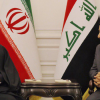
Well-known Iranian activist and journalist Roohollah Zam was captured Oct. 14 in Iraq and deported to Iran. The details surrounding his arrest and deportation have raised questions about the magnitude of Iran’s influence in Iraq.
BBC Persian, Saudi-funded Alarabiya and many other Persian and Arabic media outlets reported that Zam had been captured by the Iraqi National Intelligence Service on an arriving flight from France at the Baghdad airport and immediately handed to Iranian agents, who sent him to Tehran the same day. Both the Iranian and Iraqi governments have remained silent about the reports, neither confirming or denying them.
Posted in Politics, Security Comments Off on Is Iran Expanding its Influence in Iraq?

Transparency in Iraqi Upstream Petroleum Sector
Posted on 30 September 2019 .
By Ahmed Mousa Jiyad.
Any opinions expressed are those of the authors, and do not necessarily reflect the views of Iraq Business News.
Transparency in the Arab Countries’ Upstream Petroleum Sector- Iraq as case study*
While upstream petroleum sector is either dominant or has significant importance in many Arab economies of MENA region, the transparency of the sector is alarmingly lacking; this is manifested by their “formal” association with Extractive Industry Transparency Initiative (EITI), which is extremely limited and their Resource Governance Index (RGI) and Corruption Perception Index (CPI) that are too poor.
This presentation comprises three parts;
The first part addresses, briefly, the essence of transparency and what it entails:
- Full disclosure & availability of and accessibility to related Data & Information;
- Openness, answerability, accountability;
- Multiplicity of involved, reporting or concerned entities;
- Objective, Independent & Verifiable Indicators;
- Transparency is not rhetorical claim; it is evidence-based;
- Reconciliation of data: Materiality, Identifiably, Measurability;
- Constitutional Premises (ownership) Right and Rights Based Development- RBD
Also, this part provides a selection of most known international entities specialized in the matter; these are EITI, Natural Resource Governance Institute (NRGI), Transparency International (TI), Publish What You Pay (PWYP) and the Fund for Peace. Each of these entities has its distinct methodology, working procedures and publications. In addition to them, this part refers to the IMF’ Fiscal Transparency Code.
The second part exhibits charts on the standing of the Arab countries based on the latest available data and information from three international entities: EITI, NRGI-RGI and TI-CPI.
As on September 2019 only Mauritania has “meaningful progress” standing with EITI; Iraq was “suspended” since October 2017 due to “inadequate progress” and Yamen was “suspended” on February 2015 due to “political instability”, then in October 2017, Yemen was “delisted” and, thus, could be invited to reapply to the EITI once conditions were again favourable for implementation.
Obviously, the above manifests extremely poor standing (in number of countries and their status) with EITI.
The NRGI’ RGI measures the quality of resource governance in countries that together produce 82 percent of the world’s oil, 78 percent of its gas and a significant proportion of minerals, including 72 percent of all copper. RGI is the product of 89 country assessments (eight countries were assessed in two sectors), compiled by 150 researchers, using almost 10,000 supporting documents to answer 149 questions.
NRGI’s RGI for 2017 (oil and gas only) covers 89 countries and provides their “Score” on a scale of 100 and “Rank” of 89. RGI 2017 classifies the standing of countries according to their scores into: Good (>74); Satisfactory (60:74); Weak (45:59); Poor (30:44) and Failing (<30).
All the 12 Arab countries covered by RGI scored less than 60 out of 100. Countries with Weak score are Tunisia, Kuwait and Oman. Those scored poorly are Qatar, UAE, Bahrain, Egypt, Iraq, Saudi Arabia, Algeria and Yamen. Finally, Libya scored failing.
TI’ CPI 2018 draws on 13 surveys and expert assessments to measure public sector corruption in 180 countries and territories, giving each a Score from zero (highly corrupt) to 100 (very clean) and their Ranks accordingly.
Syria, Yemen, Sudan, Iraq and Lebanon each scored less than 30; Egypt, Algeria, Kuwait, Tunisia, Morocco, Jordan and Saudi Arabia scored over 30 up to 50; Oman, Qatar and UAE scored over 50 to 70.
Since both RGI and PCI are composite indexes, there is strong correlation between Scores and Ranks: low scores are associated with high rank numbers; high rank number means at the bottom of the list.
In conclusion all the standing of Arab countries is alarmingly very poor and disappointing with EITI, NRGI and TI.
The third part of the presentation focuses on Iraq as a case study on transparency through its association and experience with EITI.
Briefly, Government of Iraq (GoI) launched (2007/8) the International Compact with Iraq (ICI) in cooperation with the UN and the WB. ICI specifically calls to, “Establish and implement mechanisms to ensure transparency of petroleum sector flows”.
The government publicly announced its commitment to work with all stakeholder groups at the 4th EITI Global Conference in Doha, Qatar, in February 2009, and then made formal commitment to EITI at the Iraq EITI (IEITI) launching conference on 10-11 January 2010; a month later the country was accepted, by EITI Board, as a Candidate.
The first validation report, prepared by EITI’ International Secretariat- IS staff, endorsed by Adam Smith International- ASI, prompted EITI Board to announce, on 12 December 2012, Iraq as “Compliant” country under EITI rules and process. On 3 April 2013, IEITI organized big event in Baghdad celebrating this achievement by Iraq.
A team from EITI-IS visited Iraq during 1-9 April 2017 and held numerous meetings in Baghdad and, also, in Dubai (UAE); IS Report presents the findings and initial assessment of the data gathering and stakeholder consultations and followed EITI usual and unified “Validation Procedures” and applied the “Validation Guide” in assessing Iraq’s progress with the EITI Standard.
Iraq was found to have inadequate progress in implementing the EITI Standard in October 2017. The country status as “compliant member” was suspended and, according to EITI rules, was given a grace period to rectify the shortcomings to achieve at least “Meaningful” progress on all identified requirements.
Why and what went wrong
The presentation highlights and discussed questions relating to why and what had led to such suspension under the following headlines:
- “Mission accomplished” and sense of complacency; frequency of MSG meetings and attendance curve
- Wrong understanding of what “compliant” status really means;
- Focus on “release on time” not on the quality and contents of the IEITI Annual Reports;
- IEITI Annual report mostly Copy & Paste; most Parts are prepared by MoO/ MIM officials and full of flaws and inaccuracies;
- Structure & composition of the MSG: dominated by Government representatives, IOCs not active, CSO lack understanding of Extractive Industry and language;
- Big Secretariat, weak national capacity contribution and complete reliance on the Administrator;
- Opposing domestic views: useless/invisible; event-base; abused by authorities and two extreme views (Rosy vs. UN full control!):
- Surprising passivism on Corruption!!!!!!;
- IEITI itself is a Black Box
- Limited impacts that led to diminishing international support and lack of funding e.g., NORAD; NRGI: from “priority country” to “Limited engagement” to only in “RGI”;
What are next and the way forward
In this part, the presentation reviewed responses and actions taken by the Iraqi authorities since the suspension: From the initial “muteness” and “passivism” October -2 November 2018,….., to 4 Nov 2018 alerting article; Committees & changes, …; February 2019 Baghdad Conference; EITI-IS second validation; EITI Global Conference, Paris- June 2019.
In case of re-instating Iraq “Compliant” status, IEITI still has to take specific necessary measures and actions for real impacts instead of making rhetorical statements; such measures and actions were proposed, justified and discussed during the presentation. The PowerPoint slides are attached herewith.
* Presentation delivered before the 12th Middle East and North Africa Oil & Gas Conference, organized by Target Exploration www.targetexploration.com, Imperial College, London, UK. 18 September 2019. I am very grateful to Target Exploration for sponsoring my participation.
Click here to download the PowerPoint slides presented at the conference.
Mr Jiyad is an independent development consultant, scholar and Associate with the former Centre for Global Energy Studies (CGES), London. He was formerly a senior economist with the Iraq National Oil Company and Iraq’s Ministry of Oil, Chief Expert for the Council of Ministers, Director at the Ministry of Trade, and International Specialist with UN organizations in Uganda, Sudan and Jordan. He is now based in Norway (Email: mou-jiya(at)online.no, Skype ID: Ahmed Mousa Jiyad). Read more of Mr Jiyad’s biography here.
Posted in Ahmed Mousa Jiyad, Iraq Oil & Gas News Comments Off on Transparency in Iraqi Upstream Petroleum Sector
ACWA Power Signs MoU with Iraq Energy Institute
Posted on 27 September 2019 .
ACWA Power, a Saudi-based developer, owner, and operator of power generation and water desalination plants, has signed a Memorandum of Understanding (MoU) with Iraq Energy Institute (IEI), an independent non-profit policy institute, to collaborate on research development projects and enhance capacity building programs that will contribute to the optimum development of Iraq’s energy sector.
The MoU communicates the commitment of ACWA Power and IEI to partake in both parties’ events, workshops and activities and exchange expertise from consultants and senior management at organised events and forums.
The partnership will initiate professional dialogues and knowledge sharing that will bring about solutions which target challenges facing the region and elevate the private-public investor community in Iraq.
Demonstrating its role in nurturing young talent, ACWA Power will also take a leading role in IEI’s future scholarship programmes that will grant Iraqi students the chance to progress and excel in the energy and water fields in cooperation with other governmental and non-governmental partners.
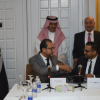
The MoU was signed by Mr. Yesar al-Maleki, Managing Director of IEI, and Mohamed Fata Nahhas Business Development Manager at ACWA Power in the presence of Mohammad Abunayyan, Chairman of ACWA Power and Mr. Adnan Al Janabi, Vice Chairman of IEI.
ACWA Power Chairman, Mohammad Abunayyan said:
"We are pleased to commence collaboration with Iraq Energy Institute and bring our expertise to the Iraqi market.
"The signing of the MoU will certainly bridge to further alliances between ACWA Power and Iraqi energy players and is a robust start of a mutually beneficial relationship built on knowledge and exchange of energy proficiency between the Kingdom of Saudi Arabia and Iraq – which we are proud to lead and are keen to further progress."
(Source: ACWA Power)
Posted in Iraq Industry & Trade News, Iraq Oil & Gas News Comments Off on ACWA Power Signs MoU with Iraq Energy Institute
Monetization Strategies for Development of Border Oil Fields
Posted on 24 September 2019 .
By Ahmed Mousa Jiyad.
Any opinions expressed are those of the authors, and do not necessarily reflect the views of Iraq Business News.
Monetization Strategies for Joint Development of Border Fields in MENA Region
Many hydrocarbons fields and exploration blocks, with billons barrels of petroleum, straddle sovereign borders (both onshore and offshore) in the Middle East and North Africa- MENA region, present significant development opportunities as well as potentially risk and source of conflict.
So far, they have been mostly source of conflicts, contentious and acrimonious relationship; it’s about time to pursue the other mutually beneficial approach whenever possible and feasible.
The number, prospects and potential of border fields in MENA Region indicate to billions barrels of oil equivalent -BOEs of proven hydrocarbon (oil, gas and condensates) reserves, with more to add through further exploration and technological advancement, generating billions of cash flows with attractive returns on investment.
Brief examples and as of today’s data and information are the following:
- Iraq has (24) border oilfields with Iran, Kuwait and Syria;
- Iran has (23) border fields/blocks with Iraq, Saudi Arabia, Kuwait, Qatar, UAE, Oman and Turkmenistan;
- Arabian Gulf Region is crowded with too many structures, including Saudi Arabia-Kuwait Neutral Zone (Al-Khafji & Al-Wafra);
- The Mediterranean: Lebanon vs. Occupied Palestine (Israel); Cyprus vs. Turkey; Egypt vs.....!!
- Red Sea: Egypt vs, Sudan (Halayib and Shalateen)
- Other MENA countries…….
Empirical evidence and analytical premises suggest that sovereign border hydrocarbons fields or exploration blocks could be developed either through “competitive” or “collaborative” strategies; the first follows “rule of capture” or “use it before losing it”, while the second adopts “feasibility & optimization”; the first is harmful to the field, its structure and reservoir(s) while the second adheres to efficiency considerations, prudent natural resource management and international best practices; the first is premised on “sovereign exclusivity” while the second is formulated on “Bi/trilateral inclusivity”; the first is “conflict-prone” while the second serves “mutuality of interests”; the first is “short-term focused” while the second has “phasic orientation” and finally, from investment vs. net revenue perspectives, the first is “own-risk” while the second is “burden and benefit-sharing”.
What should be highlighted is that collaborative development of a border field could be done through two broad (comprising various versions) distinct modalities with different investment, revenue structures and legal modalities: unitization (mostly trilaterally structured) or joint venture (mostly bilaterally structured).
For this purpose the presentation proposes TELG Approach for monetizing these resources, which basically integrates four fundamental broad spheres of professional knowledge-base and analysis and the needed institutional, managerial and governance setups applicable to the collaborative mode of border fields development in both modalities- unitization and joint venture.
TELG Approach is helpful for unitization requirements of both onshore and offshore across-sovereign borders as well as across contracted areas within each country.
After discussing the essence of cross-border fields exploitation as “Hotelling game”, basic contesting strategies, phases of unitization agreements and elaborate on TELG approach and its requirements, the presentations provides examples on the “ambiguity” of legal provisions on unitization in the Iraqi service contracts, the July 2019 Iraq-Kuwait contract with ERCE and a list of modalities governing UK-Norway unitization of fields.
The presentation ends with call upon Arab related entities such as OAPEC, ESCWA and the Economic and Social Council of the Arab League among others to take necessary and serious measures to address unitization, and request Arab petroleum professionals to produce international best-practice guide and formulate basic model for unitization agreement in efforts to help in efficient exploitation of such natural resources in a prudent and effective way and finally provide Illustrative Hypothetical Case for Unitization Negotiation Game.
This presentation was delivered before the 12th Middle East and North Africa Oil & Gas Conference, organized by Target Exploration at Imperial College, London, UK. 19 September 2019; I am very grateful to Target Exploration for sponsoring my participation.
Click here to download the PowerPoint slides presented at the conference.
Mr Jiyad is an independent development consultant, scholar and Associate with the former Centre for Global Energy Studies (CGES), London. He was formerly a senior economist with the Iraq National Oil Company and Iraq’s Ministry of Oil, Chief Expert for the Council of Ministers, Director at the Ministry of Trade, and International Specialist with UN organizations in Uganda, Sudan and Jordan. He is now based in Norway (Email: mou-jiya(at)online.no, Skype ID: Ahmed Mousa Jiyad). Read more of Mr Jiyad’s biography here.
Posted in Ahmed Mousa Jiyad, Iraq Oil & Gas News Comments Off on Monetization Strategies for Development of Border Oil Fields
Iraq works to distance itself from US-Iran Tension
Posted on 22 September 2019 .
By Ali Mamouri for Al-Monitor. Any opinions expressed are those of the author, and do not necessarily reflect the views of Iraq Business News.
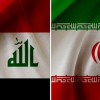
Iraq works to distance itself from US-Iran tension after Saudi Aramco attack
Attacks that occurred Sept. 14 against Aramco oil processing facilities in Saudi Arabia, resulting in huge fires and halting near half of the supply from the largest oil exporter in the world, could have a major effect on Iraq.
Soon after the attacks, Yemen’s Houthi rebels took responsibility, saying they used 10 drones in the strikes.
However, Middle East Eye quoted an unnamed Iraqi intelligence official as saying the strikes were launched by Iranian drones using Iraqi territory.
Middle East Eye added that the attack was in revenge, occurring out of the belief that Riyadh funded Israeli drone attacks that have taken place in recent months on Iraqi Popular Mobilization Units.
Click here to read the full story.
(Picture credit: Tasnim, under Creative Commons licence)
Posted in Security Comments Off on Iraq works to distance itself from US-Iran Tension

Iraq signs deal to Import Electricity from Gulf States
Posted on 16 September 2019 .
Iraq has signed a landmark deal with the Gulf Cooperation Council (GCC) for a power line to import 500 megawatts of electricity by 2020, local reports said on Sunday.
According to the Iraqi Electricity Ministry, the 300-kilometre line will run from Kuwait to Iraq’s southern port of Faw and be financed by the GCC.
Electricity Minister Lo’ai [Luay] Al-Khatteeb (pictured) signed the agreement with the head of the GCC Interconnection Authority, Ahmad Ibrahim, on the sidelines of an energy conference held in Baghdad.
“This is the first deal of its kind with the GCC,” explained Al-Khatteeb. Iraq is also in separate talks with neighbours Saudi Arabia, Jordan and Turkey to import electricity.
“This first step will pave the way to discuss further and higher capacity projects,” the minister added, “not only to supply Baghdad and northern Iraq but also as a pathway to other countries.”
(Source: Middle East Monitor)
Posted in Iraq Industry & Trade News Comments Off on Iraq signs deal to Import Electricity from Gulf States

Saudi-Iraq Border Crossing to reopen in weeks
Posted on 15 September 2019 .
By John Lee.
Commercial operations at the new Saudi-Iraq Arar Crossing will begin on a trial basis on 15th October.
Saudi Arabia's Ambassador to Iraq, Abdul Aziz Al-Shammari, and Iraqi Ambassador to Riyadh, Qahtan Al-Janabi, made the announcement during a visit to the crossing point.
The Saudi town of Arar is 70 kilometers from the Iraqi border.
(Sources: Xinhua, Arab News)
Posted in Iraq Industry & Trade News, Iraq Transportation News Comments Off on Saudi-Iraq Border Crossing to reopen in weeks

Petrofrac Order Intake hit by Iraq Fraud Investigation
Posted on 29 August 2019 .
By John Lee.
Petrofac has said that a fall in first-half order intake was partly due to an investigation into the oilfield services company’s dealings in Saudi Arabia and Iraq.
In its results for the six months ended 30th June 2019, Petrofac's Group Chief Executive Ayman Asfari commented:
"Petrofac has delivered good results that reflect solid operational performance across the business.
"New order intake year to date has been impacted by recent challenges in Saudi Arabia and Iraq.
"Looking forward, the Group has a busy tendering pipeline with around US$13 billion of bid opportunities due for award in the second half of the year."
It added that "no charges have been brought against Petrofac, or any officers or current employees."
Earlier this year, David Lufkin, previously Global Head of Sales for Petrofac International Limited, pleaded guilty to eleven counts of bribery.
(Source: Petrofac)
Posted in Iraq Oil & Gas News Comments Off on Petrofrac Order Intake hit by Iraq Fraud Investigation