


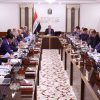
Cabinet approves Draft Law on Public-Private Partnership
Posted on 08 August 2019 .
The Cabinet held its regular weekly meeting in Baghdad on Tuesday under the chairmanship of Prime Minister Mr. Adil Abd Al-Mahdi. It approved:
- the recommendation of the Ministerial Energy Council on the service contract for Al-Mansuriyah oil field in Diyala province;
- a draft law on public-private partnership to strengthen cooperation between government agencies and the private sector;
- the draft agreement between the Republic of Iraq and the Kingdom of Saudi Arabia on the avoidance of double taxation and the prevention of tax evasion'
- measures to meet the requirements of elections to provincial councils outside the Kurdistan Region of Iraq;
- recommendations for development of the Safwan border crossing between Iraq and Kuwait in Basra province.
(Source: Govt of Iraq)
Posted in Investment, Iraq Industry & Trade News, Politics Comments Off on Cabinet approves Draft Law on Public-Private Partnership

Saudi Border Crossing to Officially Reopen in Oct
Posted on 18 July 2019 .
By John Lee.
The Arar border crossing between Saudi Arabia and Iraq will reportedly officially reopen in October.
It was closed in 1990 following Iraq’s invasion of Kuwait.
According to Gulf News, some pilgrims are currently being allowed to pass through the crossing to participate in next month’s Haj.
(Source: Gulf News)
Posted in Iraq Industry & Trade News, Iraq Transportation News Comments Off on Saudi Border Crossing to Officially Reopen in Oct

Iraq could surpass Saudi Arabia in Oil Production
Posted on 08 July 2019 .
By Padraig O'Hannelly.
A senior oil executive has predicted that Iraq could surpass Saudi Arabia as an oil producer.
Addressing delegates at CWC's Iraq Petroleum conference in London, Majid Jafar (pictured), CEO of Sharjah-based Crescent Petroleum, said:
"Iraq is hugely underexplored. We at Crescent know of 300 structures just in the Western Desert that have yet to be drilled, so I for one believe that Iraq has a lot of potential, and I wouldn't be surprised if it becomes the largest producer in OPEC during my career."
Crescent Petroleum has an interest in the Khor Mor field in the Kurdistan Region of Iraq, and has signed initial contracts to develop the oil fields of Gilabat-Qumar (in Diyala), Khashim Ahmer-Injana (in Diyala), and Khudher Al-Mai [Khider al-Mai] (in Basra and Muthana).
Posted in Iraq Oil & Gas News Comments Off on Iraq could surpass Saudi Arabia in Oil Production
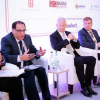
Iraq "has a Role to Play" in Reducing Middle-East Tensions
Posted on 06 July 2019 .
By Padraig O'Hannelly.
Following the increase in tensions in the Gulf region in recent weeks, two British diplomats have expressed the view that Iraq could have a positive role to play.
Addressing delegates at CWC's Iraq Petroleum conference in London, the British Ambassador to Iraq, Jonathan Wilks CMG, said:
"Iraq is strong enough now to keep itself out of whatever may develop between the US and Iran, as long as it asserts its sovereignty and independence with all countries, not just with Iran and the US, but with all countries east and west. It is powerful enough to do this now ... [and] must be taken seriously as an economic power.
"Iraq is back as a reasonable, constructive and credible player in world affairs."
Later at the same gathering, Sir William Patey KCMG (pictured on left), a former UK Ambassador to both Iraq and Saudi Arabia, said:
"Iraq is in a unique position, in that it has equity in ensuring that there isn't a war ... and I think a confident new Iraq could play a role.
"It has better relations with Saudi Arabia, it has good relations with Iran, it has a close relationship with the United States, and it has a lot at stake. So I actually think in terms of reducing the tensions, I think there is potential for Iraq, and I think the current leadership of Iraq has the [right] vision and outlook."
Posted in Politics, Security Comments Off on Iraq "has a Role to Play" in Reducing Middle-East Tensions

IBBC hosts Members' Retreat at Cumberland Lodge
Posted on 01 July 2019 .
This weekend, the Iraq Britain Business Council (IBBC) hosted its annual members’ retreat at Cumberland Lodge, Windsor Park, which was generously sponsored by Al Burhan Group.
As with previous years, it was very well attended by over seventy delegates, and allowed our members to mingle and network with representatives of other businesses, civil servants, and Iraqi government dignitaries.
Speakers and organisations represented included:
- Dr Falah Al Amiri, Advisor to the Ministry of Oil, Government of Iraq
- Dr Hameed Ahmed, Deputy Higher Education Minister
- Eng. Dara Rasheed, Deputy Minister of Housing, Construction & Municipalities
- Jon Wilks CMG, HM Ambassador to Iraq
- Beverley Simpson, Director, Department of International Trade (DIT) in Iraq
- Dr Victoria Lindsay, Director, British Council, Iraq
- Emma Sky, Director, Greenberg World Fellows Program, Yale University
- Nicolas Pelham, The Economist
- Professor Toby Dodge, London School of Economics
- Dr Renad Mansour, Chatham House
- Al Burhan Group
- Al Maseer Insurance
- Basra Gateway Terminal
- Bath Spa University
- BP
- Chevron
- Constellis
- EAME
- ENKA
- ExxonMobil
- Financial Times
- G4S
- GulfTek Saudi
- KBR
- Management Partners
- Mosul University
- OiLSERV Kuwait
- Perkins+Will UK, Ltd
- Petrofac
- Petronor
- Pro-Technique Group
- Rolls-Royce
- Serco
- Shire Oak International
- Stirling Education
- Tube Tech International
- TurnKey LLC
- Unihouse Global
- University of Dundee
- University of Liverpool
- University of Northampton
- University of Sheffield
- Wood Plc
- Zaha Hadid Architects
Sessions included discussions and panels on the state of Iraq, contemporary Middle Eastern politics, meetings for our various sector tables (including oil and gas, and construction and infrastructure), economic development strategies for Iraq, and how higher education partnerships could be developed between the UK and Iraq. A biannual council meeting for representatives of our member organisations was also held.
Christophe Michels, Managing Director of the IBBC was happy with how the weekend went:
“As in previous years the Retreat has attracted some of the finest minds from business, academia, politics, media and diplomacy working on Iraq to conduct truly meaningful and intimate discussions”.
Baroness Emma Nicholson, President of the IBBC and the Prime Minister’s Trade Envoy to Iraq, Azerbaijan, Kazakhstan and Turkmenistan said:
“IBBC has had a fantastically happy and hugely productive busy weekend. We call it a retreat, but I am not sure what it was a retreat from! People were working morning, noon, and night, and they were making great achievements, and huge strides in the various different table meetings…one of the best I can ever remember”.
For more information on the Iraq Britain Business Council, visit our website at https://www.iraqbritainbusiness.org/
(Source: IBBC)
Posted in Construction & Engineering In Iraq, Investment, Iraq Banking & Finance News, Iraq Education and Training News, Iraq Industry & Trade News, Iraq Oil & Gas News, Politics, Security Comments Off on IBBC hosts Members' Retreat at Cumberland Lodge
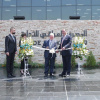
Trade Bank of Iraq (TBI) unveils new HQ
Posted on 27 June 2019 .
By John Lee.
The Trade Bank of Iraq (TBI) has officially opened its new headquarters in Baghdad.
Located on Al Rasheed Street in the heart of Baghdad, the new headquarters is wholly owned by the bank and is designed to facilitate collaboration, bringing 670 Baghdad-based employees of TBI under one roof for the first time.
The building comprises of 5 floors with the ground floor set to provide banking services to customers while the remaining floors are dedicated to administrative work.
The TBI also recently opened its first operational branch outside Iraq, in Saudi Arabia.
(Source: TBI)
Posted in Construction & Engineering In Iraq, Iraq Banking & Finance News Comments Off on Trade Bank of Iraq (TBI) unveils new HQ

Capstone Wins Order for Microturbines in Basra
Posted on 05 June 2019 .
US-based Capstone Turbine Corporation (Nasdaq: CPST) has announced today that it has secured an order for two C600 Signature Series microturbines to provide 1.2 megawatts (MW) of energy to power a triethylene glycol (TEG) dehydration facility in the Basra region of Southern Iraq.
The order also includes Capstone’s new self-cleaning pulse filtration system which will allow the microturbines to endure the remote and sandy conditions with minimal maintenance. The order was secured by Technical Solutions to Industry FZE (TSI), Capstone’s authorized distributor to Iraq and United Arab Emirates (UAE).
Fueled by available raw gas, Capstone’s two C600S microturbines will power 100% of the new dehydration facility. The new facility is part of a larger 25-year joint venture between local gas and leading oil producer’s efforts to capture, treat and monetize associated gas currently being flared from three southern Iraq oilfields.
Capstone recently developed a new line of self-cleanable severe environment air filtration systems for its Signature Series line of microturbine products to facilitate its expansion into the oil and gas business in the Middle East as part of its overall double digit revenue growth strategy.
The company announced its intentions to expand its business into the Middle East a couple of years ago and has previously delivered successful projects in Oman, Qatar, Saudi Arabia and the UAE. Capstone expects that higher oil prices and the move towards reduced gas flaring will continue to drive demand and should provide a positive backdrop for Capstone’s low emission microturbine solutions.
Darren Jamison, President and Chief Executive Officer of Capstone, said:
“Flaring is the traditional way to dispose of unwanted gas produced during oil exploration activities, but the long standing practice creates an immense amount of carbon dioxide emissions and adds to climate change.
“In Iraq alone, 16 billion cubic meters (bcm) of natural gas is flared annually, making it a wasted resource that could instead provide electricity or other benefits to meet the predicted doubling demand by 2030.”
Iraq is one of the world’s biggest energy producers and is set to become the fourth-largest oil-producer by 2030 behind the United States, Saudi Arabia and Russia according to the IEA report, Iraq’s Energy Sector: A Roadmap to a Brighter Future 2019.
At the same time, 60-70% of gas produced is being flared due to the lack on infrastructure causing Iraq to import natural gas from the neighboring country of Iran. To improve efficiency and help with shortfalls due to rising electricity demand, the Iraqi government is working with international gas companies to capture and utilize its resources versus flaring.
Jim Crouse, Executive Vice President of Sales and Marketing for Capstone, said:
“As pressure for more efficient and environmentally conscious oil and gas production increases, we continue to see an increased demand for microturbines for flare reduction applications.
“Capstone, through its distributor network, is committed to do its part by educating and working with producers and local operators for a more profitable production. Flare reduction applications like this in Basra can have a payback as short as one year which makes it an economic win as well as an environmental win.”
(Source: Capstone)
Posted in Iraq Industry & Trade News, Iraq Oil & Gas News Comments Off on Capstone Wins Order for Microturbines in Basra
Shaping Iraq’s Role in the Global Energy Scene
Posted on 31 May 2019 .
There can be no doubting Iraq’s oil credentials. It is Opec’s number two oil producer, second only to Saudi Arabia, and holds the world’s fifth-largest proved oil reserves. Production is on the rise, having nearly doubled over the past decade, averaging around 4.5 million barrels per day in 2018.
Almost 90 per cent of the country’s output comes from giant oilfields in the southern part of the country. The remainder is largely pumped from oilfields in the northeast, in the semiautonomous Kurdistan Region of Iraq (KRI), which is under the control of the Kurdistan Regional Government.
This is good news for a country that is heavily dependent on revenues from its oil exports, which, according to the IMF, accounted for almost 90 per cent of total government revenues in 2017. The rise in oil prices, despite recent wobbles in the face of US-China trade tensions, has certainly been a boost to the country’s coffers and provides further impetus for investment in development and infrastructure.
This upwards trajectory is likely to continue as the country seeks to fill the supply gap left by new US sanctions on Iran. Iraq is keen to lift production capacity to 5 million bpd this year, and to 8.5 million bpd in the coming years as it upgrades its infrastructure. The southern oilfields are key to this growth, expected to pump some 6.5 million bpd in the coming years, with the country keen to partner with international oil companies (IOCs) to secure the necessary investment to unlock its vast resource potential.
Iraq’s growing importance as a key player on the world’s energy stage will be discussed at the upcoming CWC two-day event, Iraq Petroleum, which will be held in London on June 27-28 in collaboration with the new Federal Government of Iraq. For the first time, the event is being co-located with the one-day Kirkuk & Mosul Mega-Projects event on June 29, where delegates will be first to hear government plans and investment opportunities to develop the giant oilfields in the newly liberated oil-rich areas of Kirkuk and Mosul.
The three-day event brings together key figures shaping the future of this strategically important country. The Iraqi ministerial delegation will be led by H.E. Thamir Gadbhan, Deputy Prime Minister for Energy & Minister of Oil along with the heads of the Basra Oil Company and North Oil Company, while the international oil industry is well represented, with confirmed speakers including Michael Townshend, Regional President of BP Middle East, Jeffrey T. Levy, President of Chevron Chevron Europe, Eurasia and Middle East E&P, Majid Jafar, CEO of Crescent Petroleum, and Gati Saadi Al-Jebouri, Managing Director of LUKOIL Mid-East Limited.
It’s not just oil that’s creating new investment opportunities for international partners. Oslo-based energy consultancy Rystad Energy forecasts that in terms of resoruces sanctioned for development, gas will overtake oil projects in 2019, with new projects, mainly in the Kurdistan Region, set to triple the country’s gas output from just over 1 billion cubic feet per day in 2017 to 3 billion cf/d in 2022, enabling it to meet growing domestic demand for gas and possibly even launch the country as a gas exporter for the first time. Again, it’s a topic that will be widely covered at CWC’s Iraq Petroleum event, including presentations from Dr Jaafar Oklany, commercial director of Basra Gas Company and Ali H. Khudhier Al-Saady, former director general of South Gas Company, Basra.
For anyone with an interest in Iraq’s future, and indeed the stability of the world energy mix, this is one event not to be missed.
For further information, visit https://www.cwciraqpetroleum.com/
For full programme, download the brochure
(Source: CWC)
Posted in Iraq Oil & Gas News Comments Off on Shaping Iraq’s Role in the Global Energy Scene
Video: Could Iraq be pulled into a US-Iran Conflict?
Posted on 27 May 2019 .
From Al Jazeera. Any opinions expressed are those of the authors, and do not necessarily reflect the views of Iraq Business News.
Could Iraq be pulled into a conflict between the United States and Iran?
The United States is raising the stakes against what it calls threats from Iran.
President Donald Trump is sending an extra 1,500 troops to the Middle East.
He's also bypassing Congress to sell billions of dollars' of weapons to Iran's rivals, Saudi Arabia and the United Arab Emirates.
Iran's neighbour, Iraq, is vowing support and offering to mediate.
At the same time, Iraq is wary of straining relations with the Americans.
How should leaders in Baghdad handle this balancing act?
Presenter:
- Hashem Ahelbarra
Guests:
- Andreas Kreig - Assistant Professor, Defence Studies Department, King's College London
- Sami Nader - Director, The Levant Institute for Strategic Affairs
- Robert Gutsche - Associate Professor, Lancaster University
Posted in Politics, Security Comments Off on Video: Could Iraq be pulled into a US-Iran Conflict?

Iraq's Energy Sector: Roadmap to a Brighter Future
Posted on 13 May 2019 .
Iraq, one of the world's biggest energy producers, can address its current electricity shortfall and growing power needs through immediate action to relieve pressure on the system, according to an in-depth report published Thursday by the International Energy Agency.
It also provides a medium-term strategy that makes the best use of the country’s abundant oil and natural gas resources and solar potential.
Despite the extraordinary challenges of war in recent years, Iraq has made impressive gains, nearly doubling the country’s oil production over the past decade. But the turmoil has also undermined the country’s ability to maintain and invest in its power infrastructure.
The new IEA report, Iraq’s Energy Sector: A Roadmap to a Brighter Future, maps out immediate practical actions and medium-term measures to tackle the most pressing problems in Iraq’s electricity sector.
The analysis finds Iraq has huge potential to cut its electricity network losses, which are among the highest in the world. Reducing these losses by half would help dramatically improve the efficiency of grid supply, effectively increasing available capacity by one-third.
The report also takes a detailed look at the country’s oil and gas sector. It projects that Iraq’s oil production will grow by 1.3 million barrels a day by 2030, accounting for the third-largest increase globally over the period, and soon becoming the world’s fourth-largest oil producer behind the United States, Saudi Arabia and Russia.
The report also notes that more gas can be captured and put to use in efficient power plants. Today, 16 billion cubic meters of gas are flared each year, more than enough to replace Iraq’s current imports.
Dr Fatih Birol, the IEA’s Executive Director met, with Iraqi President Barham Salih on Wednesday in Baghdad, and presented the study’s findings and recommendations. He then met with Prime Minister Adil Abdul-Mahdi to discuss ways forward for the electricity sector, including making best use of Iraq’s significant natural gas and solar resources.
On Thursday, Dr Birol will discuss the report at a press conference with Thamir Ghadhban, the Deputy Prime Minister for Energy and Minister of Oil, and Luay Al-Khatteeb, the Minister of Electricity.
The IEA has worked closely with the Iraqi Ministries of Oil and Electricity to produce the report, and would like to thank the ministers and their staff for their cooperation with this study.
“Operating under extremely challenging circumstances, Iraq has done a remarkable job expanding its oil industry,” said Dr Birol. “Today’s urgent issue is to address the national power sector as the summer heatwave approaches by improving grid maintenance, boosting electricity production with larger mobile generators, and incentivising upgrades of power plants. The IEA is pleased to recommend immediate practical actions for the benefit of the entire Iraqi people, and provide a roadmap for a sustainable power system in the medium term.”
Iraq’s electricity demand is set to double between now and 2030, and its shortfall in electricity supply will widen, as the country’s population grows by more than 1 million people each year.
Without changes to the current structure of electricity supply and improvements to the network, domestic generation, imports and neighbourhood generation would need to double by 2030, for a total supply of over 250 TWh. However, there are many opportunities to improve on this outcome through measures such as investing in transmission and distribution to cut network losses.
Promoting the more efficient use of electricity, including by introducing more progressive tariffs, would play an important role in ensuring that the growth in demand during the summer peak does not continue to outpace supply.
Iraq also needs to take advantage of its abundant renewable energy potential. The analysis shows that expanding the share of solar PV and wind to 30% of electricity supply by 2030 would bring benefits both to the Iraqi consumer, in the form of reduced electricity bills, and to the environment.
Reducing network losses and moving towards an electricity mix where renewables play a more prominent role would free up 9 billion cubic meters of gas for other uses in 2030, plus 450 kb/d of oil for export.
“In addition to oil, Iraq is blessed with some of the richest solar and gas resources in the world but it is yet to take advantage of them,” Dr Birol said. “Turning that potential into fuel for its own economy and for export would help bring about a more sustainable, reliable and affordable energy future.”
The report is the second in-depth study of Iraq’s energy sector following the publication of the Iraq Energy Outlook in 2012.
(Source: IEA)
Posted in Iraq Oil & Gas News Comments Off on Iraq's Energy Sector: Roadmap to a Brighter Future