



Jiyad: Oil Market Collapse Damages the Iraqi Economy
Posted on 14 April 2020 .
By Ahmed Mousa Jiyad.
Any opinions expressed are those of the author, and do not necessarily reflect the views of Iraq Business News.
Oil Market Collapse, Damages the Iraqi Economy and Changes Oil Geopolitics
The collapse of the global oil market is undoubtedly unprecedented in its timing, magnitude, spread and devastating impacts across the globe. A strange and unpredicted association of a few, but major, factors had contributed to the current threat, causing much uncertainty and vulnerability on national and global levels.
The revised "OPEC+" production cut agreed on 12 April prompted initial minor improvement in oil price, but there remains very many serious concerns that such reduction is much below what is needed to bring stability to and balances a saturated global oil market.
This article aims at estimating the collapse in oil market on Iraq first then on both Russia and Saudi Arabia, as they are accused for "OPEC+" failure early last March that ignited the oil price war, and assesses the geopolitical and political economy consideration that contributed to and further complicate the impasse. The article provides a summary of two articles written and published in Arabic recently and an update on recent deliberation by "OPEC+" and G20 Energy Ministers to rescue the situation and bring some stability to global oil market under existing threat of Coronavirus to the world biosecurity.
My two articles attempt to provide comparative assessment of the impact of the collapse with particular focus on short-term horizon, i.e., the remaining nine months of this year under different Brent oil price scenarios on Iraq, first article , while the second focuses on Russia and Saudi Arabia.
Click here to download the full report in pdf format.
Mr Jiyad is an independent development consultant, scholar and Associate with the former Centre for Global Energy Studies (CGES), London. He was formerly a senior economist with the Iraq National Oil Company and Iraq's Ministry of Oil, Chief Expert for the Council of Ministers, Director at the Ministry of Trade, and International Specialist with UN organizations in Uganda, Sudan and Jordan. He is now based in Norway (Email: mou-jiya(at)online.no, Skype ID: Ahmed Mousa Jiyad). Read more of Mr Jiyad's biography here.
Posted in Ahmed Mousa Jiyad, Iraq Oil & Gas News 1 Comment

Market Review: "Iraq, Oil Prices and the Coronavirus"
Posted on 07 April 2020 .
By Ahmed Tabaqchali, CIO of Asia Frontier Capital (AFC) Iraq Fund.
Any opinions expressed are those of the author, and do not necessarily reflect the views of Iraq Business News.
"The herd instinct among forecasters
makes sheep look like independent
thinkers" -- Edgar Fielder
The crash in oil prices, brought on by the oil price war between Russia and Saudi Arabia, and the collapse in consumption due to COVID-19, seems like the perfect storm to hit Iraq given its vulnerabilities to such external shocks.
Though, this is not the first perfect storm to hit it. The last one which was arguably more perfect than the current one took place in the summer of 2014 when ISIS took over a third of the country, threatening its imminent break-up, and for good measure oil prices crashed.
As in 2014, the fall in oil prices poses serious threats to Iraq's oil-dependent economy, but the current storm hits a very different Iraq from that of 2014 - especially changed this time is its equity market. Then, the equity market was at the end of a multi-year bull market that, as measured by the Rabee Securities RSISX USD Index (RSISUSD), had almost doubled by early 2014 from the levels of 2010.
Comparatively, now the equity market is at the end of a multi-year bear market that saw it decline 71% from the 2014 peak. Fuelling the 2014 bull market were foreign investor inflows and the government's multi-year investment spending program which boosted the economy and domestic liquidity. The opposite is true in the current bear market with most foreigners having withdrawn from the market and the government's investment spending having been practically non-existent for a number of years.
RSISUSD Index: Bull market 2010-2014 - Bear Market 2014-2020

(Source: Bloomberg)
The significant drop in oil revenues will force the government to sharply curtail expenditures in the same way that it did in 2014-2016, with negative consequences for the economy, yet unlike then the cuts will not be magnified by the need to shift resources to the sharply increasing cost of the ISIS conflict. The combination of the different profiles of investment spending and expenditures have vastly different implications for both the economy and equity market.
In 2014-2016 the dramatic cuts to investment spending and diversion of resources towards the war effort led to year-over-year contractions in non-oil gdp of 3.9% and 14.4% in 2014 and 2015 respectively. The severity of the drop was such that the small bounce of 1.3% in 2016 was followed by a 0.6% drop in 2017. The multiplier effect of these contractions negatively impacted corporate earnings and ultimately led to the equity market's multi-year decline.
Today's different circumstances mean that the non-oil economy will not face the same severe double whammy as then, and as such the contractions will be of a different magnitude. It will nevertheless be negatively impacted by the effects from the COVID-19 lockdown far more than any cuts to the government's investment spending. While every sector of the economy will feel the effects of the lockdown, the informal sector which is dominated by retail and hospitality and which accounts for the bulk of private sector economic activity will be particularly hard hit. Whereas, these effects on the equity market will be through a few sectors that dominate the market, consisting of banking, telecoms and consumers staples.
The banking sector was hurt the most between 2014-2016 as the cuts to the government's investment spending were disastrous for private sector businesses at the receiving end of the cuts, whose finances deteriorated. This in turn affected the quality of bank loans as these businesses accounted for the bulk of bank lending. Consequently, the banks' earnings suffered from the increasing non-performing loans (NPL's) coupled with negative loan growth, as well as losing funding sources due to negative deposit growth. The scale of the effects on private sector businesses from any future cuts by the government ought be smaller this time around and should not lead to the same negative effects for the banking sector. However, it would be reasonable to assume that the sector's tentative recovery will be on hold, while any reversal would be limited given the nascent recovery prior to the COVID-19 shock and the sector's limited exposure to the informal economy. With the sector contributing the most to the market's 71% decline from the 2014 peak, it's difficult to see how bank stock prices can decline much further in response to these developments.
Other reasonable assumptions that can be made are that telecom stocks could benefit from the increased need for broadband induced by the lockdown, while any moderation in consumption for soft drinks - whose local bottler accounts for the bulk of the consumer staples sector market capitalization in the equity market - should be limited. These are very early thoughts and much more data, on the economy and company specific, are needed before any meaningful analysis can be made. However, such data and analysis in the short term will play second fiddle to shifting expectations on the future direction of oil prices.
Forecasting the direction of oil prices, especially at critical junctures, is fraught with uncertainty, as subsequent prices have made a mockery of all predictions throughout recent history: from those calling for ever higher prices when "peak oil" was the consensus thinking, to those calling for ever lower prices when "lower for longer" became the consensus. However, analysing the supply-demand for oil, while equally fraught with uncertainty, it is possible to analyse a few broad trends to help frame expectations for the general direction of prices.
The effects of the lockdowns related to COVID-19 have been profound on the global demand for oil given that about 60% of consumption comes from transportation. The first contraction in demand was seen when China went into lockdown in January and expanded as the rest of the world followed suit in March. Current expectations call for a decline in April of up to 20 million barrels per day (mbbl/d) from initial world oil demand estimates of 101mbbl/d.
The known nature of the virus precludes a return to full normalcy when global lockdowns are expected to ease from mid-summer onwards. Combined with the unknown nature of the new normal as the world learns to deal with and ultimately contain the virus, the return to a pre-virus oil demand picture is unlikely within the next 12 months. But, in six to nine months demand for oil should recover from the extreme lows of April and trend upwards to a small drop from base-line demand by year end, as suggested by the chart below.
Global Oil Demand Impact from COVID-19

(Source: CNBC 26/03/2020 citing Goldman Sachs Investment Research, International Energy Agency, Bloomberg, Reuters, New York Times)
The supply-side of the equation is much harder to predict given the multitude of possibilities of producer reactions to low, yet extremely volatile oil prices in which a great deal of oil production becomes uneconomical. The International Energy Agency (IEA) estimates that about 3.8-5.0mbbl/d of global production is uneconomical at $25-30/bbl prices for Brent crude. The industry has responded to the severe price drop by cutting expenses and in particular capital spending plans with the IEA reporting a range of 20-30% in cuts to initial plans for 2020. It would be reasonable to conclude that these and other actions would lead to the removal of about 2-5mbbl/d from an initial supply estimate of 102mbbl/d for 2020. But these will take a few months to alter the supply-demand imbalance and as such all the excess supply will end up in storage.
Global crude storage capacity will likely be maxed out in the next few weeks, currently estimated at 63% capacity with an effective full capacity at 80%, which will force additional significant production cuts above and beyond the above mentioned 2-5mbbl/d - this time by economically viable crude producers. This will likely accelerate, or pre-empt, the currently discussed plans for a new round of coordinated production cuts by OPEC+, or OPEC++ if other countries such as the U.S. join.
All of the above will likely mean that oil prices will remain under pressure for the next 9 to12 months, probably in a price range of $30-40/bbl for Brent crude. However, with a return to some sort of post-lockdown normalcy in early 2021, low oil prices should stimulate demand, and coupled with the massive worldwide fiscal stimuli to the global economy should begin to recover. Following a time-lag, as demand absorbs the stored supply, the supply-demand picture should be tilted in supply's favour, and oil prices will trend higher - likely to a price range of $45-55/bbl for Brent crude.
The outlook for Iraq, within this scenario, i.e. an average of $30-40/bbl for Brent crude over the next 12 months, is far from benign, but hardly bleak. As noted here in the past, the economic consequences from the continued political paralysis would be that no new budget will be passed, and thus the government will continue to implement the current spending parts of the 2019 budget. However, it will embark on dramatic cuts to investment spending plans and expenditures on goods and services, though it will maintain expenditures on salaries, pensions and social security. These measures could lead to annual expenditures of $69bn resulting in a cumulative 12-month budget deficit of $25bn-38bn. This can be comfortably funded by indirect monetary financing by the Central Bank of Iraq (CBI), with its foreign currency reserves of $67bn as of the end of 2019.
Beyond the next 12 months, Brent crude prices in a range of $45-55/bbl will remove much of the pressure on government finances, but the exact timing of the post-lockdown return to normal with the new level of oil prices means that Iraq cannot avoid embarking on an accelerated and significant set of economic reforms, previously agreed to with the IMF in the 2016 Stand-By Agreement (SBA) but abandoned when oil prices recovered in 2018. However, with an increasingly alienated population these reforms would not come about without meaningful political reforms.
As a measure to contain the outbreak of COVID-19, the government announced a one-week nationwide curfew, starting on March 16th that was extended twice to April 11th. Trading on the Iraq Stock Exchange (ISX) was suspended in response to these instructions and the market, as measured by Rabee Securities RSISX USD Index (RSISUSD), ended the month down 7.1%.
The concentrated selling in the few foreign favoured stocks that began in January continued into March. However, as in February, the list narrowed further, and turnover declined. Given the uncertain global economic outlook, this selling could continue when the market resumes trading. Nevertheless, as Iraq's equity market was discounting neither an economic nor a corporate earnings recovery, it's difficult to see why it should decline as other markets have elsewhere. Most global markets have had multi-year bull markets and would need to discount vastly different economic assumptions than those that led to their multi-year rises. This explains the better action by the ISX compared to other markets during the recent sell-off - the decline, at least until March 16th, was less than other markets as can be seen from the chart below and arguably makes the risk-reward profile more attractive for the ISX versus these markets as portfolio allocations are rebalanced in the light of the changed global environment.
Trailing 12-months normalized returns for the RSISUSD Index vs MSCI World Index, MSCI Emerging Markets Index and MSCI Frontier Markets Index.

(Source: Bloomberg)
Please click here to download Ahmed Tabaqchali's full report in pdf format.
Mr Tabaqchali (@AMTabaqchali) is the CIO of the AFC Iraq Fund, and is an experienced capital markets professional with over 25 years' experience in US and MENA markets. He is a non-resident Fellow at the Institute of Regional and International Studies (IRIS) at the American University of Iraq-Sulaimani (AUIS), and an Adjunct Assistant Professor at AUIS. He is a board member of the Credit Bank of Iraq.
His comments, opinions and analyses are personal views and are intended to be for informational purposes and general interest only and should not be construed as individual investment advice or a recommendation or solicitation to buy, sell or hold any fund or security or to adopt any investment strategy. It does not constitute legal or tax or investment advice. The information provided in this material is compiled from sources that are believed to be reliable, but no guarantee is made of its correctness, is rendered as at publication date and may change without notice and it is not intended as a complete analysis of every material fact regarding Iraq, the region, market or investment.
Posted in Ahmed Tabaqchali, Investment Comments Off on Market Review: "Iraq, Oil Prices and the Coronavirus"
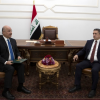
Al-Zurfi named Iraqi PM-Designate
Posted on 18 March 2020 .
By John Lee.
Iraqi President Barham Salih has named former governor of Najaf, Adnan al Zurfi (pictured), as Prime Minister Designate, asking him to form a new government within 30 days.
The 54-year-old is a member of the small Nasr parliamentary group, led by former Prime Minister Haider al-Abadi, and was formerly a member of Dawa.
According to AFP, Zurfi fled to Saudi Arabia and then on to the United States following the failed 1991 uprising against Saddam Hussein, returning to Iraq after the US-led invasion in 2003.
He is reported to have dual US and Iraqi citizen, and his wife, five sons and two daughters still live in the US.
(Sources: Govt of Iraq, BBC, AFP, AP, eKurd)
Posted in Politics Comments Off on Al-Zurfi named Iraqi PM-Designate

New Solar Park to ease Dohuk's Power Shortage
Posted on 25 February 2020 .
By Joe Snell for Al Monitor. Any opinions expressed here are those of the author and do not necessarily reflect the views of Iraq Business News.
New solar park to ease Iraqi governorate's power shortage
No one batted an eye when the power abruptly cut off in English teacher Miriam Zia's 11th-grade classroom at the Sardam International School in Duhok.
The cuts occur at least twice a day and are now "part of the fabric of our society," Zia told Al-Monitor.
To combat growing electricity concerns in the district, the Iraqi governorate of Duhok signed an agreement with the United Nations Development Programme (UNDP) earlier this month to set up the district's first solar energy park.
The project comes amid pressure on Iraq to diversify its energy sources and lessen its dependence on Iran.
Posted in Iraq Industry & Trade News Comments Off on New Solar Park to ease Dohuk's Power Shortage
Market Review: “A Tale of Two Markets”
Posted on 05 February 2020 .
By Ahmed Tabaqchali, CIO of Asia Frontier Capital (AFC) Iraq Fund.
Any opinions expressed are those of the author, and do not necessarily reflect the views of Iraq Business News.
The year for Iraq, and its equity market, started with two momentous events that raised the feared spectre of a US-Iran proxy war fought in the country and all of the instability that would come with it.
In quick succession, the US’s assassination in Baghdad of Iran’s top general was followed by the Iranian missile attacks on Iraqi military bases housing US military units. Initially the market shrugged them off, discounting the possibility of military conflict as unlikely, but by January’s end the market, as measured by the Rabee Securities RSISX USD Index (RSISUSD), was down –4.7%.
However, this decline masks two contradictory trends. The first of which was heavy selling in foreign favoured stocks, such as Baghdad Soft Drinks (IBSD), Asiacell (TASC), Bank of Baghdad (BBOB) and Mansour Bank (BMNS). This was most likely foreign selling, by either Iraq-focused equity funds or most probably by frontier market funds with small weights in Iraq, likely over concerns of potential political instability following the two momentous events.
These stocks were down between - 3% to - 10%. This trend was contrasted by heavy buying in local favoured small cap cyclical stocks that had a stunning rally by early January, but which cooled off by month end as foreign selling in IBSD, TASC, BBOB and BMNS picked up steam. But this was not before posting solid month end gains on the back of strong performances in 2019 as discussed in December 2019. Certain stocks in particular had impressive performances during the month as shown in the table below (figures rounded):
January performance of selected stocks: -
| Stock | January’s end | Early January |
| IMAP - Al-Mansour Pharmaceuticals Industries | +33% | +58% |
| INCP - National Chemical & Plastic | +25% | +54% |
| IMIB - Metallic & Bicycles Industries | +6% | +24% |
| IKLV - Al-Kindi of Veterinary Vaccines Drugs | +1% | +21% |
(Source: Iraq Stock Exchange, Asia Frontier Capital)
These conflicting trends are in-line with the 2019 themes as discussed in the “2019 Market Review and 2020 Outlook” in which the market’s bottoming action was seen through its improved dynamics throughout 2019. The first improved dynamic was its discriminating nature – in that negative developments in certain stocks were confined to these stocks and did not spread to others in the sector or to the overall market. While, the second improved market dynamic was the broadening of breadth, and in particular, the market’s focus on the hopes of an earnings recovery for some of the industrial stocks even before any signs of such recovery can be detected in their earnings reports during 2019.
The fears that prompted the heavy foreign selling might be justified on the grounds of instability arising from the current political chaos in Iraq and the spill-over effects of these on the Iraqi economy. The countrywide demonstrations continue unabated in the face of unprecedented violent state crackdowns, however, this youth-led protest movement continues to shape events in the country. Since October these ranged from forcing the political elite to implement reforms that would threaten their interests, to its influence on the choice of the current prime minister designate replacing the forced out prime minister. The prime minister designate faces considerable challenges in the short time that will require him to produce changes, satisfying the protest movement’s demands for change, while preserving the status quo for the political elite. In addition to balancing the conflicting demands of the protest movement and the political elite, he would need to navigate any potential re-escalation of tensions between the United States and Iran.
Yet, as these events are being played out, their effects – real and feared – can be seen in the action in the exchange rate of the Iraqi Dinar (IQD) vs the USD. The market price of the USD versus the IQD by month end returned to levels that prevailed over the last 20 months after spiking higher following the events at the start of the year. This is highlighted in the chart below.

(Source: Central Bank of Iraq, Iraqi Foreign Exchange Houses, Asia Frontier Capital)
Such spikes have happened before, during periods of geopolitical crisis in the summer of 2019 which included the tanker hits and the attacks on Saudi oil installations; and during local political crises such as the elections in May 2018, and more recently the nationwide demonstrations that started in October 2019. The current spike was probably a response to sharply increased local demands for physical USD notes as flight to safety prompted this demand. Cash transactions dominate activity in the local retail and trade markets where the IQD-USD exchange rate for physical USD notes trades at a slight premium to the market price (in red) in the above chart. This premium widened during the spikes in the market rate for USD but settled down to about an 8% premium versus the usual 2 - 4% premium. This wider premium likely reflects local traders’ hoarding of physical USD notes in preparation of a possible future, real or imagined, shortage – but these fears have moderated significantly from the start of the year.
While the FX market is suggesting that the disruptions to economic activity have subsided, other data is needed for a full evaluation of their effects. The first of this data would be broad money or M2, as a proxy for economic activity due to its sensitivity to oil revenues (chart below), in which the most recent data from the Central Bank of Iraq (CBI) indicate continued growth.

(Source: Central Bank of Iraq, Iraq’s Ministry of Oil, Asia Frontier Capital)
(Note: M2 as of Oct. with AFC estimates for Nov. & Dec., Oil revenues as of Jan.)
Actual M2 data as of October shows robust growth with a year-over-year increase of +10.7%, while estimates show a moderation of year-over-year growth in December to less than half of that. However, it should be noted that December estimates are based on preliminary data on the deposit component of the monetary base M0 as of mid-January. These in turn show a decline from earlier figures, but there are not enough data to suggest if it’s the start of a declining trend or a normal seasonal decline. Combining the declining deposit component of M0 with the spike in the market exchange rate of the USD might be interpreted as capital flight. Yet the exchange rate as end of January suggests that it was a short-lived phenomenon. A more likely explanation than capital flight is the disruptions to economic activity, and in particular to the cash-dominated retail and trade markets, led to a decline in deposit formation as cash was used to fund operations.
While geopolitical and local political events are playing out, the equity market’s action, in particular its contrasting trends, in January supports the thesis that the stock market is bottoming following a multi-year bear market with back to back declines of –1.3% in 2019, of –15.0% in 2018, –11.8% in 2017, –17.3% in 2016, –22.7% in 2015, and –25.4% in 2014.
Please click here to download Ahmed Tabaqchali’s full report in pdf format.
Mr Tabaqchali (@AMTabaqchali) is the CIO of the AFC Iraq Fund, and is an experienced capital markets professional with over 25 years’ experience in US and MENA markets. He is a non-resident Fellow at the Institute of Regional and International Studies (IRIS) at the American University of Iraq-Sulaimani (AUIS), and an Adjunct Assistant Professor at AUIS. He is a board member of the Credit Bank of Iraq.
His comments, opinions and analyses are personal views and are intended to be for informational purposes and general interest only and should not be construed as individual investment advice or a recommendation or solicitation to buy, sell or hold any fund or security or to adopt any investment strategy. It does not constitute legal or tax or investment advice. The information provided in this material is compiled from sources that are believed to be reliable, but no guarantee is made of its correctness, is rendered as at publication date and may change without notice and it is not intended as a complete analysis of every material fact regarding Iraq, the region, market or investment.
Posted in Ahmed Tabaqchali, Investment Comments Off on Market Review: “A Tale of Two Markets”

Airlines Continue Using Iraqi and Iranian Airspace
Posted on 21 January 2020 .
Qatar Airways, Emirates and several other Persian Gulf airlines still fly in Iranian and Iraqi airspace and to cities in both countries since Iran and the United States traded military strikes.
“Iranian airspace is important for all carriers in this region,” said Adil al-Ghaith, Emirates’ senior vice president, commercial operations, Persian Gulf, Middle East and Iran, Reuters reported.
Dubai-based Emirates and sister carrier flyDubai together serve 10 cities in Iran and Iraq, and have continued to use the airspace of both countries for other flights.
Kuwait Airways and Abu Dhabi-based Etihad Airways have also continued using Iranian and Iraqi airspace.
“We will continue to fly to Iran because Iran is an important country to us and it is our neighbor and we want to serve the people of Iran,” Qatar Airways Chief Executive Akbar al-Baker said on the sidelines of a Kuwait air show.
However, some regional carriers have changed their routes. Bahrain’s Gulf Air has redirected European flights away from Iraqi airspace and now flies longer, more fuel consuming routes over Saudi Arabia and Egypt.
“We want to take the safest option even if it costs us a little bit more for a period of time. We can live with that,” Deputy Chief Executive Waleed Abdulhameed al-Alawi said.
The UAE regulator told its carriers — Emirates, Etihad, flydubai and Air Arabia AIRA.DU — this month to “evaluate flight path risks” although it said it was up to the airlines to make the final decision on the routes they chose.
(Source: Tasnim, under Creative Commons licence)
Posted in Iraq Transportation News Comments Off on Airlines Continue Using Iraqi and Iranian Airspace
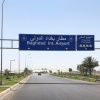
Airlines Re-route away from Iraq, Iran
Posted on 09 January 2020 .
By John Lee.
The US Federal Aviation Administration (FAA) has reportedly banned US carriers from flying in the airspace over Iraq, Iran, the Gulf of Oman and the waters between Iran and Saudi Arabia.
The ban was imposed due to "heightened military activities and increased political tensions in the Middle East, which present an inadvertent risk to US civil aviation operations due to potential for miscalculation or misidentification”.
The Russian Federal Air Transport Agency, Rosaviatsia, has reportedly issued a similar order.
(Source: Reuters)
Posted in Iraq Transportation News, Security Comments Off on Airlines Re-route away from Iraq, Iran
2019 Market Review and 2020 Outlook
Posted on 07 January 2020 .
By Ahmed Tabaqchali, CIO of Asia Frontier Capital (AFC) Iraq Fund.
Any opinions expressed are those of the author, and do not necessarily reflect the views of Iraq Business News.
Stop the Press: Just as this article was being readied for publication, the news came of a US strike in Baghdad that targeted a car carrying Iran’s top general and a senior commander of Iraq’s Paramilitarily Units (PMU). The attack raised the often-discussed spectre of a US-Iran proxy war fought in Iraq. While this is a real possibility, and events are extremely fluid, there a few points that should be taken into account amidst the breathless media coverage:
- Angry rhetoric from Iran promising fire and brimstone is a given, however, irrespective of all the bluster, Iran cannot afford a direct or indirect full confrontation with the US given the severe weakness of its economy.
- Iran’s false reading of the US’s hesitation to order a full strike a few months ago led it to push the envelope assuming the US would not retaliate. This attack, demonstrating the extreme extent to which the US will go to defend its interests, will force Iran to re-calculate especially given that the US will be in the midst of an election campaign that will likely see the re-election of the current administration.
- The dilemma for Iran is the need to retaliate to save face, but without crossing the now abundantly clear US red line, or for that matter starting a wider conflict in the region that it can ill-afford to wage.
- Iraqi politicians, especially some with sympathies to Iran will, after expressing their perquisite outrage over the violations of sovereignty and threats of revenge, realize that being placed in the same position as that of sanctioned Iran is not advantageous to them, to Iraq, or to Iran.
- The recent decision by the Iraqi parliament regarding foreign military presence supports the argument made here, in that it’s high on theatrics, but low on substance. It was not a decision to end US military presence, but a typical Iraqi fudge. In essence, it’s a resolution asking the government to do five things, of which two are worth noting: (1) Cancel the request for global coalition support made in 2014; and (2) for the government to work towards ending the presence of all foreign troops. Crucially, the request for global coalition support in 2014 was made by the then government, without parliamentary oversight, and as such could have been cancelled directly by the government, yet it chose to pass the buck to parliament using the excuse of being a caretaker government, but parliament then passed it back. The next steps would involve a lot of noise and bluster, but most likely the resolution would be watered down to an aspiration once the uproar subsides.
- Finally, within Iran, the government finds itself for the first time in a position to conduct a rational foreign policy, unlike the shadowy operations that were Iran’s effective de-facto foreign policy in the region. This will likely manifest through back channel diplomacy once the dust settles over the next few months.
- However, the next few weeks are to be marked by a lot of noise and come with spurious threats and counter threats that are reminiscent of the fire and fury that marked the exchanges between the US and North Korea a few years ago, but this time taking place in the most volatile region in the world.
While these events are being played out, it’s worthwhile to look at the Iraq investment story purely on its own merit, especially as the stock market was up +1.5% for the year as of Tuesday 7th January and was building on the trends discussed below. Crucially the market price of the US versus the Iraqi Dinar has only moved up by about +2.0% above the levels for most of the last 20 months. After stabilising in early 2018, It has traded briefly at current elevated levels before the elections in May 2018, during the tanker hits during the summer, and finally, the recent attacks on Saudi oil installations.

(Source: Central Bank of Iraq, Iraqi Foreign Exchange Houses, Asia Frontier Capital)
The Iraqi equity market, as measured by the Rabee Securities RSISX USD Index (RSISUSD), ended December up +2.6% and down –1.3% for the year. The outlook for the Iraqi equity market for 2020 will be shaped by the three events that marked 2019:
- The equity market’s bottoming following a multi-year bear market
- The increasing signs, at both a macro and company level, of an economic recovery
- The repercussions of a youth led protest movement that is bringing with it profound changes (mostly positive) to the Iraq story culturally, politically and economically
Protest movement art in Baghdad’s Tahrir Square

(Source: Art by Yota Namir, Ra’ed Modah & Noor Namir, photo by Mohammed Ghani posted on Baghdad Projects’ Facebook page)
2019’s decline of –1.3% by the Rabee Securities RSISX USD Index (RSISUSD) comes on the back of declines of –15.0% in 2018, –11.8% in 2017, –17.3% in 2016, –22.7% in 2015, and –25.4% in 2014. The small scale of the 2019 decline, the improved market dynamics and the bottoming in trading turnover all point to a bottoming market formation after a brutal bear market that saw the index decline by –66.1% from the peak in early 2014 to the end of 2019.
The first of the market’s improved dynamics is its discriminating nature in evidence throughout the bank rally that started in May 2019, which at the time was led by a stunning rise in Iraq’s leading bank, the Bank of Baghdad (BBOB), which was up +62.5% in May on hopes it would resume dividend payments for the year. These expectations led to other leading banks such as the National Bank of Iraq (BNOI), Mansour Bank (BMNS) and Commercial Bank of Iraq (BCOI) to join the rally. Subsequently, BBOB’s quarterly earnings results confirmed expectations that it is following through with the recovery in its fortunes that began in 2018 as part of the overall conditions in place for the sector’s future revival. Nevertheless, BBOB did not resume dividend payments for 2018’s earnings. However, unlike in prior years, BBOB declined from the May 2019 peak, yet did not lose all the gains– and more importantly while it pulled the other leading banks up with it in May, it did not drag them lower in the following months. By year end all of the leading banks were meaningfully higher than their pre-May rally lows.
Indexed performance: Bank of Baghdad - BBOB (black), Commercial Bank of Iraq – BCOI (purple), Mansour Bank – BMNS (blue), National Bank of Iraq - BNOI (green)

(Source: Bloomberg, data from 30/04/2019 – 31/12/2019)
The second aspect of the improved market dynamics is the broadening of breadth and the market’s focus on the hopes of an earnings recovery for some of the industrial stocks even before any signs of such recovery can be detected in their earnings report during 2019. This dynamic was evident in small industrial companies and in healthcare providers classified under the industrial sector on the Iraq Stock Exchange (ISX), as discussed here in the last few months. The chart below shows the price action of Al-Mansour Pharmaceuticals Industries (IMAP), Al-Kindi of Veterinary Vaccines Drugs (IKLV), National Chemical & Plastic (INCP), and Metallic & Bicycles Industries (IMIB).
Indexed performance: Al-Mansour Pharmaceuticals Industries- IMAP (green), Al-Kindi of Veterinary Vaccines Drugs- IKLV (black), National Chemical & Plastic – INCP (purple), Metallic & Bicycles Industries -IMIB (blue)

(Source: Bloomberg, data from 31/12/2018 – 31/12/2019)
Normally, cyclical stocks outperform defensive or growth stocks at the start of economic recoveries even though their earnings do not support this outperformance – at least initially. It can be argued that similar dynamics are taking place through the action of cyclicals on the ISX in 2019 such as the banks, mentioned earlier, versus those of market stalwart growth stocks – Pepsi bottler Baghdad Soft Drinks (IBSD) which was down –8% for the year, or for mobile telecom operator Asiacell (TASC) which straddles the cyclical and defensive sectors due to the specifics of its earnings drivers since 2014, which was up +12% in 2019. In contrast, in 2018 both were up +34% and +47% respectively, but the banks were down, such as BBOB –52%, BMNS –20%, BNOI –28%, BCOI –4%. Even though the analysis of cyclicals versus growth stocks can only go so far on the ISX, given its illiquidity and limited diversification, the logic of an economic recovery driving cyclical earnings is applicable.
This economic recovery was initially driven by the revival in government spending on goods and services and on wages, the evidence of which was seen in: (1) the upturn of the country’s exports and in new vehicle sales as reported here in October, and (2) the continued growth of broad money, or M2, as a proxy for economic activity as reported here in December.
Data from the Central Bank of Iraq (CBI) on private sector deposits and credit to the private sector support the above trends. These show private sector deposit growth of +12% for the year by end of September 2019 after a few years of no change, while credit to the private sector was up +3% for the period but should accelerate as the economy continues to recover.

(Source: Central Bank of Iraq, Asia Frontier Capital)
The above chart is based on aggregate data for the private sector with the banking system as a whole – both for state banks, and commercial sector banks which accounted in 2018 for 36% of total credit to the private sector and 37% of private sector deposits – and thus do not show the performances of specific commercial banks listed on the ISX.
Drilling down to the company level within the commercial banking sector, the earnings profile of the National Bank of Iraq (BNOI) for the first nine months of 2019 (9M/2019) demonstrates the above macro trends. For BNOI private sector deposits were up +54% in 9M/2019, while credit to the private sector was up +116% for the same period. Its pre-tax earnings for 9M/2019 hold promise for strong full year earnings – a long way to go before recovering to pre-crises levels– but supporting management’s bullish expectations for the year. While it’s not possible to extrapolate much from these results, or to generalize for the sector as a whole from them, they support in any case the argument that the conditions are in place for the sector’s recovery in 2020.
The macro and the micro trends discussed so far are affected by the youth protest movement that dominated all events in Iraq from the 25th of October 2019 after the initial wave of protests in early October. The protest movement forced the political elite to implement reforms that would threaten their interests – contrary to earlier expectations of the opposite. Parliament approved electoral reforms that if made into law would be a meaningful departure from the prior ones that largely allowed the political elite to maintain their oversized influence on successive government formations.
If the hoped-for early elections in 2020 are to be conducted under these electoral reforms they will most likely lead to the formation of the next government with a majority in parliament and parliamentary opposition, as opposed to the case since 2003 in which successive governments were composed of all parties in parliament. This was the root cause of the failures of the past to implement the reconstruction of the country, as each party pursued its own program within its own sphere of influence within an all-inclusive government.
These developments have yet to be played out and a lot of uncertainties remain, yet the near-term effect on the economy would be that the current caretaker government, while unable to act on capital spending plans, will follow up with implementing the current spending element of the 2019 expansionary budget. Moreover, it will continue to implement this budget in 2020 through the upcoming months of pre-election manoeuvring, elections, and post-election government formation. The government has plenty of firepower to fund this spending in the form of a 33-month cumulative surplus of about USD 28.9 bln that will increase in a firmer oil price environment. The most important consequence of this is the sustainable continuation of the consumer led economic recovery discussed in earlier paragraphs.

(Source: Iraq’s Ministry of Oil, Rabee Securities, Asia Frontier Capital)
(Data for oil revenues as of December 2019)
The stock market continues to look through the political developments to the upcoming economic recovery, and while it’s in the early process of forming a base it is worthwhile to point out its continued divergence from its past close relationship with oil revenues (a proxy for the forces driving the economy). This divergence is still at the widest it has been for the last few years and it is showing tentative signs of narrowing this divergence as the above chart shows.
For further reading, here are some interesting, relevant news links related to Iraq:
- An interesting article on the emerging art and the future significance of the protest movement is “Hip hop, poetry and Shia iconography: How Tahrir Square gave birth to a new Iraq”, Fanar Haddad, December 9th, 2019, Middle East Eye.
- For a full coverage of the protest movement’s symbolic art form visit the Facebook page of Baghdad Projects.
Please click here to download Ahmed Tabaqchali’s full report in pdf format.
Mr Tabaqchali (@AMTabaqchali) is the CIO of the AFC Iraq Fund, and is an experienced capital markets professional with over 25 years’ experience in US and MENA markets. He is a non-resident Fellow at the Institute of Regional and International Studies (IRIS) at the American University of Iraq-Sulaimani (AUIS), and an Adjunct Assistant Professor at AUIS. He is a board member of the Credit Bank of Iraq.
His comments, opinions and analyses are personal views and are intended to be for informational purposes and general interest only and should not be construed as individual investment advice or a recommendation or solicitation to buy, sell or hold any fund or security or to adopt any investment strategy. It does not constitute legal or tax or investment advice. The information provided in this material is compiled from sources that are believed to be reliable, but no guarantee is made of its correctness, is rendered as at publication date and may change without notice and it is not intended as a complete analysis of every material fact regarding Iraq, the region, market or investment.
Posted in Ahmed Tabaqchali, Investment Comments Off on 2019 Market Review and 2020 Outlook
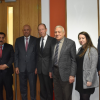
Governor of Anbar visits UK
Posted on 21 December 2019 .
The Governor of Anbar, Mr Ali Farhan Hameed, visited the UK this week as a guest of the Iraq Britain Business Council (IBBC) .
While here, he attended various meetings at Chatham House, UKEF, at roundtables with IBBC members and dinner in the House of Lords with Baroness Nicholson ( President of IBBC and PM Trade Envoy to Iraq)
Mr Hameed’s message is that Anbar province is open for business, is secure, and has defeated and rooted out ISIL. Anbar is on the look out specifically for British engineering companies to work on water projects. The province now has good, rebuilt infrastructure, and the benefits of large phosphate deposits, natural gas, and is locationally at the crossroads between Turkey, Saudi Arabia and Syria. It seeks to reclaim its position as one of Iraq’s wealthier areas and has great opportunities for companies looking to establish businesses there.
Mr Hameed also attended the IBBC Christmas party, attended by Lord Green and Lord Robertson, vice presidents of IBBC, Mr Alastair Kett of PWC ( Deputy Chairman of IBBC) and Mr Rasmi El Jabri – deputy chairman IBBC ) and many new and original IBBC members and supporters, at the Royal Overseas League.
Mr Christophe Michels says’ that IBBC is ready and willing to facilitate any further introductions and initiatives with Anbar province, and we invited Mr Hameed following our own visit to Anbar in July 2019. We all look forward to a busy and successful year ahead.’ Season’s greetings and thanks to you all in our world.
(Source: IBBC)
Posted in Iraq Industry & Trade News Comments Off on Governor of Anbar visits UK

Iraq Repays more than $20bn in Foreign Debt
Posted on 20 December 2019 .
Iraq has paid back more than $20 billion in foreign debt, the head of the parliamentary finance committee Haitham Al-Jubouri has said.
“Iraq’s foreign debt amounted to more than $50 billion. More than $20 billion was paid back over the last period,” Al-Jubouri told the Iraqi news agency.
According to the official, Iraq still owes $27 billion to foreign countries, in addition to $41 billion to Saudi Arabia given as a grant to the late Iraqi President Saddam Hussein.
(Source: Middle East Monitor)
Posted in Iraq Banking & Finance News, Politics Comments Off on Iraq Repays more than $20bn in Foreign Debt