


Shell to Build Private Dock on Shatt al-Arab
Posted on 04 January 2011 .
Royal Dutch Shell may build its own dock in Iraq's Shatt al-Arab waterway to speed up delivery of heavy equipment to its supergiant Majnoon oilfield, according to a report from Reuters.
The head of the General Company of Iraqi Ports, Salah Kudhair, told the agency that it had given initial approval to a proposal from Shell to build a 25 metre quay to ship equipment from the Umm Qasr sea port to Majnoon through the waterway.
That would be faster, safer and much easier than transporting the materials by truck.
"Shell asked to build its own dock on the Shatt al-Arab at their own expense and we gave them an initial approval," Kudhair said in an interview in the oil hub city of Basra.
Shell has started conducting a survey and suggested a joint management committee should run the dock.
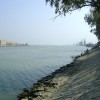
The Shatt al-Arab, a waterway formed by the confluence of the Tigris and Euphrates rivers, empties into the Gulf below Iraq's port city of Basra and is Iraq's only shipping outlet.
"Shell is looking at a number of potential options to mobilize equipment later in the year, and this is an initial survey to assess the feasibility of using Shatt al-Arab," one source said, asking not to be identified.
Shell, Europe's largest oil company, and Malaysia's Petronas won a contract in 2009 to develop Majnoon, one of the world's biggest oilfields.
A second industry source said that Exxon Mobil, which is developing Iraq's West Qurna Phase One oilfield, another supergiant, was watching Shell's proposal for a dock in the Shatt al-Arab closely.
(Sources: Bloomberg, Reuters)
Posted in Construction & Engineering In Iraq, Iraq Oil & Gas News, Iraq Transportation News 1 Comment
Update on Iraqi Oil Production
Posted on 19 December 2010 .
The following update on output at Iraq's oilfields comes from Early Warning, citing a report from UPI:
Rumaila: Iraq's biggest field with the equivalent of 17.8 billion barrels of oil. That makes it the fourth largest oil field in the world. It contains around 15 percent of Iraq's oil. It is operated by BP and the China National Petroleum Corp (CNPC).
Production is 1.052 million bpd and is expected to reach its initial production rate of 1.065 million bpd by the end of the year, Jafaar says. That's three years ahead of schedule.
West Qurna 1: Contains 8.7 billion barrels. Exxon Mobil of the United States and Royal Dutch Shell secured the production contract in 2009. Production has been slipping but is expected to hit the IPR of 285,000 bpd within a year.
West Qurna 2: Holds 12.9 billion barrels and is operated by a consortium headed by Russia's Lukoil and StatoilHydro of Norway. Peak production of 1.8 million bpd is expected by the end of 2012, sustainable for more than a decade.
Majnoon: With reserves of 12.6 billion barrels, this is one of the top Iraqi fields and lies near the border with Iran. It is operated by Royal Dutch Shell and Petronas, which say they have boosted production from a paltry 46,000 bpd to 70,000 bpd, rising eventually to 1.8 million bpd.
Zubair: Operated by a consortium of Italy's ENI, the U.S. Occidental Petroleum Corp. and the Korea Gas Corp. (KOGAS) of South Korea. It has reserves of 4.1 billion barrels. Production is 200,000 bpd, up from 183,000 bpd in 2009. That's expected to eventually reach 1.2 million bpd.
Halfaya: Contains 4.1 billion barrels and is operated by the China National Petroleum Corp. Production is running at 3,600 bpd but potential output has been pegged as high as 535,000 bpd.
The Baghdad government expects production from just three of these fields -- Rumaila, West Qurna 2 and Zubair -- to hit 7 million bpd within six years.
(Source: Early Warning)
Posted in Iraq Oil & Gas News Comments Off on Update on Iraqi Oil Production
Chevron Considered Iran-Iraq Oilfield
Posted on 16 December 2010 .
The Iraqi Prime Minister, Nouri al-Maliki, allegedly told U.S. diplomats that oil giant Chevron has been in talks with Tehran about developing a cross-border oilfield with Iraq, according to a cable released by WikiLeaks.
Dow Jones reports that the cable, sent by the U.S. Embassy in Baghdad, summarizes a conversation between the U.S. diplomats and the Iraqi premier in March 2009.
The communication says that al-Maliki asked the U.S. charge d'affaires whether a U.S. company would legally be able to operate a field that straddles both sides of the Iraq-Iran border. The U.S. diplomat said that U.S. law on sanctions would forbid it, according to the cable.
The Iraqi leader said that he would prefer to have Chevron, the second-largest U.S. oil company after ExxonMobil, work the field, but if U.S. rules prevented it, he would deal with a non-U.S. company, the cable said.
Iran is subject to strict U.S. trade sanctions because of concerns in Washington about Iranian nuclear policy. The U.S. has pushed several international oil companies, such as France's Total and Anglo-Dutch Royal Dutch Shell, to reduce their involvement in Iran, a major oil producer and a founding member of OPEC.
"Chevron acts in full compliance with U.S. law," a Chevron spokesman wrote in an email. "We have not engaged in business discussions with Iran that are, or could potentially be, in violation of U.S. law. We categorically deny any suggestion to the contrary."
(Sources: Dow Jones, The Guardian)
Posted in Iraq Oil & Gas News 1 Comment
Iraq's West Qurna Output to Triple in Three Years
Posted on 29 November 2010 .
Production from Iraq's West Qurna 1 oil field should more than triple to 750,000 barrels a day in three years time, an oil official said on Sunday.
The 8.6 billion barrel field, which is being developed by a consortium including ExxonMobil and Shell, currently produces 234,000 barrels per day, Madhi Swadi, the head of the joint management commission that runs the field, told The Associated Press. Output is set to climb to 270,000 barrels per day by May, he added.
Under the agreement between Iraq and the companies, production from the West Qurna I field should reach 2.825 million barrels a day after 6 to 7 years. The consortium will be paid $1.9 per barrel for each barrel produced.
That production target is up from the 2.325 million barrels a day target when the deal was announced late last year.
The consortium was originally only allowed to pump oil from one reservoir, but five more reservoirs were added to the field over the summer.
Swadi said this year's budget to develop the field stood at $306 million, and next year's budget is expected to be about $1.1 billion.
There are currently 360 wells at the field, and the consortium is planning to start up about 2,000 more over their contract's 20-year duration.
(Source: Associated Press)
Posted in Iraq Oil & Gas News Comments Off on Iraq's West Qurna Output to Triple in Three Years
Schlumberger 'Wins Contract' for Iraq's W.Qurna
Posted on 29 November 2010 .
Reuters, citing "industry sources familiar with the matter", reports that U.S. oil major ExxonMobil and its partners have awarded a contract to oil services firm Schlumberger to drill 10 wells in Iraq's West Qurna 1 oilfield.
The contract award was finalised a few days ago but a final contract is yet to be signed by Schlumberger, the sources told Reuters.
The new wells are part of the Exxon-led consortium's plan to rehabilitate West Qurna, for which it signed a 20-year development contract with Iraq earlier this year.
Leading service companies including Weatherford International, Halliburton, and Schlumberger were also said to have been invited to bid for another tender to drill 15 new wells, which could be awarded by early next year.
The state-owned Iraq Drilling Company was also invited to bid. Exxon and Shell were awarded the deal to develop the 8.7-billion-barrel West Qurna 1 oilfield last year.
Exxon and its partners raised their production plateau target for West Qurna 1 to 2.825 million barrels per day after adding new reserves to the area.
In March, Schlumberger was awarded a contract to drill new wells at BP's Rumaila oilfield.
(Source: Reuters)
Posted in Iraq Oil & Gas News Comments Off on Schlumberger 'Wins Contract' for Iraq's W.Qurna
The Biggest Increase in Oil Capacity in History
Posted on 17 November 2010 .
The balance of risk and reward for investing in Iraq's vast oil reserves is changing, according to a report by Turner Investments.
The report, called Oil in Iraq: A Profitable Gamble? considers safety risk for oil company employees and their families, risks to operations from bombs and landmines, and political risks ranging from a line of officials seeking bribes to sectarian wars between Sunni, Shia and Kurd factions.
For all the problems, the authors believe there is one big reason why oil companies will seek to profit from Iraq:
"Iraq could hold the greatest potential for growth in global oil production. With 115 billion barrels of oil, Iraq has the world’s third-largest proven reserves, behind only Saudi Arabia and Iran. Some geologists believe that Iraq’s reserves are even greater than that, as many oil fields have yet to be fully explored. There are few, if any, places that have as much oil that’s untapped and close to the surface (and thus relatively economical to extract) as Iraq does."
Iraq has clearly not been an instant success. As the report states, "energy companies have in fact balked at getting entangled in Iraq’s spider web of domestic problems." It goes on to say that in a major auction in June 2009, "only a single deal was struck in that auction; other energy companies considered the risks of a long-term investment in Iraq too formidable to overcome." This year, Iraq has seen four major gas deals and many more oil investment projects announced.
The authors say: "Our own sense is that companies have become decidedly more optimistic about their prospects in Iraq over the past 12 months. Their optimism evidently has been stoked by the 12 development contracts to increase oil production that have been awarded to international companies such as BP, ExxonMobil, Occidental Petroleum, and Royal Dutch Shell."
The authors concurred with Morgan Stanley's forecast that "Iraq can roughly double its oil production by 2016, to 4.2 million barrels per day." That would represent one of the biggest increases in oil capacity in history. They continued: "Doing that would likely require a fourfold increase in capital investment, with $50 billion being spent between now and 2016. The money would fund the drilling of more than 1,700 new wells and upgrading 1,000 existing wells that have been decaying for years. BP alone plans to spend some $15 billion in a joint venture with China National Petroleum Corporation to boost production at the Rumaila field."
The authors conclude: "In short, we think Iraq represents too big of a prospective bonanza for Western oil exploration-and-production companies and energy-services companies to pass up. In truth, the companies are increasingly concluding that the pluses of doing business in Iraq outweigh the undeniably large number of minuses."
(Source: Turner Investments)
Posted in Iraq Oil & Gas News 1 Comment
Sterling Energy Falls 10% After Update
Posted on 04 November 2010 .
Shares in Sterling Energy (LSE: SEY), which has operations in the Kurdistan region of Iraq, fell 10% on Thursday morning following an Interim Management Statement for the period beginning 1 July 2010.
HIGHLIGHTS
· Sangaw North #1 exploration well is drilling ahead at 2,927m.
· Production, net to Sterling from the Chinguetti field, averaged 621 bopd for the third quarter 2010
· Adjusted EBITDA in third quarter of $2.8 million (unaudited).
· Profit after tax in third quarter of $3.1 million (unaudited).
· Cash as at 31 October 2010 of $110.4 million (unaudited), including partner funds of $4.4 million.
· Exploration programme funded from existing cash, cash flow and partner-carry.
Alastair Beardsall, Sterling's Chairman, said:
"Operations at Sangaw North #1 continue to present challenges. However the drilling team continue to make progress in evaluating the prospectivity of the structure. Flow tests of two zones within the Cretaceous section have demonstrated that hydrocarbons are present but neither test delivered commercial flow rates. These zones may be stimulated and re-tested later, when the well has reached total depth. The progress of our projects offshore Cameroon and Madagascar remains slow as we wait for those countries to resolve their border and political issues, respectively."
Kurdistan
The Sangaw North #1 exploration well is drilling ahead at 2,927m.
Posted in Iraq Oil & Gas News Comments Off on Sterling Energy Falls 10% After Update
Exxon "On Track" at West Qurna 1
Posted on 22 October 2010 .
U.S. oil giant ExxonMobil said on Friday it was on track to reach its initial production target in Iraq's West Qurna I oilfield next year, according to reports from Reuters.
"ExxonMobil is moving forward in accordance with the contract timeline and we are on track with our plans to reach the initial production target in 2011 in accordance with our contract terms," Exxon told Reuters in a statement.
Current production at the field is more than 200,000 barrels per day.
The Vice President of ExxonMobil Iraq, James Adams, had said in recent months that Exxon and its partner Royal Dutch Shell aimed to raise production by 10 percent by the end of the first quarter of 2011 and that current production was from 200,000 to 250,000 barrels per day.
ExxonMobil and Shell ultimately aim to boost output to 2.32 million bpd.
(Source: Reuters)
Posted in Iraq Oil & Gas News Comments Off on Exxon "On Track" at West Qurna 1
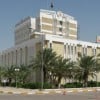
Conference on Oil Ministry Strategy in Basra
Posted on 17 October 2010 .
Iraq’s South Oil Company has organized a special conference on the strategy of the Iraqi Oil Ministry in the field of training and technology transportation, with the participation of major specialized global companies, the company’s Training Director said on Sunday.
Hassib Attiya said “the activity of the strategic conference for training and technology transportation began with the participation of specialized international companies, including ExxonMobil, Eni, Statoil and Shell, as well as foreign researchers and and researchers, representing Iraqi universities and institutes,” according to Aswat al-Iraq.
Attiya said that the conference will see the announcement of the strategy of the Iraqi Oil Ministry in the field of training of specialized workforce. This will be achieved through the establishment of “Petroleum and Excavation in Basra,” as well as the development of specialized teaching institutes in the oil sector.
(Source: Aswat al-Iraq)
Posted in Iraq Education and Training News, Iraq Oil & Gas News Comments Off on Conference on Oil Ministry Strategy in Basra

Halliburton Wins Exxon Contract in Iraq
Posted on 15 October 2010 .
Halliburton (NYSE: HAL) has been awarded a wellwork integrated services contract by ExxonMobil Iraq Ltd. for refurbishment of wells in the West Qurna (Phase 1) field in southern Iraq.
Halliburton will provide on-site logistics and technical support for both rigless and rig-assisted workovers. Other services provided by Halliburton include provision of a workover rig, coiled tubing, slickline services, logging, production enhancement and well testing.
“We believe Halliburton’s strong presence in Iraq, coupled with our technical leadership, was a factor in securing this contract from ExxonMobil Iraq Limited,” said Dave Lesar, Halliburton’s Chairman, President and CEO (pictured).
“We’re pleased to see our investment and commitment to provide services within Iraq being recognized by companies such as ExxonMobil and its West Qurna (Phase 1) project co-venturers.”
Exxon plans to drill more than 1,000 new wells at West Qurna 1.
Halliburton is scheduled to release its third-quarter earnings on Monday, the first major oil services to report. ExxonMobil releases its third quarter results on Oct. 28.
Posted in Construction & Engineering In Iraq, Iraq Oil & Gas News Comments Off on Halliburton Wins Exxon Contract in Iraq