



Iraqi PM in Washington: What His Trip Actually Means for the Dinar
Posted on 15 July 2026 .
By Guest Blogger. Any opinions expressed are those of the author(s), and do not necessarily reflect the views of Iraq Business News.
Ali al-Zaidi in Washington: What His Trip Actually Means for the Dinar
The forums have been buzzing. Iraq's prime minister is in Washington. He met Trump in the Oval Office. There were handshakes, warm words, and promises of deals. For the segment of dinar holders who treat every piece of Iraqi news as a potential trigger for the long-awaited revaluation, this week's visit looked like exactly the kind of high-level momentum they have been waiting for.
So let's look at what actually happened, what it means, and what it doesn't.
What al-Zaidi Was There to Discuss
Trump and al-Zaidi met at the White House on Tuesday, with both leaders pledging to deepen economic ties and boost Iraq's oil output. The visit was al-Zaidi's first international trip since taking office in May, and the agenda was clear well before the handshakes. Oil and gas agreements were expected to be signed, with US companies set to boost Iraq's production capacity and reduce reliance on the Strait of Hormuz.
Al-Zaidi was expected to sign several agreements, including a deal to establish a fund into which Iraq will deposit half a million barrels of oil per day in exchange for the US helping to boost the country's electricity supply. In a show of support for al-Zaidi's administration, the US also resumed cash shipments for Iraq's oil revenue, which have been handled by the Federal Reserve Bank of New York since 2003.
Trump's framing was characteristically direct. He said "massive" new oil deals with Iraq would be announced soon, adding: "Iraq has tremendous potential because of their oil and because of other things. We're going to create a lot of jobs for both countries, and we're going to be taking out a lot of oil. A lot of oil is coming out, and the American companies are doing it."
Al-Zaidi, for his part, described a shift in the relationship's character. He said: "On the 30th of September, the US forces will be out of Iraq, while these companies will be inside Iraq. The social relations is about like economy, it's not about like military relations."
The Security Dimension
The visit was not only about oil. The disarming of pro-Iran Iraqi armed factions and restricting weapons under state authority, as well as Baghdad's relationship with Tehran, were expected to be among the issues the US side would raise. Al-Zaidi has set a September 30, 2026 deadline for all armed factions to disarm, which aligns with the withdrawal of the international coalition's military troops.
That deadline is significant, and not only for security reasons. Washington's willingness to resume dollar shipments to Iraq, and to deepen the oil investment relationship, is directly connected to Baghdad's progress on militia disarmament. The Trump administration has issued sanctions on Iran-backed militias, including Kata'ib Hizballah and Asa'ib Ahl Al-Haqq. The economic partnership being discussed this week is inseparable from the political conditions the US expects Baghdad to meet.
Shortly before al-Zaidi's departure, the Islamic Resistance in Iraq, an umbrella group of Iran-backed armed groups, rejected the prime minister's visit and its outcomes. That rejection is a reminder that the September disarmament deadline is an aspiration, not a settled outcome.
What the Dinar Forums Are Saying - and Why They're Wrong
Predictably, parts of the dinar speculation community have interpreted this week's visit as a bullish signal. A US-backed prime minister, Oval Office optics, Trump talking about "massive deals" - for those primed to read every development as a precursor to revaluation, the ingredients are all there.
They are not.
Nothing discussed in Washington this week has any bearing on the exchange rate of the Iraqi dinar. The agenda was oil production, electricity infrastructure, militia disarmament, and the withdrawal of US troops. The Central Bank of Iraq sets exchange rate policy, not the prime minister, and not the White House. As noted in our November 2025 coverage, the CBI issued a formal statement confirming there is "no intention whatsoever to amend the exchange rate of the Iraqi dinar," explicitly calling revaluation rumours "speculation aimed at disrupting the market and undermining economic stability." That statement has not been withdrawn or updated. No CBI official was in Washington this week.
The resumption of dollar cash shipments to Iraq, which some forum commentators have flagged as significant, is also being misread. The US resumed those shipments as a signal of support for al-Zaidi's administration - a diplomatic tool, not a monetary one. The dollar pipeline from the Federal Reserve Bank of New York exists to allow Iraq to pay for imports and manage its oil revenues. It is not a mechanism for dinar revaluation, and its resumption says nothing about where the IQD/USD exchange rate is headed.
What the Visit Actually Represents
Taken on its own terms, the Washington trip was a genuine diplomatic achievement for al-Zaidi. His administration has prioritised anti-corruption investigations, including "Operation Dawn," which resulted in 67 arrests and the seizure of 375 kilograms of gold. That kind of concrete action gave him something real to show Washington, and the warmth of the reception reflected it.
Al-Zaidi has said he wants to move the relationship "beyond crisis management to opportunity creation, particularly opportunities that have a measurable economic impact." That framing is credible in the context of what was actually discussed: US companies entering Iraq's oil and gas sector, electricity infrastructure investment, and a structured path toward ending the US military presence.
These are meaningful developments for Iraq's long-term economic trajectory. A more stable fiscal position, deeper US investment, and a functioning relationship with Washington are all positive for the country. None of them, individually or together, creates a mechanism by which foreign holders of physical Iraqi banknotes profit.
The Bottom Line
Al-Zaidi's Washington visit was about oil, security, and the future shape of the US-Iraq relationship. It was a successful first international trip by a prime minister who needed to demonstrate credibility in Washington, and by most accounts he achieved that. The deals being discussed - energy agreements, electricity investment, alternative export routes - are the substance of a serious bilateral relationship.
For holders of physical Iraqi dinars waiting for a life-changing revaluation, however, the calculus is unchanged. The Central Bank has not altered its position. The exchange rate was not on the agenda at the White House. Trump's enthusiasm for Iraqi oil is enthusiasm for American companies extracting and profiting from that oil - not a signal that the dinar is about to multiply in value.
The forums will find reasons to be excited. They always do. But the question worth asking, before the next intel call tells you that the Oval Office handshake was a coded signal, is a simpler one: was the word "revaluation" spoken anywhere in Washington this week?
It wasn't.
This article does not constitute financial or investment advice. If you are holding Iraqi dinars and considering your options, consult a licensed, regulated financial advisor - not an online forum.
For more information on the Iraqi dinar, check out IBN's Dinar Page.
Posted in Iraq Banking & Finance News, Iraq Industry & Trade News 2 Comments

CBI Expands Lending for SMEs and Renewable Energy
Posted on 13 July 2026 .
By John Lee.
The Central Bank of Iraq (CBI) has announced enhancements to two of its developmental lending initiatives, raising the financing ceiling for small and medium enterprises (SMEs) and expanding support for renewable energy projects.
According to the CBI, the measures are aligned with the National Banking Lending Strategy (2024-2029) and are intended to broaden access to credit, stimulate private sector activity, and advance financial inclusion across Iraq's provinces.
The first initiative increases the funding cap for micro, small, and medium enterprises, with the aim of expanding the pool of eligible entrepreneurs and businesses, narrowing the financing gap, supporting productive and service activities, and creating employment opportunities.
The second initiative develops and strengthens the renewable energy project financing programme, with a focus on expanding uptake of clean energy sources, reducing pressure on the national electricity grid, and cutting carbon emissions. The CBI said it will provide concessional financing instruments to enable citizens, private sector companies, and institutions to acquire and benefit from renewable energy systems, particularly solar power.
The CBI also announced new regulatory controls and mechanisms to ease borrowing conditions and simplify the process of obtaining finance. It said it will expand the number of banks participating in developmental lending, adopt new mechanisms to accelerate the processing of financing applications, and provide guidance and support to project owners.
(Source: Central Bank of Iraq)
Posted in Investment, Iraq Banking & Finance News, Iraq Industry & Trade News 0 Comments
Iraq, Turkey consider Joint Investment Fund
Posted on 12 July 2026 .
By John Lee.
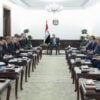
Iraq's Prime Minister, Ali al-Zaidi, met on Thursday with Turkey's Minister of Energy and Natural Resources, Alparslan Bayraktar, to discuss bilateral cooperation across a range of sectors. The Iraqi government's media office reported that talks covered energy, oil and gas, electricity, agriculture, and regional connectivity.
During the meeting, Ali al-Zaidi highlighted plans to establish an Iraqi-Turkish joint fund aimed at financing investment and development projects in Iraq, with a view to accelerating the implementation of strategic initiatives and deepening economic partnership between the two countries.
The Prime Minister also invited Turkish companies to expand their investments in Iraq's agricultural sector, citing opportunities in livestock development, agricultural production, and supply chain integration.
The Turkish minister conveyed greetings from President Recep Tayyip Erdoğan and expressed Turkey's strong interest in the bilateral relationship. He noted Erdoğan's particular attention to the Development Road project, describing it as strategically and economically significant for the region, and affirmed Turkey's readiness to enter into broad strategic partnerships with Iraq in oil, gas, electricity, and regional connectivity.
(Source: Iraqi Prime Minister's Office)
Posted in Construction & Engineering In Iraq, Investment, Iraq Industry & Trade News, Iraq Oil & Gas News 0 Comments
Iraq, Germany's GIZ discuss Energy Transition
Posted on 08 July 2026 .
By John Lee.
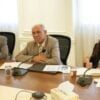
Iraq's Ministry of Planning has held talks with Germany's Deutsche Gesellschaft für Internationale Zusammenarbeit (GIZ) on preparing a proposed strategic project to support the transition in Iraq's electricity and renewable energy sector.
According to a statement from the Ministry, the project, which remains under study, aims to develop sector policies, improve energy efficiency, and support the shift towards clean energy sources.
The meeting reviewed the general framework of the project, which is based on five strategic areas:
- Developing integrated investment plans for electricity and identifying financing pathways as part of long-term planning;
- Updating technical planning and operational processes to integrate renewable energy sources into electricity transmission and distribution networks;
- Regulating grid-connected activities and developing the electricity market through institutional reforms, market design, and competitive tendering;
- Regulating off-grid activities by establishing regulatory frameworks and technical standards for mini-grids, and designing mechanisms for awarding power purchase contracts in unconnected areas;
- Enhancing energy efficiency in line with Iraq's climate commitments and improving the system economically and technically.
Both sides stressed the importance of the project in developing Iraq's energy sector by drawing on international experience and building national capacity, in line with the government's priorities for sustainable development and the transition to clean energy.
The meeting was attended by the head of the Ministry's expert team, Dr. Ahmed Mohammed Hassan, along with representatives of the Ministry's Sectors Department and International Cooperation Department, and representatives of GIZ.
(Source: Ministry of Planning)
Posted in Iraq Industry & Trade News 0 Comments
Electricity Expenditure in Iraq "10x Higher than Needed"
Posted on 05 July 2026 .
From Rudaw. Any opinions expressed are those of the author(s), and do not necessarily reflect the views of Iraq Business News.
Electricity expenditure in Iraq 10 times higher than actual need: NGO
The money spent on Iraq's electricity sector is 10 times higher than what is actually required to provide full power supply, the head of a non-governmental organization said Wednesday, as Iraq continues to struggle with chronic electricity shortages ahead of a difficult summer season.
Mohammed al-Rubaie, head of the head of the Al-Nahrain Foundation for Transparency and Integrity, told Rudaw that "the money spent on electricity is 10 times more than the amount Iraq needs to have a full power supply."
Posted in Iraq Industry & Trade News 0 Comments
New Cement Facility for Al-Anbar
Posted on 02 July 2026 .
By John Lee.
Authorities in Iraq's western Al-Anbar province have begun construction of the country's first fully privately owned cement plant, a project expected to produce one million tonnes of cement annually and create at least 5,000 jobs.
According to Shafaq News, construction on the Ramadi Cement Plant is currently 27-30 percent complete. The facility will use German machinery and chemicals, and is being supervised by Swiss technical specialists to ensure international engineering standards.
The developer, Sada Al-Nujoom [Sada Al-Nugum] for Contracting and Oil Services, has also built a dedicated 26-megawatt power station to supply the project independently, without drawing electricity from Al-Anbar's allocation on the national grid.
(Source: Shafaq News)
Posted in Construction & Engineering In Iraq, Iraq Industry & Trade News 0 Comments
Iraq and Syria Sign Water Management Protocol
Posted on 27 June 2026 .
By John Lee.
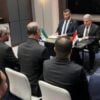
Iraq's Ministry of Water Resources and Syria's Ministry of Energy have signed a joint technical minutes document on cooperation in managing shared water resources and exchanging technical data, following a bilateral meeting held at the ministry's headquarters in Baghdad.
The meeting was co-chaired by the Technical Undersecretary of Iraq's Ministry of Water Resources, Engineer Hussein Abd al-Amir Baka, and Syria's Deputy Minister of Energy for Water and Electricity Affairs, Engineer Osama Khaled Abu Zaid, with technical delegations from both sides in attendance.
The session was convened under the direction of Water Resources Minister Dr Muthanna al-Tamimi, and was based on a technical paper prepared by the Planning and Follow-up Directorate's International Water Studies Division, in coordination with the ministry's relevant departments.
Discussions focused on cooperation in managing shared water resources, developing coordination mechanisms, and exchanging technical data, with particular attention to the Euphrates river and matters of mutual interest.
Both sides affirmed the importance of continued direct technical dialogue, strengthening communication between specialists, and developing bilateral cooperation in shared water resource management.
(Source: Iraqi Ministry of Water Resources)
Posted in Agriculture, Construction & Engineering In Iraq, Politics 0 Comments
Iraq, US Outline Energy, Security and Investment Goals
Posted on 17 June 2026 .
Iraq and US Reaffirm Strategic Partnership, Eye White House Meeting in July
Iraq-US Joint Statement Outlines Energy, Security and Investment Goals
Chevron, Starlink and Pipeline Rehabilitation Among Priorities in Iraq-US Joint Statement
By John Lee.
Prime Minister Ali al-Zaidi and Tom Barrack, Special Presidential Envoy of President Trump, have reaffirmed the commitment of both governments to building a strong and mutually beneficial US-Iraq partnership. Barrack conveyed President Trump's wish to receive Prime Minister al-Zaidi at the White House in mid-July to discuss the future of the relationship.
According to the Iraqi Prime Minister's Office, the two sides discussed the Iraqi government's vision for a future free from terrorism and outlined plans for the complete disarmament and dissolution of all armed groups operating outside state authority, the consolidation of weapons under state control, and the imposition of full sovereignty - with the aim of ensuring Iraq is kept clear of regional conflicts and that its territory is not used by any party to threaten regional peace.
Prime Minister al-Zaidi reaffirmed Iraq's commitment to deepening bilateral trade and investment relations. Both sides welcomed a series of specific commercial developments, including:
- Iraq's decision to complete the granting of an operating licence to Starlink to provide internet services to Iraqi consumers
- The launch of negotiations with Chevron for the development of the West Qurna 2 and Nasiriyah oil fields
- The resumption of operations by US companies HKN, Western Zagros and Hunt, with full security guarantees
- Progress on a memorandum of understanding with TI Capital for the rehabilitation of the Kirkuk-Banias pipeline as a vital oil export route
- Expansion of US-Iraq commercial cooperation to support Iraq's electricity needs, including US-based Excelerate Energy's project to develop a floating liquefied natural gas (LNG) import terminal at Khor al-Zubair
Both sides also affirmed their support for a strong, unified and sovereign federal Iraq grounded in constitutional institutions, with full equality for all citizens.
(Source: Prime Minister's Office)
Posted in Construction & Engineering In Iraq 0 Comments

Electricity Generation in Iraq Reaches 22,000 MW
Posted on 17 June 2026 .
By John Lee.
According to the Ministry of Electricity, current electricity generation has reached around 22,000 megawatts, with governorate allocations calculated based on net generation after accounting for exemptions including government hospitals, water stations, losses, loads and auxiliary equipment.
The ministry said allocations are distributed according to approved percentages set by the Higher Coordination Committee between Governorates, with Basra receiving its calculated share and the remaining capacity distributed among other governorates to support fair supply and grid stability.
The ministry said the combined shares of governorates, excluding Basra, total 100%, distributed as follows:
- Baghdad: 27.07%
- Dhi Qar: 9.02%
- Nineveh: 8.47%
- Babylon: 5.94%
- Karbala: 5.77%
- Najaf: 5.64%
- Anbar: 5.49%
- Salah Al-Din: 5.12%
- Diyala: 5.04%
- Maysan: 5.02%
- Wasit: 4.99%
- Kirkuk: 5.21%
- Diwaniyah: 4.00%
- Muthanna: 3.24%
(Source: Ministry of Electricity)
Posted in Iraq Industry & Trade News 0 Comments

Jordan-Iraq Investment Opportunities in Focus at Franchise Exhibition
Posted on 11 June 2026 .
By John Lee.
According to Jordan's state-run Petra news agency, financial and banking experts and representatives of international financial institutions convened on the sidelines of the 2026 Franchise and Trade Agencies Exhibition in Amman to discuss expanding economic cooperation between Jordan and Iraq.
The dialogue session, titled "Financing Mechanisms, Banking Facilities and the Role of International Financial Institutions in Supporting Trade and Investment Exchange Between Iraq and Jordan," focused on strengthening private-sector financing and bilateral investment opportunities.
Marcel Rashid, representative of the International Finance Corporation (IFC) mission in Jordan, described Jordan and Iraq as part of an interconnected economic system and said the IFC supports private-sector development and strategic project financing in both countries. He noted that the IFC has invested billions of dollars in Iraq in recent years across private-sector initiatives, infrastructure, and financial services, and that its role includes technical and advisory support alongside direct financing.
Katarina Hansen, Director of the European Bank for Reconstruction and Development (EBRD) office in Iraq, described Iraq as one of the region's most promising markets, citing opportunities in transportation, logistics, energy, electricity, and telecommunications. She said the EBRD is working alongside the World Bank Group and other international partners to support Iraq's development priorities.
Nasser Abu Zahra, Deputy Chief Executive Officer and Head of Corporate and Banking at Housing Bank, said amendments by the Central Bank of Jordan had enabled Jordanian banks to finance projects in Iraq, including in the energy, industrial, services, and technology sectors, using instruments such as letters of credit.
(Source: Petra)
Posted in Investment, Iraq Industry & Trade News 0 Comments