


New Iraq-Iran Agreements include Rail and Road Freight
Posted on 27 July 2026 .
By John Lee.
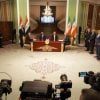
Iraq and Iran have signed four agreements and memoranda of understanding (MoUs) covering transport, rail, municipal ties, and public administration, during a ceremony in Tehran.
According to the Prime Minister's Office, the signing was witnessed by Prime Minister Ali al-Zaidi and Iranian President Masoud Pezeshkian.
The agreements were signed on the Iraqi side by the ministers of foreign affairs, electricity, and finance and planning (acting).
The agreements are:
- An agreement on international road freight transport
- An MoU on extending the railway from Kermanshah-Khosravi-Khanaqin to Baghdad
- An MoU on twinning between the Baghdad Municipality and Tehran Municipality
- An MoU on government administration and human resources training
(Source: Prime Minister's Office)
Posted in Construction & Engineering In Iraq, Iraq Industry & Trade News, Iraq Transportation News 0 Comments
$76bn in Unsettled Advances Identified in Federal Audit Report
Posted on 25 July 2026 .
By John Lee.
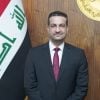
The head of Iraq's Federal Board of Supreme Audit (FBSA), Dr. Ammar Subhi Khalaf al-Mashhadani (pictured), has outlined the key findings of the board's 2025 annual report in an interview with the state-owned Iraqi Media Network (IMN).
The report, which covers more than 7,950 audit reports totalling at least 70,000 pages, has been submitted to parliament within the 120-day statutory deadline. According to the FBSA, this is the first time since 2003 that parliament has convened a dedicated session to discuss the board's annual report.
Key figures highlighted in the report include:
- IQD 100 trillion (USD 76.3 billion) in unsettled advances accumulated since 2004
- IQD 26 trillion (USD 19.8 billion) in unpaid treasury shares from company dividends
- IQD 4 trillion (USD 3.1 billion) in uncollected liability compensation
- IQD 2 trillion (USD 1.5 billion) attributed to a single Ministry of Electricity contract for the operation of power stations
Click here to view the interview (Arabic).
Click here to download the FBSA 2025 Annual Report.
(Source: Federal Board of Supreme Audit)
Posted in Iraq Industry & Trade News, Politics 0 Comments
Iraq Private Banks sign MoU with US Energy Engineers Body
Posted on 24 July 2026 .
By John Lee.
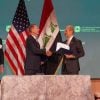
The Iraqi Private Banks League (IPBL) has signed a memorandum of understanding (MoU) with the Association of Energy Engineers (AEE) in Washington, DC, aimed at supporting Iraq's banking sector in financing the transition to a green economy and developing the country's energy infrastructure.
The signing took place on the sidelines of Prime Minister Ali al-Zaidi's state visit to the United States. IPBL President Wadee Al Handal signed on behalf of the association, while AEE Executive Director William Kent signed for the American side.
According to the IPBA, the MoU covers:
- Financing for solar energy projects
- Integration with international financial institutions, including the European Bank for Reconstruction and Development (EBRD), to support upgrades to the national electricity grid
- Capacity-building and knowledge-transfer programmes, including internationally accredited professional certifications
- Technical advisory services for ministries, municipalities, and financial institutions on carbon-reduction projects and ESG governance
(Source: Iraq Private Banks Association)
Posted in Construction & Engineering In Iraq, Investment, Iraq Banking & Finance News 0 Comments
GE Deal to Boost Iraq's Power Generation Capacity
Posted on 23 July 2026 .
By John Lee.
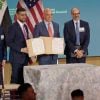
Iraq has signed an agreement with GE to implement a comprehensive plan for securing the country's energy supply. The deal was signed in Washington by Minister of Electricity Ali Saad Wahib, under the auspices of Prime Minister Ali al-Zaidi.
According to the Ministry of Electricity, the agreement covers an integrated national programme with the following components:
- Construction and expansion of power generation stations using GE's combined-cycle technology
- A central generation project at Al Faw
- Expansion of generation stations in multiple governorates
- Development and modernisation of the national transmission network
- Construction and upgrading of transmission substations
- An electricity interconnection project with Saudi Arabia using high-voltage direct current (HVDC) technology
- Advanced distribution control centres and automation of secondary substations
- Mobilisation and structuring of project financing
The ministry said the agreement links capacity additions, fuel supply, transmission network development, and financing into a single integrated framework aimed at improving electricity supply stability and efficiency.
(Source: Ministry of Electricity)
Posted in Iraq Industry & Trade News 0 Comments

Iraq Struggles to Meet Power Demand; Drop in Iranian Gas Imports
Posted on 22 July 2026 .
From Rudaw. Any opinions expressed are those of the author(s), and do not necessarily reflect the views of Iraq Business News.
Iraq Struggles to Meet Power Demand amid Drop in Iranian Gas Imports
The Iraqi government is producing less than half of the country's electricity needs despite scorching summer temperatures, a shortfall officials partly attribute to a sharp decline in natural gas imports from neighboring Iran, the Iraqi electricity ministry's spokesperson said on Monday.
Posted in Iraq Industry & Trade News 0 Comments
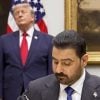
10 Key Takeaways from PM Al-Zaidi's Washington Visit
Posted on 21 July 2026 .
By Guest Blogger. Any opinions expressed are those of the author(s), and do not necessarily reflect the views of Iraq Business News.
1. A historic volume of agreements - 48 in total
A total of 48 agreements, memoranda of understanding, cooperation agreements and partnership declarations were signed between public and private sector entities in Iraq and the United States during the five-day visit. In total, Iraq's initial agreements with US firms, spanning the energy, healthcare and technology sectors, are worth more than $60 billion.
2. Major oil and energy companies ink deals
The agreements include cooperation and partnerships involving the Iraqi ministries of oil and electricity with ExxonMobil, KBR, GE Vernova, Shell and Halliburton. Chevron also signed two additional agreements with Iraq focused on boosting oil production.
3. Iraq-Syria crude oil pipeline to be revived
Iraq and Syria signed a cooperation agreement to reconstruct the long-defunct Iraq-Syria oil pipeline, which runs from the oil-rich Kirkuk region in northern Iraq to Syria's Mediterranean port of Banias [Baniyas]. Iraq's state news agency reported that Chevron would carry out the project. The US Department of State welcomed the plan, stating that upon rehabilitation the pipeline would have an initial transport capacity of two million barrels per day.
4. Pipeline deal framed as making Hormuz "an afterthought"
US ambassador to Türkiye Tom Barrack said Iraq's latest oil pipeline agreements would lead to a programme "that will make the Strait of Hormuz an afterthought." The deals come as Baghdad seeks to move away from dependence on the Strait of Hormuz, where shipping and oil exports have been heavily disrupted due to the US-Israel war against Iran.
5. Starlink deal for satellite internet services
Iraq signed a deal with Starlink to introduce services to the country. This forms part of a broader push to attract US companies across the technology sector.
6. Oil production ambitions front and center
Al-Zaidi said Iraq seeks to increase oil production to seven million barrels per day over the next three years, up from its current output of about 4.5 million bpd. A sovereign wealth fund structured around oil exports was also discussed as a vehicle for funding future development.
7. US companies given priority across key sectors
Al-Zaidi's government said it would prioritise US companies in energy, communications, technology and development projects, with the prime minister stating his goal is to move bilateral relations "from a phase of security cooperation to a sustainable economic partnership."
8. Deals signed at a US-Iraq Business Summit
The preliminary deals were signed at a US-Iraq business summit at the US Chamber of Commerce in Washington. Al-Zaidi told attendees: "We are using an open-door policy. Everybody who has a project can come and talk to us. We will not make it difficult for anyone."
9. Corruption crackdown cited as a confidence-builder for investors
Al-Zaidi has launched a corruption crackdown, with raids yielding millions of dollars in seized assets, a signal intended to reassure US partners that Baghdad is serious about improving the business environment.
10. Strategic shift from security to economic partnership
Al-Zaidi said discussions with Trump focused on strengthening bilateral relations, expanding economic cooperation and creating opportunities for American companies to participate in development projects in Iraq, particularly in the energy sector, stressing the importance of building commercial ties rather than focusing solely on military cooperation.
Posted in Investment, Iraq Banking & Finance News, Iraq Industry & Trade News, Iraq Oil & Gas News, Politics, Security 1 Comment

Iraq Signs 48 Deals with US Firms
Posted on 20 July 2026 .
By John Lee.
Iraq has signed 48 agreements, memoranda of understanding (MoUs) and partnership declarations with US public and private sector entities spanning the oil, electricity, technology, finance and agriculture sectors.
According to Iraq's Prime Minister's Office (PMO), the signing ceremony took place on Friday evening Baghdad time under the auspices of Prime Minister Ali al-Zaidi.
Companies named as signatories include:
- ExxonMobil
- KBR
- GE Vernova
- Shell
- Halliburton
- Starlink (agreement with the Communications and Media Commission)
- Kizlight Technology
- PepsiCo
- UOP
- Polaris
- Association of Energy Engineers (AEE)
- PPTA
- Frito-Lay (two agreements for agricultural sector development)
The agreements also cover pipeline projects to transport oil to Banias on the Mediterranean coast, education partnerships, and private sector cooperation in pharmaceuticals supply and manufacturing.
(Source: Prime Minister's Office)
Posted in Construction & Engineering In Iraq, Investment, Iraq Industry & Trade News, Iraq Oil & Gas News, Politics 1 Comment

Floating Gas Terminal Deal Agreed for Khor al-Zubair
Posted on 20 July 2026 .
By John Lee.
A floating gas platform project at Khor al-Zubair is set to proceed. following a meeting in Washington between Prime Minister Ali al-Zaidi and the chief executive of US-based Excelerate Energy.
In October, the Ministry of Electricity and Excelerate Energy agreed on a floating storage and regasification unit (FSRU) with a capacity of 15 million cubic metres per day. The five-year renewable agreement would supply natural gas to power generation plants, supporting diversification of gas sources to meet national demand.
An earlier statement from Excelerate Energy put the total project investment at approximately $450 million, inclusive of the cost of the FSRU.
(Source: Iraqi Prime Minister's Office)
Posted in Construction & Engineering In Iraq, Iraq Oil & Gas News 0 Comments
ExxonMobil in Talks with Iraq on Oil Prodn, Refinery Development
Posted on 18 July 2026 .
By John Lee.
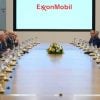
Iraq's Prime Minister Ali al-Zaidi has met with the chief executive of ExxonMobil, Darren Woods, and the company's board at its headquarters in Houston to discuss expanding oil production and export capacity, and potential partnership in refinery development.
According to the Prime Minister's Office, al-Zaidi outlined the government's intention to develop Iraq's oil production and export sectors, raise refining capacity, and bring an end to associated gas flaring.
He invited ExxonMobil to contribute to these plans, emphasising the need for swift action and long-term investment. Al-Zaidi also stressed the importance of eliminating Iraq's dependence on imported gas for power generation and capturing all associated gas. The Ministers of Oil and Electricity attended the meeting.
Woods presented an overview of ExxonMobil's activities and capabilities in Iraq and the region, and expressed the company's interest in closer cooperation, including attention to environmental requirements and pollution reduction.
(Source: Prime Minister's Office)
Posted in Iraq Oil & Gas News 0 Comments
Chevron in Talks with Iraq over Southern Fields and Refining Investment
Posted on 17 July 2026 .
By John Lee.
Chevron has held talks with Iraq's Prime Minister on expanding investment in southern oil fields, refining, pipeline infrastructure, and export routes.
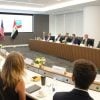
The meeting took place at Chevron's corporate headquarters and was attended by Iraq's ministers of oil and electricity, along with the Prime Minister's advisory council and the Iraqi ambassador to Washington.
According to the Prime Minister's Office, Prime Minister Ali al-Zaidi called on Chevron to accelerate and expand its work in Iraq, with a focus on raising crude oil production, increasing refining capacity, and diversifying export outlets. Al-Zaidi said the government was prepared to provide land, approvals, and other facilitations for the construction of refinery complexes, chemical industry infrastructure, and gas production facilities, as well as to support technology transfer.
Chevron's president, Mark Nelson, indicated the company's interest in investing in Iraq's southern oil fields, pipeline projects connecting to regional ports, storage facilities, and compressing implementation timelines.
(Source: Prime Minister's Office)
Posted in Iraq Oil & Gas News 0 Comments