


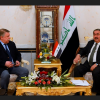
Foreign Minister Receives Russian Ambassador
Posted on 22 May 2014 .
By John Lee.
Minister of Foreign Affairs, Hoshyar Zebari received on May 21, 2014, Ambassador of the Republic of the Russian Federation, Elia Morgnov.
During the meeting, the Russian Ambassador congratulated the Iraqi people for the success of the legislative elections, hoping to achieve progress and prosperity of Iraq.
The two sides discussed bilateral and international cooperation between the two countries and the ongoing political developments in the international arena.
The Minister renewed the Iraqi government's keenness to ensure the requirements for the work of the accredited Diplomatic Missions in Baghdad.
The meeting was attended by Undersecretary for Multilateral Relations and Legal Affairs, Head of Europe Department and the Director of the Minister's Office.
(Source: MoFA)
Posted in Iraq Industry & Trade News Comments Off on Foreign Minister Receives Russian Ambassador

Lukoil's West Qurna 2 Ambition
Posted on 04 May 2014 .
By John Lee.
Writing in Forbes, correspondent Christopher Helman has written an autobiographical study of Lukoil CEO Vagit Alekperov (pictured) and the company's long term ambition in developing the giant West Qurna 2 field in southern Iraq.
Helman notes the stunning scale of the endeavor, which has spanned several decades including a deal with Saddam in 1997 which never came into fruition because of sanctions.
The piece is titled a little too sensationally for this IBN blogger, noting the current "chaos" in Iraq which is indisputable in parts of the center and west of the country.
However, the situation in Ninewa, Diyala and Al Anbar which Helman describes is very different from that of West Qurna 2, located hundreds of miles away in the comparatively calm south.
Aside from that, it is an informative piece about an incredible endeavor, taking a wider geopolitical view. With 120,000 bpd initial production and a potential production capacity of 1.2 million bpd, the story of West Qurna 2 is something to behold.
The field has an estimated 20 billion barrels of estimated recoverable reserves, something Alekperov described as having vital strategic importance to Lukoil. Read the whole piece here.
(Source: Forbes)
Posted in Iraq Oil & Gas News 1 Comment

LUKoil, Zarubezhneft consider Iraq Oil JV
Posted on 26 April 2014 .
By John Lee.
Russia's Lukoil is considering joining a joint venture with Russian state-owned exploration and production company Zarubezhneft to develop the Nassiriya oil field and help build an associated refinery.
The next round of talks on the project with the Iraqi government is expected this summer, LUKoil CEO Vagit Alekperov (pictured) stated earlier, according to Itar-Tass.
The company recently commenced production at the West-Qurna 2 project in southern Iraq.
(Source: UPI, Itar-Tass)
Posted in Iraq Oil & Gas News Comments Off on LUKoil, Zarubezhneft consider Iraq Oil JV
Russia to Deliver more Military Helicopters
Posted on 23 April 2014 .
By John Lee.
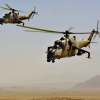
Russia is preparing to deliver a new batch of highly-sophisticated military helicopters to Iraq late June, according to a report from Kuwait's KUNA.
The new batch will include Mi-35 (pictured) and Mi-28NE 'Night Hunter' attack helicopters, and is part of the $4.2 billion deal signed in 2012.
To date, Baghdad is reported to have received only four Russian-made Mi-35 aircraft from the total of 43 gunships agreed in the contract.
(Source: KUNA)

Thales to Provide Security System at West Qurna
Posted on 13 March 2014 .
Thales has been awarded a contract to provide an Integrated Security System (ISS) for the West Qurna-2 oil field development located 65 km northwest of Basra in Southern Iraq.
This contract has been signed with LUKOIL Mid-East Ltd, a subsidiary of the Russian oil company LUKOIL.
Thales will design and deploy the Integrated Security System over the security perimeter surrounding the West Qurna-2 area, protecting LUKOIL Mid-East personnel and assets, including well pads, central processing facilities, gas treatment facilities, produced water treatment, all related offsites and utilities, storage tanks and living camps.
Thales´s Integrated Security System will include a number of innovative technical solutions as well as a command & control centre to assure supervision and control of day-to-day security operations and comprehensive protection from operational incidents and threats.
Thales is also part of the international consortium that was awarded another contract by LUKOIL Mid-East Ltd at the end of 2013 for spare parts supply and maintenance assistance at the existing and future security installations of LUKOIL´s West Qurna-2 oil field development.
Dominique Gaiardo, Vice President Protection Systems, commented:
“These two contracts are important milestones because they are Thales’s first deals with LUKOIL, Russia’s largest privately owned oil business group and a major international, vertically integrated oil & gas company.
"In addition, these awards continue to confirm that Iraq is an important geographical market for Thales.”
(Source: Thales)
Posted in Iraq Oil & Gas News, Security 4 Comments
Iraq Buys Small Arms and Ammunition from Iran
Posted on 24 February 2014 .
By John Lee.
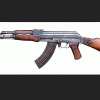
An investigation by Reuters has found that Iraq has purchased $195 million worth of small arms, ammunition and infantry kit from Iran, in addition to artillery ammunition.
The move will likely unnerve some observers in the US, but analysts are still divided over the extent of Iranian influence in Iraq.
Touted by an unnamed State Department spokesperson as a violation of the UN arms embargo against the Iraq's eastern neighbour, the purchase has not surprised some observers of improved ties between the two countries.
For some time now, Iran has been supplying adjacent Iraqi provinces with gas and electricity, and Iranian companies have won a number of contracts in Iraq from the energy sector to construction.
Iraq has not denied the validity of the claims however, and argues it is a necessary measure due to delays in US arms exports. Iraq continues to fight a robust and revived insurgency in the north and west of the country, and officials have claimed the purchase is an essential security measure.
The scale of the deal is likely to be more of political significance as much as tactical necessity. Iraq's recent arms purchases from the US and Russia have totalled billions of dollars. In 2013, Iraq signed a $1.1 billion deal with South Korea to buy FA-50 light fighter jets, following a similar $1 billion dollar deal with Czechoslovakia.
(Source: Reuters)
Posted in Politics, Security 4 Comments

Chinese Foreign Minister Meets Zebari in Baghdad
Posted on 24 February 2014 .
By John Lee.
Chinese Foreign Minister Wang Yi met his Iraqi counterpart Hoshyar Zebari in Baghdad in a rare Chinese high level diplomatic mission to Baghdad.
The two men discussed increased Sino-Iraqi cooperation in areas such as oil development and arms sales. Until recently, Iraq has been frustrated by slow deliveries of weapons systems from the US and turned to Russia for major arms contracts to combat terrorism and build conventional forces.
Iraq remains a country of major strategic importance for the major Asian oil consumer, but Baghdad is pursuing a diversified foreign policy in terms of relations with the major world powers.
(Source: Al Manar TV)
Posted in Politics 3 Comments
Gazprom Raises Cost Estimate For Iraq Field
Posted on 23 February 2014 .
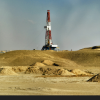
Russia's Gazprom Neft has increased its estimated costs for the Badra oil field to about US $3 billion, reports Bloomberg, citing a bond prospectus recently issued by its parent company.
The company had previously forecast costs at about $2 billion.
The field is being developed by Gazprom as lead partner (30% stake), along with Korea’s KOGAS (22.5%), Malaysia’s Petronas (15%), Turkey’s TPAO (7.5%), and Iraq (25%).
The group is planning to produce 170,000 bpd from the field by 2017, earning a fee of $5.50 a barrel over the 20-year span of the contract.
(Source: Bloomberg)
(Picture: Drilling at Badra -- Gazprom)
Posted in Iraq Oil & Gas News 5 Comments
Turkey Defers to Baghdad on Kurdish Oil
Posted on 19 February 2014 .
By Semih Idiz for Al-Monitor. Any opinions expressed are those of the author, and do not necessarily reflect the views of Iraq Business News.
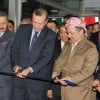
With hundred of thousands of barrels of its oil stuck in the Turkish Mediterranean port of Ceyhan, unable to be sold on the world market because of its continuing row with Baghdad, the Kurdistan Regional Government (KRG) is discovering just how landlocked and boxed in it is in terms of utilizing the vast oil reserves under its control.
Baghdad also has support from Washington, where administration officials fear the energy cooperation between Turkey and the KRG will increase the risk of splitting up Iraq — already in the throes of sectarian strife — and are consequently putting pressure on Ankara over its energy dealings with the Iraqi Kurds.
Iraq's constitution says oil revenues, regardless of where the reserves are located in the country, have to go through Baghdad and allocates the autonomous Kurdish region 17% of total revenues.
Nouri al-Maliki's government argues that the KRG can only export its oil after an agreement is reached between Erbil and Baghdad on how to proceed in this matter.
Baghdad has also threatened to cut the KRG out of its share of Iraq’s vast oil revenues, should it go ahead and sell its oil unilaterally.
Iraqi Oil Minister Abdul Kareem Luaibi told Reuters in January that the government would take legal action against Turkey and consider canceling all contracts with Turkish firms if Ankara enabled the exporting of KRG oil before an agreement between Erbil and Baghdad is reached.
Such an agreement, though, has been elusive because of Kurdish claims of sole ownership over oil reserves discovered in northern Iraq after the region gained political autonomy from Baghdad following the US invasion in 2003.
KRG officials are disappointed that a comprehensive package of agreements they signed with Turkey in November 2013 has not become fully operational yet.
Posted in Iraq Oil & Gas News, Politics 9 Comments
Iraq Becomes China's Number Two Crude Exporter
Posted on 19 February 2014 .
By John Lee.
Intensive competition to supply China's oil demand has combined with slowing demand for oil globally, and this is putting downward pressure on oil prices in 2014, Reuters reports.
Iraq and Russia have positioned themselves to be long term suppliers of the Asian giant, squeezing out African and Latin American producers trying to improve their terms for the Asian market. This intensive competition means that oil on the market is surpassing demand.
In the case of Iraq, the strategy to increase exports to Asia will see exports rise to 882,000 bpd, an increase of 62%, according to Reuters data. China's slowing demand will still see a 7% rise in oil imports, but Iraqi and Russian exports will more than match this increase.
Iraq's rise to become one of China's main suppliers has been somewhat rapid, seeing the country become the 5th biggest supplier last year, overtaking Iran after cutting the price of its main crude, Basra Light.
(Source: Reuters)
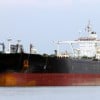
(Tanker image via Shutterstock)
Posted in Iraq Oil & Gas News 14 Comments