


Controversy Surrounds Alleged Iraq-Iran Arms Deal
Posted on 15 February 2014 .
By Ali Mamouri for Al-Monitor. Any opinions expressed are those of the author, and do not necessarily reflect the views of Iraq Business News.
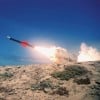
In a Feb. 4 interview with the semi-official Iranian Tasnim News Agency, Mohammed Majid al-Sheikh, Iraq’s ambassador to Iran, was reported to have revealed his country’s intention to strike a deal to buy weapons from Iran.
The agency quoted Sheikh as saying, “Some well-informed sources said that the Iranian-Iraqi talks came in light of the Iraqi Ministry of Defense’s vision of the need to supply the Iraqi army with Iranian-made military equipment, given their efficiency and importance.”
This style of statement is inconsistent with the ambassador’s official role, which is to present the official position of the Iraqi government, from official Iraqi sources, not from “well-informed sources.” This calls into question the validity of this supposed news, especially since it has not been confirmed by Iranian authorities or the Iraqi officials typically involved in such deals.
Mohammed Ugail, a member of the ruling coalition in Iraq, had declared in a Jan. 17 interview with a Russian website that the Iraqi government was seeking to strike arms deals with Egypt as well as Iran.
In addition, several newspapers and news websites have reported on an Iraqi purchase of Iranian weapons, giving the story additional impetus by claiming that the deal has already been sealed. They quote Sheikh as having said, “Iraq signed a memorandum of understanding with Iran to buy weapons and military equipment.”
Iraqi Defense Minister Saadoun al-Dulaimi had traveled to Iran on Sept. 23, it is thought to discuss ways to promote defense cooperation between the two countries. His visit followed that of Iraqi parliament speaker Osama al-Najafi, to offer condolences to the commander of the al-Quds Force, Qasem Soleimani, on the death of his mother.
Posted in Security Comments Off on Controversy Surrounds Alleged Iraq-Iran Arms Deal

Capital Gain Tax on IOCs in Iraq
Posted on 10 February 2014 .
By Ahmed Mousa Jiyad.
Any opinions expressed are those of the author, and do not necessarily reflect the views of Iraq Business News.
Many countries impose capital gain tax on individuals, companies and corporations when a profit realized from the sale of assets. National and state legislation often has a large array of fiscal obligations and regulations regarding capital gains, however, these fiscal obligations may vary from jurisdiction to jurisdiction.
In other words capital gain tax is a normal component of taxation systems on both national and international levels, and thus has a significant contribution to the state revenues and fiscal policies. Iraq is no different and should consider doing the same.
In Iraq the signed service contracts provide the IOCs with a possibility to assign (sell) wholly or partly their participating interests as specified by a common clause in the signed contract, “any Company shall have the right to assign any of its Participating Interest, shares, rights, privileges, duties or obligations under this Contract to an Affiliate.” Such right for assignment is subject to and governed by a set of provisions outlined in the signed contract.
Due to the long duration of the contracts (the Term) that extend beyond 20 years, and due to the usual practice of Merger and Acquisition (M&A) in the international petroleum business it is highly probable that IOCs might “farm in” and “farm out” by acquiring, selling or exchange participation interests in the related petroleum field.
The transfer of participation interests between IOCs involves financial transactions or transfer of “asset” ownership between the concerned parties: the buyer and the seller. This assignment deal may (though highly likely) results in significant realized gain (profit) for the selling party compared to the actual cost (investment) it made as a consequence to its participation in the related upstream petroleum development project.
This realized gain is known to be “capital gain” and in most countries it is taxable. The “Capital Gain Tax” is imposed on individuals, companies and corporations and in many countries it is imposed in addition to other direct taxes such as “Property/Wealth Tax” and “Income Tax” among others. The percentage of Capital Gain Tax differs according to the taxation systems and fiscal policies across the world.
Posted in Ahmed Mousa Jiyad 3 Comments
Anbar Headed Towards Isolation
Posted on 06 February 2014 .
By Ali Abdel Sadah for Al-Monitor. Any opinions expressed are those of the author, and do not necessarily reflect the views of Iraq Business News.
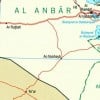
Reports about the military operations in the Anbar province suggest that the “decisive moment” remains elusive. There are battles involving Islamic State of Iraq and al-Sham (ISIS) militants, fighters from the province’s tribes and members of the regular military forces, with no clear winning team on the ground.
These conditions drive many politicians and security experts to believe that what is happening in the volatile province is a kind of a war of attrition that may widen and thus pave the way for a Syrian scenario in Iraq.
Since late December, Anbar has been witnessing large-scale military operations where various weapons are being used. These weapons include US and Russian arms that Iraq has started to import to fight armed groups.
Various Iraqi security and media sources from Anbar told Al-Monitor during the last days of January: “The conflicting parties take turns in gaining control of the province’s neighborhoods and streets. As soon as government SWAT forces took control of ISIS centers, ISIS fighters managed to localize themselves in other areas.”
These sources said: “The delayed decisiveness is due to the political split in the Sunni community, which affected the role of tribal militants in the military conflict. The fact is that some of these militants fight alongside the Iraqi army, while others fight against it.”
Consequently, in his weekly address on Jan. 29, Iraqi Prime Minister Nouri al-Maliki threatened to storm the city of Fallujah "to resolve the matter there.” He pointed out that “the battle will cost the army casualties but he has to do it.”
However, the implementation of military operations, especially in the city of Fallujah, seems a hard call because it is difficult to distinguish civilians from ISIS fighters. Moreover, many believe that the organization took advantage of the political divide, presenting itself as the defender of “Sunni’s interests” in Iraq.
Bristol VMD Delivers Emergency Vehicles to Iraq
Posted on 21 January 2014 .
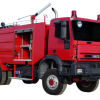
Abu Dhabi's Bristol Vehicle Manufacturing Division (Bristol VMD) has announced it has rolled out seven new fire-fighting and emergency response vehicles as part of a multimillion-dollar contract with Russia's Gazprom Neft.
ConstructionWeekOnline reports that the new fleet of vehicles -- five oilfield fire-fighting vehicles, one rescuer and pollution-control vehicle, and a water and foam support trailer -- will be deployed at the Badra oilfield project.
Bristol VMD is a subsidiary of Concorde Corodex Group (CCG), which is itself part of the MH Al Mana Group of companies. Despite the fact that the contract was only penned in December 2013, the manufacturer’s senior executives have revealed that all seven vehicles have already been delivered to the Badra oilfield.
(Source: ConstructionWeekOnline)
Posted in Construction & Engineering In Iraq, Iraq Transportation News 3 Comments

"Slaughter of Journalists in Iraq Must End Now"
Posted on 21 January 2014 .
The International Federation of Journalists (IFJ) has issued a renewed plea for Iraqi authorities to step up their efforts to protect the safety of journalists following the murder of reporter Firas Mohammed Attiyah today, Monday 20 January.
According to IFJ affiliate, the Iraqi Journalists' Syndicate (IJS), Attiyah, who worked for Fallujah TV, was killed in a bomb attack in the town of Khaldiyah, east of the Iraq's Anbar provincial capital, Ramadi. The blast occurred as Attiyah, his brother and Muayad Ibrahim, a reporter for Al-Anbar TV, were travelling in a car to report on fighting in the area. Ibrahim and Attiyah's brother were both wounded in the attack.
As violence in Iraq continues to escalate, the IFJ has reiterated its appeal for the Iraqi government to introduce genuine measures that will bring an end to the killing of innocent journalists and ensure that those who carry out acts of violence against the media face the full weight of justice.
Jim Boumelha, IFJ president, said:
"We are deeply saddened at the news that the journalists Firas Mohammed Atttiyah has lost his life and we send our deepest condolences to his family and colleagues during this incredibly difficult time.
"Standing in solidarity with our Iraqi affiliate, the IJS, we reiterate our call for the Iraqi government to set up a special task force with the resources to carry out a thorough and independent investigation into the murder of Attiyah and the many other journalists that have been brutally killed in Iraqi. Impunity must end and those responsible must answer for their crimes."
According to the IFJ's list of journalists and media staff killed in 2013, Iraq remains one of the deadliest countries in the world for journalists. Thirteen journalists were murdered in the country last year, with eleven of those murders occurring towards the end of the year.
Reacting to the desperate situation, the IFJ last October launched its End Impunity campaign which is calling on the governments of Iraq, Pakistan and Russia to investigate killings of journalists and bring their perpetrators to justice.
Jim Boumelha added:
"We are deeply concerned about the escalation of violence against the media in Iraq in recent months. Our End Impunity campaign is calling for an end to violence against journalists in the country where it is estimated that at least 300 journalists have been killed since the US invasion in 2003.
"Our message is clear: the slaughter of journalists in Iraq must end now.
"Such blatant and utterly appalling disregard for the lives of journalists quite simply cannot be tolerated."
(Source: National Union of Journalists)
(Journalism image via Shutterstock)
Posted in Security Comments Off on "Slaughter of Journalists in Iraq Must End Now"

Progress still being made in Iraq
Posted on 16 January 2014 .
The tragedy of sectarian violence continues in Iraq, but the country still presses ahead with its development, and foreign companies continue to seize opportunities to contribute to the country’s growth and prosperity.
This week in our newsletter, we have details of a Russian company's first oil output at an Iraqi oilfield, a Danish company exploring for oil in Iraqi Kurdistan, and a Pakistani company re-opening its office in Baghdad.
And at a time when progress is being made in the dispute regarding the export of oil from Iraqi Kurdistan, there are many quesstions still to be answered. To help shed some light on consequences for the industry, Iraq Business News is delighted to be a Media Partner in the forthcoming conference to be held in Abu Dhabi. Hosted by Academy & Finance, "The Control of Energy in the Kurdistan Region of Iraq" will take place on 3rd and 4th March -- full details can be found here.
(Flag image via Shutterstock)
Posted in Blog, Iraq Oil & Gas News 2 Comments

Basra’s Next Battle: Defeating Corruption and Bureaucracy
Posted on 07 January 2014 .
By Robert Tollast.
Robert Tollast is a consultant at Noorbridge, a Helsinki based consultancy with staff in London and Nasiriyah, Iraq. He has written extensively on security, politics and economic issues in Iraq for various publications, and is currently researching a modern history of Iraq with support from The Middle East Forum. email: [email protected] twitter: @roberttollast
As Iraqi troops continue to fight the Islamic State of Iraq and the Levant in Fallujah and Ramadi, a different kind of battle is brewing 350 miles to the southeast, one that could prove just as decisive for Iraq’s future. In Basra this year, the province has more cause for more hope than in previous years. Here’s why.
The dawn of strategy
At the end of 2012, Colin Freeman reported a story in The Telegraph that made for depressing reading: Britain was closing its consulate in Basra, just as the province was experiencing a surge in foreign investment from all over the world.
Last month I spoke to a former British diplomat and asked him why this was, and he remarked that security costs- around £6m per year, were the equivalent to several embassies. But that wasn’t the only thing keeping the British away.
Another factor that has often deterred foreign investors is of course bureaucracy and the difficulty of getting your business on the ground because of Iraq’s fondness for red tape. Discouraging contractual terms offered to investors have put a stop to many potential ventures, as someone with years of experience in the country recently told me, “Iraq is good at killing the goose before it lays the golden eggs.”
But things might be about to change. Last week, Freeman published another story in The Telegraph reporting that Basra governor Nasrawi had hired the British firm Aegis Defence Services to institutionalise the latest counter-terrorism practices for the province.
Governor Nasrawi (from the Islamic Supreme Council of Iraq) seems to understand what counter-terrorism involves, remarking in a recent al-Monitor interview that CT was not primarily a conventional military task. The fact that he has invited a British general who was involved in the invasion is certainly an interesting story.
But Nasrawi (elected last April) is also keen to make progress in other areas. He recently hired American firm Hill International on a long term contract to oversee strategic planning and contracts with foreign companies. As he asserted in the al-Monitor interview, Nasrawi appeared determined that Basra was going to beat corruption, short termism and develop a strategy. Out with four year plans, and in with long term goals.
Posted in Construction & Engineering In Iraq, Robert Tollast 14 Comments
13 Russian Choppers Arrive in Iraq
Posted on 07 January 2014 .
By John Lee.
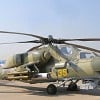
The Voice of Russia reports that 13 Russian Mi-28NE “Night Hunter” helicopters have arrived in Iraq.
The Alsumaria television channel said the helicopters would be used in the counter-terrorism operations in Anbar Province.
The shipment is part of a total deal for around 40 Mi-35 and Mi-28NE attack helicopters to be supplied by the end of the year, the first 15 of which arrived last month.
(Source: The Voice of Russia)
Posted in Security Comments Off on 13 Russian Choppers Arrive in Iraq
Army Fights for Control of Anbar
Posted on 31 December 2013 .
By Mushreq Abbas for Al-Monitor. Any opinions expressed are those of the author, and do not necessarily reflect the views of Iraq Business News.
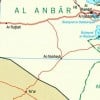
On Dec. 23, Iraqi Prime Minister Nouri al-Maliki announced the launch of a military operation against al-Qaeda near the Syrian border. The operation was dubbed “Avenging the Leader Mohammad.”
Many in Iraq are hoping that this operation will eradicate al-Qaeda. However, the fact remains that the Anbar battle is over military control of the area after al-Qaeda tried to establish a foundation to fuel its activities on both sides of the 600-kilometer (373-mile) Syrian-Iraqi border.
Considering the context, the operation seems to be a reaction to the killing of a number of senior Iraqi army officers, including Maj. Gen. Mohammad al-Rawi, the commander of the 7th Division, in an ambush in the Horan valley desert, near the town of Rabta in the far west of Iraq, on Dec. 21.
The announcement of the military operation seems to have been warmly and widely greeted, especially in Baghdad and southern Iraq. But many in the cities of Anbar, Mosul and Salahuddin fear its implications.
The operation was launched for several reasons.
First, in the past, the Iraqi army was not armed in a way consistent with the launching of major operations in large desert areas. But in recent months, the army has received helicopters, American and Russian fighter jets and monitoring equipment from an earlier deal, enabling the Iraqi army to support its ground troops. The Iraqi air force had been active in the Anbar desert for weeks before the military operation.
Rashid Fleih, a leader of the Anbar operations, told Al-Monitor that the Iraqi army had received US equipment and supplies to be used in the battle against groups affiliated with the Islamic State of Iraq and al-Sham (ISIS). The New York Times revealed Dec. 25 that Washington will supply Iraq with a map showing the locations and origins of al-Qaeda in Iraq, besides 75 Hellfire air-to-land missiles and 10 ScanEagle reconnaissance drones. This information was confirmed by the prime minister's spokesman, Ali al-Moussawi, in a statement released Dec. 27.
Posted in Security Comments Off on Army Fights for Control of Anbar
Iraq To Become Third Largest Russian Arms Purchaser
Posted on 26 December 2013 .
A Russian thinktank has predicted that China will be the fourth biggest buyer of weapons from Russia between 2013 and 2016, falling from the second place it held during the 2005 to 2013 period, according to a China Times.
The Center for Analysis of World Arms Trade stated in a report released on Dec. 13 that the top three countries buying arms from Russia for 2013-2016 are likely to be India, Iraq and Vietnam.
The projection forecast that India, Iraq and Vietnam will make arms purchases worth a combined 51.24% of Russia's total arms sales from 2013-2016, with India accounting for 32.75%, followed by Iraq at 9.87% and Vietnam at 8.92%.
Between 2005 to 2012, Iraq's share was 0.54%, while Vietnam's was 4.86%. Over the eight-year period, India, China and Algeria bought the highest percentage of arms from Russia, accounting for 56.42% of Russia's total arms sales.
A total of 69 countries bought weapons from Russia between 2005 and 2012. India, China and Algeria were followed by Venezuela, Vietnam, Syria, Iraq, Egypt, Azerbaijan and the United Arab Emirates. These latter seven countries accounted for 27.9% of the total, while 59 other countries made up a combined 15.68% of total exports.
(Source: Want Daily, China Times)
Posted in Iraq Industry & Trade News, Security Comments Off on Iraq To Become Third Largest Russian Arms Purchaser